Ask any fleet manager running maintenance out of a spreadsheet how confident they are that every vehicle got its oil changed on time, and the honest answer is usually a pause before "pretty confident." That pause is the problem. A shared file with mileage columns, colored cells, and a handful of people updating it from memory looks organized right up until a vehicle blows an engine two weeks past its due interval and nobody can explain why the reminder never fired. Research on spreadsheet-managed fleets consistently finds a meaningful share of due services slipping through simply because nobody caught the update in time. This page walks through why manual tracking breaks down at scale and what an automated model looks like instead — you can start a free trial to see it running against your own fleet in minutes.
Preventive Maintenance · Oil Change Tracking · 2026
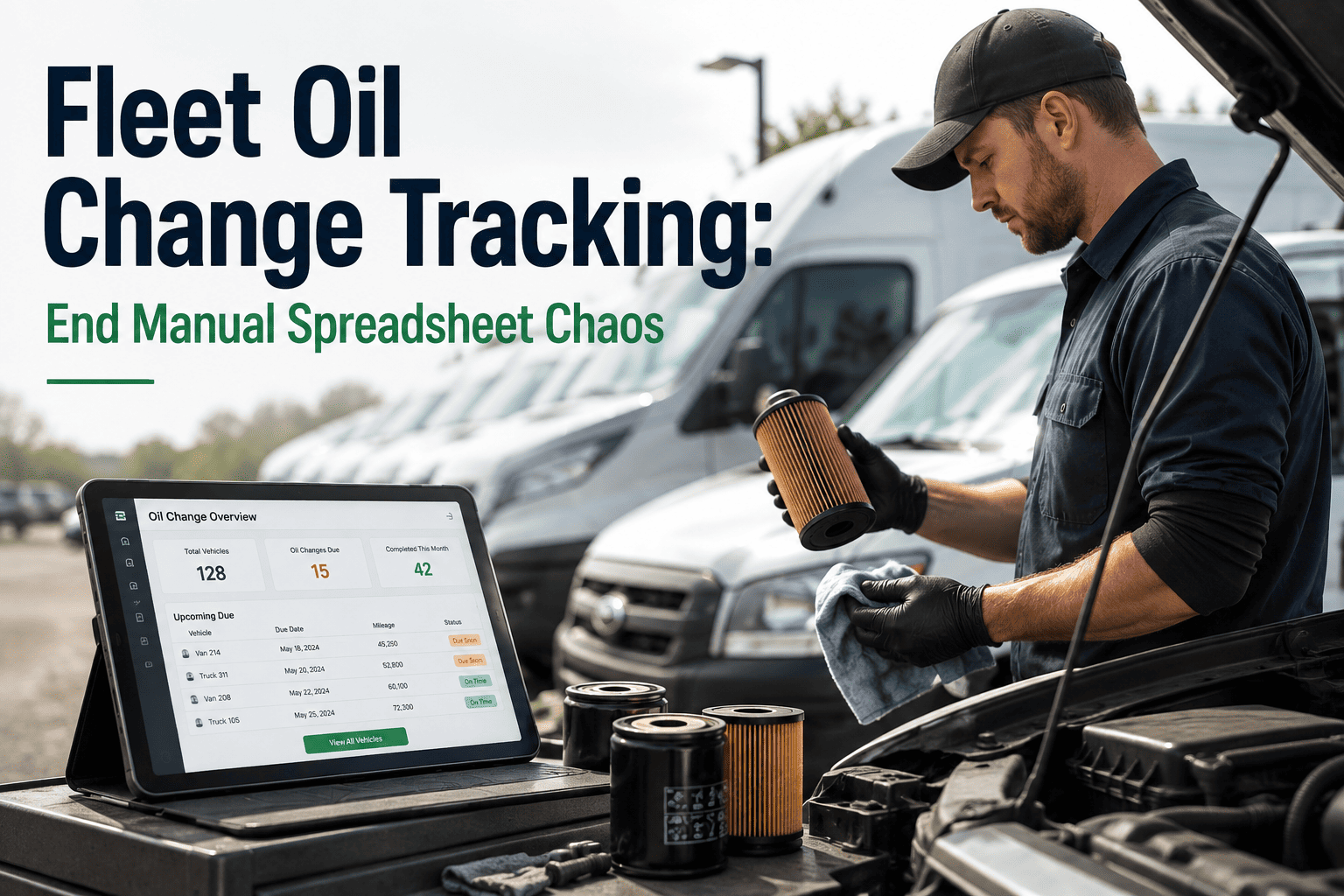
Fleet Oil Change Tracking: End Manual Spreadsheet Chaos
Manual tracking quietly misses due services on 12-18% of vehicles every cycle. Here is the automated model that closes the gap to near-perfect compliance.
12-18%
Of due oil changes typically missed each cycle on spreadsheet-managed fleets
88%
Of spreadsheets contain at least one error, according to broader spreadsheet-error research
5-10 hrs
Spent weekly updating logs and reconciling maintenance records by hand
99%
Compliance rate fleets typically reach once tracking moves to automated, telematics-fed reminders
Two Fleets, Two Very Different Realities
The gap between spreadsheet tracking and automated tracking is not a matter of preference — it shows up directly in how many services actually happen on time. Here is what the same fleet looks like under each approach.
The Spreadsheet Reality
Odometer readings updated whenever someone remembers to type them in
Due-date reminders live in one person's memory or inbox
No alert when a vehicle is dispatched past its service interval
Compliance history scattered across tabs, emails, and paper receipts
Audit prep means hours spent reconstructing records from scratch
The Automated Model
Odometer and engine-hour data flow in automatically from telematics
Reminders trigger the moment a threshold is reached — no memory required
Vehicles past due are flagged before dispatch, not after a breakdown
Every service, invoice, and technician note lives on one vehicle timeline
Audit-ready reports generate in seconds, not hours
How a $70 Service Becomes a $12,000 Problem
The real cost of a missed oil change is rarely the oil change itself — it is what happens to the engine in the months nobody notices it was overdue. Degraded oil keeps circulating, contaminants keep building, and by the time a warning light appears, the damage is already done. The escalation usually looks something like this.
Day 0
$70
The cost of the oil change itself, done on schedule with no drama.
Weeks Later
Missed
The interval passes unnoticed. The vehicle keeps running on degrading oil with no flag raised anywhere.
Months Later
Wear
Contamination accelerates bearing and component wear well before any dashboard warning appears.
Eventually
$6K-$12K
The repair or premature engine replacement bill that a $70 service was supposed to prevent entirely.
5 Ways Spreadsheets Let Oil Changes Slip
None of these gaps happen because a fleet manager is careless. They happen because spreadsheets were never built to run a live maintenance operation, and every one of these failure points is structural rather than personal.
1
Stale Odometer Data
A mileage column is only accurate the moment someone types a new number into it — and drivers do not report odometer readings daily.
2
No Real Alerting
A spreadsheet can highlight a cell red, but it cannot text a shop manager, lock a vehicle from dispatch, or escalate an overdue service.
3
Version Confusion
Multiple copies, multiple tabs, multiple people editing at once — the "current" file is often not actually current by the time anyone checks it.
4
No Connection to Telematics
Spreadsheets cannot pull live mileage or engine hours from GPS and telematics systems, so every number depends on manual entry.
5
Single Point of Failure
When the one person who "owns" the file is out sick, on vacation, or leaves the company, the tracking system effectively leaves with them.
Close the Gap Automatically
Give Every Vehicle a Reminder That Cannot Be Forgotten
Oxmaint pulls live odometer and engine-hour data straight from your telematics feed and fires reminders automatically, so oil change compliance stops depending on any one person remembering to update a cell.
How Automated Tracking Reaches 99% Compliance
Moving off a spreadsheet does not require ripping out your entire process at once. Fleets that make the switch successfully tend to follow the same four-step path.
01
Connect Live Data
Telematics and GPS feeds replace manual odometer entry, so mileage and engine hours update themselves in real time.
02
Set Interval Rules Once
Mileage, engine-hour, and calendar triggers get configured per vehicle type, then run automatically without re-entry.
03
Automate the Alert Chain
Overdue and upcoming services notify the right person automatically, and vehicles can be flagged before dispatch.
04
Keep One Audit-Ready Record
Every service, cost, and technician note lands on a single vehicle history, ready for review or audit in seconds.
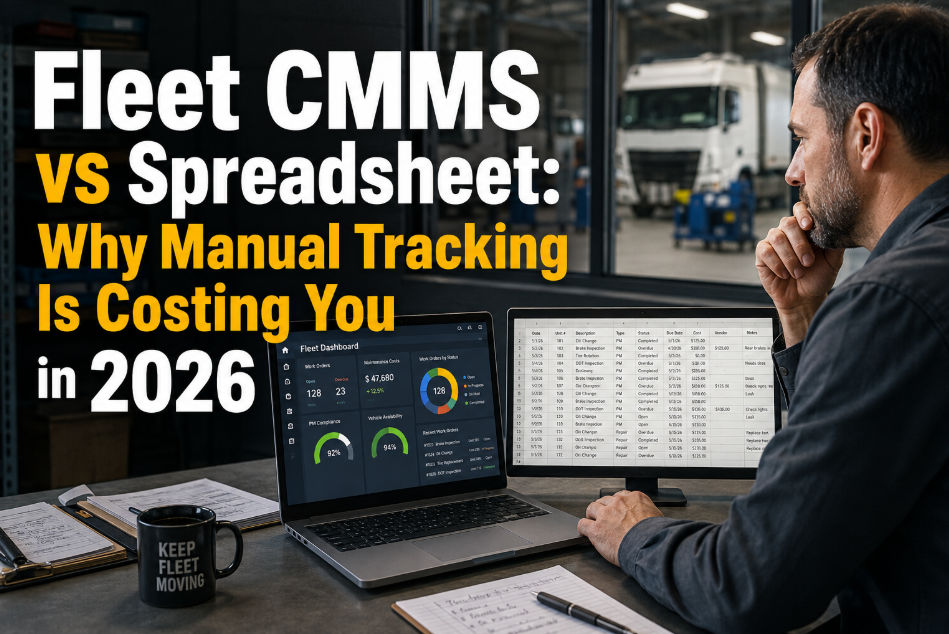
Manual Tracking vs Automated Tracking, Side by Side
| Capability |
Spreadsheet |
Automated Platform |
| Odometer updates |
Manual entry, often delayed |
Real-time from telematics |
| Overdue alerts |
None built in |
Automatic, multi-channel |
| Dispatch protection |
Not possible |
Flags or locks overdue vehicles |
| Audit prep time |
Hours per request |
Seconds, report on demand |
| Data loss risk |
High, single point of failure |
Centralized and backed up |
Frequently Asked Questions
How much oil change compliance do spreadsheets actually miss?
Fleets tracking maintenance manually commonly miss somewhere between 12% and 18% of due services each cycle, mostly from stale odometer data and reminders that depend on one person's memory.
Is switching from spreadsheets to software difficult for a small fleet?
No — most of the setup is connecting existing telematics and entering interval rules once. You can
start a free trial and see the full setup before committing any budget.
What does a missed oil change actually cost long term?
The service itself is a small cost, but the engine wear that follows a missed interval commonly turns into a repair bill running into the thousands, well beyond what the original service would have cost.
Can automated tracking connect to the telematics we already use?
Most automated platforms integrate directly with existing GPS and telematics providers rather than requiring new hardware.
Book a demo to confirm compatibility with your current setup.
Does automated tracking help with DOT or compliance audits?
Yes — centralized, timestamped service records generate audit-ready reports in seconds, replacing the hours typically spent reconstructing history from scattered spreadsheets and paper receipts.
Built for Fleets Ready to Leave the Spreadsheet Behind
Get Every Oil Change Tracked Automatically
Oxmaint replaces manual mileage columns and memory-based reminders with live telematics data, automatic alerts, and a single audit-ready record for every vehicle. Explore the platform yourself, or walk through your current tracking process with our team live.