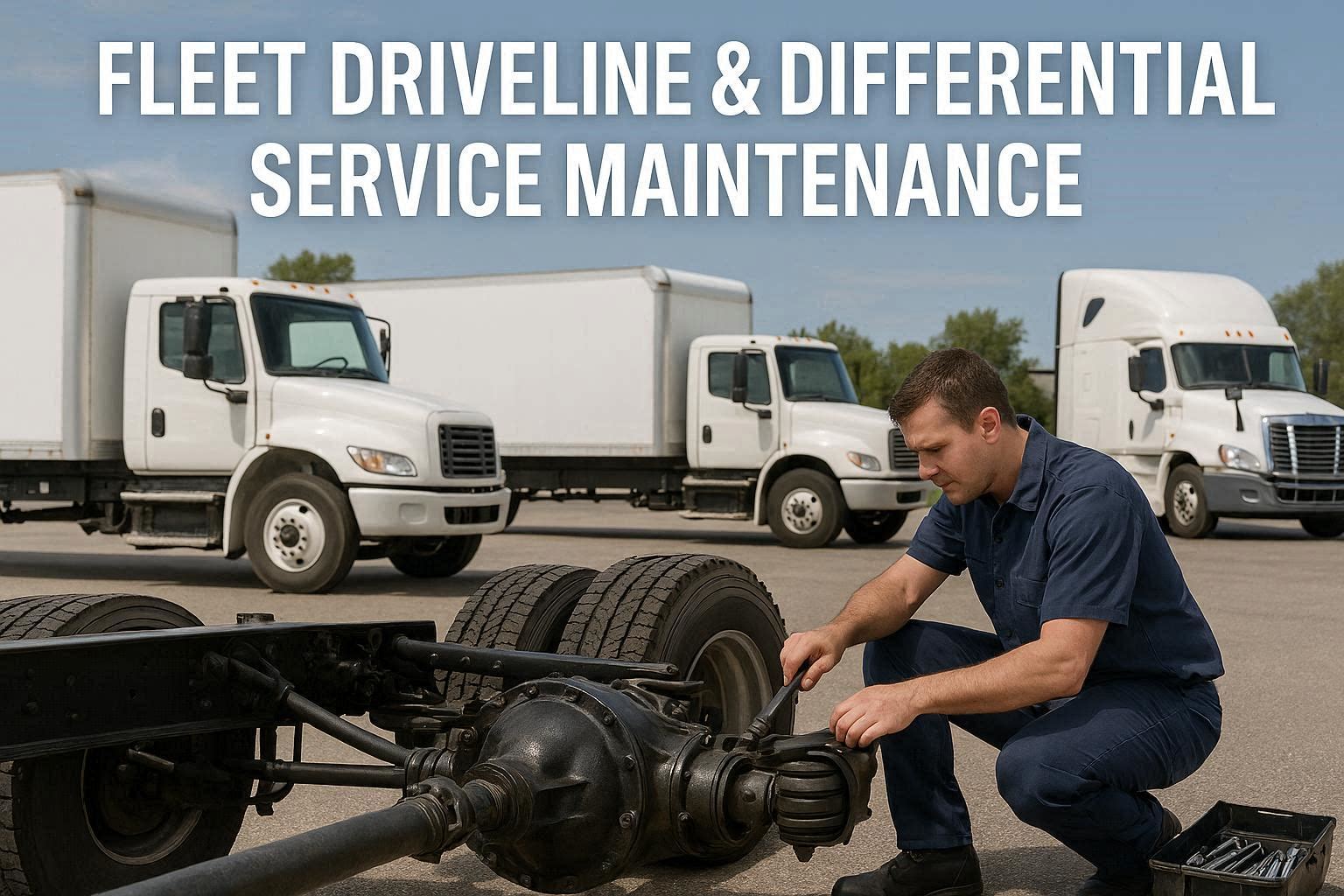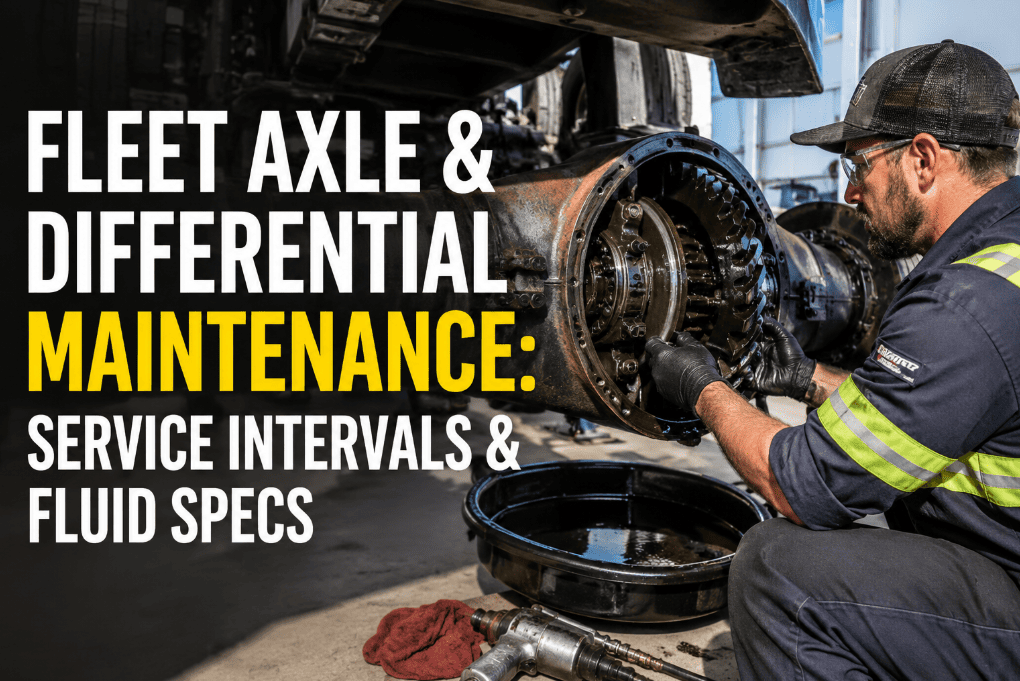
Fleet axle and differential systems are among the most neglected drivetrain components in commercial vehicle maintenance — partly because they fail slowly, partly because the symptoms are subtle until catastrophic, and partly because most PM checklists treat "rear diff fluid" as a checkbox rather than a condition-based maintenance event. Data from the American Trucking Associations Technology and Maintenance Council shows that differential-related failures account for 6% of all commercial vehicle drivetrain failures — at an average repair cost of $4,200 to $18,000 depending on severity — and that 78% of those failures are directly attributable to contaminated, degraded, or low lubricant levels that a systematic fluid analysis program would have detected 30 to 90 days before failure. Oxmaint tracks axle and differential service intervals against manufacturer specifications, triggers fluid change work orders at the correct mileage thresholds by vehicle class, and links fluid analysis results to the asset record so condition trends are visible before they become failures. Start a free trial or book a demo to see how axle and differential tracking works for your vehicle mix.
Fleet Axle and Differential Maintenance: Service Intervals and Fluid Specifications
Differential failures cost $4,200 to $18,000 per event. 78% are caused by lubricant neglect that systematic fluid tracking catches 30–90 days before catastrophic failure. Here are the intervals, specifications, and CMMS practices that protect your drivetrain.
Rear Differential Fluid Is Not a Set-and-Forget Maintenance Item
Most fleet PM checklists include "check rear differential fluid level" as a visual inspection item. Checking the level tells you whether fluid is present — it tells you nothing about the condition of the lubricant, the presence of metal particles indicating gear wear, or the water contamination that occurs from axle seal failures. A fluid analysis program that samples and tests differential lubricant every 50,000 miles detects 90% of developing failures before they become roadside breakdowns. Oxmaint tracks fluid change intervals, links analysis results to the differential asset record, and alerts fleet managers when sample results indicate accelerated wear. Start a free trial or book a demo to see how drivetrain fluid tracking integrates with your fleet's PM schedules.
Axle and Differential Service Intervals by Vehicle Class and Application
OEM service intervals are the baseline — but application, vocation, and operating environment all justify adjustments. A tanker making multiple daily PTO engagements requires more frequent differential service than a line-haul semi running similar mileage on flat interstate routes.
| Vehicle Class / Application | Initial Drain Interval | Subsequent Interval | Severe Duty Interval | Fluid Analysis Trigger |
|---|---|---|---|---|
| Class 8 Highway Semi — Single Rear Axle | 25,000 mi (initial fill) | 100,000 mi or 24 months | 50,000 mi high-temp/load | Every 50,000 mi sample |
| Class 8 Tandem Drive Axle | 25,000 mi (initial fill) | 100,000 mi or 24 months | 50,000 mi — inter-axle diff | Every 50,000 mi per axle |
| Class 7 Vocational / Dump Truck | 15,000 mi (initial fill) | 50,000 mi or 12 months | 25,000 mi off-road cycles | Every 25,000 mi sample |
| Class 5–6 Medium Truck | 10,000 mi (initial fill) | 40,000 mi or 24 months | 20,000 mi severe vocation | Annual sample minimum |
| Transit Bus / Coach | 15,000 mi (initial fill) | 50,000 mi or 12 months | 25,000 mi — stop-start ops | Every 25,000 mi sample |
| Front Drive Axle — 4WD / AWD | OEM specified at first service | 30,000–60,000 mi varies | 15,000 mi — off-road use | Annual sample — contamination |
Gear Oil Specifications and What Goes Wrong When the Wrong Fluid Is Used
Gear oil specification errors are the most easily preventable cause of premature differential failure — yet they occur in 12% of fluid changes performed by untrained technicians or contract shops that do not have vehicle-specific specifications on the work order. The specifications below represent the most common commercial vehicle applications — always verify against the specific axle manufacturer's recommendation.
How Oxmaint Tracks Axle and Differential Health Across a Fleet
Differential service is a condition-based maintenance event — the right interval depends on operating temperature, load cycles, vocation, and fluid analysis results. Oxmaint tracks all four variables for each axle asset in the fleet. Start a free trial or book a demo to see the axle tracking module configured for your vehicle classes.
Front and rear axles register as child assets under each vehicle record — with gear oil specification, capacity, and current fluid type stored on the asset. Work orders for fluid changes pull the specification automatically, eliminating the wrong-fluid errors that occur when technicians reference memory rather than documentation.
Differential fluid change PM schedules use whichever-comes-first triggers — mileage for highway fleets, calendar for low-mileage vocational units. Severe duty flags on specific vehicles reduce the trigger threshold automatically. PM work orders generate 500 miles before the threshold — giving scheduling time to stage parts before the vehicle comes in.
Fluid analysis reports upload directly to the axle asset record with sample date, mileage at sampling, and lab results for viscosity, metal particles, water content, and oxidation. Trend analysis across consecutive samples identifies developing failures — elevated iron particles indicate ring-and-pinion wear; water content indicates seal failure — 30 to 90 days before symptoms appear.
Axle seal inspection schedules link to differential fluid change events — when a fluid change work order opens, the technician checklist includes axle seal condition inspection, pinion seal visual, and breather vent check. Seal deficiencies create immediate corrective work orders before water contamination progresses to bearing failure.
Oxmaint's capital planning module uses fluid analysis trend data to forecast differential overhaul timing — when iron particle counts reach warning levels across three consecutive samples, the differential appears in the 12-month capital forecast with estimated overhaul cost. Fleet managers plan and budget the repair rather than absorbing it as an emergency.
All fluid costs, labor hours, and parts consumed on axle service events capture against the vehicle and axle asset records. Fleet managers see axle maintenance cost per vehicle versus fleet average — identifying vehicles with above-average axle costs that signal early-stage component wear requiring attention before the next fluid change interval.
Interval-Only Axle Maintenance vs. Condition-Tracked Differential Program
What Condition-Tracked Axle Programs Deliver
Fluid analysis and seal inspection programs catch the lubricant and seal failures responsible for 78% of differential failures before they progress to catastrophic drivetrain damage
Fluid analysis costs $35–$65 per sample. The average avoided differential failure saves $4,200–$18,000 in parts, labor, and vehicle downtime per event
Elevated metal particle counts in fluid analysis results provide 30 to 90 days of warning before failures become roadside breakdowns — enough time for planned repair
Fluid specification stored on the axle asset record and auto-populated to work orders eliminates the 12% wrong-grade fluid change rate that accelerates gear wear in untrackedsystems
Frequently Asked Questions
How do we extend differential drain intervals with a fluid analysis program?+
What metal particles in fluid analysis results indicate which components are failing?+
Should inter-axle differentials on tandem drive axles have separate service records from the rear axles?+
How does front axle maintenance differ from rear differential service on 4WD and AWD commercial vehicles?+
Track Every Axle, Every Fluid Change, Every Analysis Result
Differential failures are expensive, predictable, and preventable. Oxmaint tracks axle fluid specifications, service intervals, and analysis results against each vehicle asset — giving your team 30 to 90 days of advance warning before failures reach the road. First axle PM schedules active in week one.