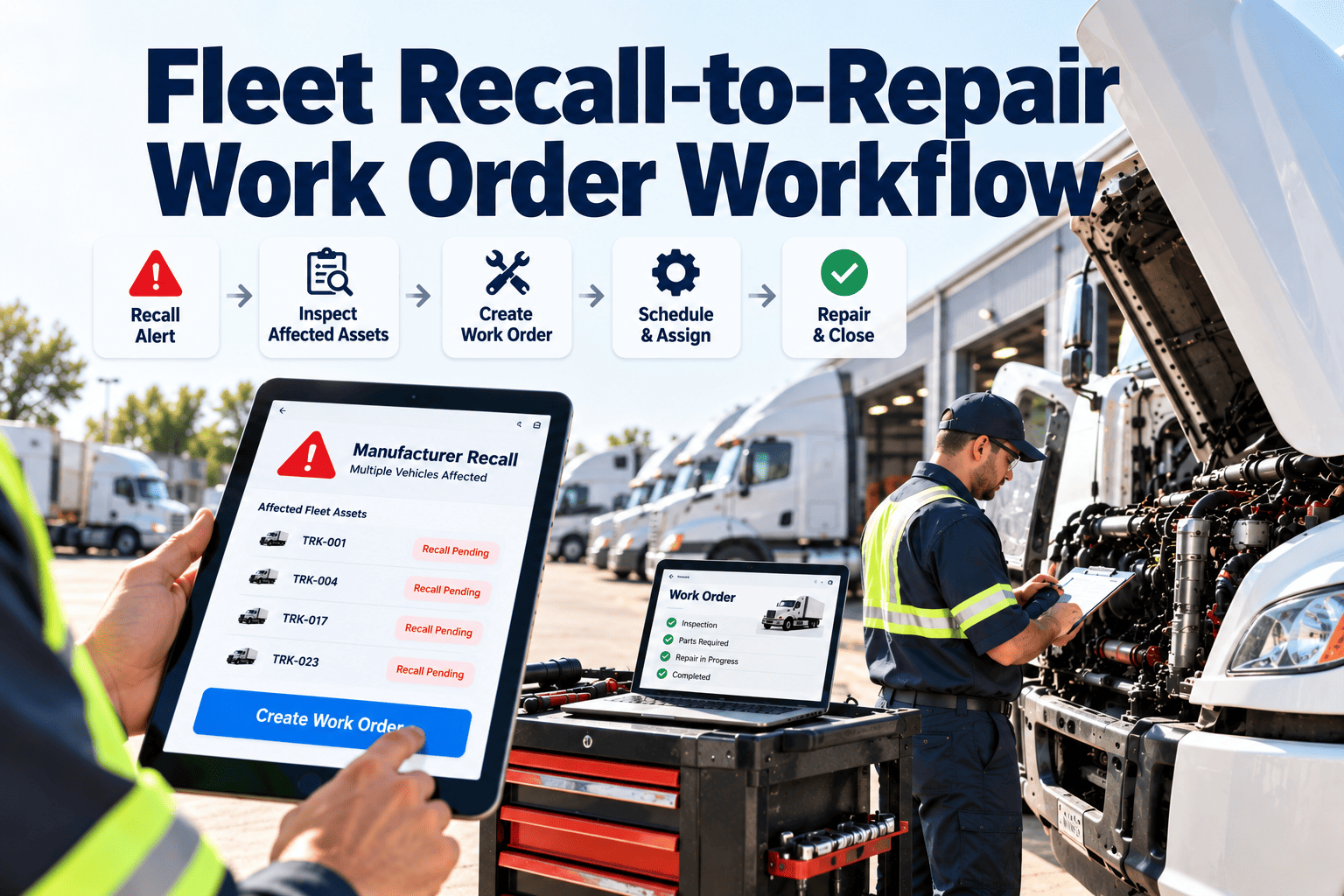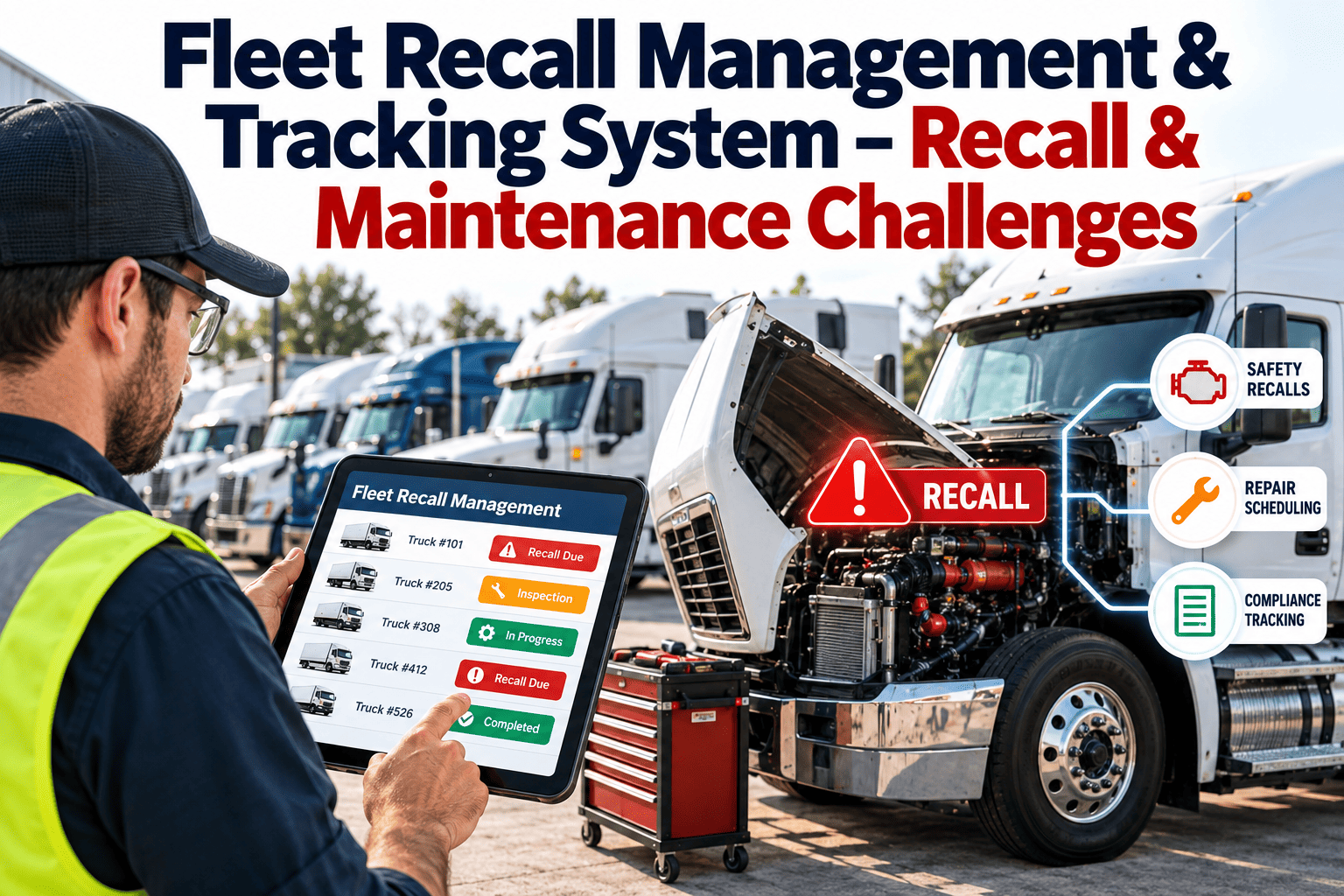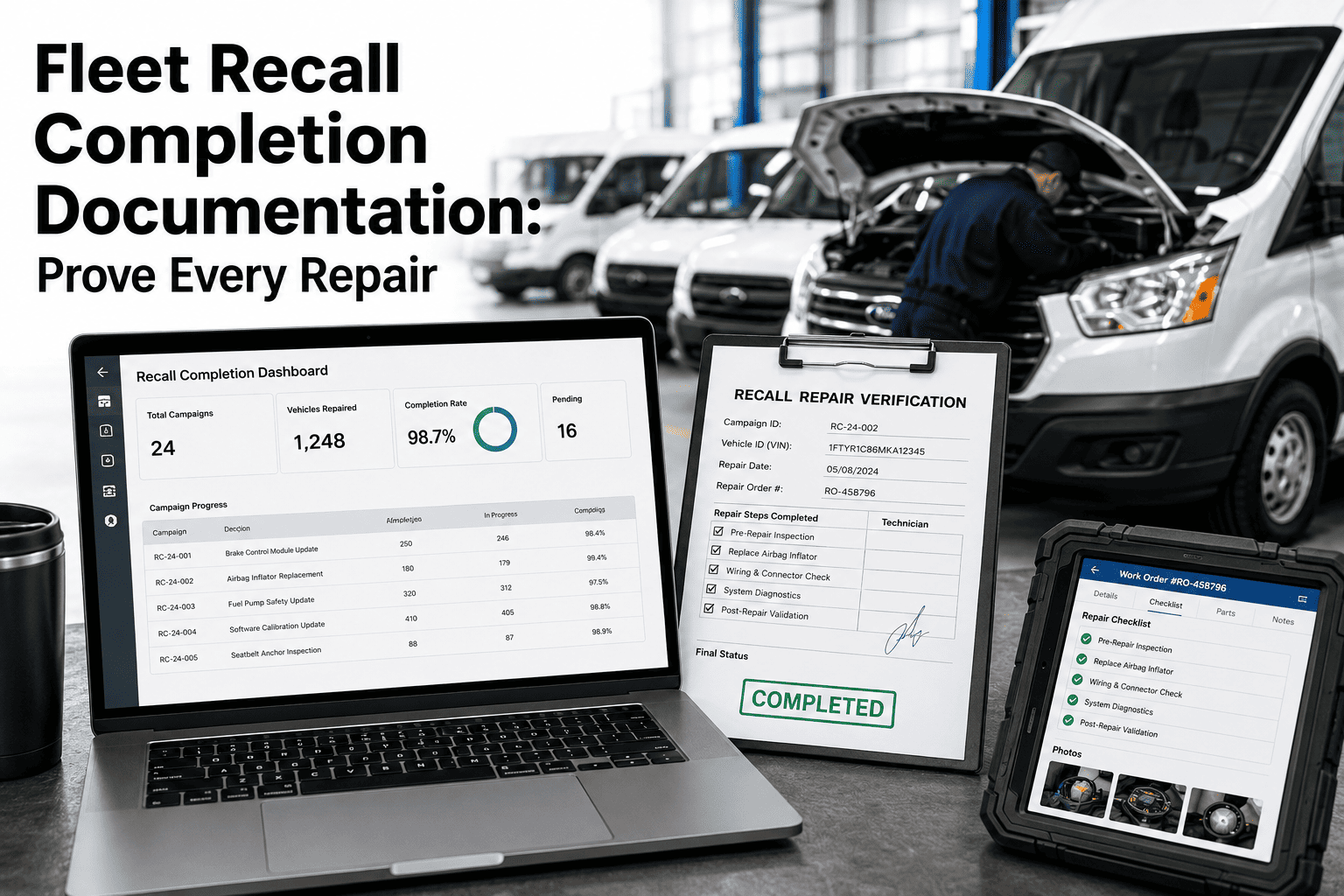
A recall repair that isn't documented did not happen, at least not as far as a DOT auditor, an insurance adjuster, or a plaintiff's attorney is concerned. Fleets fix the truck, close the ticket in their head, and move on — then six months later can't produce the one piece of paper that proves the recalled part was actually replaced on that specific VIN. Roughly half of recalled vehicles nationwide are still running around with the defect unresolved, and completed repairs without a paper trail sit in the same risk category as repairs that were never done at all. Here's what a defensible recall completion record actually requires, and how Oxmaint keeps that proof attached to the vehicle automatically.
Fleet Recall Completion Documentation: Prove Every Repair
A finished repair with no VIN-matched record is indistinguishable from an open recall during an audit. See what a complete completion file needs and how long to keep it.
"We Fixed It" Is Not the Same as "We Can Prove It"
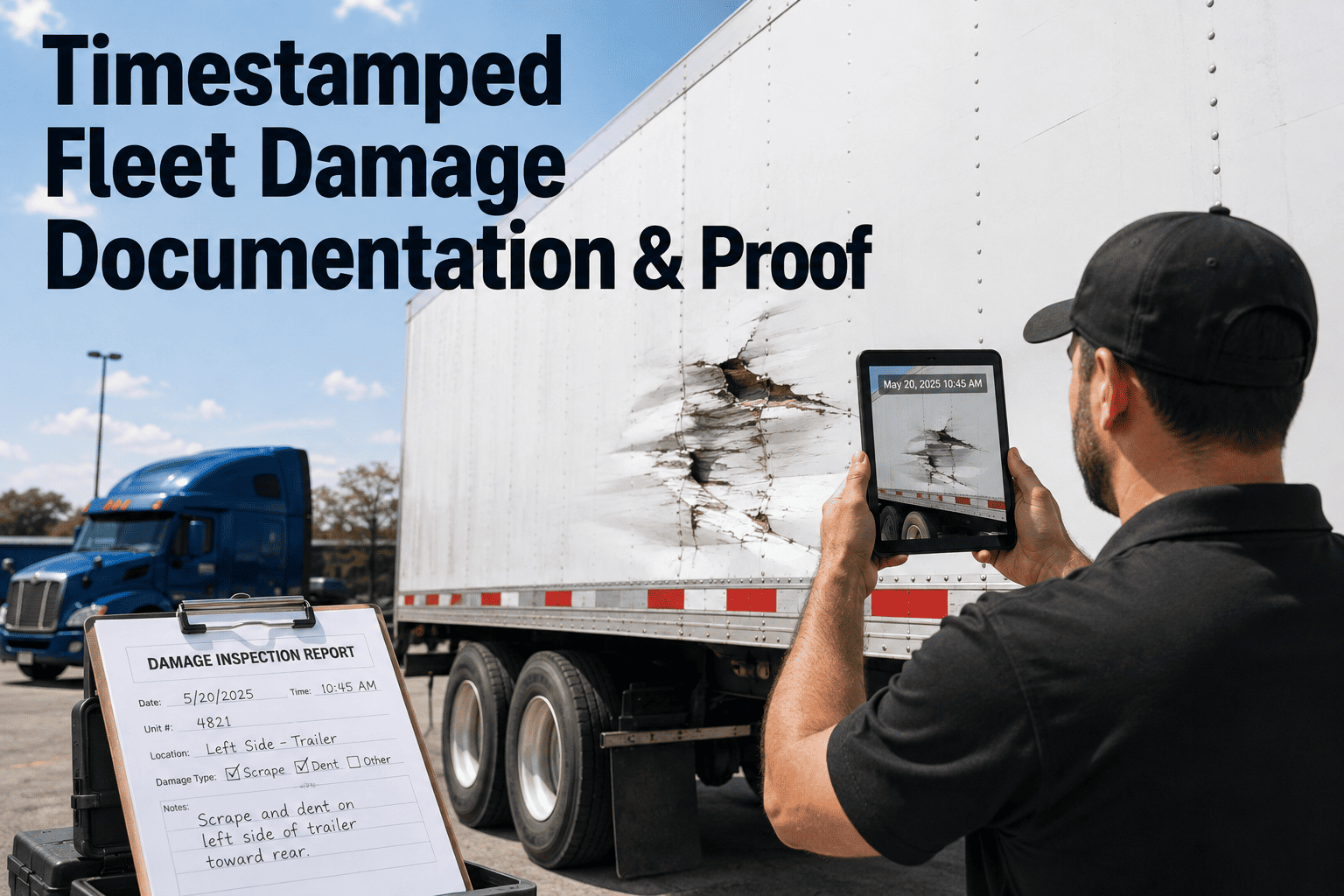
A technician swaps the recalled part, the driver takes the truck back out, and in most shops that's where the story ends. Nobody links the repair order back to the specific NHTSA campaign number. Nobody confirms the VIN on the part invoice matches the VIN on the recall notice. Six months later, during a routine compliance review or after an incident, the fleet is asked to produce proof that vehicle 1FUJA6CV12LM12345 had its steering component recall closed out — and what exists is a vague note in a shop management system that says "recall done."
Auditors don't take that on faith. Standard review methodology traces a chain: the original defect notice, the work order that addresses it, the parts used, and the date it closed — all tied to one VIN. Any broken link in that chain gets treated the same as if the repair never happened, because from a compliance standpoint, a record that can't be located is functionally identical to a record that was never created.
Five Documents That Make a Recall Repair Defensible
A completion record that would survive a DOT audit or a legal discovery request needs all five pieces below, tied together by the same VIN. Missing any one of them leaves the repair unprovable even if the work was actually done.
The specific recall ID the repair addresses, linking the work order to the exact safety defect it resolves.
The full 17-digit VIN on the repair order matching the VIN listed on the original recall notice, exactly.
The signed RO showing labor performed, technician name, and the date the vehicle was in the shop.
Confirmation that the replacement part matches the remedy component specified in the recall campaign.
The closing timestamp and mileage at repair, establishing exactly when the vehicle became compliant again.
Never Chase a Repair Order Again During an Audit
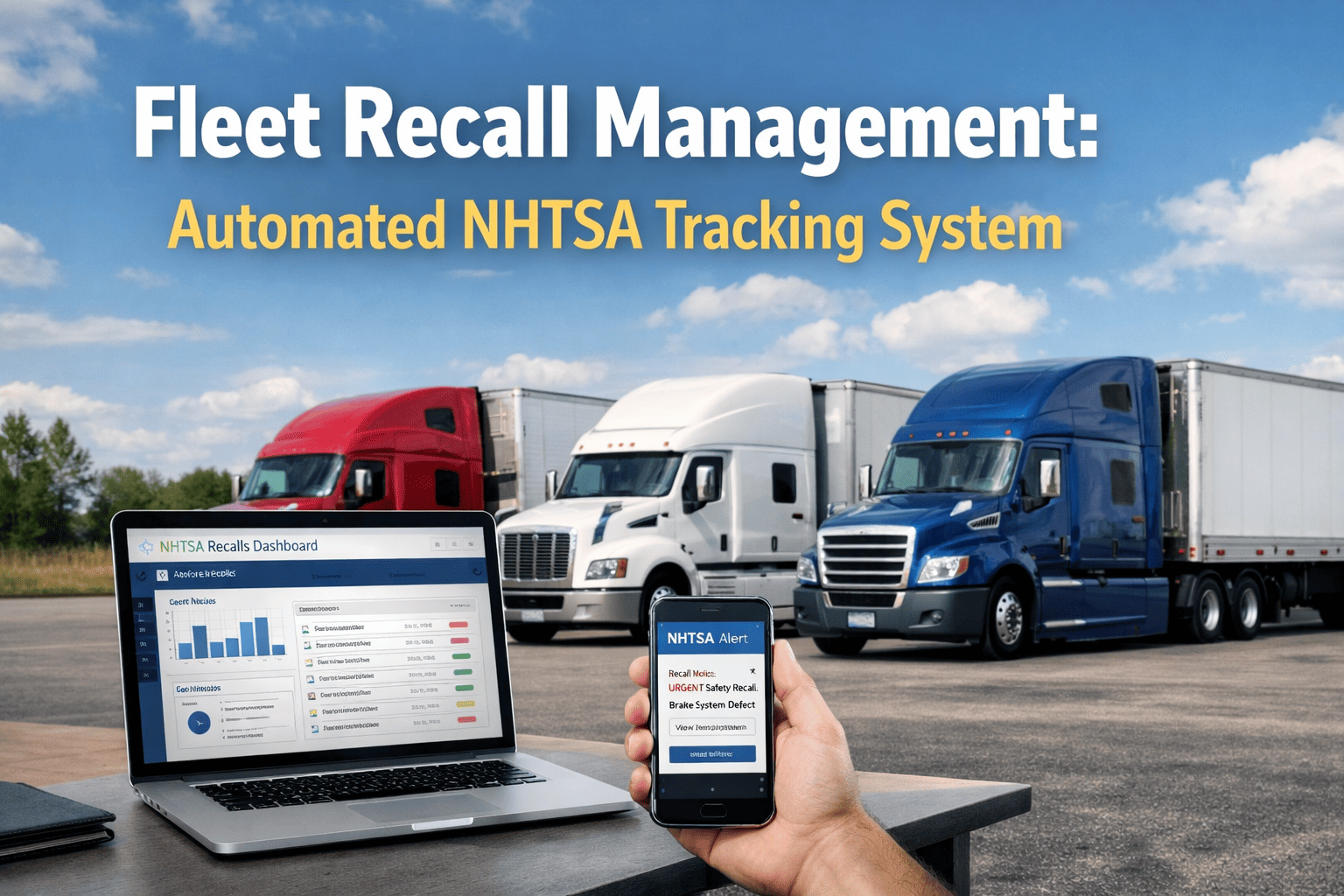
Oxmaint attaches the VIN, campaign number, RO, parts, and completion date to the vehicle record automatically the moment a recall closes — searchable in seconds, not scavenged from old emails.
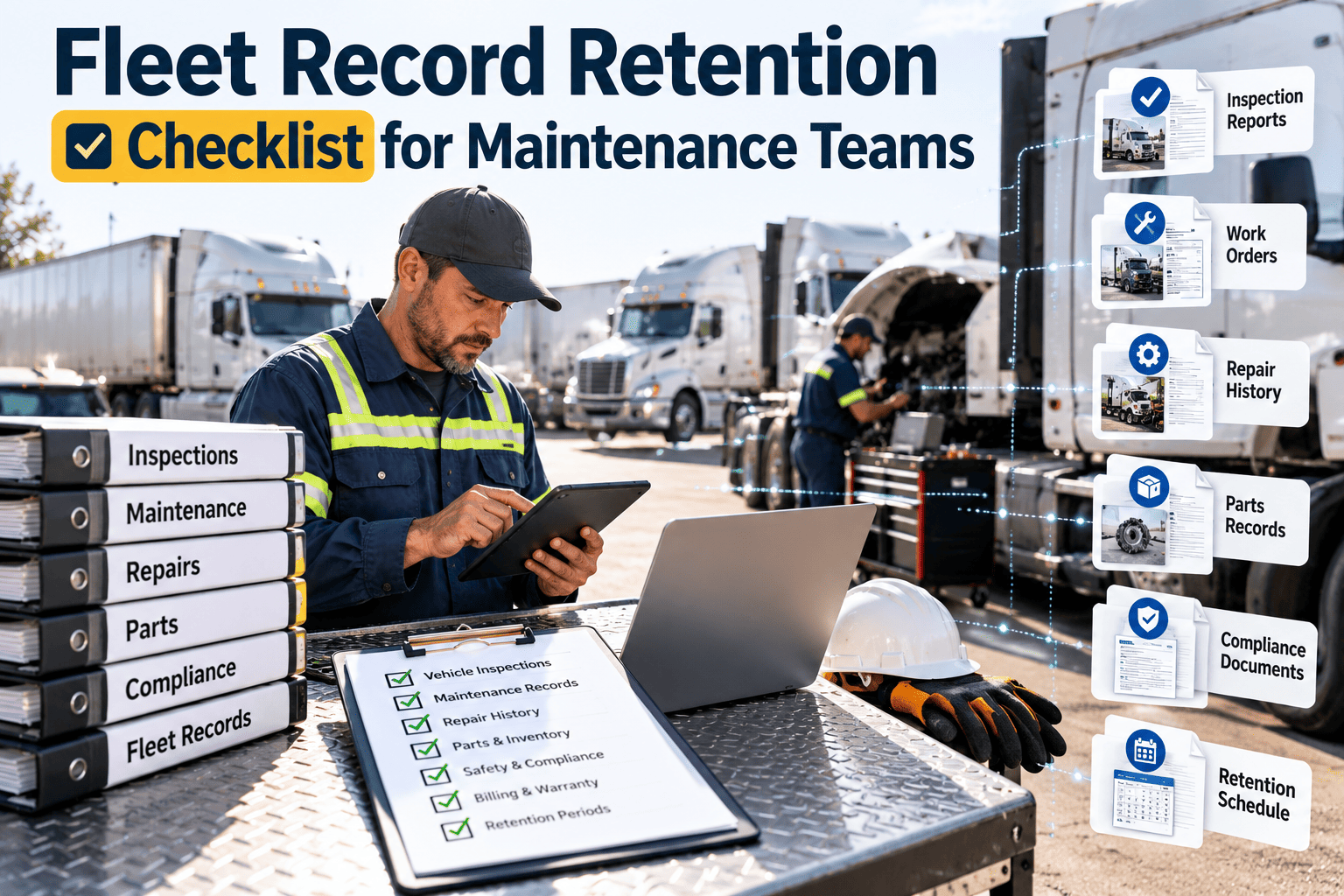
How Long to Keep Recall Repair Records
Federal minimums for general maintenance records are shorter than most fleets expect — but recall documentation carries outsized legal exposure, which is why the safe practice runs well past the regulatory floor.
| Record Type | Federal Minimum | Recommended Practice |
|---|---|---|
| DVIRs / Defect Reports | 3 months | 1 year |
| General Maintenance Records | In-service life + 6 months | Full vehicle service life |
| Annual Inspection Reports | 14 months | 3 years |
| Recall Completion Records | Not separately specified | 3 years minimum, litigation-safe practice |
| Accident Register Entries | 3 years | 3 years or per counsel guidance |
Recall records don't fall neatly into one FMCSA category, which is exactly why they're the ones fleets most often lose track of. A three-year minimum keeps a completed recall provable through the window where most insurance reviews, safety audits, and litigation discovery requests actually happen.
How an Auditor Actually Traces a Recall Repair
A single broken link — an RO that doesn't reference the VIN, a completion date with no matching part invoice — is enough to reclassify a completed repair as unresolved in the auditor's findings.
What an Undocumented Recall Actually Costs
Frequently Asked Questions
What's the single most common gap in recall completion records?
A repair order that doesn't reference the NHTSA campaign number or a mismatched VIN between the RO and the original recall notice, both of which break the audit trail an inspector needs.
Is there a federal rule specifically for recall record retention?
Recall completion proof doesn't fall under one dedicated FMCSA retention clock, which is why a 3-year minimum has become the practical standard fleets use for protection. Book a demo to see how retention is handled automatically.
Can a dealer repair order alone satisfy documentation requirements?
Only if it's tied back to the correct VIN and campaign number and the parts listed match the official remedy — an RO on its own, without that linkage, is not sufficient proof.
How quickly should a completion record be filed after repair?
Immediately. The longer a completed repair sits without its documentation attached, the more likely the paper trail gets lost across shops, emails, or shift changes.
Does this apply to leased or third-party maintained vehicles too?
Yes. The fleet operating the vehicle carries the compliance exposure regardless of who performed the repair, so completion proof needs to be collected and retained either way. Start a free trial to centralize records across owned and leased units.
Turn Every Closed Recall Into an Airtight Record
Oxmaint captures the VIN, campaign number, repair order, and completion date for every recall the moment it closes, keeping a searchable, audit-ready file behind every vehicle in the fleet.