Most fleet maintenance programs are built from manufacturer schedules and past breakdowns. That works until the schedule does not fit your duty cycle, or until the same failure keeps repeating despite a task that was meant to stop it. Reliability-centered maintenance asks a different question: what must this vehicle do, how can it fail, and what is worth doing about it. This guide shows how to build a fleet RCM program, and how a fleet maintenance CMMS carries it into daily work.
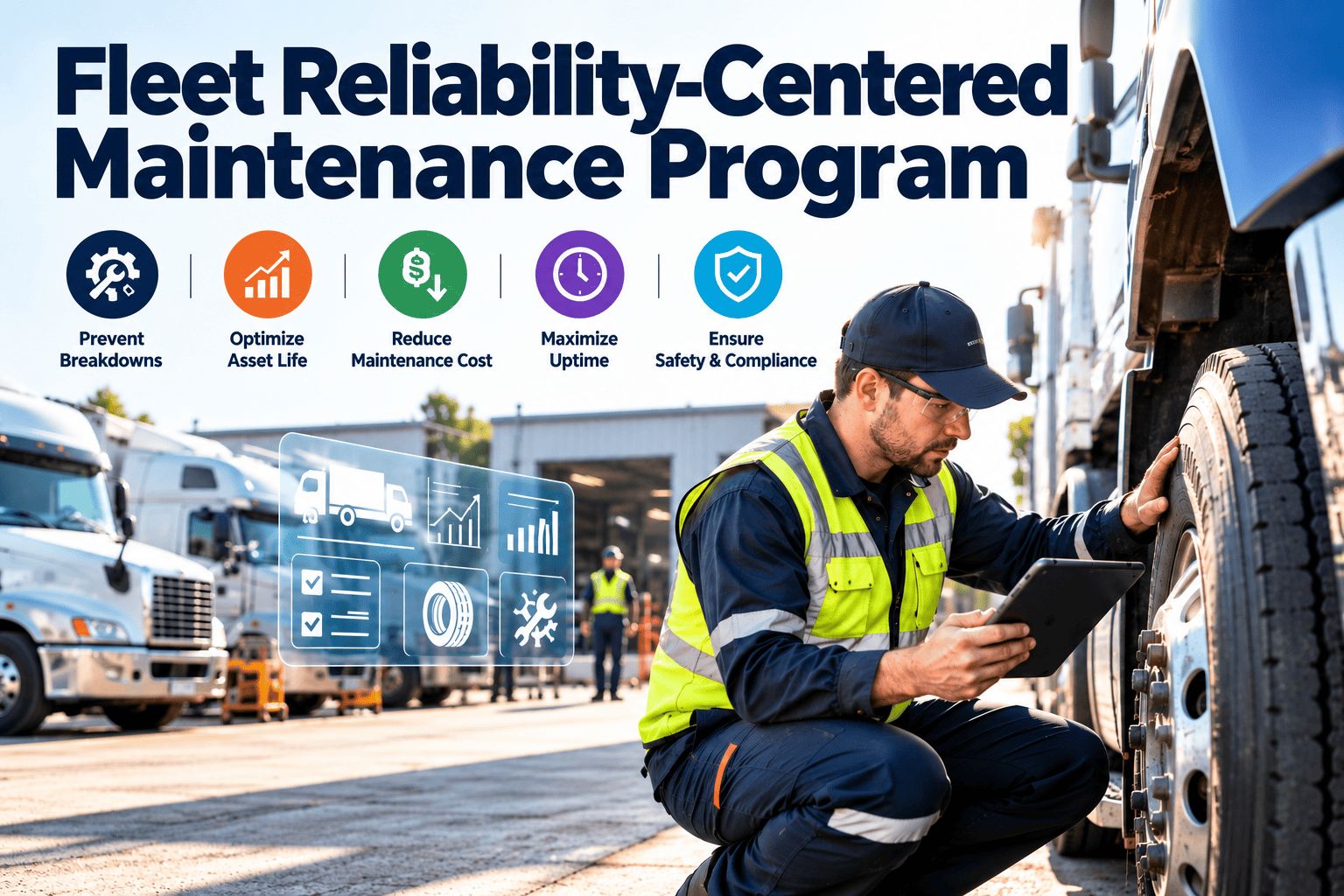
Fleet Reliability-Centered Maintenance Program
Focus effort on the failures that hurt safety, uptime and cost, and stop doing tasks that protect nothing. Oxmaint records the plan, the work and the results per vehicle.
Why Calendar-Based Fleet PM Falls Short
- Every unit gets the same service, regardless of duty
- Tasks continue long after anyone knows why they exist
- Some failures cannot be prevented by any scheduled task
- Hidden failures, such as warning systems, are never tested
- Breakdown data never changes the plan
- A clear link from each task to a failure mode
- A decision on whether a task is worth doing
- Different treatment for safety and non-safety failures
- Failure-finding tasks for hidden functions
- A way to review and refine over time
The Seven Questions of RCM
The SAE JA1011 standard describes the questions any RCM process must answer. Fleets can apply them without a heavy formal study.
Build a Plan Based on How Your Vehicles Actually Fail
Store tasks, failure history and results in one place so your fleet strategy keeps improving.
Sorting Failures by Consequence
Consequence decides how much effort a failure deserves. This is the step that stops teams from over-maintaining trivial items.
Choosing the Task
| Task type | When it fits | Fleet example |
|---|---|---|
| Condition-based | Failure gives measurable warning with time to act | Brake lining thickness, tread depth, oil analysis, coolant condition |
| Scheduled restoration | Clear wear-out age and the item can be restored | Rebuild of components with predictable life |
| Scheduled replacement | Wear-out with no useful warning | Timing belts, certain filters, hoses |
| Failure-finding | Hidden function that protects against a bigger failure | Test of backup alarms, emergency equipment, trailer lighting circuits |
| Run to failure | Low consequence, cheap, quick to fix | Interior bulbs, some trim, minor accessories |
| Redesign or change practice | Failure repeats and no task works | Part upgrade, route change, operator training |
Failure rates do not always rise with age. Many components fail randomly, which is why fixed replacement intervals can waste parts without improving reliability.
Illustrative Example: Air Brake System
This example shows how the questions turn into a plan. Use your own duty, data and manufacturer guidance for real work.
Starting an RCM Program in a Fleet
Systems Where Fleets See Early Returns
- Brakes and wheel ends: Safety consequence, strong inspection data.
- Tires: Visible wear, clear condition-based tasks.
- Cooling and aftertreatment: Common cause of derates and roadside events.
- Electrical and charging systems: Frequent source of no-start and warning-light faults.
- Suspension and steering: Wear affects safety, tires and ride.
- Hydraulics on vocational units: Leaks and contamination drive downtime.
Data Quality Decides RCM Quality
- Vehicle, meter reading and system affected
- Reported problem, found cause and remedy using a code list
- Whether the repair was planned, inspection-driven or a breakdown
- Parts used and labor time
- Downtime start and end
- Repeat of an earlier failure
Measures That Show Reliability Improving
How Oxmaint Supports Fleet RCM
- Asset management: Group units by class and duty, with full history.
- Preventive and condition-based tasks: Schedule by mileage, hours, time or inspection findings.
- Mobile inspections: Capture measured readings that feed condition-based decisions.
- Work orders: Record cause and remedy to support failure analysis.
- Inventory: Link critical spares to the failure modes that need them.
- Reporting: Review repeat failures, PM effectiveness and downtime.
Frequently Asked Questions
Move Your Fleet from Scheduled Habits to Reliability Decisions
Use failure history, inspections and work orders in one system to keep the right tasks and drop the rest.