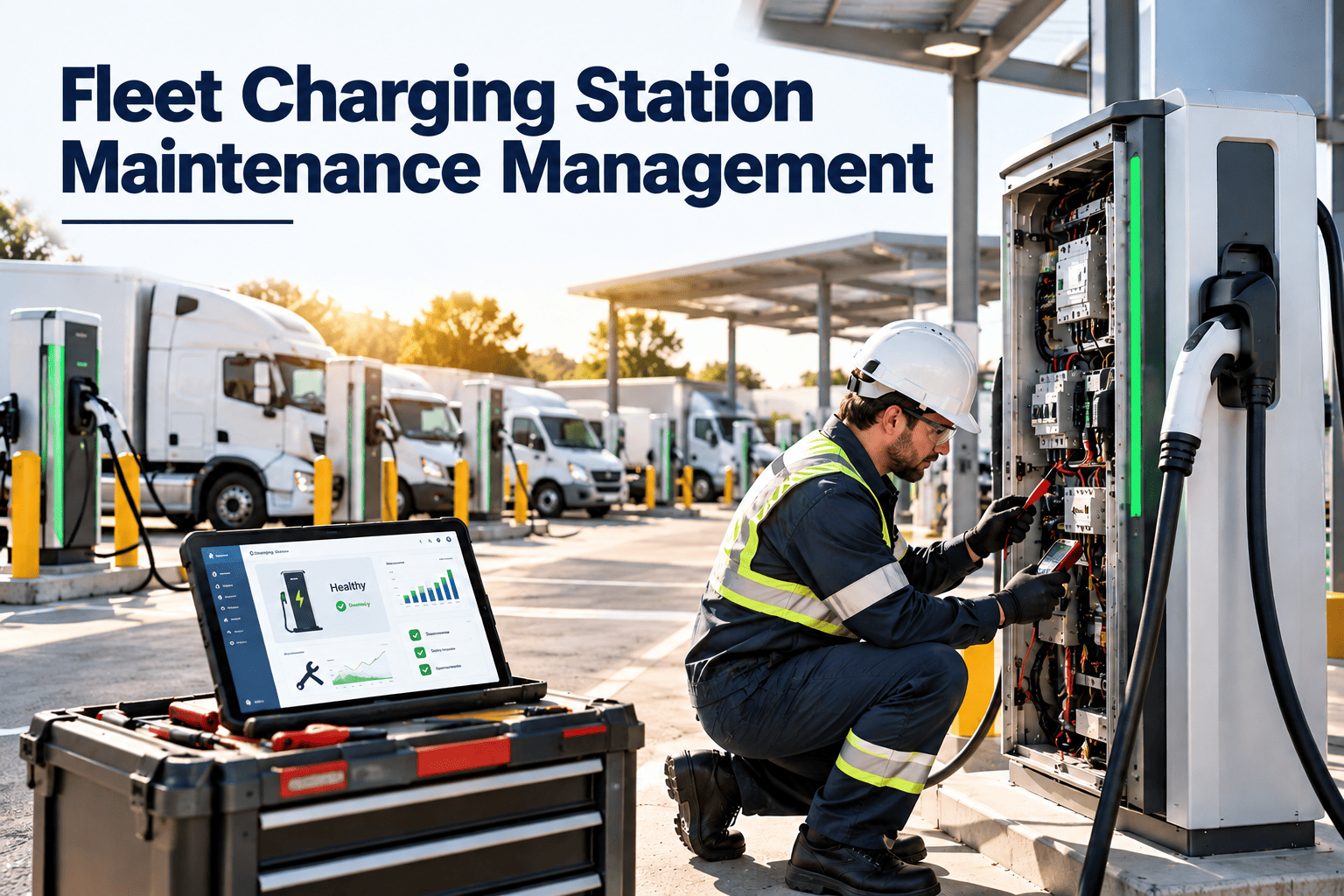
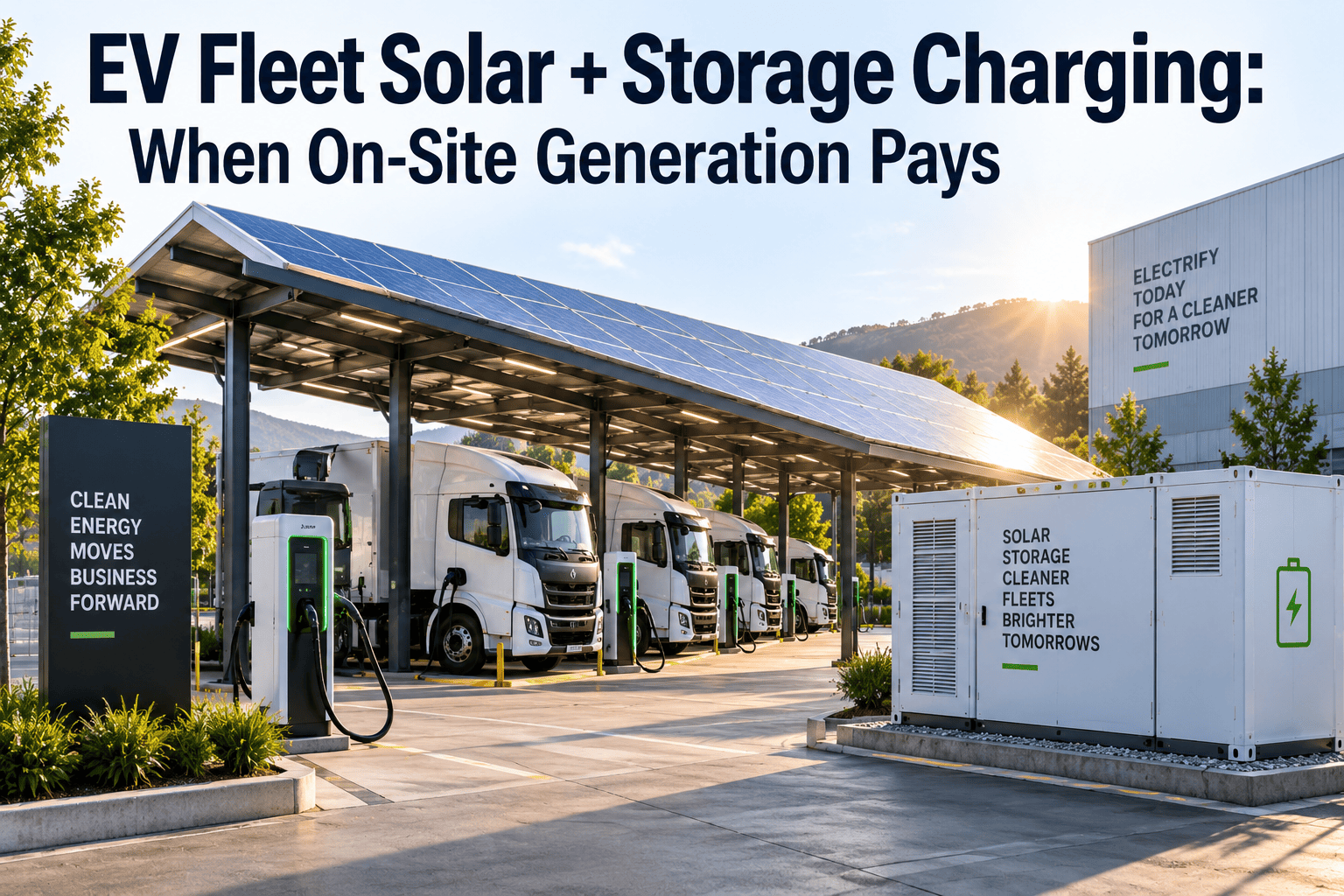
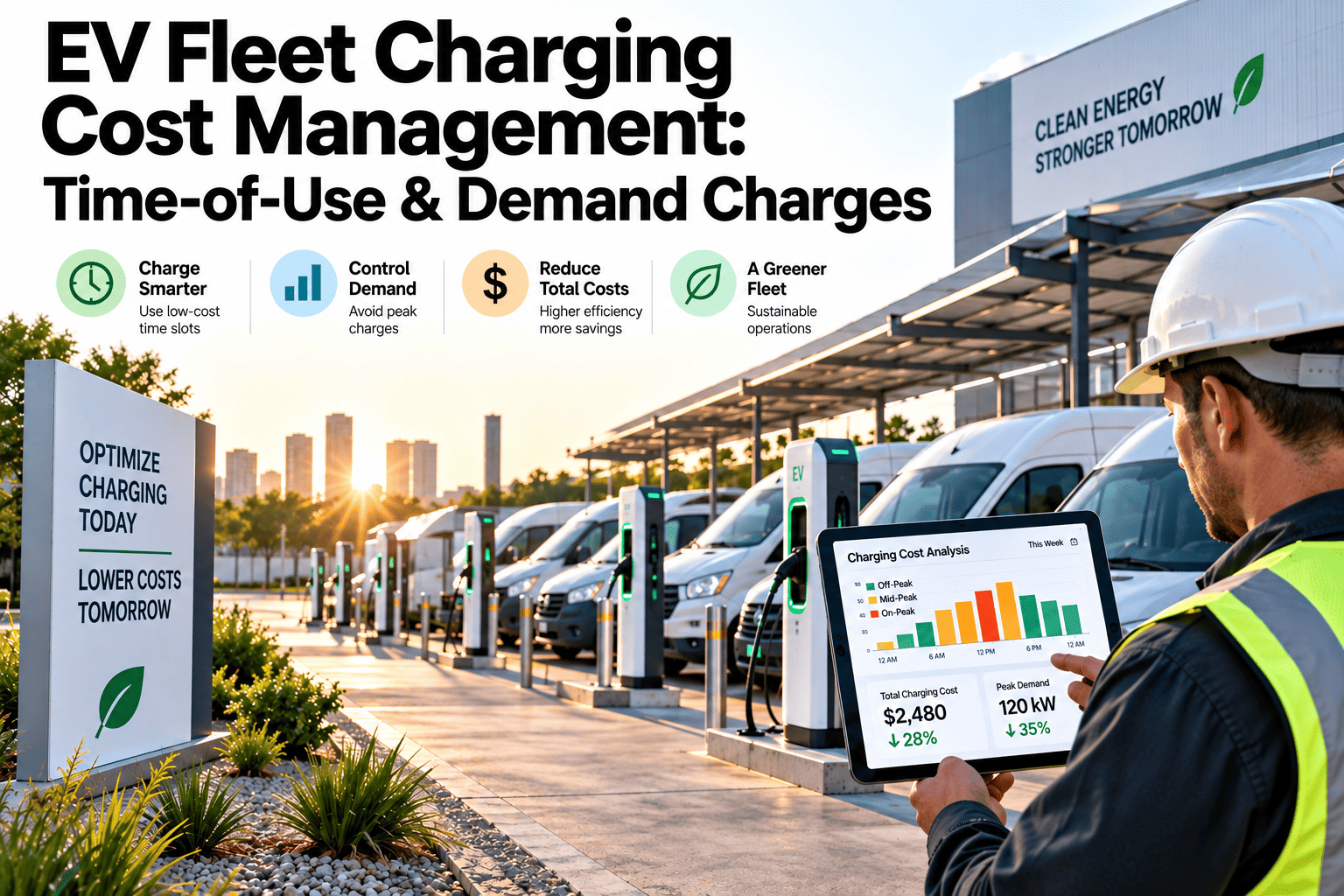
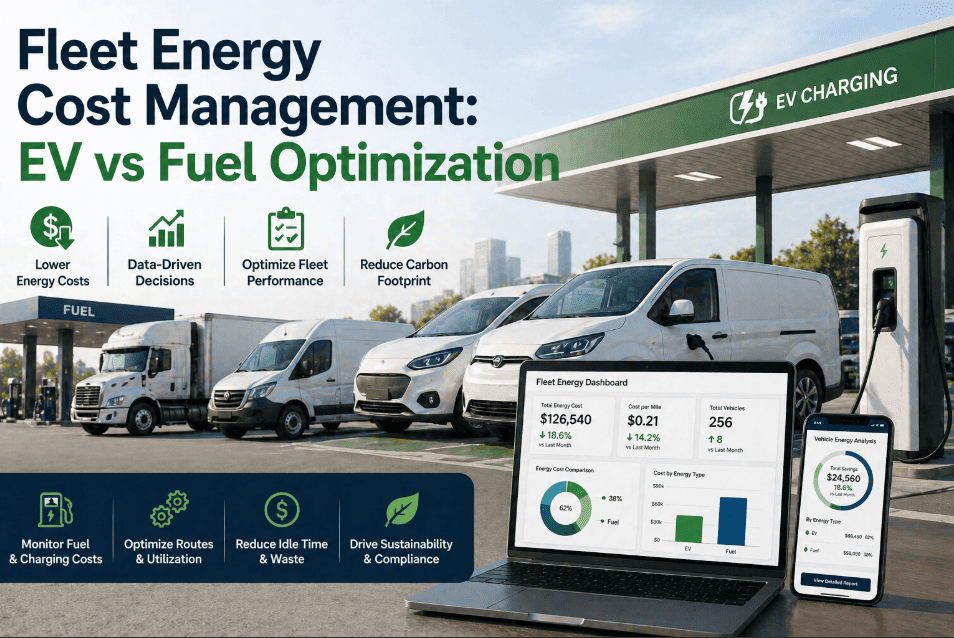
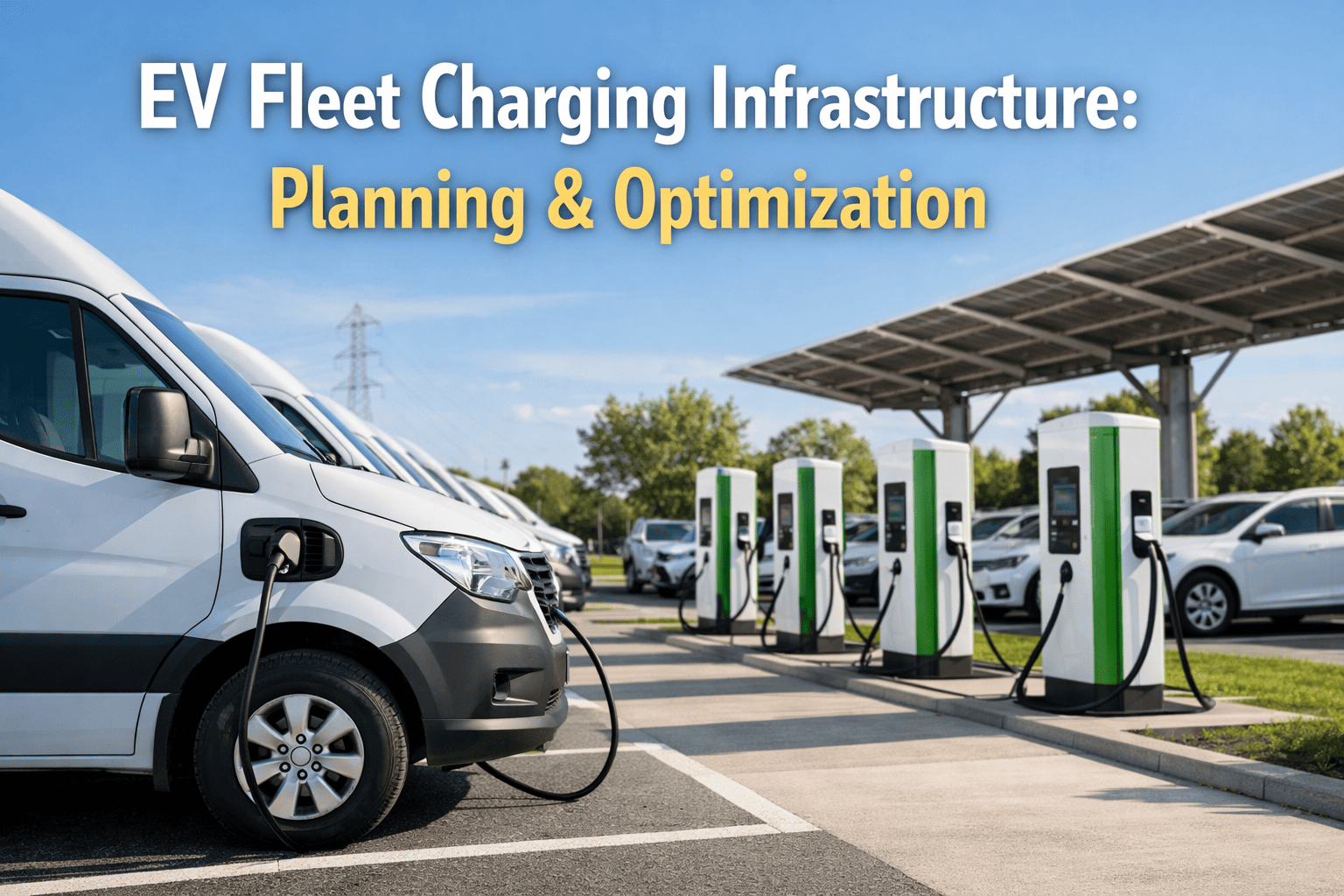
A 50-vehicle EV fleet depot charging overnight draws 250–500 kW of continuous load. At commercial electricity rates of $0.10–$0.15/kWh, that's $300,000+ in annual energy cost — before demand charges. Utility demand charges alone can add 20–40% to that bill. Meanwhile, every square foot of depot rooftop, parking canopy, and open lot space is exposed to solar radiation that goes completely uncaptured. The math isn't complicated: a well-designed solar installation at a fleet depot can offset 40–70% of annual charging energy, reduce grid dependency, and eliminate the demand charge spikes that make EV fleet economics unpredictable. OxMaint manages the maintenance of the solar infrastructure, battery storage systems, and EV charging equipment that makes grid-independent fleet charging a reality.
Solar-Powered Fleet Depot: Renewable Energy Charging Guide
Grid electricity is your fleet depot's largest operating cost after the vehicles themselves. Solar panels on rooftops and parking canopies, paired with battery storage, can offset 40–70% of charging energy — while eliminating demand charge volatility and building energy independence.
40–70%
Charging energy offset from solar
5–7 yr
Typical solar installation ROI
$100K
IRA Section 30C credit per charger
25+ yr
Solar panel productive lifespan
The Solar Fleet Depot Energy Stack
A solar-powered fleet depot isn't a single system — it's four interconnected systems that require coordinated maintenance. When any layer degrades undetected, the entire energy economics shift. OxMaint manages all four as a unified asset hierarchy.
Layer 1
Solar Panel Array
Rooftop and parking canopy panels generate DC power during daylight hours. Output degrades 0.5–0.8% per year without cleaning and inspection. Inverter failures can take sections offline without detection.
CMMS Maintenance Tasks
Quarterly panel cleaning schedule
Annual inverter inspection and testing
Wiring and connection point inspection
Output degradation monitoring per string
Layer 2
Battery Energy Storage System (BESS)
Stores excess solar energy generated during peak sun hours for overnight fleet charging. Battery storage at $300–$500/kWh enables time-shifting solar energy to match fleet charging demand curves.
CMMS Maintenance Tasks
Battery SOH monitoring and degradation tracking
Thermal management system inspection
BMS firmware updates and calibration
Safety system and fire suppression verification
Layer 3
EV Charging Infrastructure
Level 2 depot chargers ($2K–$8K per unit) handle overnight charging. DC fast chargers ($30K–$150K+) provide rapid turnaround. Both require regular maintenance and uptime monitoring.
CMMS Maintenance Tasks
Monthly charger visual and functional inspection
Cable and connector wear assessment
Charger uptime tracking per unit
Firmware and network connectivity checks
Layer 4
Grid Integration and Demand Management
Smart load balancing between solar, battery, and grid ensures fleet charges at lowest cost. Demand charge management via staggered charging can reduce electricity bills by 50%+ compared to unmanaged charging.
CMMS Maintenance Tasks
Transformer and panel capacity verification
Smart charging controller PM schedule
Utility meter accuracy verification
Peak demand monitoring and alert configuration
Renewable Fleet Depot CMMS
Solar Panels. Battery Storage. EV Chargers. One Maintenance Platform.
OxMaint manages the entire solar fleet depot energy stack — panels, batteries, chargers, and grid integration — with automated PM schedules, degradation monitoring, and uptime tracking across every asset.
Frequently Asked Questions
How much solar capacity does a fleet depot need?+
Solar capacity depends on fleet size, daily charging demand, and available installation area. A rough calculation: a 50-vehicle fleet charging 50 kWh per vehicle per night needs 2,500 kWh daily. A solar array producing this in a location with 5 peak sun hours requires approximately 500 kW of installed capacity — about 25,000 sqft of panel area. Most depot rooftops and parking canopies can accommodate this for medium-sized fleets. OxMaint helps you track actual solar production versus fleet consumption to right-size your installation over time.
What incentives are available for solar fleet depot installations?+
The federal Investment Tax Credit (ITC) provides a 30% credit on solar installation costs. The IRA Section 30C credit covers up to $100,000 per EV charging station for qualifying commercial installations. Many states offer additional rebates, net metering credits, and renewable energy certificates (RECs). Some utilities offer demand response incentives for fleets that can shift charging load during grid stress periods. Combined, these incentives can reduce total solar+storage+charging infrastructure cost by 40–60%.
How does CMMS prevent solar panel degradation?+
Solar panels degrade 0.5–0.8% per year under normal conditions — but dirty panels, shading from growing vegetation, failed inverters, and loose connections accelerate losses significantly. OxMaint schedules quarterly cleaning cycles, annual inverter inspections, and continuous output monitoring per string. When output from a panel string drops below baseline, a corrective work order is automatically generated for investigation. This proactive approach keeps panels producing at rated capacity for their full 25+ year lifespan.
Can OxMaint manage battery storage system maintenance?+
Yes — battery energy storage systems (BESS) are registered as assets in OxMaint with their own PM schedules. This includes thermal management system inspection, battery management system (BMS) firmware updates, capacity testing, fire suppression system verification, and SOH degradation tracking. Since BESS units at fleet depots represent $150,000–$500,000+ investments, maintaining them proactively is critical to achieving the projected ROI from your solar depot investment.
OxMaint · Solar Fleet Depot Management
Generate Your Own Fleet Fuel. Maintain Every Asset That Makes It Happen.
A solar-powered fleet depot is a maintenance operation — panels need cleaning, inverters need inspection, batteries need SOH monitoring, chargers need uptime tracking. OxMaint manages the entire energy stack so your fleet charges reliably, affordably, and independently.