When a diesel truck is down, the shop knows the process. When a charger is down, the vehicle sits idle with no fault in the vehicle at all. Fleet charging stations are electrical equipment that works outdoors, takes daily abuse from cables and connectors, and depends on software and network links. Treating them as managed assets, with inspections, preventive tasks and repair history, keeps routes on schedule. A fleet maintenance software platform gives chargers the same discipline as vehicles.
EV and Alternative Fuel Fleets | Charging Infrastructure
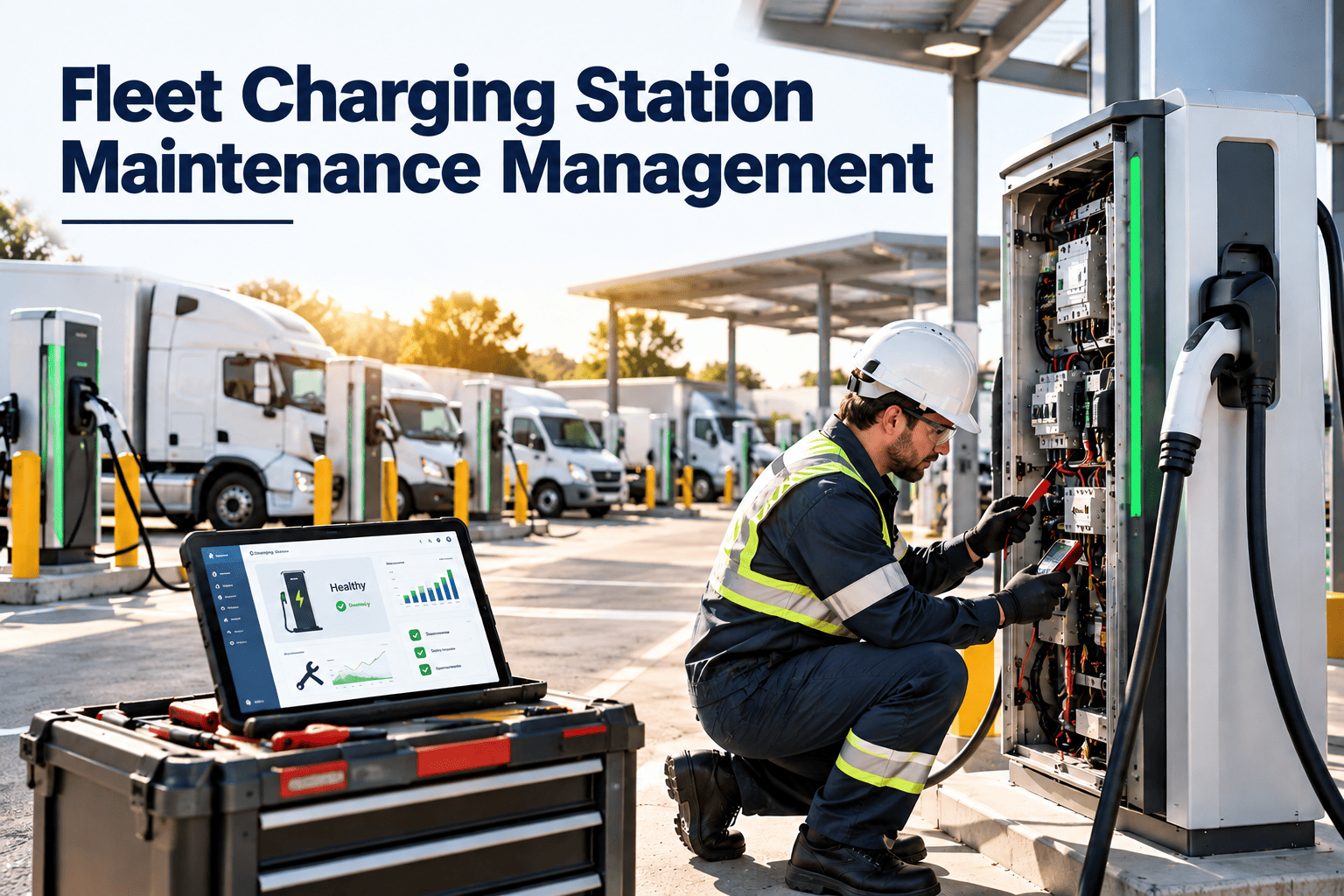
Fleet Charging Station Maintenance Management
Inspect, maintain and track every charger, connector and cable so vehicles are charged and ready when dispatch needs them.
Grid and Panel
Charger Unit
Cable and Connector
Vehicle Port
Any weak link stops the charge. Maintain the whole chain.
Where Charging Stations Actually Fail
Failure Mode by Likely Frequency and Impact
Cables and Connectors
Worn insulation, damaged pins, dropped or driven-over plugs
Network and Software
Lost connectivity, authentication faults, firmware mismatch
Cooling and Filters
Blocked intakes, fan faults, liquid cooling issues on DC units
Enclosure and Weather
Water ingress, corrosion, damaged glands and seals
Electrical Connections
Loose terminations, heat at lugs, protective device trips
Site Hazards
Bollards, signage, lighting, trip hazards from cables
Electrical work should be done by qualified personnel under your lockout and safety procedures, and in line with local electrical codes and manufacturer instructions.
Reactive Charger Care Versus Managed Charger Care
Reactive
- Driver reports a dead charger
- Repair order raised by phone
- No record of earlier faults
- Warranty dates unknown
- Vehicles parked uncharged
Managed
- Routine inspections catch wear
- Faults logged against each charger
- Repeat failures visible by port or site
- Warranty and service contracts tracked
- Spare connectors on hand
A Preventive Maintenance Rhythm
| Frequency | Task | Owner |
|---|---|---|
| Daily or per use | Driver check of cable, plug, display and holster; report damage | Driver |
| Weekly | Visual walk of all units, cable condition, signage, site hazards | Shop or yard team |
| Monthly | Clean filters and vents, test emergency stop, review fault log | Technician |
| Quarterly | Check enclosure seals, mounting, glands and connector wear | Technician |
| Annual | Electrical inspection, thermal scan of connections, torque checks, firmware review | Qualified electrician or vendor |
Treat this as a starting framework. Adjust intervals to manufacturer manuals, environment and usage.
From Fault Code to Fixed Charger
1
Fault raised
Driver report or network alert creates a work order against the charger.
2
Triage
Safety check first; then separate cable, power, network and vehicle causes.
3
Repair
Replace connector, reset, update or escalate to vendor under warranty.
4
Test
Complete a charge session to confirm the fix.
5
Record
Cause, parts and downtime saved to the charger history.
Give Every Charger a Maintenance Record
Register chargers, schedule inspections and keep every fault, repair and warranty date in one place.
Uptime and Compliance Considerations
Uptime
- Public chargers funded under US NEVI rules face an uptime requirement; check current rules if that applies to you
- Fleet depots should set their own targets per charger and per shift window
- Downtime should be measured and categorised
Safety and Records
- Electrical installations follow local code and equipment listings
- Keep inspection and repair evidence per charger
- Track contractor visits and certifications
Depot Realities Maintenance Teams Face
Shared power capacityLoad management can throttle charging. Fault logs should note whether slow charging was a fault or a setting.
Mixed hardwareDifferent chargers and connector standards mean different parts and procedures.
Vendor dependenceService level agreements and response times need tracking.
Cable abuseCables dropped, run over or left coiled wear faster, so spare cables are worth stocking.
Vehicle versus charger faultsCheck whether the charger fails with other vehicles before blaming either side.
What Oxmaint Adds to Charger Maintenance
Asset Management
Chargers, ports, cables and panels registered with serials, location and warranty.
Preventive Maintenance
Scheduled inspections, filter cleaning and annual electrical checks.
Work Orders
Fault tracking from report to verified fix, with vendor escalation notes.
Mobile Inspections
Photos and checklists captured at the charger.
Inventory
Connectors, cables, filters and fuses held as spares.
Reporting
Downtime, repeat faults and overdue tasks by site.
Charger KPIs
Availability
Time chargers are usable
Mean Time to Repair
Report to fix
Repeat Faults
Same fault by unit
PM Compliance
Tasks done on time
Frequently Asked Questions
What maintenance do EV chargers need?
Regular visual checks, cleaning, connector and cable inspection, firmware review and periodic electrical testing.
Who should service charging equipment?
Qualified electricians or authorised vendors for internal electrical work; trained staff for visual checks.
Can I track chargers like vehicles?
Yes, Oxmaint registers chargers as assets with schedules and history.
How do I reduce charger downtime?
Inspect often, stock key spares, log faults by cause and track repeat failures.
Can I see a charger workflow?
Yes, book a demo to walk through a charger inspection and repair flow.
Keep Your Electric Fleet Charged and Ready
Manage chargers with the same inspections, work orders and history you use for vehicles.