Commercial fleet accidents cost U.S. businesses more than $75 billion annually — and that number is climbing. Americans drove a record 3.3 trillion miles on U.S. roads in 2024, and with traffic volumes rising, persistent aggressive driving, and a documented surge in distracted behaviour behind the wheel, fleet managers are under more pressure than ever to prove their safety programs actually work. The hard truth: only 5% of fleets achieve near-perfect maintenance compliance according to the 2025 State of Fleet Management survey — leaving 95% exposed to preventable accidents, regulatory penalties, and insurance cost spirals they cannot defend on paper. Fleet safety management in 2026 is not a compliance checkbox. It is a documented, data-driven operational system that prevents incidents before they occur, protects drivers, and gives fleet managers the audit trail that insurance carriers and DOT regulators require. Oxmaint's CMMS connects vehicle inspections, preventive maintenance scheduling, work order history, and driver safety records in one platform — so fleet managers stop reacting to accidents and start preventing them. Sign up free or book a demo to see how Oxmaint builds your fleet safety foundation.
Fleet Safety Management Built Into Your Maintenance Platform
Oxmaint connects inspections, preventive maintenance, work orders, and compliance documentation — turning fleet safety from a reactive cost into a measurable operational advantage.
$75B+
Annual cost of fleet accidents to U.S. businesses — crashes, liability, downtime, and insurance
95%
Of fleets fall below near-perfect maintenance compliance — creating preventable accident exposure
41%
Reduction in rear-end collisions with AEB systems — FMCSA 2023 documented data
25%
Accident rate reduction reported by fleets using telematics — ATA 2024 industry data
Why Fleet Safety Fails in 2026
The 4 Root Causes of Preventable Fleet Accidents — and Why Most Programs Miss Them
The majority of fleet accidents share a common origin: safety systems that exist on paper but fail at the operational level. These four failure modes account for the vast majority of preventable fleet incidents documented in FMCSA enforcement and NHTSA crash data.
01
Reactive Maintenance — Vehicles Operated Past Safe Condition
The majority of mechanical failure-related fleet accidents involve vehicles that had documented defects days or weeks before the incident — defects that were either not recorded at inspection or not escalated to maintenance before dispatch. Brake failure, tire blowouts, and steering defects that cause accidents are almost never sudden: they develop progressively through deferred maintenance that a connected CMMS would have triggered into a work order before dispatch.
Emergency repairs cost 4.8× more than planned maintenance — and that gap does not include accident liability
02
Paper Inspections That Do Not Surface Defects Before Dispatch
Paper inspection forms are the single most common compliance failure in commercial fleet safety. Drivers complete them in under 90 seconds without physical inspection, tick every box regardless of vehicle condition, and the form reaches the fleet manager days later — if at all. According to the 2025 State of Fleet Management survey, incomplete inspection documentation is the leading gap in maintenance compliance for fleets operating below the 75% threshold. A defect that is not recorded before dispatch cannot be repaired before the vehicle causes an incident.
Paper inspections create communication gaps — fleet managers learn of defects days or weeks after dispatch
03
Driver Behaviour Without Data — Coaching Without Evidence
Annual driver safety training has a documented problem: behaviour reverts to pre-training patterns within 60–90 days without continuous reinforcement. The 2025 Road Safety Report from Lytx — analysing over 300 billion miles of commercial driving data — found that traffic volumes at record highs, persistent aggressive driving, and distracted behaviour have made reactive post-incident coaching increasingly ineffective. Fleets that deploy telematics and move to data-driven micro-coaching sessions address specific behaviours with evidence — and sustain the improvement.
Annual training alone reverts within 90 days — data-driven micro-coaching is the 2026 standard
04
No Documentation = No Defence at Audit or in Court
When a fleet vehicle is involved in a serious incident, the investigation immediately shifts to documentation: pre-trip inspection records, maintenance history, driver qualification files, hours of service logs. Fleets operating on paper cannot produce complete, timestamped records that satisfy FMCSA audit requirements or litigation discovery requests. Without documentation, the legal presumption shifts to negligence — and the fleet operator bears the full liability burden for an accident that better records might have characterised very differently.
Without timestamped records, at-fault determination defaults against the fleet — documentation is your legal defence
8 Core Best Practices
Fleet Safety Management Best Practices That Actually Reduce Accident Rates in 2026
These eight practices are drawn from FMCSA enforcement data, 2025–2026 fleet safety research, and documented outcomes from fleets that have moved from reactive incident management to proactive safety programs. Each one has a measurable impact on accident frequency, insurance costs, or compliance standing.
Practice 01
Digital Pre-Trip and Post-Trip Inspections — Enforced, Not Optional
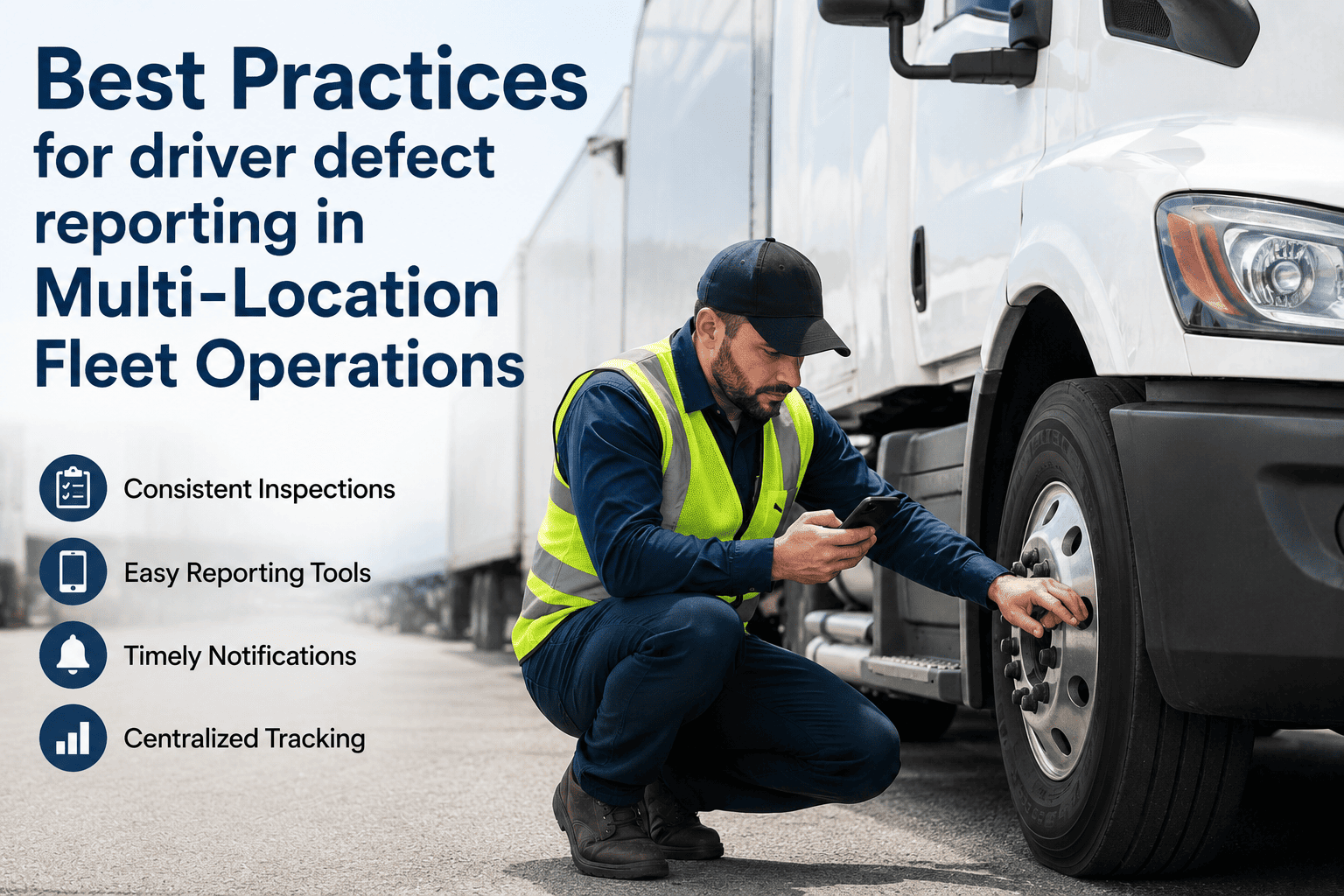
Digital inspections replace paper with mobile checklists that require active confirmation per item, capture photos for failed items, timestamp each response, and instantly surface defects to the fleet manager. Oxmaint's digital inspection platform flags failed items immediately — maintenance is notified before the vehicle returns to service. Vehicles with critical defects are blocked from dispatch until the verified repair work order is completed.
Impact: Defects surface before dispatch, not during an incident investigation
Practice 02
Preventive Maintenance Scheduling Tied to Mileage, Hours, and Condition
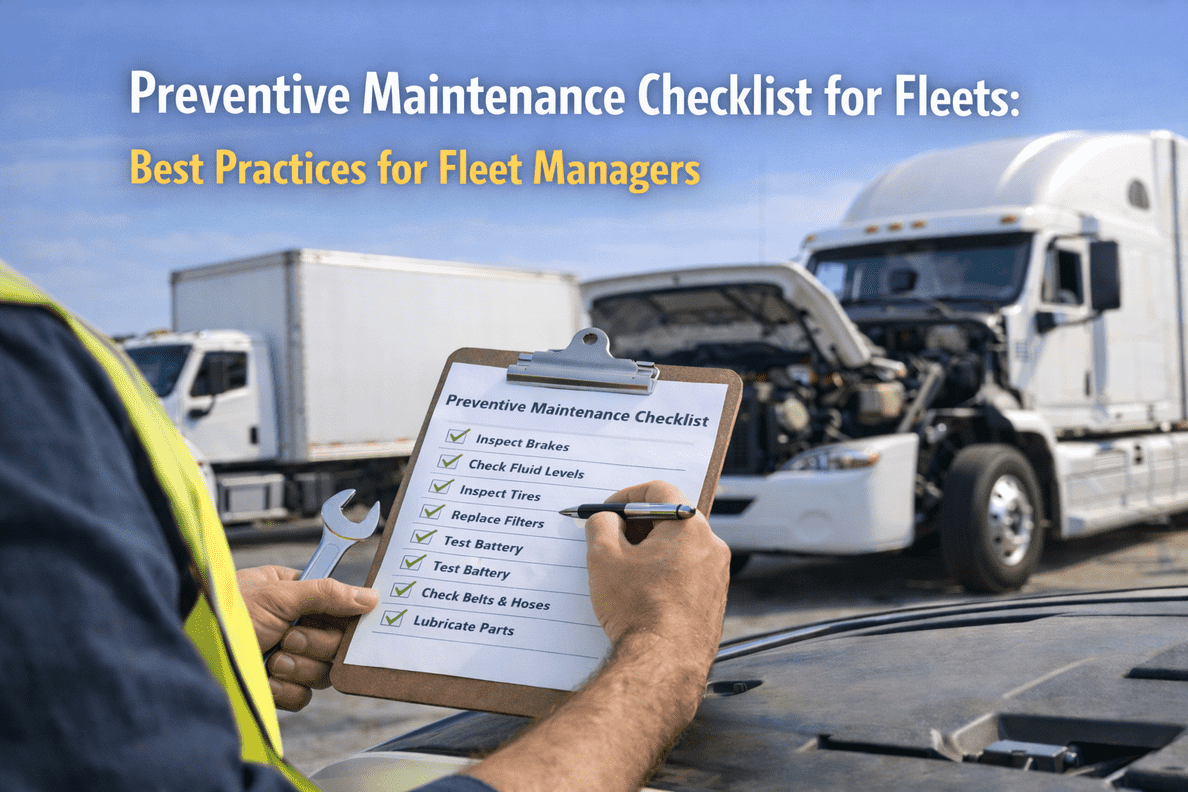
Most fleet accidents with mechanical causes involve vehicles where scheduled maintenance was due but deferred. Oxmaint's PM scheduling engine triggers work orders automatically based on mileage, engine hours, or calendar intervals — with escalation alerts when services are approaching or overdue. PM compliance rates are tracked at the vehicle and fleet level, with dashboards that show approaching services before they become overdue safety risks.
Impact: Mechanical failure risk eliminated before it reaches the road
Practice 03
Telematics Integration — Behaviour Data Connected to Maintenance Records
Companies using telematics have reported a 25% reduction in accident rates (ATA, 2024). Oxmaint integrates with GPS and telematics platforms to connect harsh braking events to brake inspection triggers, correlate aggressive acceleration data with engine wear rates, and build per-driver behaviour histories that inform coaching and route assignment decisions. Behaviour data does not sit in a separate system — it connects directly to the maintenance record where it affects real decisions.
Impact: 25% accident reduction — behaviour data becomes maintenance intelligence
Practice 04
Driver Safety Scorecards — Targeted Coaching on Evidence, Not Memory
The 2026 fleet safety standard is continuous, data-driven coaching in short targeted sessions — not annual classroom training that reverts within 90 days. Driver safety scorecards built from telematics and inspection data identify the specific drivers and specific behaviours generating the highest risk. Fleet managers spend coaching time on the 10–15% of drivers generating 60% of safety events — with documented evidence rather than subjective observation. Lytx data shows measurable collision reductions when this model replaces annual training.
Impact: Repeatable behaviour change — coaching with evidence, not anecdote
Practice 05
Driver Qualification File Management — Complete, Current, Accessible
FMCSA driver qualification files require current medical certificates, licence validity, MVR records, training completions, and annual review documentation. Fleets maintaining these on paper or in disconnected spreadsheets cannot produce complete files quickly during an audit or post-incident investigation. Oxmaint's document management layer stores driver qualification files with expiry alerts — flagging medical certificate renewals, licence expiries, and annual review deadlines before they create compliance gaps that become liability exposure.
Impact: FMCSA DQ files complete and retrievable — audit exposure eliminated
Practice 06
Work Order History as the Safety Evidence Chain
Every repair, service, and inspection outcome on every vehicle should be documented in an immutable work order record with technician ID, timestamp, parts used, and sign-off. Oxmaint's work order management creates this record automatically as a byproduct of daily maintenance operations — building the documented service history that demonstrates proactive safety management to insurance carriers, DOT auditors, and litigation counsel. The difference between a fleet that proves due diligence and one that cannot is the completeness of the work order record.
Impact: Complete maintenance history = provable due diligence at audit and in litigation
Practice 07
Fleet Safety KPIs — Measure What You Manage
The 10 fleet safety metrics that risk managers must track in 2026 include: collision frequency per million miles, claims frequency and average claim cost, CSA score by BASIC category, harsh braking event rate per driver, serious injury and fatality (SIF) exposure rate, PM compliance rate, inspection defect rate, mean preventive maintenance cost per vehicle, driver safety score distribution, and out-of-service rate at roadside inspections. Oxmaint's analytics dashboard tracks maintenance-linked KPIs and produces the trend reports that show insurance carriers a declining risk profile — the documented safety improvement story that drives premium reductions at renewal.
Impact: KPI trend reports = insurance negotiating leverage and board-level safety evidence
Practice 08
Incident Reporting and Root Cause Analysis — Closed Loop, Not Open Investigation
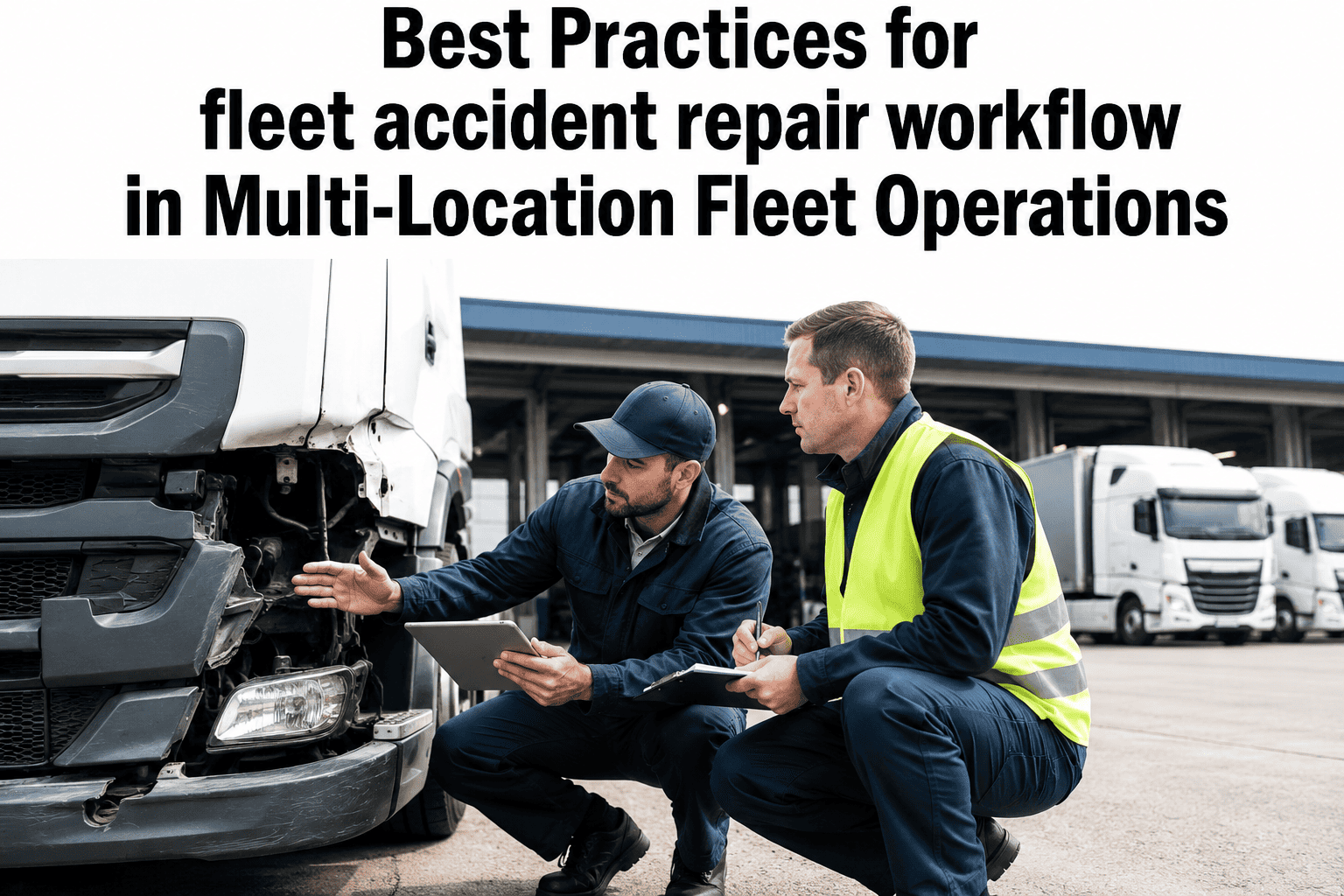
A fleet safety program that documents accidents but does not close the loop — identifying the root cause, completing the corrective action, and verifying the outcome — will see the same accident types repeat. Oxmaint's incident reporting module captures the incident record, links it to the vehicle's maintenance and inspection history, identifies the contributing maintenance factors, generates a corrective work order, and tracks completion. Every incident becomes an input that strengthens the preventive maintenance schedule rather than a cost that is absorbed and forgotten.
Impact: Root cause identified, corrective action completed, repeat incident prevented
Oxmaint Connects Your Fleet Safety Program to Maintenance — Where It Actually Works
Digital inspections, PM scheduling, work order history, telematics integration, and compliance documentation — all in one cloud-native platform. Free to start. Measurable results within 90 days.
Before vs. After
Reactive Fleet Safety vs. Proactive Safety Management — The Operational Comparison
This is the documented difference between a fleet operating a reactive safety program and one running a proactive, data-driven safety management system connected to maintenance operations. Every row represents a compounding cost or risk that reactive management absorbs silently every year.
Fleet Safety ROI
The Financial Return on a Proactive Fleet Safety Management Program
Fleet managers who frame safety as a cost miss the financial reality. A proactive safety program has four distinct revenue-protecting streams that compound on each other — and the documented ROI from each one makes the business case undeniable to any CFO or risk committee.
$300K
Avoided per weather-related accident
Lytx 2025 Road Safety Report documents $200,000–$300,000 in avoided damages and liability per prevented weather-related accident. Preventing one serious incident per year justifies a fleet safety technology investment for 50+ vehicles. FMCSA data shows injury crashes average $148,279 — and fatal crashes average $3.6M in total economic cost.
25%
Insurance premium reduction potential
Insurers in 2026 require documented safety improvement, not just cameras or programs on paper. Fleets that can present declining accident frequency, coaching records, and maintenance compliance trends achieve meaningful premium reductions at renewal. The documented safety story is the negotiating asset — Oxmaint structures it from daily maintenance and inspection data automatically.
4.8×
Emergency repair cost multiplier eliminated
Emergency repairs cost 4.8× more than planned maintenance — before accounting for downtime, towing, missed deliveries, and SLA penalties. A fleet of 50 vehicles shifting from predominantly reactive to preventive maintenance typically saves $80,000–$200,000 annually in direct maintenance cost alone, with the reduction in accident-related repairs adding further to the total.
45%
Unplanned downtime reduction with Oxmaint PM
Oxmaint customers reduce unplanned vehicle downtime by up to 45% through preventive maintenance scheduling and digital inspection enforcement. For a commercial fleet, vehicle downtime translates directly to missed deliveries, idle driver wages, and SLA penalties — costs that compound daily for every vehicle off the road unexpectedly.
Fleet Safety KPIs
8 Fleet Safety Metrics Every Fleet Manager Must Track in 2026
You cannot improve what you do not measure. These eight KPIs form the core of a documented fleet safety management program — and each one either prevents accidents directly or builds the insurance and audit narrative that protects the fleet financially when incidents occur.
KPI 01
Collision Frequency per Million Miles
The primary benchmark metric. Track quarterly to identify trend direction and compare against industry benchmarks. A declining trend over 12 months is the core evidence in insurance premium negotiations and FMCSA CSA score management.
KPI 02
PM Compliance Rate by Vehicle
What percentage of scheduled preventive maintenance services are completed on time vs. deferred? Oxmaint tracks this at vehicle, fleet, and site level. Target: above 95%. Fleets below 75% are in the highest-risk bracket for mechanical failure-related incidents.
KPI 03
Inspection Defect Detection Rate
What percentage of digital inspections surface at least one defect that generates a maintenance work order? A rate near zero suggests drivers are completing inspections without actual vehicle review. A rate of 8–15% reflects genuine inspection quality. Track this to verify inspection program integrity.
KPI 04
Harsh Braking Events per Driver per Week
Harsh braking is a leading indicator of collision risk and a primary driver of brake wear. Tracking this by driver allows targeted coaching on the specific behaviour — and links the behaviour data to accelerated brake maintenance costs that confirm the financial return on coaching investment.
KPI 05
Insurance Claims Frequency per Vehicle
Number of insurance claims per vehicle per year — the metric insurers use to price commercial fleet premiums. A declining claims frequency trend, supported by documented PM compliance and coaching records, is the strongest lever fleet managers have in annual insurance renewal negotiations.
KPI 06
Out-of-Service Rate at Roadside Inspections
The CVSA out-of-service rate — percentage of vehicles placed out of service at roadside inspections — is a direct measure of maintenance compliance quality. Industry average OOS rate for commercial trucks is approximately 19–22%. Fleets below 10% have demonstrably superior maintenance programs. Oxmaint PM scheduling directly targets this metric.
KPI 07
SIF Exposure Rate — Serious Injury and Fatality
SIF exposure tracks incidents that resulted in — or had the realistic potential to result in — a serious injury or fatality. This metric forces fleet managers to weight near-miss events appropriately and focus safety investment on preventing the highest-severity outcomes rather than counting minor incidents equally with catastrophic ones.
KPI 08
Time-to-Close on Safety-Related Work Orders
How long does it take from a defect being identified at inspection to the verified repair being completed and the vehicle returned to service? Extended time-to-close on brake, tyre, and steering defects represents direct safety risk. Oxmaint tracks this metric by defect type, technician, and vehicle class — identifying bottlenecks in the repair workflow before they become dispatch pressure that sends a defective vehicle back to the road.
Oxmaint Fleet CMMS · Safety Management
Stop Reacting to Fleet Accidents. Start Preventing Them With a Connected Safety and Maintenance Platform.
Oxmaint brings digital inspections, automated PM scheduling, telematics integration, work order management, driver compliance records, and fleet safety analytics together in one mobile-first, cloud-native platform. Join 1,000+ fleet operations running safer, smarter, and more cost-efficiently. Deploy in days. See measurable results within 90 days.
45%
Reduction in unplanned downtime with Oxmaint preventive maintenance
4.8×
Emergency repair cost vs planned maintenance — the gap PM compliance closes
Days
Deployment timeline — no heavy IT project, no implementation fees
Frequently Asked Questions
Fleet Safety Management — Questions Fleet Managers Ask Most
What is a fleet safety management program and what does it actually include in 2026?
A fleet safety management program is a comprehensive, documented system of policies, procedures, and technology that works together to prevent vehicle accidents, protect drivers, maintain regulatory compliance, and minimise the financial exposure of operating commercial vehicles. In 2026, an effective program has seven core components: digital pre-trip and post-trip inspections that surface defects before dispatch; preventive maintenance scheduling triggered by mileage, hours, or condition data; driver qualification file management with expiry alerts; telematics integration for behaviour monitoring and harsh event detection; continuous data-driven coaching replacing annual classroom training; incident reporting with root cause analysis and closed-loop corrective action; and fleet safety KPI dashboards that generate the documented trend data insurers and DOT regulators require. The critical distinction between a program that exists on paper and one that actually reduces accidents is connection — safety policies must be enforced through the same operational platform that manages maintenance, so defects identified at inspection automatically generate work orders, PM due dates trigger preventive service before vehicles become safety risks, and every driver-related decision is supported by documented evidence. Oxmaint connects all seven components in a single CMMS platform.
Sign up free to explore the fleet safety features, or
book a demo to see the full safety management workflow live.
How does preventive maintenance directly reduce fleet accident rates — what is the documented connection?
The connection between deferred preventive maintenance and fleet accidents is documented at the accident investigation level and in FMCSA enforcement data: the most common mechanical failure causes of commercial vehicle accidents — brake failures, tyre blowouts, steering defects — are progressive conditions that develop over time and are identifiable through scheduled maintenance and pre-trip inspection before they reach the failure threshold on a public road. The research consistently shows that vehicle defects involved in commercial accidents were often present for days or weeks before the incident — and in the majority of cases, the scheduled maintenance that would have identified and corrected the defect was overdue at the time of the accident. Emergency repairs cost 4.8× more than planned maintenance — and this comparison does not include the accident liability, insurance claim, vehicle repair, cargo loss, driver injury, and reputational cost that the incident creates. Oxmaint's preventive maintenance scheduling triggers work orders automatically when mileage, engine hours, or calendar intervals reach configured thresholds — ensuring that no vehicle departs with overdue safety-critical maintenance. PM compliance rates are tracked by vehicle, fleet, and facility, with escalation alerts before services become overdue. Customers reduce unplanned downtime by up to 45% — a metric that directly correlates with fewer vehicles operating past safe service limits.
Book a demo to see Oxmaint's PM scheduling and compliance dashboard, or
sign up free to start scheduling PM on your fleet today.
Why are paper vehicle inspections a liability risk — and what does a digital inspection system change operationally?
Paper inspection forms are the most consistently cited compliance failure in fleet safety audits, and the operational reason is straightforward: a paper form requires no evidence that the driver actually inspected the vehicle. Drivers under schedule pressure learn quickly that ticking every box takes 30 seconds and creates no consequence. The form reaches the fleet manager hours or days later — and a defect that was present but not recorded at departure cannot be corrected until it causes an incident, a breakdown, or a roadside out-of-service order. The 2025 State of Fleet Management survey identifies incomplete inspection documentation as the primary gap in maintenance compliance for fleets below the 75% compliance threshold. Digital inspection systems change four things that paper cannot: they require active confirmation per checklist item on a mobile device, making box-ticking without inspection impossible; they capture photo evidence of failed items that creates an immutable record; they surface defects to the fleet manager immediately rather than days later; and they can block failed vehicles from dispatch until the verified repair work order is completed in the CMMS. Oxmaint's digital inspection platform integrates these four capabilities — every inspection is timestamped, operator-attributed, and linked to the vehicle's maintenance record. Failed items generate maintenance work orders automatically. The complete inspection history is retrievable in seconds for FMCSA audits or litigation discovery.
Sign up free to set up your first digital inspection template, or
book a demo to see the inspection-to-work-order workflow live.
How does a fleet safety program affect insurance premiums — and what documentation do carriers actually require?
Commercial fleet insurance premiums have risen significantly over the past five years — driven by increasing crash severity, nuclear verdicts in commercial vehicle litigation, and carriers tightening their underwriting standards for fleets without documented safety programs. In 2026, insurers do not accept the presence of cameras or training programs as sufficient evidence of risk reduction — they require documented evidence that safety programs are actively managed and producing measurable outcomes. The documentation that carriers use to justify premium reductions at renewal includes: declining accident frequency per million miles over a 12–24 month period; PM compliance rates above 90% with work order evidence; digital inspection completion rates with defect detection data; driver coaching records with frequency and focus area documentation; and incident reports showing root cause analysis and completed corrective actions. Fleets that can produce this complete safety improvement narrative — with timestamped digital records rather than paper summaries — achieve the strongest premium reductions at renewal. Oxmaint's analytics dashboard produces the trend reports, compliance documentation, and inspection records that structure this carrier narrative automatically from daily maintenance operations. The insurance saving from a well-documented safety improvement program typically covers total CMMS platform cost within 12–18 months for mid-size fleets.
Book a demo to see how Oxmaint structures the safety documentation that drives insurance negotiations, or
sign up free and start building your documented safety record today.
What are the most important fleet safety regulations in 2026 and how does Oxmaint help ensure compliance?
The primary fleet safety regulatory frameworks in 2026 are FMCSA regulations governing commercial motor carriers (Parts 390–399 of 49 CFR), OSHA standards for workplace vehicle safety, DOT vehicle inspection requirements for commercial vehicles, and state-level commercial vehicle enforcement that mirrors FMCSA standards in most jurisdictions. Key compliance requirements that fleet managers must document include: pre-trip and post-trip vehicle inspections with driver certification for commercial motor vehicles; driver qualification files including medical certificates, licence validity, MVR records, annual reviews, and training completions; hours of service compliance with ELD documentation; vehicle maintenance records demonstrating that safety-critical systems (brakes, tyres, lights, steering) are maintained at regulatory standards; and hazardous materials documentation for fleets transporting regulated materials. The regulatory risk for non-compliance is substantial: FMCSA out-of-service orders halt vehicle and driver operations immediately, CSA scores above intervention thresholds trigger carrier investigations, and inadequate record-keeping during a post-accident investigation shifts liability dramatically against the fleet operator. Oxmaint addresses compliance across three layers: digital inspection forms pre-configured to DOT and OSHA standards; driver document management with expiry alerts for medical certificates and licences; and work order records that produce the maintenance history documentation regulatory auditors require. Compliance documentation is retrievable in under 60 seconds — not hours of paper search.
Sign up free to access Oxmaint's compliance-ready inspection templates, or
book a demo to discuss your specific regulatory environment and compliance documentation needs.
Fleet Safety Is a Maintenance Problem. Oxmaint Is the Solution.
95% of fleets fall below near-perfect maintenance compliance. Every gap is a preventable accident waiting to happen. Oxmaint closes the gap — with digital inspections, automated PM, telematics integration, and compliance documentation that generates itself from daily operations. Deploy in days. Protect your drivers, your vehicles, and your budget.