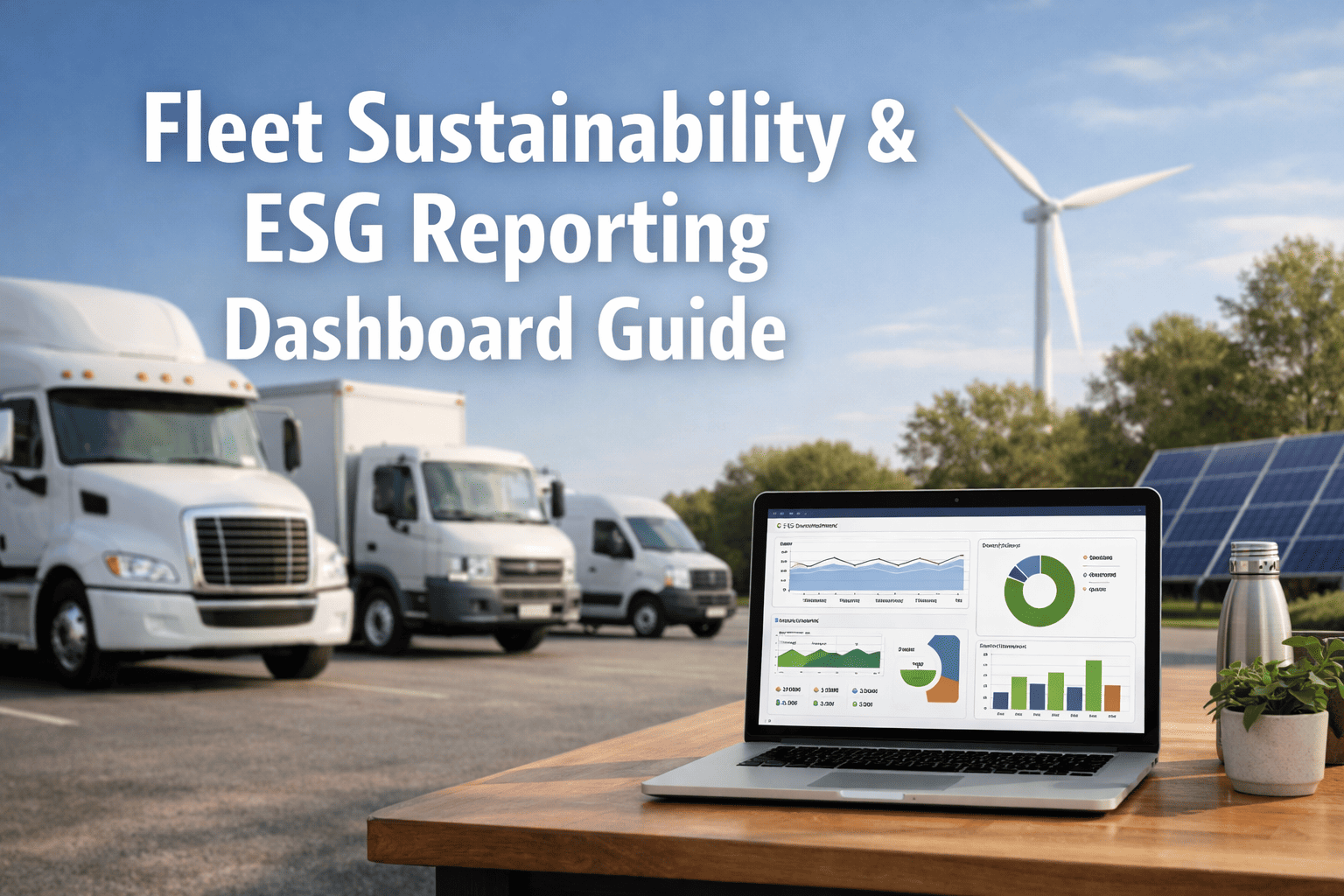
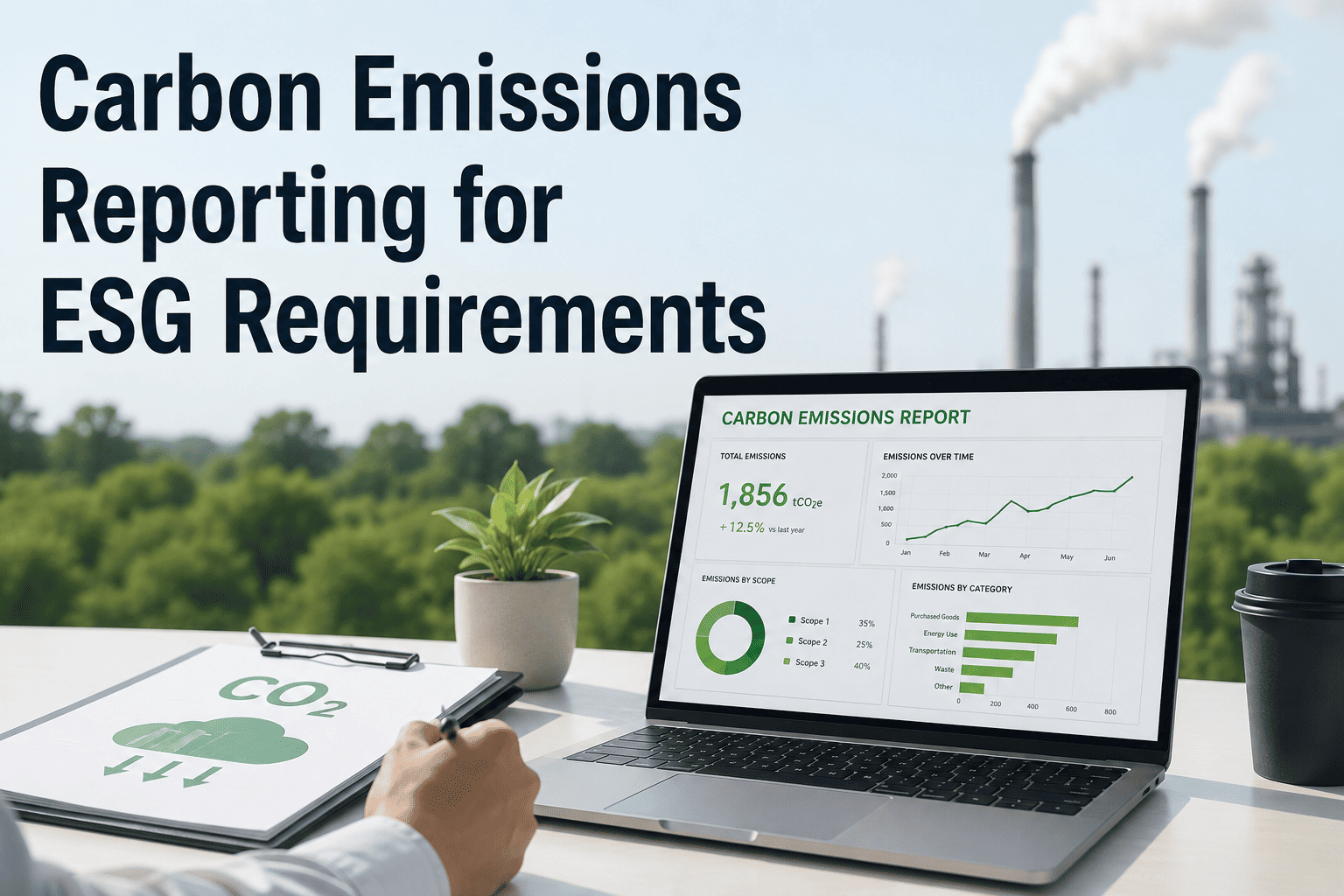
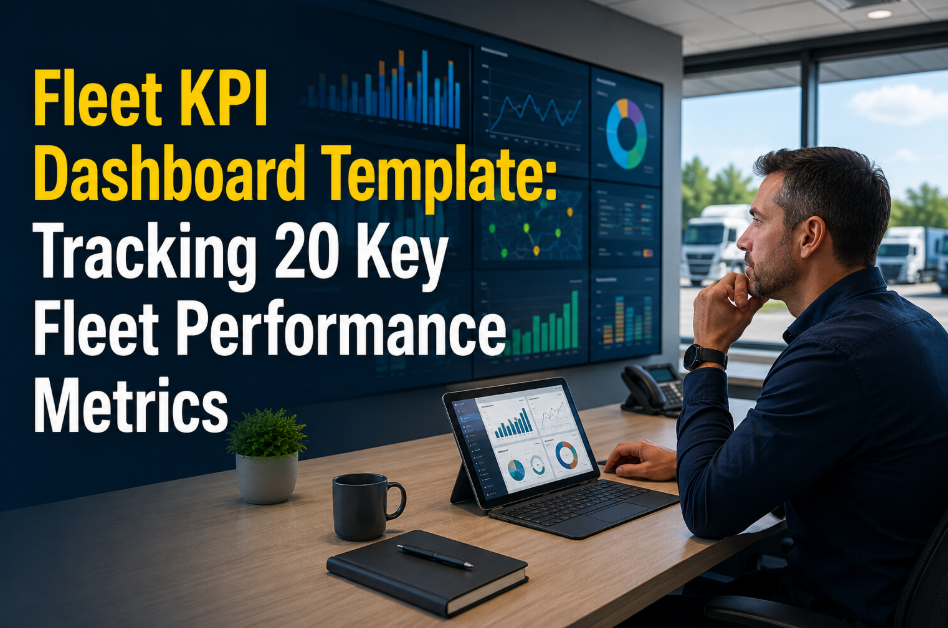
A logistics company operating 320 vehicles across seven states received a formal ESG data request from their largest customer — a Fortune 500 retailer requiring Scope 3 emissions data as part of their supply chain decarbonization commitment. The fleet had never measured carbon emissions. They had fuel receipts, IFTA reports, and vehicle registration records — but no system that connected these into the emissions framework the customer required. The request gave them 60 days to comply or risk losing a $4.8 million annual contract. They configured OxMaint's sustainability dashboard in 11 days, pulled 24 months of historical fuel and mileage data, and delivered a complete Scope 3 emissions report in GRESB-compatible format within three weeks of the request. Fleet sustainability reporting is no longer a nice-to-have — it is a contractual requirement, an investor expectation, and an emerging regulatory obligation for fleets above certain size thresholds in California, Colorado, and the EU. OxMaint's sustainability dashboard tracks every metric your stakeholders require — automatically, from data your fleet already generates. Book a demo to see your fleet's carbon baseline in real time.
Fleet Carbon Tracking, ESG Reporting, and Sustainability Metrics — One Dashboard
Contract at risk when a 320-vehicle fleet couldn't produce Scope 3 emissions data for a Fortune 500 customer ESG request — delivered in 3 weeks with OxMaint
68%
Of Fortune 500 companies now require Scope 3 supply chain emissions data from logistics and fleet partners — CDP/Science Based Targets survey 2024
12–18%
Average fleet fuel cost reduction from idle time management and route efficiency optimization — quantified in OxMaint's sustainability dashboard
The 6 Sustainability Metrics Every Fleet Must Now Track
Fleet sustainability reporting has moved from voluntary to expected — and in some jurisdictions, required. These six metrics form the core of any defensible ESG programme for a commercial fleet. OxMaint tracks all six automatically from data your fleet already generates.
1
Scope 1 Fleet Emissions (Direct)
Required for GHG Protocol, SEC climate disclosure, California reporting
Direct CO₂e emissions from fuel combustion in your owned and operated vehicles — calculated from actual fuel consumption data using EPA emission factors by fuel type. OxMaint calculates Scope 1 automatically from IFTA fuel data and telematics mileage, broken down by vehicle type, fuel type, and reporting period.
2
Scope 3 Supply Chain Emissions
Customer and investor requirement — now the most requested fleet data point
Emissions attributable to your fleet's transportation services — the data Fortune 500 customers need to complete their own Scope 3 Category 4 (upstream transportation) disclosures. OxMaint generates per-shipment, per-lane, and per-customer emissions reports in formats compatible with customer ESG systems.
3
Fuel Efficiency (MPG / MPGe)
The operational metric that drives all the others — and the most actionable
Fleet-wide and per-vehicle fuel efficiency tracked against class benchmark, prior period, and target. OxMaint identifies underperforming vehicles, routes, and drivers — connecting fuel efficiency decline to specific maintenance events (tyre pressure, air filter, idle time) that are within the fleet manager's immediate control.
4
Idle Time and Idle Emissions
5–15% of fleet fuel spend — entirely addressable with data
Idle time per vehicle, per driver, per depot, and per route tracked against policy limits. OxMaint calculates idle fuel consumption and idle CO₂e separately from driving emissions — giving sustainability managers a discrete, reportable metric and fleet managers a clear reduction target per driver.
5
Fleet Electrification Progress
Board-level metric for companies with net-zero commitments
EV penetration rate by vehicle class, charging energy consumption, Scope 2 emissions from charging, and projected ICE fleet phase-out timeline tracked in OxMaint's fleet electrification module. Mixed ICE/EV fleets managed from the same platform — no separate system for EVs.
6
Maintenance-Linked Emissions Impact
The metric that connects PM investment directly to sustainability outcomes
Every maintenance event has an emissions impact — a tyre pressure correction reduces fuel consumption 1–2%, an air filter change can recover 3–4% fuel efficiency, and a DPF service on a diesel prevents excess particulate emissions. OxMaint connects PM completion to measured fuel efficiency change — creating a sustainability ROI case for every maintenance dollar spent.
Fleet ESG Dashboard — OxMaint
Every Emissions Metric. Every Report Format. Every Stakeholder Satisfied.
OxMaint's sustainability dashboard tracks Scope 1, 2, and 3 emissions, fuel efficiency trends, idle time, and electrification progress — generating GRESB, TCFD, and CDP-compatible reports automatically from your existing fleet data.
ESG Report Generation — From Raw Fleet Data to Stakeholder Package
OxMaint transforms the data your fleet already generates into the sustainability reports your customers, investors, and regulators require — automatically, without manual calculation or data assembly. See your fleet's carbon baseline in OxMaint within 14 days of onboarding.
Continuous
Fuel & Mileage Data Ingestion
IFTA fuel data, telematics mileage, fuel card transactions, and manual fuel logs all ingested into OxMaint — building a complete, auditable fuel consumption record per vehicle per period
Daily
Emissions Calculation
OxMaint applies EPA emission factors by fuel type to actual consumption data — calculating CO₂, CH₄, N₂O, and CO₂e per vehicle, per route, and per customer automatically every 24 hours
Weekly
Sustainability KPI Dashboard
Fleet-wide and per-vehicle sustainability scorecard updated — emissions intensity per mile, idle rate, fuel efficiency trend, and electrification progress all visible in the OxMaint sustainability dashboard
On Request
Customer ESG Report
Per-customer Scope 3 emissions report generated — showing CO₂e attributed to lanes, shipments, or time periods served by your fleet — in formats compatible with customer ESG platforms and CDP disclosure systems
Quarterly
Investor ESG Package
Fleet sustainability data exported in GRESB, TCFD, and SASB-compatible formats — emissions trends, intensity ratios, and reduction targets formatted for board presentation and investor disclosure
Annual
Regulatory Compliance Report
California CARB, EU taxonomy, and SEC climate disclosure-ready reports generated — timestamped fleet emissions data with audit trail supporting regulatory submissions and third-party verification
Sustainability Reporting Requirements by Stakeholder Type
Different stakeholders require different data formats and different levels of detail. OxMaint generates reports for all of them from the same underlying dataset — no separate calculations for different audiences.
Stakeholder
Report Required
Key Metrics
Framework
OxMaint Output
Fortune 500 Customers
Scope 3 Category 4 data
CO₂e per lane, shipment, or period
GHG Protocol / CDP
Per-customer CSV/API
Institutional Investors
Portfolio ESG disclosure
Emissions intensity, reduction trajectory
TCFD / GRESB / SASB
Board-ready PDF
Lenders / Banks
Sustainability-linked loan compliance
Emissions vs covenant targets
Lender-specific KPIs
KPI compliance report
State / Federal Regulators
CARB, SEC, EPA compliance
Fleet emissions by category and fuel
CARB / GHG Reporting Rule
Regulatory format export
Internal Sustainability Team
Operational dashboard + target tracking
Per-vehicle, per-driver, per-depot
Internal targets
Live OxMaint dashboard
What a Full Fleet Sustainability Dashboard Looks Like
The numbers below represent a real 280-vehicle mixed-fuel fleet before and after 18 months of OxMaint sustainability programme — showing what structured tracking and management delivers versus unstructured data collection.
Before OxMaint
280 vehicles — no unified sustainability tracking
Emissions data availability
IFTA only — no CO₂e calc
Average fleet idle rate
22% of engine-on time
Fuel efficiency trend visibility
Monthly — manual calc
ESG report generation time
3–5 weeks manual
Customer ESG requests fulfilled
0 of 4 requests
After 18 Months
Same 280 vehicles — OxMaint sustainability dashboard
Emissions data availability
Real-time CO₂e per vehicle
Average fleet idle rate
8% — 64% reduction
Fuel efficiency trend visibility
Daily — automated
ESG report generation time
Under 2 hours
Customer ESG requests fulfilled
12 of 12 requests
We got four ESG data requests from major customers in a single quarter. Before OxMaint, we couldn't answer any of them accurately. Now we generate a per-customer emissions report in about 45 minutes. Our largest customer extended our contract specifically citing our sustainability data capabilities. That's a direct revenue consequence of getting this right.
— VP of Sustainability, 320-vehicle logistics fleet, Mid-Atlantic US, OxMaint user since 2022
Technology Stack — What Powers Fleet Sustainability Analytics
OxMaint's sustainability dashboard integrates four technology layers to deliver accurate, auditable, and actionable emissions data. Connect your fleet technology stack through OxMaint — most fleets are live within 14 days.
OBD / Telematics Integration
Real-time mileage, idle time, fuel consumption, and engine load data from Samsara, Geotab, Verizon Connect, and all major US telematics providers. OBD-II data gives per-trip fuel burn that is more accurate than pump-based calculations — critical for defensible Scope 1 and 3 reporting.
AI Digital Twin
AI models each vehicle's emissions profile — predicting future emissions based on current degradation rate, identifying vehicles where a maintenance intervention would generate the largest efficiency improvement, and forecasting fleet-level Scope 1 trajectory against net-zero targets.
SAP / ERP Integration
Fleet sustainability data feeds SAP S/4HANA sustainability modules and ESG reporting platforms automatically — eliminating the manual data extraction that delays ESG report delivery and introduces calculation errors that auditors flag.
AI Camera Vision
AI cameras detect visible maintenance issues — tyre deflation, loaded condition, excessive exhaust — that correlate with elevated fuel consumption and emissions. Condition flags feed the preventive maintenance schedule, connecting sustainability monitoring to the maintenance actions that actually reduce emissions.
Frequently Asked Questions
Does OxMaint calculate Scope 1, 2, and 3 emissions automatically?
Yes — Scope 1 (direct fleet combustion) is calculated from actual fuel consumption using EPA emission factors. Scope 2 (EV charging electricity) is calculated from charging energy data. Scope 3 Category 4 (transportation services you provide) is generated per customer per period — ready for customer ESG disclosure systems.
Which ESG reporting frameworks does OxMaint support?
OxMaint generates exports compatible with GHG Protocol, TCFD, GRESB, SASB, CDP, and California CARB reporting. For customer-specific frameworks, the underlying emissions data can be formatted to any calculation methodology — the raw data is always available.
Can OxMaint handle a mixed ICE and EV fleet in the same dashboard?
Yes — OxMaint manages ICE, hybrid, and EV vehicles in the same platform. EV energy consumption and Scope 2 charging emissions are tracked separately from ICE Scope 1 fuel emissions, with a consolidated fleet carbon footprint combining both in the sustainability dashboard.
How far back can OxMaint calculate historical emissions from existing data?
OxMaint can import historical IFTA fuel data, fuel card transactions, and telematics records going back as far as your data exists — typically 2–5 years for most fleets. Historical emissions are calculated retrospectively from imported data, giving you a baseline and trend before the current reporting period.
What is the connection between maintenance and fleet emissions reduction?
OxMaint connects PM completion records directly to measured fuel efficiency change — showing the emissions reduction delivered by each maintenance event. A tyre pressure correction, air filter replacement, or DPF service produces a measurable efficiency improvement that OxMaint quantifies in CO₂e terms — giving sustainability managers a documented case for maintenance investment.
Fleet Sustainability Dashboard — OxMaint
Track Every Emission. Report Every Metric. Meet Every Request.