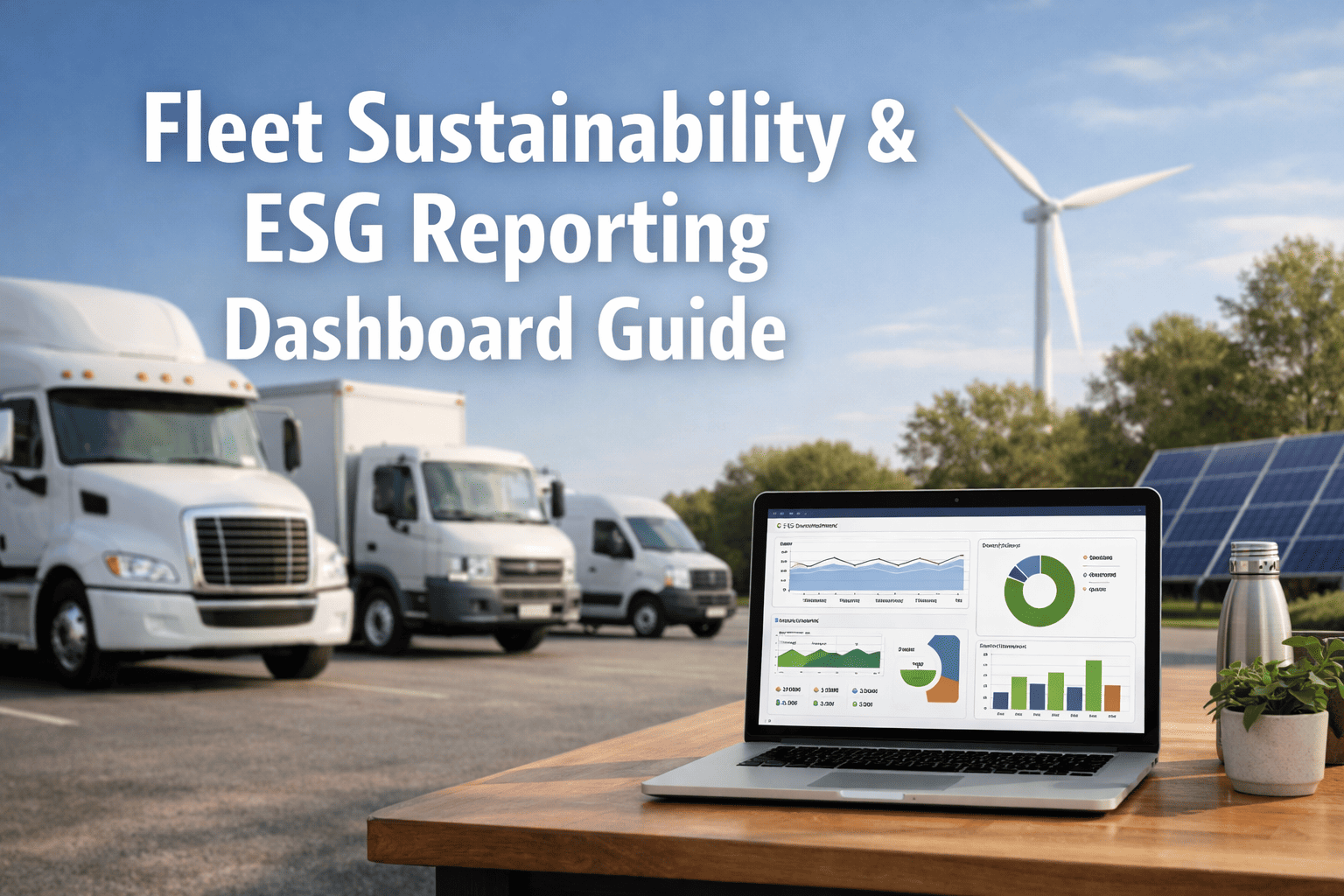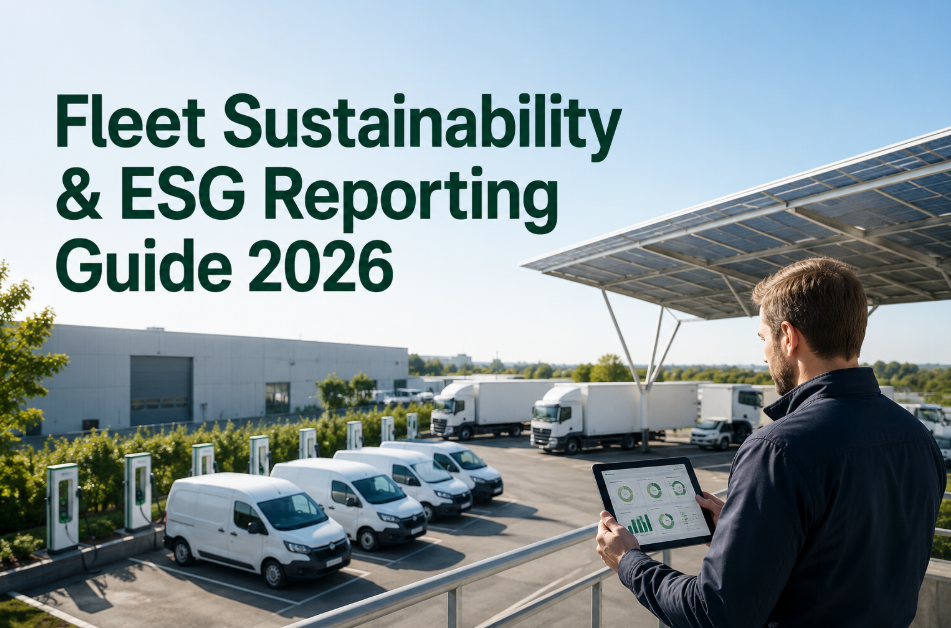
Fleet operations account for nearly 27% of total transportation-related greenhouse gas emissions globally — and in 2026, ESG reporting is no longer a voluntary initiative for fleet-heavy organizations. Investor pressure, regulatory mandates like the EU Corporate Sustainability Reporting Directive, and customer procurement requirements now demand verifiable, auditable sustainability data from fleet operators. Yet 68% of fleet managers report they cannot accurately track their Scope 1 emissions at the vehicle level, let alone produce the granular reporting investors require. The gap between ESG ambition and operational reality is where fleet sustainability programs fail. Organizations that close this gap using data-driven platforms like OxMaint's asset management CMMS achieve 23% faster decarbonization progress and produce audit-ready ESG reports that satisfy both regulators and investors.
Fleet Sustainability and ESG Reporting Guide for 2026
How fleet operators build credible ESG sustainability programs, track GHG emissions at the asset level, meet 2026 investor reporting requirements, and align fleet decarbonization with supply chain compliance mandates.
What Is Fleet ESG Reporting?
Fleet ESG reporting is the systematic measurement, tracking, and disclosure of environmental, social, and governance performance across an organization's vehicle and equipment fleet — covering greenhouse gas emissions, fuel consumption, vehicle lifecycle impacts, driver safety metrics, and governance practices around fleet procurement and disposal.
Scope 1 direct emissions from fleet fuel combustion, Scope 3 upstream emissions from fuel production and vehicle manufacturing. Tracks CO2e per mile, per vehicle, and per route.
Accident rates, driver training hours, fatigue management programs, community noise and air quality impacts. 82% of ESG frameworks now include fleet safety metrics.
Sustainable procurement policies, supplier diversity in fleet services, end-of-life vehicle disposal practices, and regulatory compliance tracking across jurisdictions.
Structured reporting aligned to GRI, SASB, TCFD, or CDP frameworks. Requires auditable data trails, year-over-year comparisons, and science-based target progress tracking.
The 2026 Regulatory Landscape for Fleet Sustainability
Fleet operators in 2026 face a converging set of regulatory requirements that make sustainability reporting a compliance obligation — not a corporate social responsibility project. Understanding which regulations apply to your fleet is the first step in building a defensible ESG program.
| Regulation / Framework | Region | Fleet Impact | Compliance Deadline |
|---|---|---|---|
| EU Corporate Sustainability Reporting Directive (CSRD) | EU / UK | Mandatory Scope 1 and 3 fleet emissions disclosure for large enterprises | Active 2025+ |
| SEC Climate Disclosure Rules | USA | Material climate risk disclosure including fleet emissions for public companies | Phased 2025-2027 |
| California Advanced Clean Fleets | California, USA | Zero-emission vehicle purchase mandates for medium and heavy-duty fleets | Active 2024+ |
| Australian Climate-Related Financial Disclosures | Australia | TCFD-aligned reporting for large entities including fleet GHG data | Active 2025+ |
| UAE Net Zero 2050 Strategy | UAE | Fleet decarbonization targets under national climate commitment | Progressive targets |
| Germany Supply Chain Due Diligence Act | Germany | ESG compliance requirements extending to fleet service supply chains | Active 2024+ |
Tracking fleet emissions across multiple regulatory frameworks requires asset-level data that most spreadsheet systems cannot produce. See how OxMaint builds audit-ready compliance documentation automatically from your maintenance and asset records — start a free trial or book a demo to see multi-site ESG reporting in action.
Building Your Fleet Sustainability Program — 4 Phases
Effective fleet decarbonization programs follow a structured progression — from baseline measurement through target-setting to continuous improvement. Rushing to buy EVs without completing Phase 1 is why 44% of fleet electrification programs stall within 18 months.
Establish your carbon baseline by tracking fuel consumption, vehicle utilization, and emissions per asset. Use OxMaint's asset registry to link fuel data to individual vehicles and calculate CO2e per mile across your fleet.
Before electrification, optimize current operations — preventive maintenance improves fuel efficiency by 4-8%, route optimization reduces unnecessary mileage by 12-18%, and right-sizing eliminates 15% of underutilized vehicles.
Use lifecycle cost analysis and route-suitability scoring to identify which vehicles should transition to electric first. Track charging infrastructure requirements and total cost of ownership versus ICE equivalents per asset class.
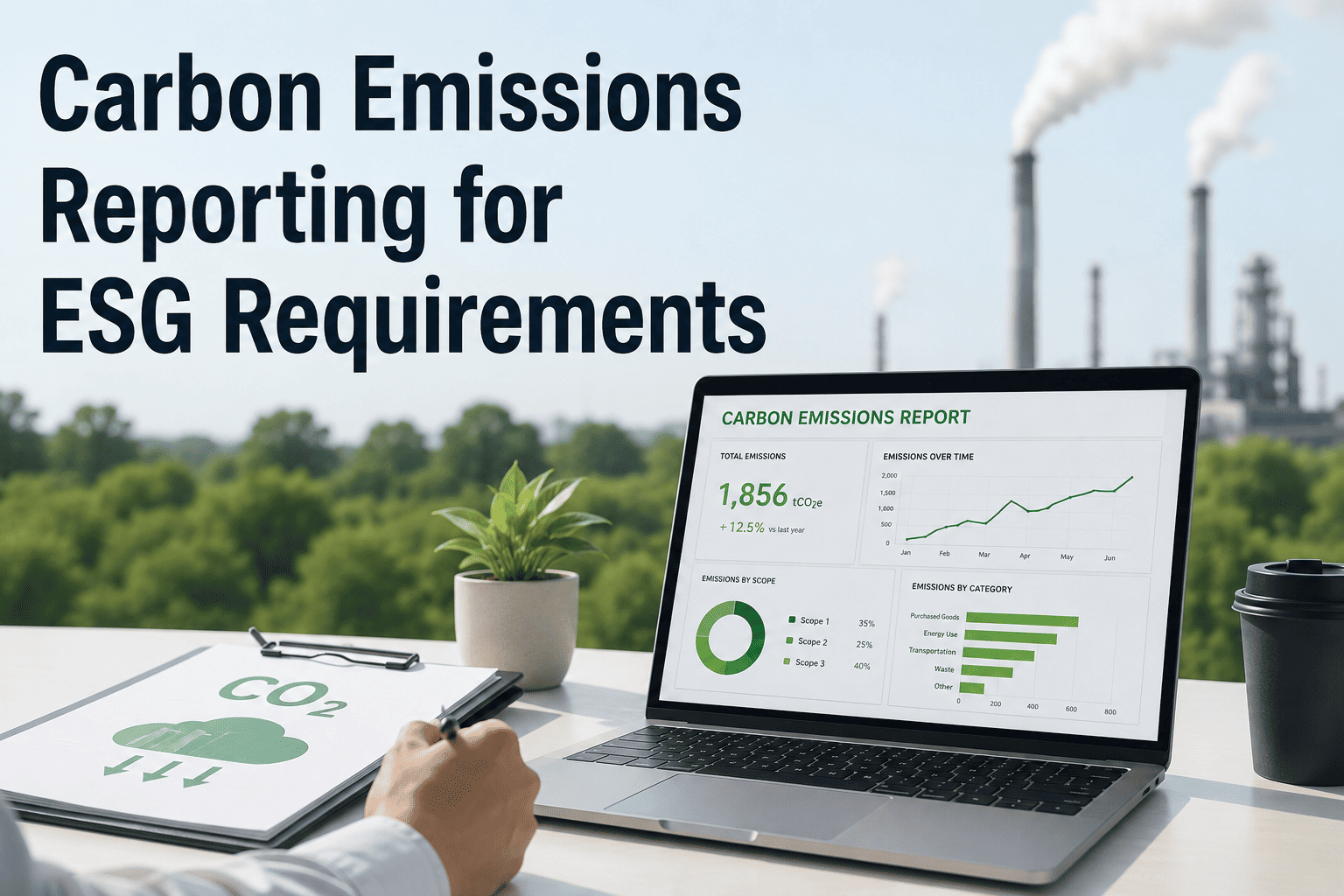
Generate structured ESG reports aligned to GRI, SASB, or TCFD frameworks. Track year-over-year progress against science-based targets. Produce audit-ready documentation from asset-level data already captured in your CMMS.
GHG Tracking — What Fleet Operators Must Measure
Credible fleet sustainability reporting requires tracking emissions across three scopes. Most fleet operators only track Scope 1 — and even that data is typically estimated from fuel purchases rather than measured at the vehicle level. Here is the complete picture.
CO2, CH4, and N2O from diesel, gasoline, CNG, and LPG burned in company-owned or leased vehicles. Typically represents 85-92% of fleet-related emissions. Must be tracked per vehicle, not just per fuel card.
Emissions from purchased electricity used to charge battery-electric fleet vehicles. Varies by grid carbon intensity — a fleet charging in Texas has different Scope 2 than one charging in California. Growing as fleets electrify.
Well-to-tank emissions from fuel production and transportation, plus embodied carbon in vehicle manufacturing. Represents 20-35% of lifecycle fleet emissions but is the hardest to track accurately.
CO2e per mile, per delivery, per passenger-trip, or per ton-mile. This normalized metric allows year-over-year comparison even as fleet size changes. Essential for science-based target tracking.
How OxMaint Powers Fleet ESG Programs
OxMaint's CMMS and asset management platform provides the data infrastructure that makes fleet sustainability reporting accurate, auditable, and automatic — not a quarterly scramble through spreadsheets.
Link fuel consumption, maintenance records, and mileage data to individual vehicles in your asset registry. Calculate CO2e per vehicle, per route, per department — not just fleet-wide averages.
Properly maintained engines consume 4-8% less fuel. OxMaint's PM scheduling ensures every tire pressure check, filter replacement, and engine tune happens on time — with documented proof of completion.
Track vehicle condition scores over time to identify when aging vehicles are consuming disproportionate fuel and maintenance resources. Data-driven replacement timing that supports both financial and sustainability goals.
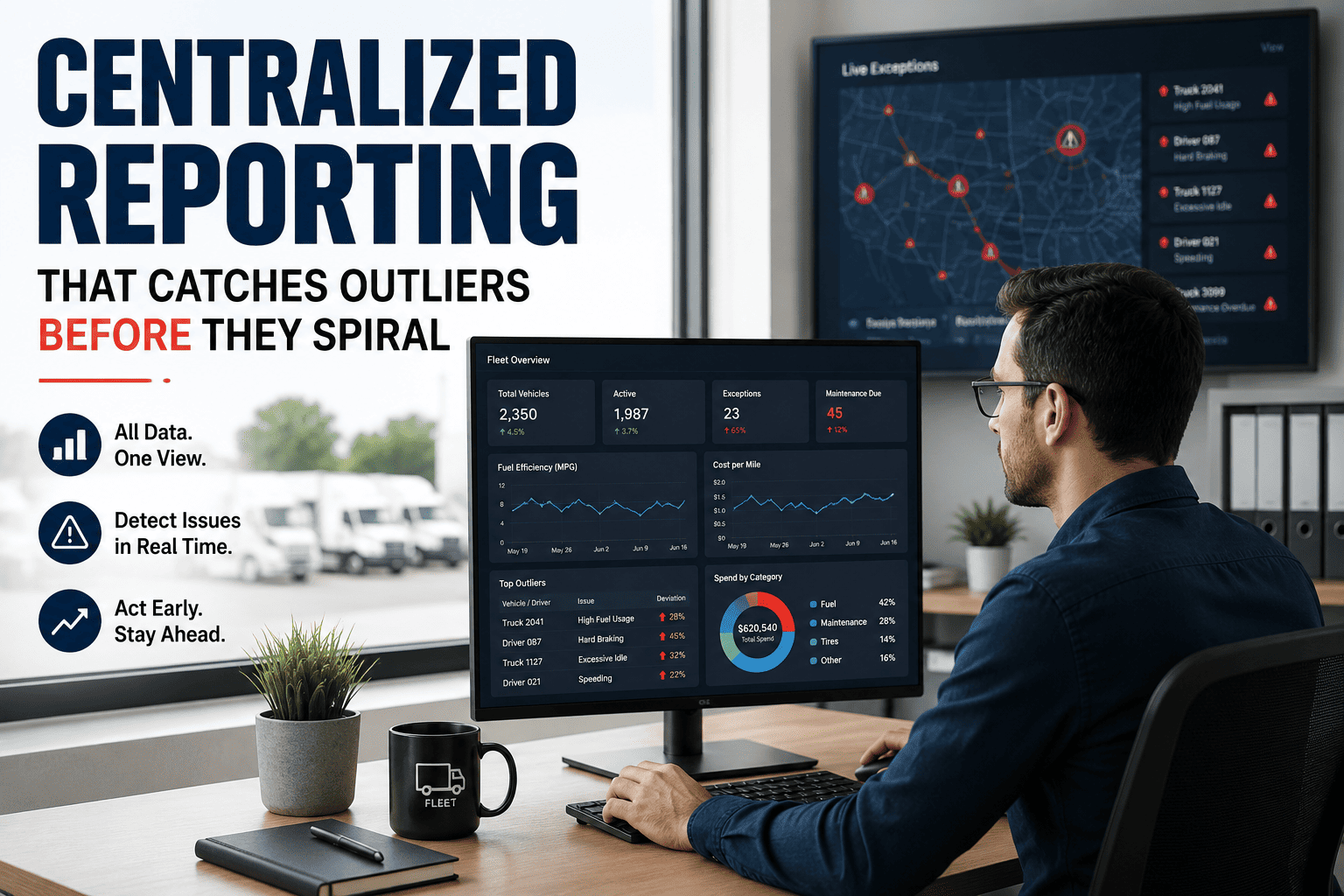
Multi-site reporting rolls up emissions data across your entire fleet portfolio. Generate investor-grade sustainability reports with year-over-year comparisons, target progress tracking, and audit-ready documentation.
Spreadsheet ESG vs Data-Driven ESG
The difference between organizations that pass ESG audits and those that scramble comes down to whether sustainability data is extracted from operational systems or assembled manually from disconnected sources.
Ready to move from spreadsheet-based ESG guesswork to auditable, asset-level sustainability tracking? See how OxMaint's portfolio reporting produces investor-grade emissions data from your existing maintenance operations — start a free trial or book a demo to review your fleet sustainability readiness.
Frequently Asked Questions
Do small fleets need ESG reporting in 2026?
What is the difference between a carbon footprint and a science-based target?
Should we electrify our fleet before or after establishing a GHG baseline?
How does preventive maintenance impact fleet sustainability?
Build an ESG Program That Survives Audit Season
OxMaint gives fleet operators the asset-level data infrastructure that transforms ESG reporting from a manual compliance exercise into an automated output of your daily operations. Preventive maintenance, asset lifecycle tracking, and portfolio-level reporting — all producing the sustainability metrics your investors and regulators require.