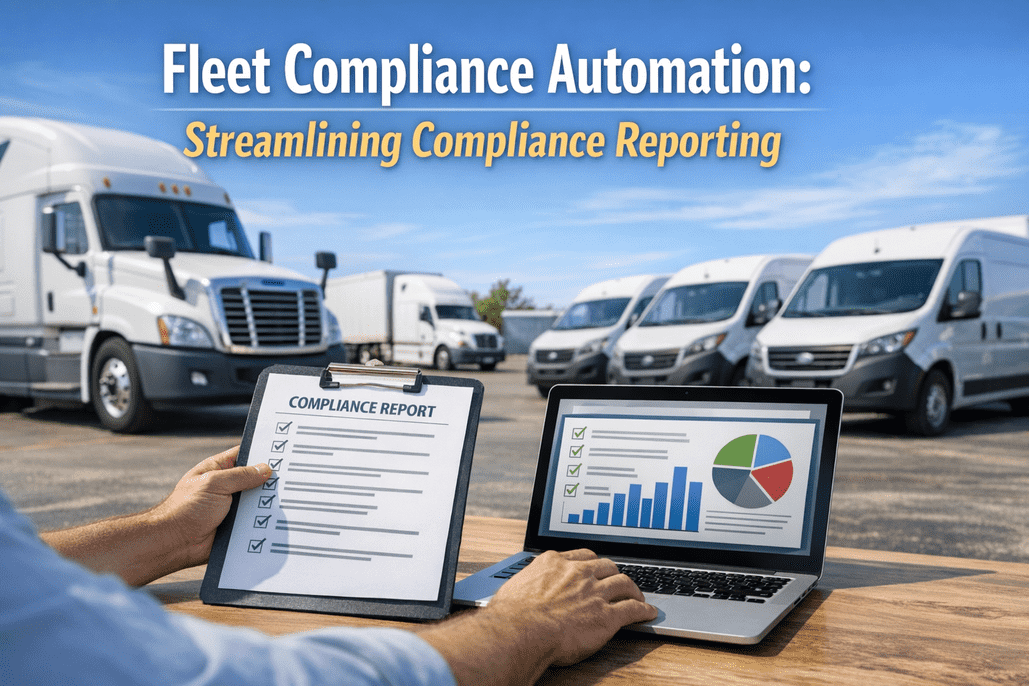
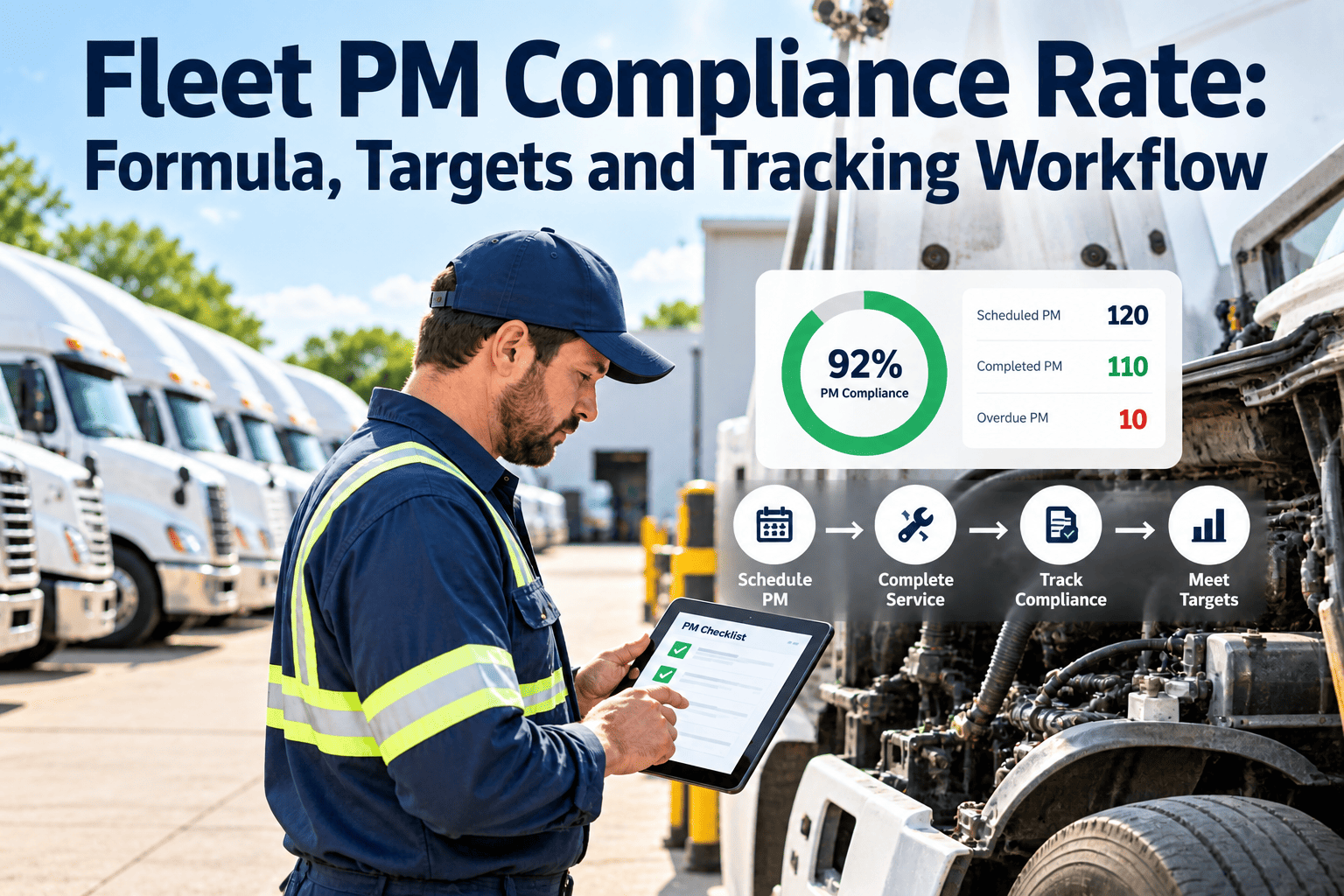
Fleet compliance in 2026 is no longer a paperwork problem — it's a data management crisis. The FMCSA conducted over 8,300 investigations through mid-2025 and uncovered more than 100,000 violations, averaging six per carrier. Routine cases cost fleets $7,100 each. Severe violations reach $125,000. And 93% of carriers audited received at least one finding. The most common cause? Missing or expired documents that an automated system would have caught 30, 60, or 90 days before the auditor arrived. The 2026 regulatory landscape has shifted dramatically — SMS scoring is overhauled, electronic DVIRs are now explicitly authorized, electronic medical certification is fully enforced, and maintenance violations now carry double the weight in carrier scoring. Manual compliance management isn't just inefficient — in 2026, it's a genuine operational liability. OxMaint automates every compliance workflow: digital DVIRs, expiration tracking, maintenance documentation, audit-ready reporting, and real-time violation monitoring — all from a single cloud-native platform. Sign up free to replace your compliance spreadsheets today.
93%
Of fleets receive at least one violation per audit
$7,100
Average cost per routine DOT compliance case
$19,277
Maximum fine per HOS violation
70%
Reduction in compliance admin time with automation
OxMaint · Fleet Compliance Automation Platform
93% of fleets fail DOT audits. Automated compliance makes your fleet the 7% that doesn't.
OxMaint automates digital DVIRs, maintenance records, expiration alerts, driver qualification files, and audit-ready reporting — so your fleet is inspection-ready every day of the year, not just when an auditor calls. Cloud-native. No IT project. Deploy in days.
90%Violation reduction
75%Faster audit prep
100%Document coverage
DaysTo go live
What Changed in 2026 — The Regulatory Shift Fleet Managers Must Know
The 2026 compliance environment is the most heavily updated since the ELD mandate. Every fleet manager needs to understand what changed and what it means operationally — because the penalties for missing these transitions have increased significantly.
SMS Overhaul
Safety Measurement System Completely Restructured
The seven BASICs are now "compliance categories." Vehicle Maintenance has been split into two separate categories — mechanical defects and driver-observed conditions — doubling the weight of maintenance violations in carrier scoring. Over 950 violation codes have been consolidated into 116 standardized groups. The scoring window shrinks from 24 months to 12. Your maintenance documentation game must be flawless from day one.
Impact: Poor maintenance records now produce two red categories in your carrier score instead of one
eDVIR Now Law
Electronic DVIRs Explicitly Authorized — FMCSA-2025-0115
Effective March 23, 2026, the FMCSA final rule explicitly authorizes electronic Driver Vehicle Inspection Reports. Any digital inspection that captures vehicle identification, defect documentation, driver signature, and repair verification is now fully compliant. Paper DVIRs are not prohibited — but digital provides timestamps, GPS stamps, and photo evidence that paper never could. Fleets still running paper inspections are already operating at a documentation disadvantage.
Impact: Digital DVIRs are now the compliance standard — and they automatically route defects to maintenance
Medical Certs
Electronic Medical Certification Fully Enforced
As of January 10, 2026, medical examiners transmit CDL driver health results directly to FMCSA and state DMVs electronically. Paper certificates are no longer accepted for CDL holders. Fleets that haven't migrated to electronic tracking of driver medical certifications are at immediate risk of incomplete Driver Qualification Files — the single most common audit failure across all carrier sizes.
Impact: Paper medical certificates cause automatic DQ file failures — 35% of audit violations trace to this alone
Clearinghouse
Drug & Alcohol Clearinghouse — Active CDL Revocations
The FMCSA is actively revoking CDLs of drivers with unresolved "prohibited" status in the Clearinghouse. The 2026 random testing rate holds at 50% for drugs and 10% for alcohol. Pre-employment full queries and annual limited queries are now mandatory — with fines exceeding $16,000 per violation for non-compliant testing programs. Missing a single annual Clearinghouse query is an automatic audit failure.
Impact: Missing queries cause automatic audit failure — automation ensures 100% query coverage
The 6 Compliance Areas Where Fleets Fail Most — And What Automation Fixes
01
Driver Qualification Files
Incomplete DQ files are the top audit violation. Files must include employment applications, MVRs, medical certificates, road test results, and previous employment verification — all current, all accessible instantly. Automated DQ file management tracks every document, fires expiration alerts at 90/60/30 days, and maintains a complete digital audit trail. With OxMaint, every driver's file is complete, current, and accessible in under two minutes.
35% of violations stem from incomplete DQ files
02
Vehicle Maintenance Records
Maintenance violations now carry double weight in the 2026 SMS overhaul. Every repair, inspection, and PM service must be documented with timestamps, technician attribution, and parts used. Paper repair logs and disconnected spreadsheets fail this standard. OxMaint creates a timestamped work order trail for every vehicle — accessible instantly for roadside inspections or off-site audits, with digital records that can be submitted within the required 48-hour window.
22% of violations involve maintenance documentation gaps
03
Pre-Trip and Post-Trip Inspections
Digital DVIRs are now fully authorized and operationally superior to paper in every way. Drivers complete mobile inspection checklists before and after every trip. Defects are automatically flagged and routed to maintenance — creating a closed-loop documentation trail. Paper DVIRs get lost, skipped, or illegibly filled in. Digital inspections are timestamped, GPS-stamped, and photo-evidenced — exactly what 2026 auditors want to see.
Paper DVIR gaps trigger deeper investigation in 100% of audits
04
Hours of Service Compliance
ELDs make every minute of driving auditable. HOS violations can reach $19,277 per infraction under 2026 enforcement, and ELD data is now used for continuous carrier scoring in the overhauled SMS system. OxMaint integrates with ELD providers to centralise HOS records alongside maintenance and inspection data — so fleet managers can spot patterns that indicate systemic scheduling problems before they become violations.
HOS violations fines up to $19,277 per infraction
05
Drug & Alcohol Testing Programs
Missing a pre-employment Clearinghouse query or failing to run annual limited queries for every CDL driver is an automatic audit failure. The 2026 random testing rate (50% drugs, 10% alcohol) requires systematic scheduling that manual tracking routinely misses. Automated testing programme management schedules queries, tracks results, documents return-to-duty processes, and alerts managers before any deadline passes.
Missing queries = automatic audit failure, $16,000+ fines
06
Annual Vehicle Inspections & Registrations
Annual inspections, registrations, and insurance certifications all expire — and a fleet of even 20 vehicles means managing 60+ expiration dates across documentation types. Automated expiration dashboards surface every upcoming deadline at 60, 30, and 14 days before expiry. Nothing slips through. When auditors request documentation, it's available instantly — not buried in a filing cabinet or a shared drive folder from 2022.
Expired registrations cited in 1 in 4 roadside inspections
OxMaint · Automated Compliance Tracking
Stop managing compliance from spreadsheets. Start running it from a dashboard.
OxMaint centralises every compliance document, automates every expiration alert, and generates audit-ready reports in one click. The average fleet manager spends 12+ hours per week on compliance paperwork. OxMaint customers cut that to under 2 hours.
12hrsSaved per manager weekly
70%Less admin time
3xFaster audit prep
DaysTo deploy
Manual vs. Automated Compliance: What the Difference Looks Like Day-to-Day
Compliance Task
Manual Process
With OxMaint Automation
DVIR Completion
Paper forms, often incomplete or lost
Mobile checklist, timestamped, auto-routes defects to maintenance
Expiration Tracking
Spreadsheet manually updated, misses slip through
Automated alerts at 90/60/30 days for every document type
DQ File Management
Paper folders, often missing items, found in audits
Digitised files, completeness checked automatically
Audit Preparation
Days of document gathering and photocopying
One-click report generation, records delivered in minutes
Maintenance Records
Service logs in notebooks or disconnected systems
Timestamped work orders linked to every vehicle, instantly auditable
Clearinghouse Queries
Manually scheduled, easy to miss annual requirement
Automated scheduling, results documented with acknowledgment
Off-Site Audit Response
48 hours to compile and submit — often incomplete
Digital records submitted instantly from any device
CSA Score Monitoring
Checked manually, no ongoing tracking
Continuous monitoring with alerts when scores change
Frequently Asked Questions
What does fleet compliance automation actually do — what gets automated?
Fleet compliance automation replaces manual document management, expiration tracking, and inspection workflows with digital systems that run continuously. Specifically, automation handles: Driver Qualification file completeness checks with expiration alerts for medical certificates, MVRs, and CDL endorsements; digital pre-trip and post-trip DVIR workflows that route defects to maintenance automatically; vehicle maintenance record creation with timestamps and photo evidence; drug and alcohol testing programme scheduling and Clearinghouse query tracking; annual inspection and registration deadline management; and one-click audit report generation. OxMaint automates all of these in a single platform.
Sign up free to see the full compliance workflow.
What are the most common DOT violations and how does automation prevent them?
The top violation categories are: incomplete Driver Qualification files (35% of violations), maintenance documentation gaps (22%), expired medical certificates, missing Clearinghouse queries, and HOS log discrepancies. Every one of these is preventable with automated tracking. Expiration alerts prevent certificate gaps. Automated DVIR workflows create maintenance documentation automatically. Clearinghouse query scheduling ensures no driver is missed. The data is clear: fleets using digital compliance platforms achieve a 90% reduction in violations.
Book a demo to see how OxMaint maps to your specific compliance risk areas.
How does the 2026 SMS overhaul affect my fleet's compliance priorities?
The 2026 SMS overhaul changes how your carrier score is calculated in several critical ways. Vehicle Maintenance is now two separate compliance categories instead of one — meaning maintenance documentation failures produce twice as many red flags in your score. The scoring window shrinks from 24 months to 12, so recent violations have outsized impact. And 950+ violation codes are consolidated into 116 groups with simplified severity weights, making the scoring more predictable but also more unforgiving for common failure patterns. Fleets with strong maintenance documentation and automated inspection records are well-positioned for the new system. OxMaint automatically updates compliance workflows when FMCSA regulations change, so your processes always reflect current standards.
Are electronic DVIRs legally compliant in 2026?
Yes, completely. FMCSA final rule FMCSA-2025-0115, effective March 23, 2026, explicitly authorises electronic Driver Vehicle Inspection Reports. Digital DVIRs that capture vehicle identification, defects found (or "no defects" certification), driver signature, and repair verification are fully compliant with federal regulations. Electronic records offer significant advantages over paper: automatic timestamps, GPS location stamps, photo evidence of defects, instant routing to maintenance teams, and instant retrieval during roadside inspections or audits. OxMaint's digital DVIR workflow meets every 2026 requirement out of the box.
Sign up free to start running digital inspections today.
How quickly can OxMaint be deployed across an existing fleet?
Most fleet operations are running digital inspections and automated compliance tracking within their first week on OxMaint. Full deployment — including vehicle data import, Driver Qualification file digitalisation, PM schedule configuration, and team training — typically takes one to three weeks depending on fleet size. Because OxMaint is cloud-native, there is no server installation, no IT infrastructure project, and no hardware procurement required. Your team accesses the platform through web browsers and mobile apps from day one.
Book a demo for a deployment walkthrough specific to your fleet size and structure.
Does fleet compliance automation reduce insurance premiums?
Yes, significantly. Insurance underwriters use CSA scores and violation histories to price fleet policies. Fleets with cleaner compliance records, higher inspection pass rates, and documented safety programmes consistently receive lower premiums. Fleets that automate compliance and can demonstrate systematic safety management have reported insurance cost reductions of 10–20% at policy renewal. Compliance automation also reduces the financial exposure from violations themselves — the $7,100 average case cost and potential $125,000 severe violation fines are largely preventable with proactive automated tracking.
Sign up free to start building your compliance record today.
OxMaint · Fleet Compliance Management
2026 is the most regulated year in fleet history. Make sure your compliance programme matches the moment.
SMS scoring overhauled. Electronic medical certification enforced. DVIRs digitalised. Clearinghouse tightening. Every change in 2026 demands better documentation, faster reporting, and tighter tracking. OxMaint automates all of it — from daily driver inspections to audit-ready reports — in a single platform built for fleet compliance. Join 1,000+ operations already running on OxMaint.
90%Fewer violations
$125KMax fine avoided
75%Faster audits
FreeTo get started