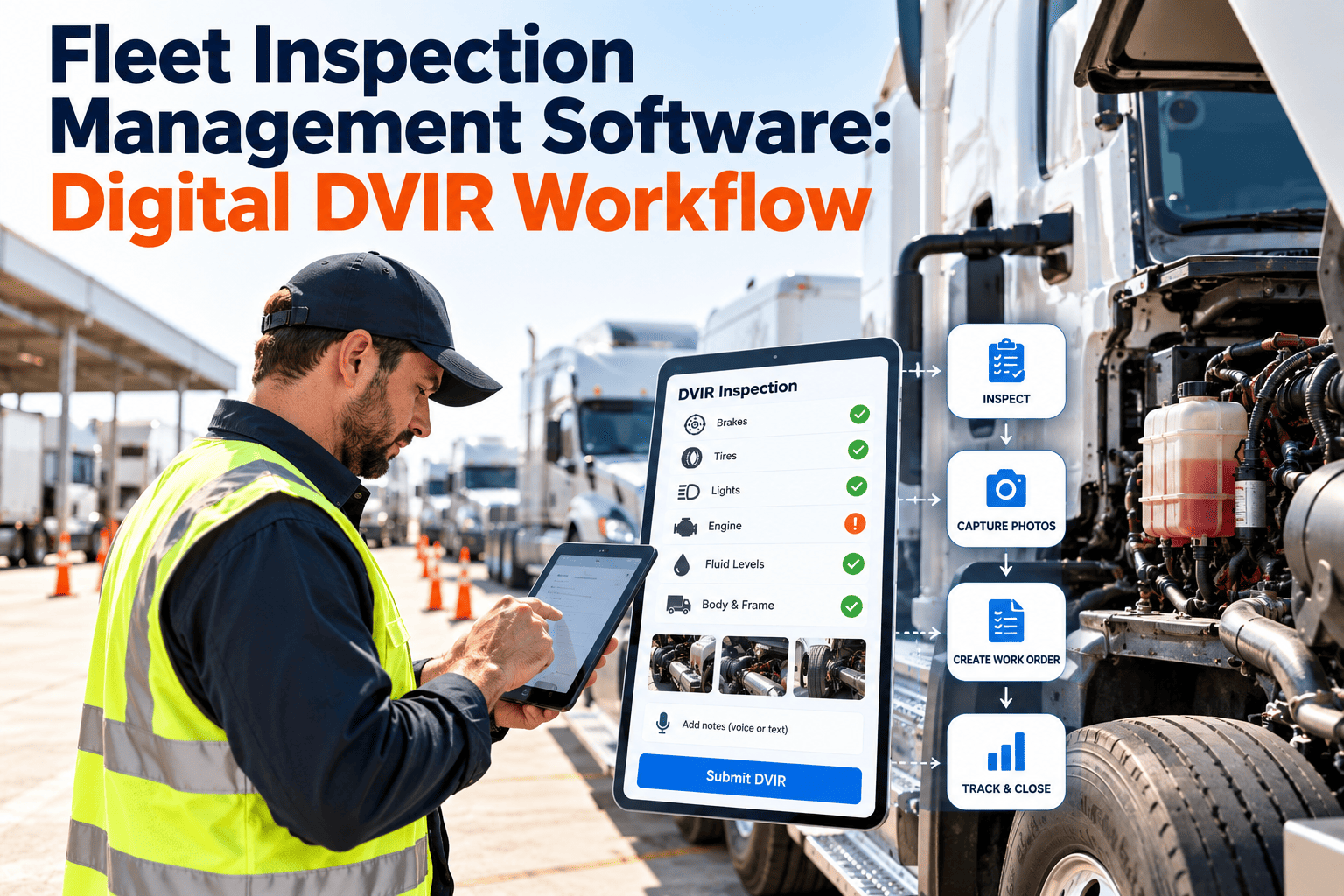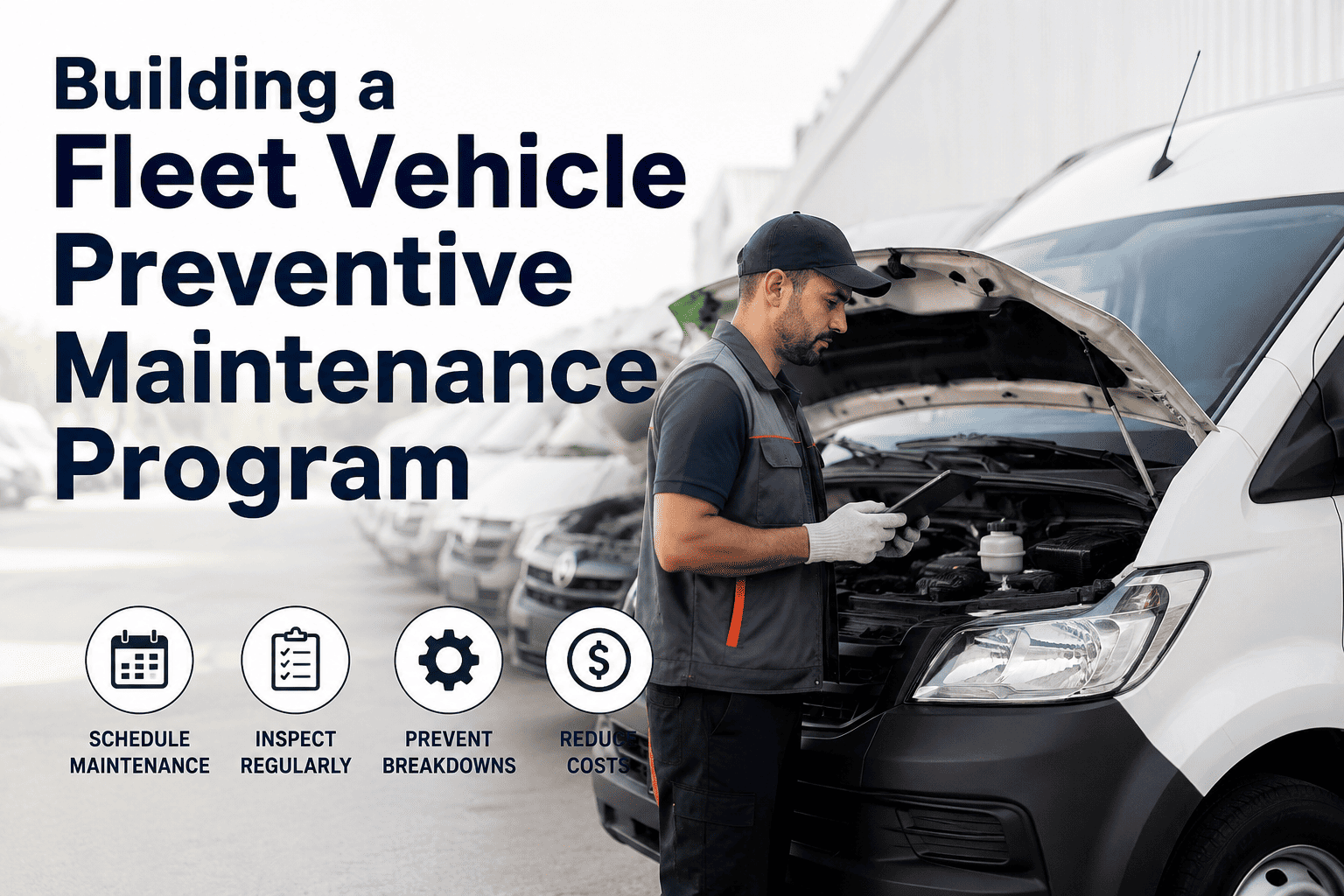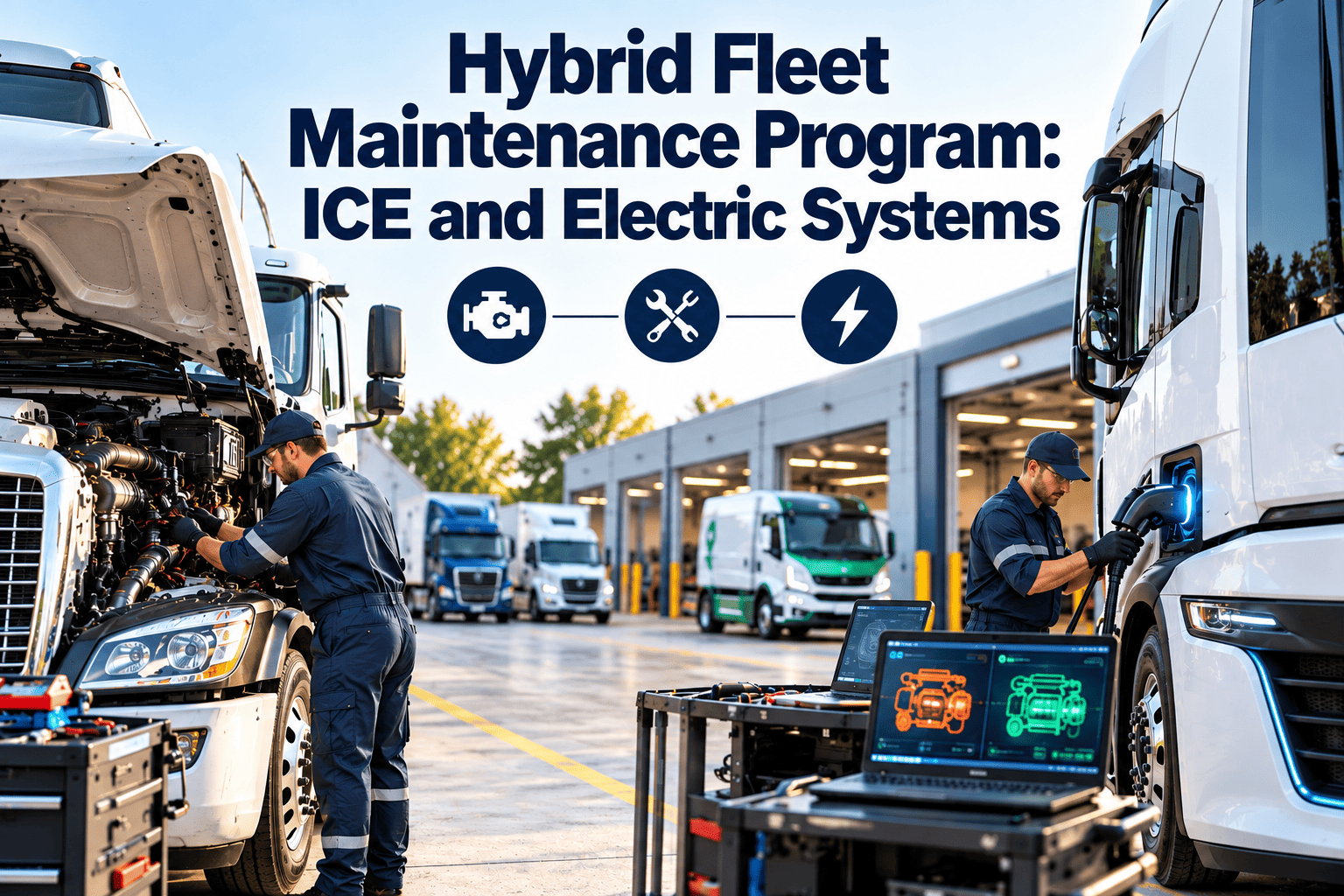
A mixed fleet of combustion, hybrid and electric vehicles does not need three separate maintenance departments, but it does need one program that respects three different sets of failure modes. Oil changes drop away on electric units while battery thermal systems, high-voltage safety and charging equipment arrive. Brakes, tires and suspension stay on every schedule. This guide outlines a practical hybrid fleet maintenance program for ICE and electric systems, and how a fleet maintenance CMMS keeps it organized.
Hybrid Fleet Maintenance Program: ICE and Electric Systems
Build one program with shared tasks, powertrain-specific tasks and a safety gate for high-voltage work. Oxmaint schedules, assigns and records all of it per vehicle.
Know What You Are Maintaining
The term hybrid fleet can mean different things. Each powertrain type has its own task mix.
Maintenance Tasks by System
| System | ICE | Hybrid and PHEV | BEV |
|---|---|---|---|
| Engine oil and filters | Mileage or hours based | Often calendar or engine-hour based | Not applicable |
| Brakes | Friction wear is normal | Regenerative braking reduces pad wear, so check corrosion and sticking | Same, with higher corrosion risk from low use |
| Cooling and thermal | Engine coolant | Engine and electronics loops | Battery and power electronics loops |
| HV battery and cables | Not applicable | Visual checks, connectors, qualified service | Visual checks, connectors, state-of-health tracking |
| 12V battery | Starting and charging checks | Support systems rely on it | Critical for wake-up and systems |
| Tires | Standard wear | Standard wear | Heavier vehicles and instant torque can raise wear |
| Charging equipment | Not applicable | PHEV ports and cables | Connector, cable and charger checks |
Follow each manufacturer's service schedule and procedures. The table shows where tasks differ, not intervals to adopt.
The High-Voltage Safety Gate
Work on high-voltage systems needs trained, authorized personnel and defined procedures. Build this into the work order, not into memory.
One Program for Every Powertrain in Your Fleet
Schedule shared and powertrain-specific tasks, track qualifications and keep every vehicle's history in one system.
Choosing the Right PM Trigger
Mileage is not always the best measure. A hybrid may cover many miles with little engine run time, while a PHEV may run mostly on the engine in one duty and mostly electric in another.
Electric Fleet Items Worth Their Own Tasks
- Thermal system: Inspect coolant level, hoses, pumps and radiator airflow for battery and power electronics.
- Charging port and cables: Check for damage, debris, water ingress, latch wear and heat marks.
- Brake hardware: Clean and lubricate slides and inspect corrosion on low-wear brakes.
- Battery health: Record state-of-health and range trends, and flag sudden changes.
- Software and recalls: Track updates and open campaigns by VIN.
- Tires: Rotate and check pressure since weight and torque can raise wear.
Charging Equipment Is Also an Asset
If chargers are down, electric vehicles are idle. Treat each unit as an asset with inspections and a repair history.
- Enclosure, mounting and signage undamaged
- Cable, connector and holster free of cuts and heat damage
- Display, indicators and network status working
- Ground fault and protection devices tested per manufacturer guidance
- Ventilation and filters clean where fitted
- Faults and outages logged with duration
Before and After: Managing a Mixed Fleet
- One PM template for every vehicle
- HV work assigned by availability
- Chargers tracked separately or not at all
- Warranty claims found late
- PM sets by powertrain and duty
- HV work gated by qualification
- Chargers scheduled like any asset
- Warranty and recall items tracked
Training, Parts and Warranty
- Keep records of technician training and authorization by platform.
- Stock HV-specific consumables and safety equipment separately from standard parts.
- Expect different parts demand, with fewer engine parts and more thermal and charging components.
- Track warranty terms for battery and drive components, including documentation needs.
- Define which repairs are done in-house and which go to dealers or specialists.
Measures to Track
How Oxmaint Supports a Mixed Fleet
- Asset management: Group vehicles and chargers by powertrain, with VIN, meter and warranty data.
- Preventive maintenance: Use mileage, hours and calendar triggers on separate task sets.
- Inspections: Use mobile checklists for HV visual checks and charger rounds.
- Work orders: Attach procedures and sign-offs to high-voltage jobs.
- Inventory: Track parts and consumables by system.
- Dashboards: Compare cost and uptime across the fleet.
Frequently Asked Questions
Keep ICE, Hybrid and Electric Units Running Under One Plan
Bring schedules, qualifications, chargers and repairs into a maintenance system designed for mixed fleets.