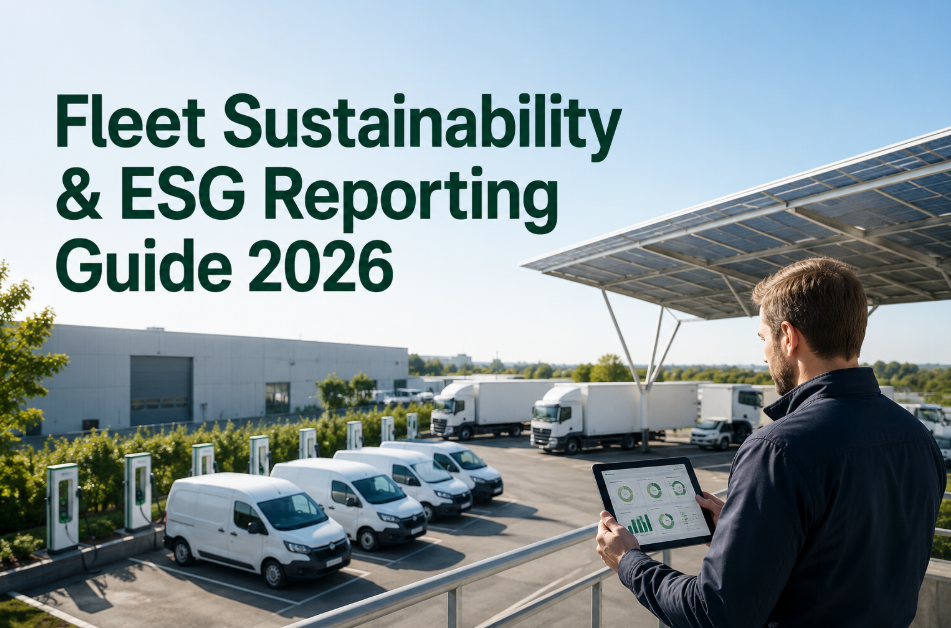
Fleet sustainability has transformed from a corporate social responsibility checkbox into a strategic imperative driven by regulatory mandates, customer requirements, operational cost savings, and competitive differentiation in 2026. The convergence of stricter emissions regulations across global markets, Fortune 500 procurement policies demanding carbon reporting from logistics providers, rising fuel costs making efficiency directly impactful to margins, and consumer preference for environmentally responsible companies creates undeniable business cases for green fleet initiatives that transcend environmental idealism. Yet sustainability remains poorly understood by many fleet operators who assume it requires massive capital investments in electric vehicles or alternative fuels beyond their budgets—missing the reality that comprehensive sustainability programs begin with operational efficiency improvements delivering immediate cost savings while reducing emissions: route optimization cutting unnecessary miles, driver behavior modification reducing fuel waste, preventive maintenance ensuring peak efficiency, and idle time reduction eliminating consumption during non-productive hours. These operational improvements typically deliver 15-25% emissions reductions with minimal capital investment while simultaneously reducing operating costs, creating positive ROI that funds subsequent technology investments in hybrid vehicles, renewable fuels, or electrification appropriate to specific fleet applications. By implementing Oxmaint's Sustainability Programs and ESG platform, fleet operators establish systematic frameworks for measuring environmental impact, identifying improvement opportunities, tracking progress toward carbon reduction goals, and generating the ESG reporting that customers and stakeholders increasingly demand—transforming sustainability from abstract environmental concern into quantifiable operational advantage delivering both ecological and economic benefits.
15-25%
emissions reduction from operational improvements
$12-18k
annual fuel savings per vehicle with optimization
78%
of enterprise buyers require supplier carbon reporting
2030
deadline for major emissions reduction mandates
Start your sustainability journey with measurable results. Sign up for Oxmaint to implement data-driven sustainability programs that reduce environmental impact while improving operational efficiency and profitability.
The Sustainability Impact Pyramid
Fleet sustainability initiatives exist in layers, from foundational operational improvements through advanced technology adoption. Understanding this hierarchy helps fleet managers prioritize investments for maximum environmental and financial impact. Most fleets should establish strong foundations before pursuing capital-intensive technologies. To receive a customized sustainability roadmap for your specific fleet operations, schedule a consultation with our sustainability specialists.
Foundation Layer
Impact: 15-25% emissions reduction
Operational Efficiency Improvements
→ Route Optimization
Reduce unnecessary miles 10-15% through intelligent routing and load consolidation
→ Driver Behavior Management
Improve fuel economy 8-12% by addressing aggressive acceleration, speeding, excessive idling
→ Preventive Maintenance
Maintain peak efficiency through proper tire pressure, air filters, engine tuning
→ Idle Time Reduction
Eliminate wasteful idling saving 5-8% annual fuel consumption
Investment: Minimal | Timeframe: Immediate | ROI: 6-12 months
Technology Layer
Impact: Additional 10-20% emissions reduction
Vehicle Technology & Specification
→ Right-Sizing Fleet Vehicles
Match vehicle size/capability to actual requirements avoiding oversized inefficient trucks
→ Aerodynamic Improvements
Add trailer skirts, cab fairings, gap reducers improving highway MPG 5-10%
→ Low Rolling Resistance Tires
Reduce fuel consumption 3-5% through tire technology upgrades
→ Auxiliary Power Units (APUs)
Eliminate sleeper cab idling reducing emissions 90% during rest periods
Investment: Moderate | Timeframe: 1-3 years | ROI: 18-36 months
Alternative Fuels Layer
Impact: Additional 20-40% emissions reduction
Renewable & Alternative Fuel Adoption
→ Biodiesel Blends (B20-B100)
Reduce lifecycle carbon emissions 20-90% depending on blend percentage and feedstock
→ Renewable Diesel (HVO)
Drop-in replacement reducing emissions 60-80% with no engine modifications required
→ Compressed Natural Gas (CNG)
Reduce greenhouse gas emissions 20-30% with lower operating costs long-term
→ Renewable Natural Gas (RNG)
Near carbon-neutral operation when sourced from organic waste streams
Investment: Significant | Timeframe: 2-5 years | ROI: 36-60 months
Electrification Layer
Impact: 60-90% emissions reduction (grid-dependent)
Electric & Hybrid Vehicle Integration
→ Hybrid Electric Vehicles
Reduce fuel consumption 25-35% ideal for urban delivery routes with frequent stops
→ Battery Electric Vehicles (BEV)
Zero direct emissions perfect for predictable routes under 150-200 miles daily
→ Plug-in Hybrid Electric (PHEV)
Electric operation for short routes with ICE backup for longer missions
→ Charging Infrastructure
Install depot charging or leverage public infrastructure for electric fleet operations
Investment: Substantial | Timeframe: 3-7 years | ROI: 60+ months
Build Your Sustainability Roadmap
Start with operational efficiency, measure your impact, and scale to advanced technologies. Oxmaint provides the framework and data to make sustainability both environmental and economically sustainable.
Sustainability Program Cost-Benefit Analysis
Phase 1: Operational Efficiency (Year 1)
Route optimization reducing miles 12%
6,000 gallons saved
Driver training improving MPG 10%
6,250 gallons saved
Idle reduction program
4,375 gallons saved
Total Fuel Saved:
16,625 gallons
Annual Cost Savings (@$4.00/gal):
$66,500
CO₂e Reduction:
170 metric tons
Program Investment:
-$15,000
Net Year 1 Benefit:
$51,500
Phase 2: Vehicle Technology (Year 2-3)
Aerodynamic improvements (5% MPG gain)
3,125 gallons saved
Low rolling resistance tires (3% MPG gain)
1,875 gallons saved
Additional Annual Savings:
5,000 gallons
Annual Cost Savings (@$4.00/gal):
$20,000
Additional CO₂e Reduction:
51 metric tons
Technology Investment:
-$45,000
Payback Period:
2.3 years
3-Year Cumulative Impact
Total Fuel Saved:
59,875 gallons
Total Cost Savings:
$239,500
Total CO₂e Reduction:
611 metric tons
Total Program Investment:
-$60,000
Net 3-Year Benefit:
$179,500
Program ROI:
299%
Expert Sustainability Perspective
"Fleet operators who wait for perfect electric vehicle solutions miss the reality that 70% of achievable emissions reductions come from operational improvements and existing technology available today. Route optimization, driver training, preventive maintenance, and idle reduction deliver immediate results with positive ROI funding subsequent technology investments. Sustainability isn't about choosing between environmental responsibility and profitability—it's recognizing that fuel efficiency and emissions reduction are mathematically identical, making sustainability programs simultaneously ecological and economical. The fleets leading sustainability aren't spending more; they're operating smarter and measuring better."
JM
Dr. Jennifer Martinez
Fleet Sustainability Consultant & Carbon Accounting Specialist
Transform Your Fleet with Sustainable Operations
Reduce environmental impact while improving profitability. Oxmaint provides the measurement, tracking, and optimization tools to make sustainability both achievable and economically sustainable for fleets of any size.
No credit card • 14-day trial • Full Sustainability Suite Included
Frequently Asked Questions
Do sustainability programs actually improve profitability or just increase costs?
Properly designed sustainability programs improve profitability through operational efficiency, not despite it. The foundational sustainability initiatives—route optimization, driver training, preventive maintenance, idle reduction—reduce fuel consumption which simultaneously cuts emissions and operating costs. A 50-vehicle fleet implementing these operational improvements typically saves $60,000-$100,000 annually in fuel costs alone while reducing emissions 15-25%. These savings fund subsequent technology investments in aerodynamics, low-resistance tires, or alternative fuels. The fleets treating sustainability as separate from profitability misunderstand the fundamental relationship: fuel efficiency and emissions reduction are identical objectives measured differently. Sustainability becomes expensive only when operators skip operational improvements and jump directly to capital-intensive electrification without proper analysis.
Should we wait for electric vehicle technology to mature before starting sustainability efforts?
No, absolutely not. Electric vehicles represent one tool in sustainability programs, not the entire program. While EV technology matures and costs decrease, fleets waiting passively miss 5-10 years of emissions reductions and fuel savings from operational improvements available today. Route optimization reduces emissions immediately regardless of vehicle powertrain. Driver behavior affects efficiency whether burning diesel or using batteries. Preventive maintenance improves fuel economy in current fleets while you evaluate electric adoption timelines. Furthermore, operational efficiency improvements establish the data-driven culture and measurement systems required to successfully implement EVs later. Fleets that optimize operations first adopt EVs more successfully because they understand their actual route profiles, duty cycles, and operational requirements rather than making blind technology bets.
What carbon reporting standards should fleet operators follow for customer requirements?
Most fleet operators should follow the Greenhouse Gas Protocol standards which provide internationally recognized methodology for carbon accounting and reporting. Specifically, use the GHG Protocol Corporate Standard for organizational emissions and the Corporate Value Chain (Scope 3) Standard for supply chain emissions your customers care about. For transportation-specific guidance, the SmartWay program from EPA offers fleet-friendly tools and benchmarks. If customers require specific reporting frameworks like CDP (Carbon Disclosure Project), TCFD (Task Force on Climate-related Financial Disclosures), or SASB (Sustainability Accounting Standards Board), those build on GHG Protocol foundations. Start by measuring Scope 1 (direct fuel combustion) and Scope 2 (purchased electricity) emissions using consistent methodology, then expand to Scope 3 as customer requirements and capabilities grow. Consistency matters more than perfection initially.
How do we choose between biodiesel, renewable diesel, CNG, and electric vehicles?
Technology selection depends on route profiles, infrastructure availability, total cost of ownership analysis, and emissions reduction goals—no single solution fits all applications. Battery electric vehicles excel for predictable urban routes under 150 miles daily with depot charging available. CNG/RNG works for heavy-duty applications with centralized fueling and longer routes. Renewable diesel (HVO) provides immediate emissions reductions as a drop-in fuel requiring no vehicle or infrastructure changes, ideal for diverse route profiles. Biodiesel offers moderate reductions but requires some engine compatibility consideration. The decision framework: (1) Analyze actual route data showing daily mileage, dwell times, and predictability; (2) Assess infrastructure—existing facilities, charging/fueling availability, capital for installations; (3) Calculate total cost of ownership over vehicle life; (4) Evaluate emissions reduction per dollar invested. Most large fleets end up with mixed technologies optimized per use case rather than fleet-wide single solutions.
Can small fleets (under 25 vehicles) meaningfully participate in sustainability programs?
Absolutely—small fleets often achieve faster sustainability improvements than large enterprises because they can implement changes fleet-wide quickly without complex change management. A 10-vehicle fleet implementing route optimization, driver training, and idle reduction sees immediate 15-20% emissions reductions affecting all operations within months. The per-vehicle savings ($10k-15k annually) matter more to small operators where efficiency directly impacts margins. Small fleets should avoid expensive capital investments initially (electric vehicles, CNG infrastructure) and focus on operational improvements delivering immediate ROI. Use telematics data to measure baseline performance, implement driving behavior scorecards, optimize routes weekly, and maintain vehicles properly. These operational improvements establish credibility for ESG reporting to customers without requiring sustainability departments or dedicated staff. Many small fleets achieve better emissions intensity (CO₂ per mile) than larger competitors because operational changes affect them faster.
What sustainability metrics should we track and report to stakeholders?
Track absolute emissions (total metric tons CO₂e annually) to measure program impact, and intensity metrics (emissions per mile, per vehicle, per revenue dollar) to show efficiency improvements independent of fleet growth. Essential metrics: Total Scope 1+2 emissions, emissions per mile traveled (kg CO₂e/mile), fuel economy (MPG or MPGe for electric), percentage alternative fuel/electric miles, and year-over-year improvement percentages. For customer reporting, provide emissions per shipment or ton-mile to demonstrate your carbon intensity. Track leading indicators predicting future improvements: percentage of drivers completing eco-driving training, percentage of fleet using low-resistance tires, miles optimized through routing software, average idle time per vehicle. Report quarterly internally to drive operational focus, annually externally for ESG disclosure. The key is consistent methodology year-over-year enabling trend analysis rather than perfect precision in any single year.