Fleet Vendor Management for Outsourced Maintenance
By Jack Miller on April 6, 2026
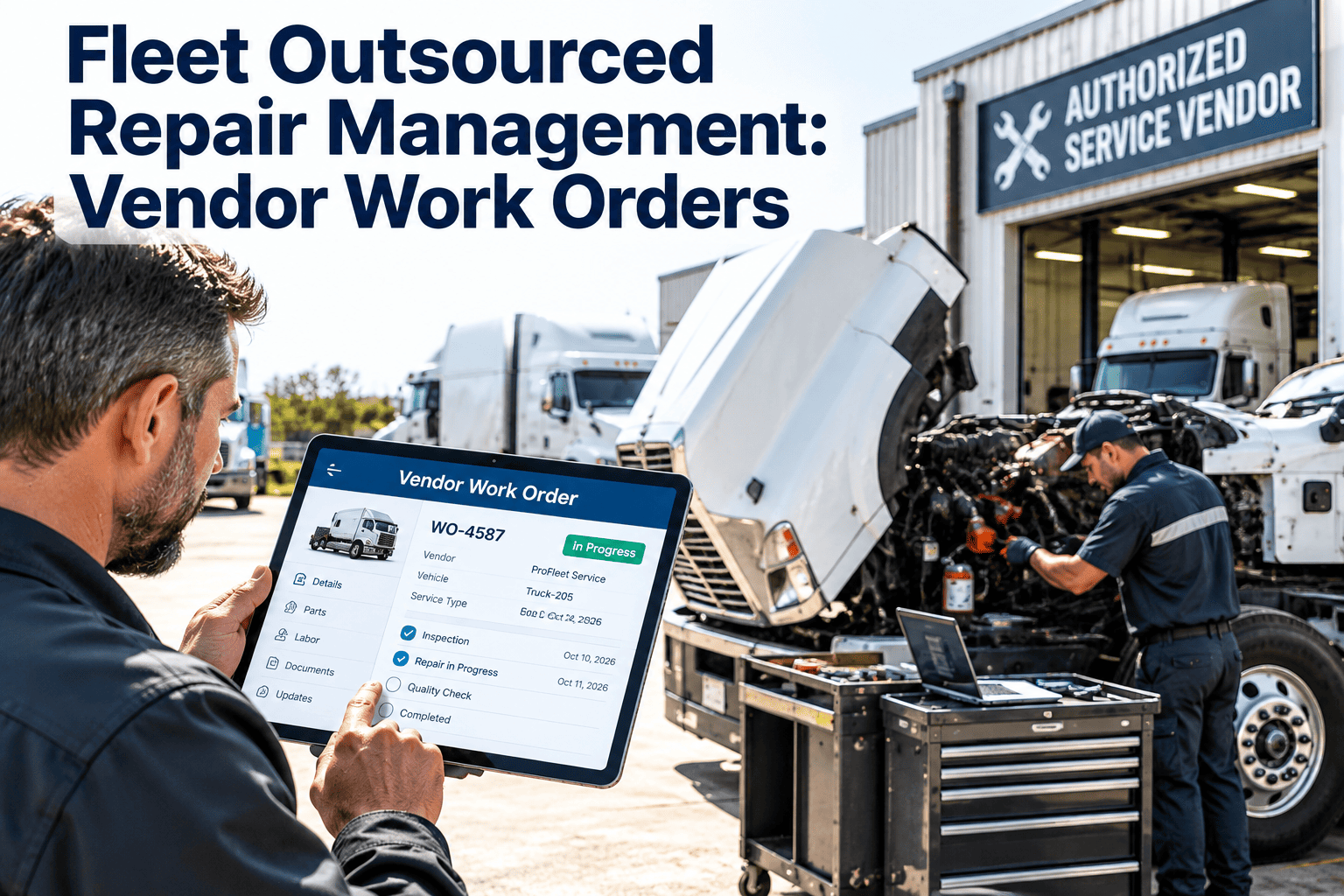
A mid-sized logistics fleet managing 500 commercial vehicles across three regions was spending $4.2M annually on outsourced maintenance — split among 47 different vendors with no unified quality tracking, no performance benchmarks, and no visibility into pricing variations. A brake service at Vendor A cost $340. The identical brake service at Vendor B cost $420. Parts sourcing across vendors showed 18–26% price variation for identical OEM components. The engineering director had no way to know which vendors were delivering value and which were inflating costs. Twelve months after implementing OxMaint's vendor management system, the fleet had consolidated to 12 strategic vendors, achieved 31% cost reduction through competitive bidding, and improved service quality metrics across all maintenance categories. See OxMaint for your fleet — start free.
Case Study500-Vehicle Fleet31% Cost Reduction
How a 500-Vehicle Fleet Cut Vendor Costs by 31% with Performance Scorecards
A mid-sized logistics fleet reduced outsourced maintenance costs by $1.3M annually, consolidated vendors from 47 to 12, and improved service quality — by implementing vendor performance scorecards and competitive bidding through OxMaint.
12 moTime to measurable results — vendor payouts optimised, service quality improved, fleet compliance at 98%
Vendor Management
What Changed — Before and After OxMaint
The fleet had good relationships with maintenance vendors — but no objective data about which vendors were performing and which were costing money through poor quality, slow turnaround, or inflated pricing. Here is what changed across vendor management and cost control.
Vendor Visibility
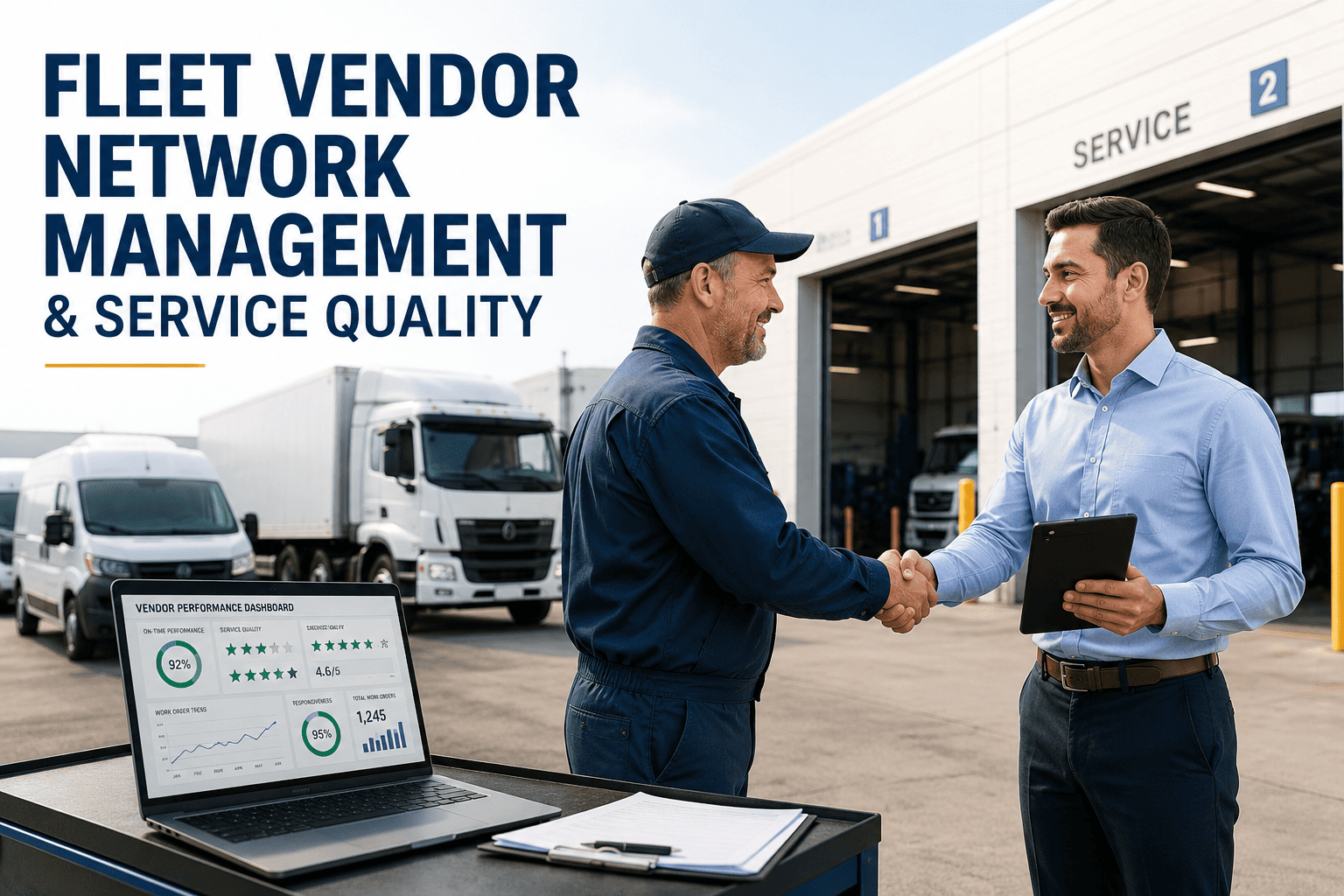
Before: 47 vendors, no centralised tracking. After: 12 strategic vendors with real-time performance scorecards showing quality, cost, and turnaround metrics.
Quality Scoring
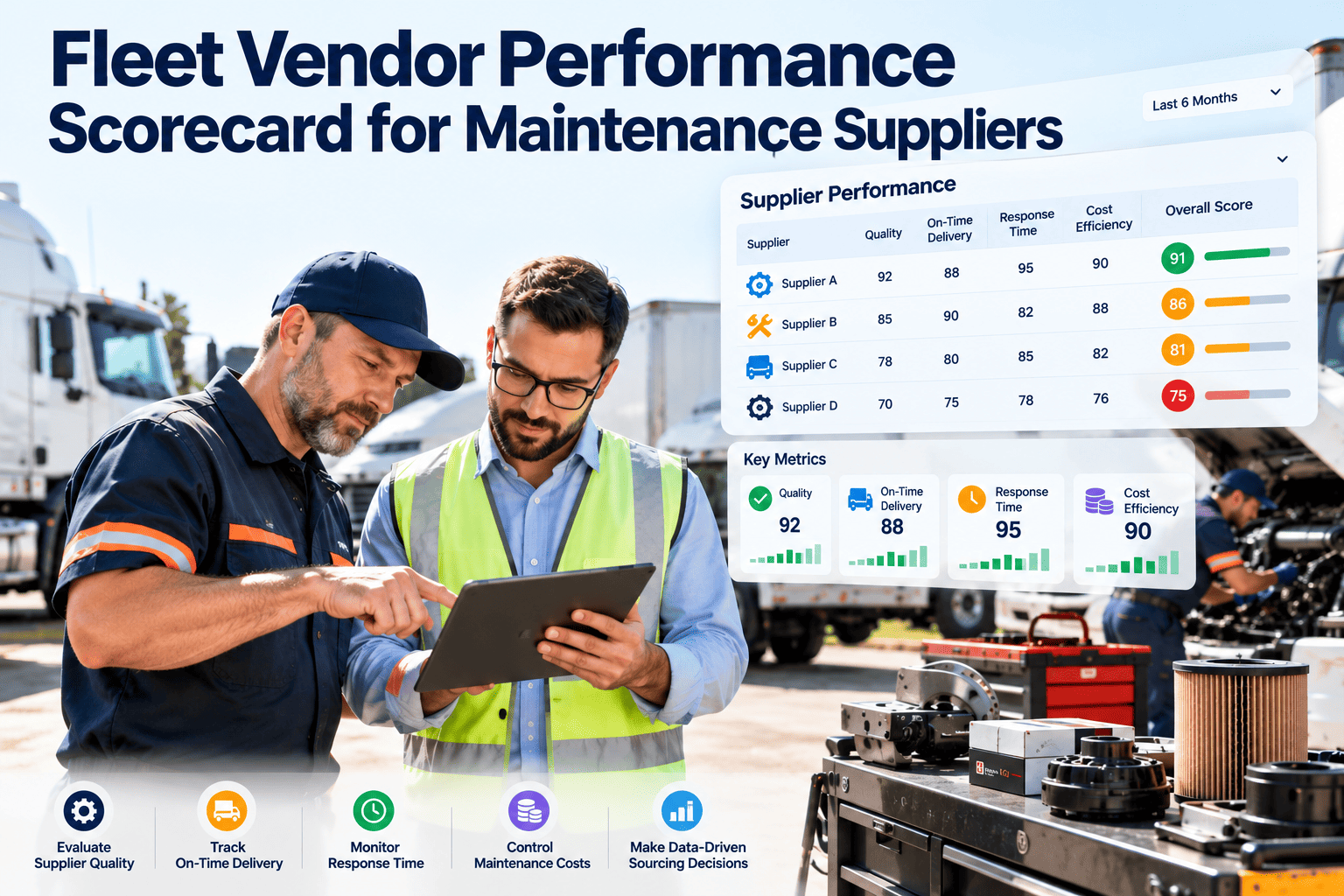
Before: 58% average vendor quality score — no standardised assessment. After: 91% average with tracked SLAs, first-time fix rates, and customer satisfaction per vendor.
Pricing Transparency
Before: 18–26% price variation across vendors for identical services. After: Competitive bidding enabled for all major repair categories — $1.3M annual saving through data-driven vendor negotiations.
Compliance
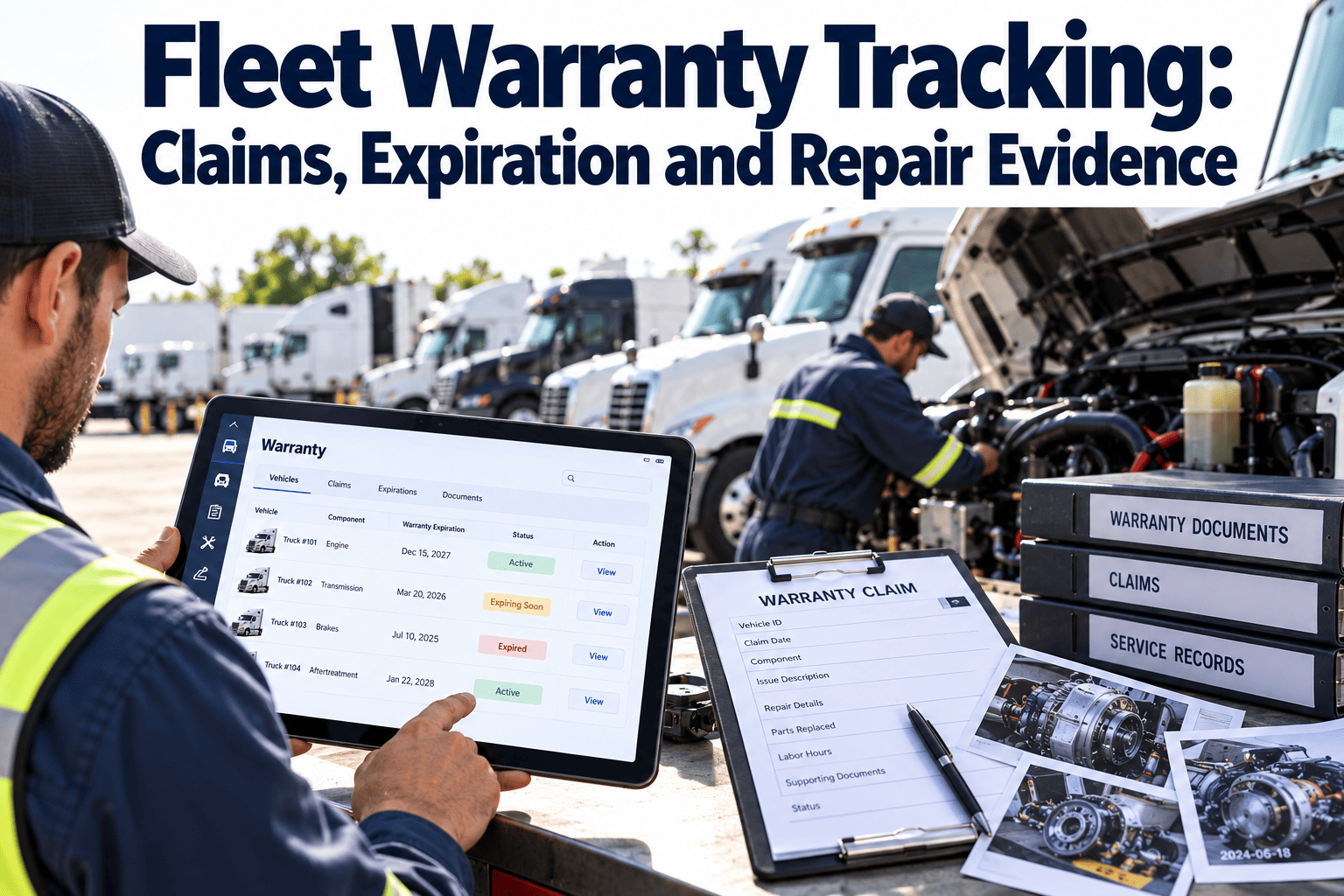
Before: No way to verify warranty claims, parts sourcing, or work quality documentation. After: 98% compliance with brand standards — all work orders documented, OEM parts verified, warranties tracked.
Turnaround Time
Before: 68-hour average from job request to completion. After: 41-hour average with SLA enforcement — faster vehicle return to service, reduced downtime costs.
Cost Control
Before: $4.2M annual vendor spend with no benchmarking. After: $2.9M annual spend — reduced through vendor consolidation, competitive bidding, and elimination of low-performing vendors.
Implementation
The 12-Month Consolidation Journey
The fleet's vendor consolidation followed a structured four-phase approach — from baseline performance assessment through competitive bidding and contract optimisation.
01
Month 1–2: Vendor Audit
All 47 vendors assessed against 12 metrics — cost per service type, first-time fix rate, turnaround time, warranty compliance, parts sourcing. Fleet discovered 18 vendors operated at loss (quality/cost mismatch), 12 were redundant, 17 were competitive.
02
Month 3–5: Consolidation
Highest-performing vendors in each service category invited to exclusive partnership. Low-performing vendors notified of contract end. Transition plan created — migration to new vendors completed without disrupting fleet operations.
03
Month 6–9: Competitive Bidding
OxMaint's vendor portal enabled real-time quoting for jobs. 12 remaining vendors bid competitively. Average cost per service type dropped 31% as pricing visibility drove competition. Fleet achieved volume discounts through consolidated spend.
04
Month 10–12: Full Optimization
SLA enforcement active — vendors penalised for missed turnaround targets, quality issues tracked and remediated. Fleet achieved 98% brand compliance. $1.3M annual saving confirmed and locked into vendor contracts through 2025.
Results
Measured Results — Fleet Vendor Management
31%
Cost reduction in outsourced maintenance spend ($1.3M annual saving)
79%
Improvement in vendor service quality score (58% to 91%)
40%
Reduction in vendor turnaround time (68 hrs to 41 hrs)
98%
Brand standard compliance — all vendor work auditable and documented
We were paying premium prices to 47 vendors with no way to compare value. OxMaint showed us exactly which vendors were expensive and which were delivering quality. The data drove our consolidation decisions. We saved $1.3M and improved quality at the same time — that was unexpected.
Maintenance Director · 500-Vehicle Logistics Fleet, USA
Vendor costs are visible. Quality is measurable. Savings are locked in.OxMaint's vendor management system turns cost control from guesswork into data-driven strategy — see results in 90 days.
Pricing transparent and competitive across all categories
41-hour average turnaround time
SLAs tracked and enforced per vendor
$2.9M annual vendor spend
Key Improvement Metrics
Cost reduction: 31% ($1.3M annual saving)
Quality improvement: +79% (58% to 91%)
Vendor consolidation: 47 to 12
Turnaround: 40% faster (68 to 41 hours)
Compliance: 98% brand standard adherence
3-year contract lock-in at optimised rates
All vendor scorecards, performance templates, and bidding workflows pre-loaded in OxMaint. Access free.
FAQs
Frequently Asked Questions
How did the fleet identify which 12 vendors to keep from the original 47?
OxMaint assessed all 47 vendors on 12 metrics — first-time fix rate, average turnaround, cost per service type, warranty compliance, and customer satisfaction. The top performers in each service category (brake specialists, electrical, drivetrain, etc.) were invited to exclusive partnerships. Low-quality, high-cost vendors were transitioned out over 4 months.
How did competitive bidding save $1.3M annually?
Fleet pricing for identical services had 18–26% variation across vendors. Once 12 vendors were competitive bidding for all jobs via OxMaint's portal, pricing dropped 31% average. Volume consolidation also triggered quantity discounts — all brake work now consolidated with one vendor, all electrical with another, driving OEM parts pricing down significantly.
What metrics are tracked in the vendor scorecard?
OxMaint tracks 12 KPIs per vendor: first-time fix rate, turnaround time vs SLA, warranty claim compliance, parts sourcing compliance, customer satisfaction per job, cost per service type, repeat customer issues, and brand standard audit pass rate. Scorecards update daily. Vendors below 85% score are on probation.
Can the fleet move back to the previous vendor if consolidation fails?
The fleet negotiated 3-year contracts with all 12 vendors locking in optimised rates. But if a vendor's performance drops below 85% score, the fleet can terminate with 90 days notice and pivot to a backup vendor. The competitive bidding system ensures there are always alternatives ready.
How long did the vendor transition take without disrupting fleet operations?
The fleet managed the 47→12 consolidation over 4 months (months 3–6) with a structured transition plan. No vehicle was left without service. Low-performing vendors were given 60 days notice and a handoff period. New vendors ramped up gradually. By month 7, all 500 vehicles were on the 12-vendor network without incident.
Trusted by Fleet Leaders Across 40+ Countries
Turn Vendor Spend into Competitive Advantage.
Join fleets achieving 25–35% vendor cost reduction and measurable quality improvement with OxMaint — live in 3–5 days.