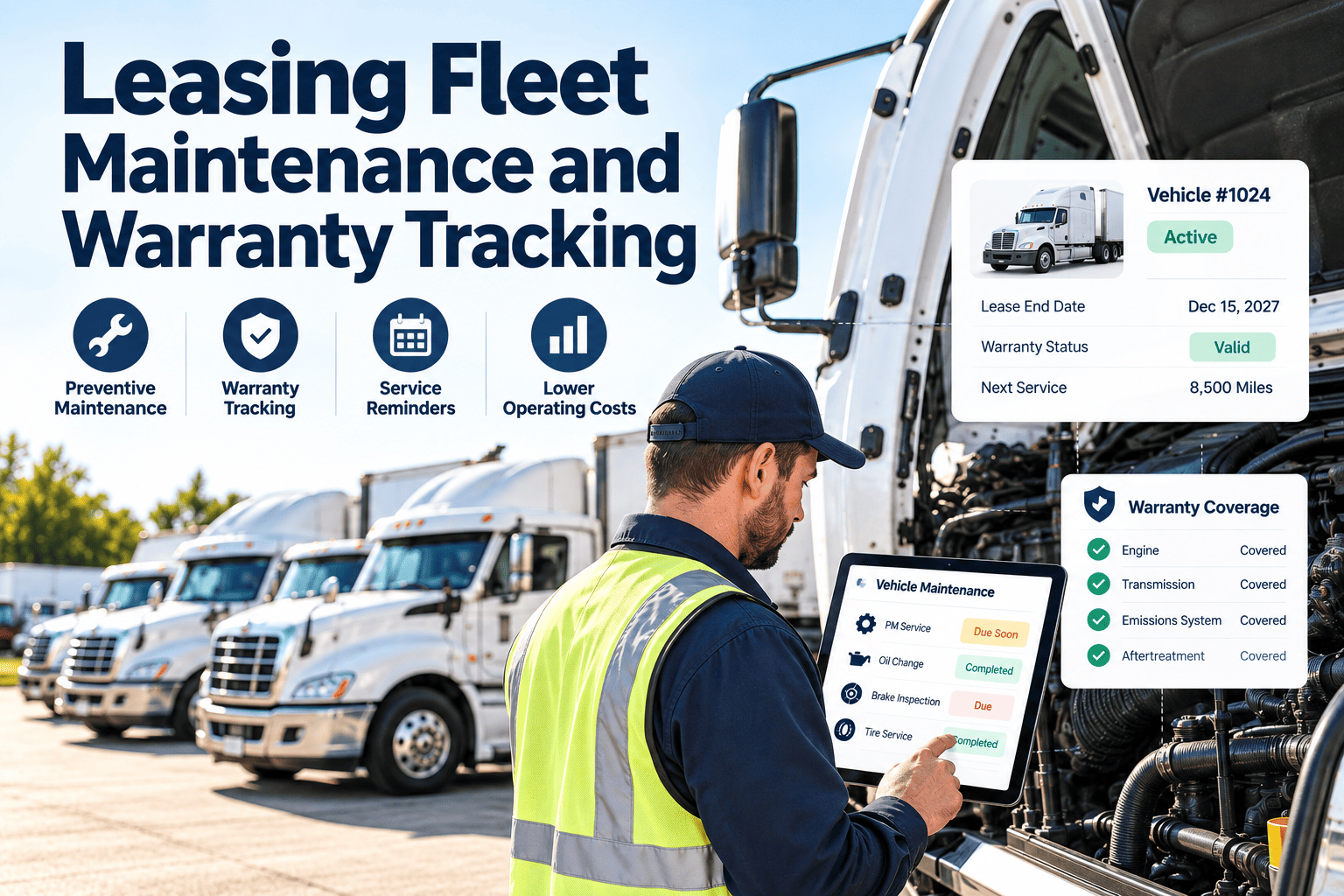
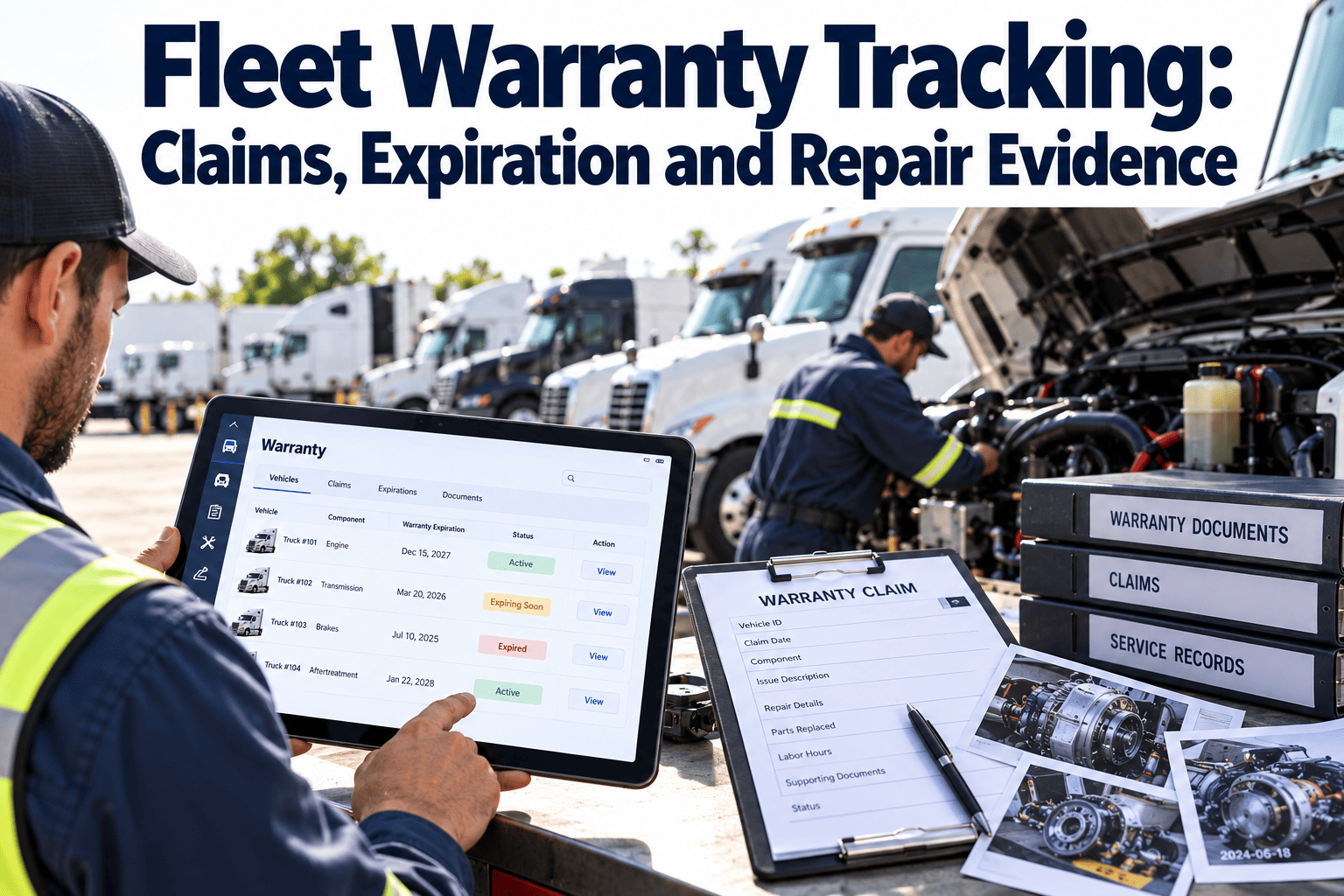
Fleet operators leave millions of dollars on the table annually through poor warranty management—paying out-of-pocket for repairs that manufacturers should cover, missing claim deadlines by days, and losing documentation that would have validated coverage. Industry data shows that fleets with manual warranty tracking systems recover only 40-60% of eligible warranty costs, while those using automated platforms recover 85-95%. The difference isn't just operational efficiency; it's direct impact to your bottom line. A 100-vehicle fleet that improves warranty recovery from 50% to 90% can recapture $50,000-$150,000 annually in previously lost reimbursements. Yet most fleet managers still track warranties in spreadsheets, rely on technician memory, and discover coverage gaps only after paying for repairs. This reactive approach treats warranty management as a paperwork burden rather than a profit center. By implementing Oxmaint's Warranty Tracking and Claims platform, fleet operators transform warranty management into an automated system that flags expiring coverage, validates claims before repairs begin, and ensures every eligible dollar is recovered—converting a cost center into a revenue recovery operation.
40-60%
Warranty recovery rate with manual tracking
85-95%
Recovery rate with automated systems
$150k+
Annual recoverable dollars per 100 vehicles
30 Days
Average claim filing window before denial
Stop leaving warranty money unclaimed. Sign up for Oxmaint to automate warranty tracking and maximize your recovery rates starting today.
The Warranty Management Dashboard
Imagine knowing the exact warranty status of every component on every vehicle in real-time—powertrain coverage expiration dates, extended warranty terms, vendor-specific claim requirements, and which repairs qualify for reimbursement before authorizing work. This visibility transforms warranty management from reactive scrambling to proactive profit recovery. Oxmaint's Warranty Dashboard centralizes all warranty information, automatically alerts managers when coverage nears expiration, flags repair orders that may qualify for warranty claims, and tracks claim submission status through resolution. The system eliminates the "I didn't know it was still under warranty" scenarios that cost fleets thousands monthly. To see how much warranty revenue your fleet is currently leaving unclaimed, schedule a warranty audit with our recovery specialists.
Active Warranties
247 Vehicles
82% Coverage Rate
Expiring Soon (30 Days)
23 Vehicles
Action Required
Pending Claims
$47,850
15 Claims in Process
YTD Recovery
$218,450
91% Recovery Rate
The 6 Types of Fleet Warranties You Must Track
Fleet warranties aren't a single entity—they're a complex web of manufacturer coverage, extended service contracts, component-specific warranties, emission system guarantees, tire warranties, and aftermarket parts protection. Each has different terms, claim procedures, and expiration triggers. Missing one category means leaving money unclaimed. Understanding what coverage you have, when it expires, and how to file claims for each type is foundational to maximizing recovery.
1
Coverage:
Powertrain & Basic Components
Typical Duration:
3 Years / 36,000 Miles
Common Pitfall:
Technicians don't verify coverage before starting repairs
2
Coverage:
Engine, Transmission, Drivetrain
Typical Duration:
5-10 Years / 100,000+ Miles
Common Pitfall:
Missing required maintenance documentation for claim validation
3
Coverage:
Catalytic Converter, DPF, Sensors
Typical Duration:
8 Years / 80,000 Miles (Federal)
Common Pitfall:
Not knowing emissions warranties extend far beyond base coverage
4
Coverage:
Batteries, Tires, HVAC, Electronics
Typical Duration:
Varies by Component (1-5 Years)
Common Pitfall:
Replacing parts without checking component-specific warranties first
5
Coverage:
Comprehensive Post-Warranty Protection
Typical Duration:
Customizable Term & Mileage
Common Pitfall:
Not tracking contract-specific claim procedures and exclusions
6
Coverage:
Replacement Parts & Labor
Typical Duration:
90 Days to 2 Years
Common Pitfall:
Losing warranty documentation from multiple parts vendors
The Warranty Claim Process: Step-by-Step
Successful warranty claims don't happen by accident—they follow a systematic process from initial failure detection through final reimbursement. Each step has specific documentation requirements, timing constraints, and approval checkpoints. Missing any step typically results in claim denial, forcing you to absorb costs that should have been covered. The workflow below represents best practices that maximize approval rates and minimize processing delays.
1
Failure Detection & Documentation
Driver reports issue or technician identifies problem during inspection. Immediately document symptoms, error codes, operating conditions, and mileage. Take photos of failed components.
2
Coverage Verification
Before authorizing ANY repair, verify active warranty coverage in your tracking system. Check manufacturer warranty, extended contracts, and component-specific coverage. Confirm claim procedures.
3
Pre-Authorization Request
Contact warranty provider before starting work. Provide failure details, diagnostic findings, and proposed repair. Many warranties require pre-authorization or claim denial is automatic.
4
Repair Execution & Evidence
Perform authorized repairs following warranty requirements. Document before/after conditions, parts replaced, labor hours, and repair procedures. Save failed parts as warranty providers often require inspection.
5
Claim Submission
Submit complete claim package within specified timeframe (typically 30 days). Include work order, parts invoices, diagnostic reports, photos, and maintenance history proving compliance with warranty requirements.
✓
Follow-Up & Recovery
Track claim status through resolution. Respond immediately to any information requests. Appeal denials with additional documentation. Record recovery in system to improve future claim accuracy.
Late Filing
Warranty providers set strict claim submission deadlines—typically 30-90 days from repair completion. Missing these deadlines by even one day results in automatic denial regardless of validity.
Prevention Strategy: Automated systems like Oxmaint flag repairs that may qualify for warranty claims immediately after completion and track submission deadlines, sending alerts before time expires.
Incomplete Documentation
Missing maintenance records, insufficient diagnostic details, lack of failure evidence, or incomplete work orders give warranty providers easy grounds to deny legitimate claims.
Prevention Strategy: Use digital work order systems that require technicians to complete all required fields before closing tickets. Attach photos and diagnostic reports automatically to every claim.
Maintenance Gaps
Warranty coverage often requires proof of regular preventive maintenance. Missing oil changes, delayed service intervals, or gaps in maintenance history void coverage even if the failure is clearly defect-related.
Prevention Strategy: Digital maintenance logs with timestamped service records provide ironclad proof of compliance. Automated PM scheduling ensures no maintenance windows are missed, protecting warranty validity.
Lack of Pre-Authorization
Many warranties require contacting the provider before starting repairs to get authorization codes and confirm coverage. Performing repairs first and filing claims later frequently results in denial.
Prevention Strategy: Implement workflow rules that require coverage verification and pre-authorization before technicians can begin any major repair work. Make authorization codes mandatory fields in work orders.
Wrong Repair Classification
Describing repairs incorrectly—listing covered failures as maintenance items, or attributing problems to wrong causes—gives warranty providers technical grounds to deny even valid claims.
Prevention Strategy: Train technicians on warranty-friendly documentation. Use standardized failure codes and repair descriptions. Review high-value claims before submission to ensure proper classification.
Recover More Warranty Dollars Starting Today
Stop accepting low warranty recovery rates as inevitable. Oxmaint's automated tracking and claims management system helps fleets recover 85-95% of eligible warranty costs.
Warranty Recovery Impact by Fleet Size
25-Vehicle Fleet
$18,750Annual Recoverable Warranty Costs
Current Recovery (50%)
$9,375
Potential Recovery (90%)
$16,875
Unclaimed Annually
$7,500
System ROI
3 Months
Most Common
50-Vehicle Fleet
$52,500Annual Recoverable Warranty Costs
Current Recovery (50%)
$26,250
Potential Recovery (90%)
$47,250
Unclaimed Annually
$21,000
System ROI
6 Weeks
100-Vehicle Fleet
$150,000Annual Recoverable Warranty Costs
Current Recovery (50%)
$75,000
Potential Recovery (90%)
$135,000
Unclaimed Annually
$60,000
System ROI
1 Month
Expert Warranty Management Insight
"Warranty management isn't about paperwork—it's about creating systems that make claiming coverage easier than paying out-of-pocket. When your default response to any failure is 'check warranty status first,' you fundamentally change your cost structure. I've seen fleets go from 40% recovery rates to 90%+ simply by implementing automated tracking and requiring coverage verification before authorizing repairs. That's not incremental improvement—it's transformational impact to your maintenance budget."
RL
Robert Lancaster
Fleet Warranty Consultant & Claims Specialist
Building Your Warranty Management System
Transitioning from manual warranty tracking to an automated system doesn't happen overnight, but it doesn't take months either. The implementation roadmap below shows how to systematically build a warranty management program that pays for itself within the first quarter through recovered claims that would have otherwise been paid out-of-pocket.
• Collect all existing warranty documentation for entire fleet
• Input current warranty data into tracking system
• Identify gaps in warranty documentation and request copies from vendors
• Establish baseline: calculate current warranty recovery rate
• Train technicians on coverage verification before starting repairs
• Implement workflow rules requiring pre-authorization for major repairs
• Create standardized claim documentation templates
• Set up automated alerts for expiring warranties and pending claims
• Review past 90 days of repairs for missed warranty opportunities
• File retroactive claims where still within submission windows
• Establish ongoing claim review and submission cadence
• Track recovery rates and identify process improvement opportunities
• Monitor warranty utilization trends to inform vehicle purchasing decisions
• Negotiate extended warranty terms based on historical claim data
• Continuously improve documentation quality to maximize approval rates
• Calculate monthly warranty recovery as percentage of maintenance spend
Transform Warranty Management into Profit Recovery
Join fleet operators who have increased warranty recovery rates from 50% to 90%+ with Oxmaint's automated tracking and claims management system. Start your free trial today.
No credit card • 14-day trial • Full Warranty Management Suite Included
Frequently Asked Questions
How do I know if a repair qualifies for warranty coverage?
Check three things: (1) Is the component still within warranty period based on date/mileage? (2) Is the failure due to defect/malfunction rather than normal wear or abuse? (3) Has required maintenance been performed and documented? If all three are yes, the repair likely qualifies. Automated warranty systems check these criteria against every repair order and flag potential claims immediately. When in doubt, contact the warranty provider before authorizing work—pre-authorization prevents disputes later.
What happens if I miss the warranty claim submission deadline?
Most warranty providers deny claims filed after their deadline regardless of validity—you absorb the full repair cost. Some providers allow appeals with compelling documentation explaining the delay, but approval is rare. This is why automated deadline tracking is critical. Oxmaint sends escalating alerts starting 15 days before deadlines, ensuring claims are never lost to time expiration. The cost of one missed claim often exceeds the annual cost of warranty tracking software.
Should I use dealer service for warranty repairs or independent shops?
Manufacturer warranties typically allow service at any qualified facility, though dealers may offer streamlined claim processing since they submit directly to manufacturers. Extended warranties often have approved facility networks—verify coverage before choosing a shop. The key factor isn't dealer vs. independent—it's documentation quality. Any shop can perform warranty work if they properly document failures, follow warranty procedures, and submit complete claims. Choose based on overall cost, quality, and claim success rate rather than facility type alone.
How long does warranty claim processing typically take?
Timeline varies by warranty type and provider: manufacturer warranties typically process in 2-4 weeks, extended service contracts in 3-6 weeks, and component warranties in 1-3 weeks. Complex claims requiring physical part inspection take longer. Incomplete documentation adds 2-4 weeks while you gather requested information. Pre-authorized claims process fastest since coverage questions are resolved before repair. Track all claims through your warranty management system to identify slow-paying providers and follow up on delayed approvals proactively.
Can warranty coverage be transferred if I sell a vehicle?
Manufacturer warranties typically transfer automatically to new owners, maintaining coverage through the original term. Extended service contracts may be transferable but often require notification and sometimes a transfer fee. Always provide warranty documentation to buyers—it adds resale value. Before selling, check if any recent repairs qualify for warranty claims you haven't yet filed. Process those claims before transfer since new owners can't file claims for repairs performed under previous ownership. Document and transfer all warranty information as part of the vehicle sale.
Is warranty management software worth it for small fleets?
Absolutely. Even a 10-vehicle fleet with average warranty recovery of $1,500 per vehicle annually has $15,000 in potential claims. Manual tracking at 50% recovery means $7,500 left unclaimed. Automated systems improving recovery to 90% reclaim $6,000 annually—far exceeding software costs. More importantly, small fleets can't afford administrative overhead; automation handles warranty management without adding staff. The return on investment is often visible within the first quarter through a single large claim that would have been missed with spreadsheet tracking.
.png)