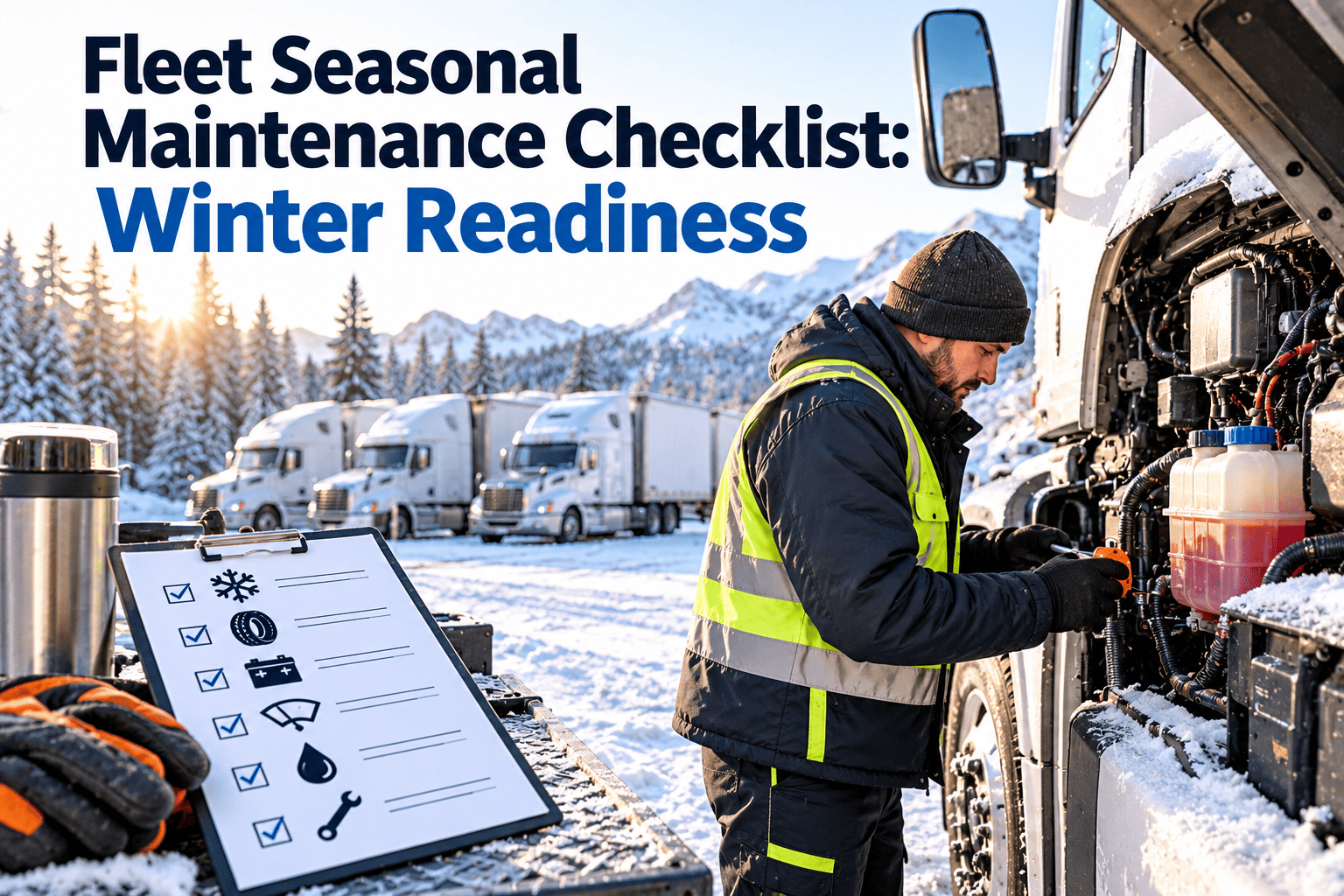
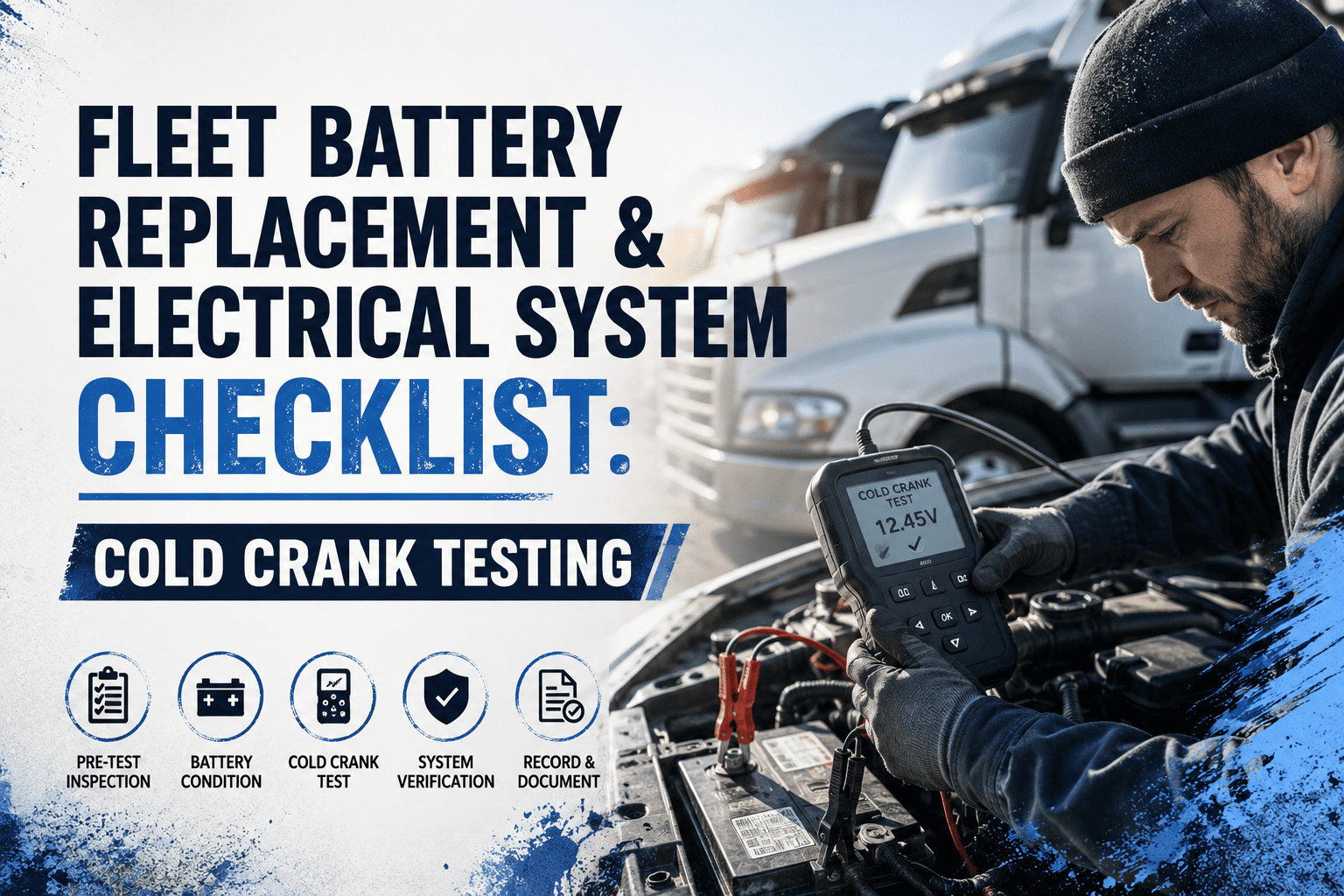
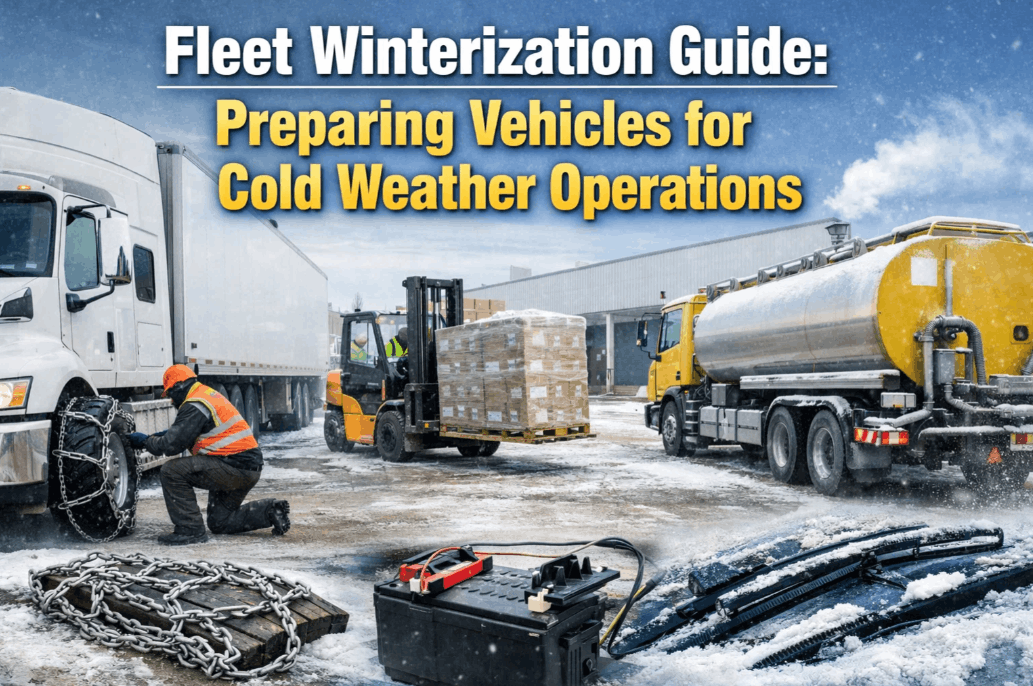
Winter is the single most damaging season for commercial vehicle reliability — batteries fail at 3× their normal rate below 0°F, diesel fuel gels at -15°F untreated, air system moisture freezes valves and locks up brakes, and coolant that tested fine in October can freeze solid in January if concentration has degraded. A fleet that enters winter without a structured winterization programme is not unlucky when vehicles fail — it is unprepared. Oxmaint's winter PM module schedules every winterization task by vehicle, captures test results digitally, and alerts maintenance teams before cold-weather conditions expose an untreated system to failure.
Winterization Timeline — What to Do and When
Timing is everything in fleet winterization. Battery tests in September are actionable — the same test in January is too late. The timeline below shows the recommended window for every winterization task, so maintenance teams can sequence the programme correctly rather than discovering gaps when cold temperatures arrive.
How Technology Strengthens Winter Fleet Preparation
Manual winterization relies on technician memory and paper checklists that do not alert anyone when a task is missed or a reading is out of spec. Four technologies now make winter fleet preparation proactive rather than reactive — catching the battery that will fail next Tuesday before it strands a driver on a January highway. Oxmaint connects all four into a single winter PM workflow.
1. Coolant and Antifreeze System Checklist
Coolant concentration failure is one of the most commonly missed winterization items — because the fluid looks fine visually even when protection has degraded to +10°F. Only a refractometer tells the true story. Log coolant test results and freeze protection readings per vehicle with Oxmaint.
Coolant freeze protection — refractometer test
Test freeze point with a refractometer — not a float-ball tester, which is inaccurate at fleet precision levels. Minimum protection: -34°F for USA/Canada northern routes; -22°F for UK/Germany. Record measured protection level per vehicle. Any vehicle below minimum protection must have coolant drained and replaced before first freeze event. OOS — below min protection
Coolant pH and condition — corrosion inhibitor check
Test coolant pH — acceptable range 7.5–11. Below 7 indicates acid conditions actively corroding aluminium components. Check for oil contamination (brown froth on dipstick or at fill cap) which indicates a head gasket leak. Depleted inhibitors are invisible to the eye but destroy water pump impellers and heater cores from inside over the winter season. Defect — pH below 7.5
Radiator hoses and heater hoses — cold weather brittleness check
Squeeze hoses when cold — a hose that feels hard and inflexible when cold but softens with heat has experienced heat cycling damage that increases rupture risk in rapid freeze-thaw cycles. Check all clamps for tightness. A hose rupture in sub-zero conditions leaves the driver stranded with no means to restart without coolant. Defect — brittle/cracked
Thermostat operation — warm-up time verification
Verify thermostat opens at the correct temperature (typically 180–195°F). A stuck-open thermostat prevents the engine reaching operating temperature in cold weather — causing fuel dilution of engine oil, increased wear, and white smoke at idle. Thermostat replacement is the cheapest winter insurance a maintenance team can buy. Defect — stuck open
Block heater and cab heater — function test
Test engine block heater element with a circuit tester — a failed block heater element is not visible externally but leaves diesel engines extremely difficult to start below -10°F. Test cab heater output — a heater core blocked with scale produces inadequate cab warming and poor windshield defrost, creating a visibility hazard on winter routes. Defect — failed element
OBD Integration tip: Coolant temperature sensor data streaming via OBD to Oxmaint flags vehicles that take significantly longer than normal to reach operating temperature — a reliable indicator of a stuck-open thermostat before the driver notices white smoke at idle. See how Oxmaint uses OBD warmup data for winter readiness monitoring.
2. Battery and Electrical System Checklist
Battery capacity drops by 35% at 32°F and by 60% at 0°F — while cold engine cranking resistance increases by 150%. A battery that passes a load test at 80% capacity in October will fail to start the same vehicle at -10°F in January. Winter battery testing must be performed in autumn, not when the first cold morning fails to start. Record battery load test results and replacement history with Oxmaint.
Battery load test — all batteries including auxiliaries
Conduct a battery load test at half the cold cranking amp (CCA) rating for 15 seconds. Voltage must not drop below 9.6V during the test. Any battery failing this test must be replaced before winter — a battery at 75–79% CCA that passes in September will fail at 0°F engine start when cold resistance peaks. Test auxiliary and jump-start batteries on vehicles equipped with them. Defect — below 9.6V
Battery terminals and cable connections
Clean all terminal corrosion with a wire brush and apply protective terminal spray. Tighten all terminal clamps — a loose terminal connection that causes intermittent starting in mild weather will cause a complete no-start in cold conditions as cold-induced contraction reduces already-inadequate contact area. Check battery hold-down clamp — a battery that vibrates loose can arc to the frame. Defect — corrosion/loose
Alternator output and charging voltage — cold load test
Measure charging voltage at idle with all electrical loads active (heater fan, defrost, lights, heated mirrors). Cold-weather electrical loads can draw 80–120A continuously — an alternator that maintains voltage at summer loads may undervolt in winter as demand increases. Minimum acceptable charging voltage: 13.5V under full winter load at operating temperature. Defect — below 13.5V loaded
Glow plug system — diesel engines
Test each glow plug individually with a current clamp — a failed glow plug draws no current and is invisible without testing. In a 6-cylinder diesel, two failed glow plugs increase cold-start white smoke duration from 10 seconds to 90+ seconds and can prevent starting below -15°F. Replace failed plugs as a set to avoid cascading failures over the winter season. Defect — failed plug
3. Diesel Fuel and Air System Checklist
Diesel fuel gelling and air system moisture freezing are the two most common causes of winter breakdown in heavy commercial fleets — and both are entirely preventable with correct pre-season treatment and component servicing. Neither failure announces itself gradually: both typically result in complete vehicle stoppage with no warning.
Diesel fuel treatment — winter additive dosing
Add winter diesel fuel conditioner to all tanks before the first sustained cold period. CFPP (cold filter plugging point) of untreated No. 2 diesel is typically -4°F to +15°F — inadequate for Northern USA, Canada, UK, or German winter conditions. Treat to a minimum of -30°F CFPP for fleet operations where overnight temperatures below -15°F are possible. Dose per manufacturer specification — under-dosing provides false confidence. Defect — untreated tanks
Fuel filter — winter-grade replacement
Replace primary and secondary fuel filters before winter season. A partially loaded fuel filter in summer does not restrict flow at warm fuel temperatures but causes significant restriction at cold temperatures as wax crystals in partially gelled fuel block the filter element. Use winter-rated filter media where available for northern fleet operations. Defect — loaded filter
Air dryer — desiccant and heater element service
Service the air dryer before winter — replace the desiccant cartridge on high-mileage vehicles and verify the dryer heater element is functioning. The heater prevents moisture from freezing inside the dryer body and purge valve. A frozen purge valve prevents system drying — saturating the downstream air system with moisture that freezes in valves, chambers, and brake lines throughout the winter. OOS — frozen purge valve
Air reservoir drain — moisture purge before freeze season
Manually drain all air reservoirs completely to remove accumulated moisture before the first freeze. Any water remaining in a reservoir at below-freezing temperatures expands and can crack the reservoir or freeze in the reservoir drain valve, preventing future draining. On vehicles with automatic drain valves, verify the valve opens and closes correctly — a stuck-closed auto drain allows moisture to accumulate all winter. Defect — stuck drain
Air system lines — insulation and routing check for freeze risk
Inspect all exposed air lines in undercarriage locations for adequate insulation and routing away from areas of direct cold air exposure at highway speed. Air lines on uninsulated chassis sections can freeze in extended cold operation at -20°F and below. Apply thermal insulation wrap to any exposed section within 12" of the wheel arch or undercarriage airflow path. Defect — uninsulated exposure
Digital Twin tip: A vehicle digital twin that models air system moisture accumulation from OBD air dryer cycle frequency data can predict when a desiccant cartridge is approaching saturation — scheduling replacement before the first winter freeze rather than after the first frozen brake event. See Oxmaint's predictive winter maintenance scheduling.
4. Brakes, Wipers, Lighting and Tires Checklist
Cold weather does not create new brake, tyre, and lighting problems — it exposes existing problems that warm weather concealed. A caliper that seizes intermittently in summer freezes solid in winter. A wiper blade that streaks in October will fail to clear the windshield in a January snowstorm. Lighting that is marginal becomes dangerous when daylight hours shorten and road spray visibility drops. Capture winter inspection results and schedule follow-up maintenance with Oxmaint.
Brake fluid — moisture content test before winter
Test brake fluid moisture content — fluid above 3% moisture has a boiling point below 290°F, creating fade risk. In cold weather operations with frequent hard braking on mountain routes, moisture-saturated fluid is also a freeze risk in long-exposed brake lines. Replace any fluid above 3% moisture before winter — a $25 fluid change versus a $400 caliper replacement when the piston seizes solid in January. Defect — above 3% moisture
Brake caliper slides and parking brake cables
Lubricate all brake caliper slide pins with low-temperature brake grease rated to -40°F. Standard high-temp copper brake grease becomes stiff at -20°F, causing caliper slide seizure. Check parking brake cables for fraying and the cable conduit for moisture ingress — water inside a parking brake cable conduit freezes solid and locks the cable applied, stranding the vehicle at the next stop. Defect — wrong grease type
Winter wiper blades — replacement and washer fluid
Replace all wiper blades with winter-rated beam blades — winter blades have a rubber boot that prevents snow and ice from packing into the blade frame and creating pressure-point streaking. Fill washer reservoirs with -34°F rated washer fluid — do not use all-season fluid on vehicles that will park overnight below -15°F. A frozen washer system forces drivers to clear the windshield manually in traffic. Defect — summer blades
All lighting — full circuit check for winter conditions
Check all exterior lamps — including clearance lamps that are often ignored in pre-trip because they are always on. Winter road spray coats lamp lenses within hours, reducing effective output. Inspect LED clearance lamp seals for moisture ingress — a moisture-filled LED lamp burns out faster than a halogen because heat cannot escape. Verify all heated mirror elements are functioning. Defect — moisture ingress
Tyre pressure adjustment for cold weather
Tyre pressure drops approximately 1 psi per 10°F temperature decrease — a tyre inflated to 100 psi at 70°F will read 94 psi at 10°F without any leak. Adjust cold inflation pressure to the upper half of the manufacturer recommended range before winter, and re-check after the first sustained cold period. Verify tyre compound rating — summer compound tyres harden below 45°F and lose significant wet and snow traction. Defect — incorrect pressure
Tyre chains and traction equipment — availability check
Verify traction chains or cables are available for all vehicles that operate in chain-required zones. Inspect chains for broken cross-links, worn side links, and damaged cam-lock fasteners. Chains with two or more consecutive broken cross-links must be replaced. Confirm drivers know how to fit the chains for their vehicle — discovering a chain-fitting gap during a chain-control closure costs hours of delay. Defect — broken links
5. Winter Emergency Kit Checklist
A stranded driver in a winter storm is not just an operational problem — it is a life safety event. Every commercial vehicle operating on winter routes must carry equipment that keeps the driver safe until roadside assistance arrives. FMCSA requires warning triangles; best practice requires considerably more in true winter conditions.
Warning triangles / flares — FMCSA minimum plus winter redundancy
Three warning triangles or flares required under FMCSA §393.95. In winter conditions where triangles may be buried in drifting snow within minutes, carry LED road flares as additional warning devices — they remain visible above snow accumulation and do not blow over in wind. Verify flare expiry dates and triangle reflector condition before the season. OOS — missing required devices
Survival gear — blanket, gloves, hi-vis vest, hand warmers
Minimum winter survival kit: emergency thermal blanket rated to -40°F, insulated work gloves, high-visibility vest, and 10-pack hand warmers. In northern USA, Canada, and winter Germany/UK operations, include a fleece layer and waterproof over-trousers. A driver stranded for 2 hours in -20°F conditions without thermal protection faces serious cold injury risk. Defect — no thermal kit
Jump cables or jump pack — rated for diesel cold cranking
Carry jumper cables rated for the vehicle's engine — a 6-gauge cable is insufficient for a diesel heavy truck in cold weather. A portable jump pack rated at 2000A or above eliminates dependence on a second vehicle being available at the breakdown location. Verify jump pack charge level before each winter season and charge monthly during winter. Defect — undersized cables
Windshield de-icer, ice scraper, and snow brush
Carry pressurised windshield de-icer rated to the minimum expected temperature for the route. An ice scraper with an extended handle and snow brush appropriate for the vehicle height. A frozen windshield that cannot be cleared within 3 minutes of attempting departure on a tight schedule forces the driver to depart with inadequate visibility — a direct cause of winter collision incidents. Defect — missing equipment
Emergency diesel treatment — on-vehicle anti-gel supply
Carry a 500ml emergency diesel anti-gel treatment in each vehicle cab — not in the tool compartment where it may freeze solid and become unusable. If a vehicle runs low on treated fuel and takes on untreated diesel at an unmanned card-lock site, on-vehicle treatment allows the driver to treat the new fuel before gelling begins at the next cold overnight stop. Defect — no on-vehicle supply
We used to lose 8–12 vehicles every January to cold-weather failures — mostly diesel gel, dead batteries, and frozen air dryers. Since we started running Oxmaint's winterization schedule in September and closing every item before the first freeze, we've had two cold-weather failures in two winters across 140 vehicles. The battery load test programme alone saved us four engine starts that would have become full battery replacements mid-route.
Winter Preparation — Impact Metrics
Structured winter PM reduces cold-weather fleet breakdowns by 40% — eliminating the majority of fuel gel, battery, and air system failures that dominate winter incident reports.
Batteries fail at 3× their normal rate below 0°F — making pre-season load testing the single highest-ROI individual winterization task for any commercial fleet.
Average daily cost per stranded vehicle including recovery, driver time, and missed deliveries — the direct cost comparison for any winterization investment decision.
September is the optimal month to begin fleet winterization — before parts supply tightens, workshop capacity peaks, and the first cold snaps expose unprepared vehicles on route.
Frequently Asked Questions
The most common questions from fleet maintenance managers about winter preparation, cold weather failure prevention, and winterization timing.
September for northern USA, Canada, and northern Europe fleets. October is the absolute latest for battery load testing and coolant concentration checking — both require sufficient lead time to source replacements before parts availability tightens as the season approaches. Waiting until November means competing with every other fleet for the same workshop slots and battery stock.
Minimum -34°F for most USA and Canadian northern routes. Vehicles operating in northern Alberta, Minnesota, or Montana should target -40°F protection. Measure with a refractometer — float-ball testers are inaccurate at fleet precision requirements. Record the measured protection level per vehicle, not just "antifreeze added."
No. Battery capacity that meets the 80% CCA threshold in summer drops significantly in cold temperatures — the same battery may only deliver 50–60% of rated CCA at 0°F. Fleet winter standard should be replacing any battery below 85% CCA capacity before winter, not waiting for the 80% threshold that is applied in other seasons.
With the engine off and the air system at operating pressure, disconnect the heater element electrical connector and measure resistance — a functioning element reads 8–15 ohms depending on the dryer model; an open circuit (infinite resistance) indicates a failed element requiring replacement before freezing temperatures arrive.
Use an ASTM D975-compliant winter diesel conditioner that improves CFPP by at least 25°F below the ambient minimum for the route. Treat all fuel in the tank — pouring additive into a tank already containing gelled fuel does not recover it. For vehicles parked overnight in extreme cold, also add a cold-flow improver rated to the minimum expected overnight temperature.
Oxmaint creates a winter PM work order per vehicle covering all checklist items, assigns it to the responsible technician, sends completion alerts when items are overdue, records test results digitally (coolant freeze point, battery load test voltage, fluid moisture %), and stores all records against the vehicle asset profile for compliance retrieval.