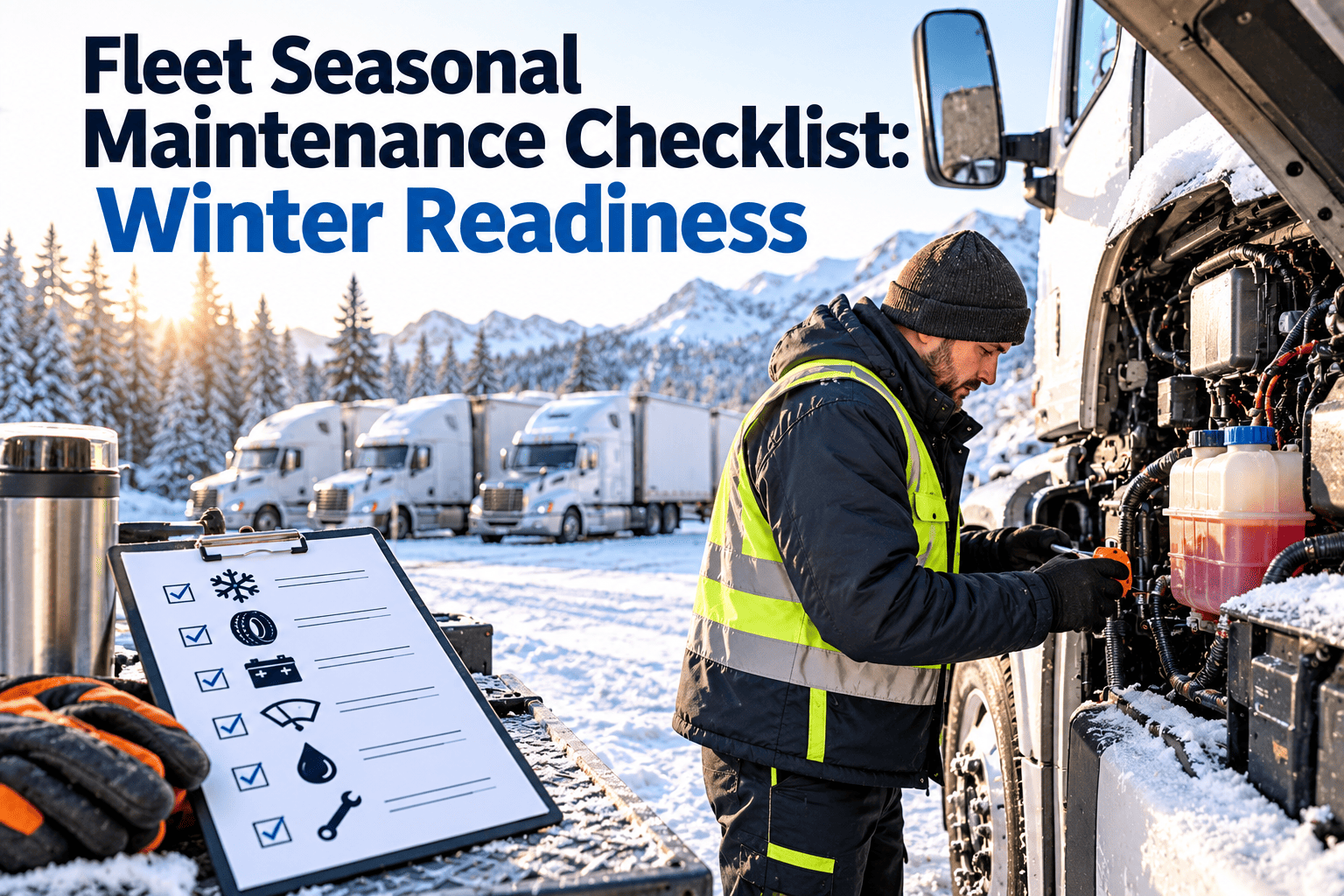
Winter does not create new fleet problems so much as expose the weak ones: a tired battery, water in a fuel tank, a damp air system, a tire that lost pressure overnight. Cold weather compresses the time between a small defect and a roadside call, and the cost of a tow rises when temperatures fall and demand peaks. This seasonal checklist gives fleet managers a countdown to the first freeze, system-by-system inspection items, pass and fail criteria and a driver routine. If your PM and inspection records already live in fleet CMMS software, the whole program can be scheduled and tracked by unit.
Fleet Seasonal Maintenance Checklist: Winter Readiness
Inspect, service and document every unit before the first hard freeze. Work from the weakest systems outward and keep a record that proves each vehicle was ready.
What cold weather does to a fleet
| System | Cold-weather effect | What to verify before winter |
|---|---|---|
| Batteries | Cranking power falls while engine oil thickens and starting demand rises | Load test results, clean tight terminals, charging output |
| Diesel fuel | Wax formation and water contamination can clog filters | Winter-grade fuel supply, water separator drained, filter age |
| DEF and aftertreatment | Fluid freezes, and heaters and lines must thaw it | Tank heater function, fluid quality, no active fault codes |
| Air brakes | Moisture can freeze in valves, lines and tanks | Air dryer cartridge condition, tank drains, leak-down results |
| Tires | Pressure drops as temperature falls, and tread depth matters more on snow | Cold-inflation pressure, tread depth, valve caps and stems |
| Cooling and heating | Weak coolant protection risks freezing; poor heat clouds glass | Freeze-point test, hoses, thermostat, heater and defroster output |
| Visibility | Short days and spray reduce sight and conspicuity | Wipers, washer fluid rating, all lamps and reflectors |
Countdown to the first freeze
8 weeks out
- Segment the fleet by route exposure, age and mission criticality.
- Pull last winter's road calls and repeat defects by unit.
- Order winter wipers, filters, air dryer cartridges and batteries.
- Book workshop capacity so inspections do not collide with peak demand.
4 weeks out
- Complete the winter inspection on every unit, starting with the highest-risk tier.
- Load test batteries and replace those that are weak.
- Change fuel and water separator filters and drain water.
- Test coolant freeze protection and correct any shortfall.
First freeze week
- Confirm winter fuel or additive treatment is in use at every fuel point.
- Check every emergency kit is complete and stowed.
- Brief drivers on cold starts, braking on ice and reporting defects.
- Close all open winter work orders or take the unit off the critical list.
Mid-season
- Review road calls and defects weekly for patterns by system and depot.
- Re-check tire pressure after large temperature swings.
- Replace consumed items such as washer fluid and chains.
- Log lessons learned for next year's checklist.
System inspection checklists
Batteries and charging
- Load test every battery and record the result.
- Clean terminals and apply protection.
- Check cable condition and secure mounting.
- Measure alternator output under load.
Fuel and DEF
- Replace primary and secondary fuel filters.
- Drain the water separator and inspect the bowl.
- Test heater circuits for fuel and DEF lines.
- Confirm DEF is fresh and uncontaminated.
Air brakes and chassis
- Service or replace the air dryer cartridge on schedule.
- Drain all air tanks and check for oil or heavy moisture.
- Run a leak-down test and record pressure loss.
- Inspect slack adjusters and brake components.
Tires and wheels
- Set cold-inflation pressure to specification.
- Measure tread depth on every position.
- Inspect sidewalls, valve stems and caps.
- Confirm chains or traction devices fit and are stowed.
Cooling, heating and glass
- Test coolant freeze point and top up with the correct mix.
- Inspect hoses, clamps and belts for cracks.
- Verify heater and defroster airflow and temperature.
- Install winter wipers and fill rated washer fluid.
Lighting and safety kit
- Check headlamps, stop lamps, turn signals and reflectors.
- Clean lenses and confirm mirror heaters work.
- Stock blanket, flashlight, warning triangles and first aid kit.
- Add ice scraper, gloves, shovel and traction material.
Pass and fail criteria
| Item | Pass when | Fail action |
|---|---|---|
| Battery | Load test meets the manufacturer's rating and terminals are clean | Replace before the freeze and log the old battery's age |
| Coolant | Freeze point is safely below the lowest expected temperature | Drain and refill to the correct mix, then retest |
| Air system | Pressure loss stays within the allowed limit and tanks drain dry | Locate the leak, replace the dryer cartridge if needed, retest |
| Tires | Pressure matches the specification when cold and tread is above your minimum | Inflate or replace and raise a work order for any slow leak |
| Wipers and washer | Blades clear glass without streaking and fluid is rated for the climate | Replace blades and drain weak fluid |
| Safety kit | Every listed item is present and in date | Restock before the unit leaves the yard |
Schedule winter readiness once and repeat it every year
Oxmaint lets fleet teams build a seasonal inspection template, assign it to each asset, and track completion and open defects from one dashboard.
Driver cold-weather routine
Before moving off
- Clear snow and ice from lamps, glass, mirrors and the roof.
- Walk around and check tire condition and pressure appearance.
- Drain air tanks if the procedure requires it.
- Check that heater, defroster and wipers work.
- Record any defect on the vehicle inspection report.
On the road
- Increase following distance and reduce speed on slick roads.
- Brake early and smoothly, and avoid sudden steering inputs.
- Report warning lights, fuel filter alerts or DEF derate messages.
- Stop safely when conditions exceed what the vehicle and driver can handle.
- Keep fuel above a safe reserve in case of delays.
Which units to prepare first
Highest exposure
Mission-critical routes, emergency or service vehicles, and units with winter breakdowns last year.
Moderate exposure
Older units, units parked all summer, and vehicles with recent battery or air system repairs.
Lower exposure
Newer units on short urban routes with strong inspection history and spare capacity.
Records that prove readiness
What to keep per vehicle
- Completed winter inspection with date and technician.
- Battery test, coolant test and leak-down results.
- Parts replaced and the work order that covers them.
- Driver vehicle inspection reports and defect corrections.
Why it matters
- Regulated carriers must keep inspection and repair records and have defects certified as repaired or not needed.
- Records show which vehicles were exposed to which risks.
- Patterns in failures guide next year's spare parts purchase.
- Audit and insurer questions are answered from the vehicle history.
Winter measures worth tracking
Pre-freeze completion
Share of units with a closed winter inspection before the first freeze.
Cold-related road calls
Starting, fuel, air and tire calls per week, compared with last season.
Open winter defects
Items found at inspection that are still waiting for repair.
Repeat failures
Units that fail again within thirty days of the same repair.
Fuel and fluid strategy for cold weather
Diesel fuel
- Ask suppliers which winter blend or additive treatment they provide and for which temperature range.
- Treat fuel before it reaches the cloud point, because wax already formed does not dissolve easily in the tank.
- Keep tanks as full as practical to limit condensation.
- Replace fuel filters before winter and drain water separators on a fixed routine.
- Record filter changes so repeat clogging on a unit stands out.
DEF, coolant and washer fluid
- Store DEF within its recommended temperature range and avoid contaminated containers.
- Check that DEF tank and line heaters operate, because thawing depends on engine heat and heaters.
- Test coolant freeze protection and correct the mixture, not just the level.
- Switch to washer fluid rated for your lowest expected temperature.
- Label cold-weather products at fuel points so drivers use the right one.
Tire and traction readiness
| Condition | What to do | What to record |
|---|---|---|
| Temperature falls overnight | Pressure drops as air cools, so check cold pressure and top up to specification | Pressure per position and date |
| Snow and ice on routes | Confirm tread depth and tire type suit the route, and stage chains where they may be required | Tread readings and chain inventory |
| Mixed dry and wet days | Watch for uneven wear on drive axles from slipping and wheelspin | Wear pattern notes at PM |
| Salt and brine exposure | Wash undercarriage, valve stems and wheel ends to limit corrosion | Wash dates and any corrosion found |
| Potholes after freeze and thaw | Inspect for sidewall bulges, bent rims and alignment drift | Defects raised as work orders |
Depot and yard readiness checklist
- Fuel points stock winter-blend diesel, DEF and rated washer fluid.
- Block heater outlets and extension cords are inspected and labeled.
- Jump packs and battery chargers are charged and tested.
- Yard lighting works in the early morning and late afternoon.
- Snow removal and de-icing materials are in stock and equipment is serviced.
- Walkways, steps and fueling lanes have a clearing routine.
- Spare tire chains, wipers, bulbs and fuses are stocked by vehicle type.
- Workshop has heated space for vehicles that must be thawed before repair.
- Contact lists for towing vendors and mobile repair are current.
- Staff know who decides when to hold vehicles in the yard.
Dispatch and route planning in bad weather
Before dispatch
- Review forecasts and road condition reports for each route.
- Assign the best-prepared Tier 1 units to the most exposed routes.
- Confirm drivers hold the correct kit and know the delay and stop rules.
- Agree a stop or reroute authority so no driver faces pressure to continue unsafely.
During the shift
- Ask drivers to report conditions and defects as they appear.
- Track units with warning codes or reduced power until they reach a safe location.
- Pre-arrange tow and repair support for the busiest corridors.
- Log every cold-related event against the asset for the end-of-season review.
Common winter failure patterns and likely root causes
| Symptom | Likely root cause | Preventive action |
|---|---|---|
| Slow or failed crank | Aged battery, corroded terminals, weak charging | Load test, clean terminals, check alternator output |
| Loss of power or stalling | Waxed or water-contaminated fuel, blocked filter | Winter fuel, additive, filter replacement, water drain |
| Brakes slow to release or apply | Moisture in the air system freezing in valves or lines | Air dryer service, tank draining, leak checks |
| Engine derate warnings | Frozen DEF, failed heater, sensor faults | Heater tests, fluid quality control, early fault code review |
| Fogged or iced glass | Weak heater or defroster, worn wipers, wrong washer fluid | Heater tests, blade replacement, rated fluid |
| Flat or low tire | Pressure loss with cold, damaged valve, pothole impact | Cold pressure checks, valve inspection, defect follow-up |
Parts and budget planning for the season
- Use last winter's work orders to forecast batteries, filters, wipers and air dryer cartridges.
- Order long-lead items early, because supplier stock tightens at the first cold snap.
- Set minimum stock levels for items that strand vehicles when missing.
- Allow budget for overtime, towing and emergency mobile repairs.
- Track emergency purchases separately so planning gaps become visible.
- Agree with finance which cold-weather costs are recurring and which are exceptions.
End-of-season review checklist
- Count cold-related road calls and compare with the prior season.
- List the units with repeat winter failures and open root cause actions.
- Check which inspection items found defects, and which were never useful.
- Wash undercarriages and inspect for salt damage and corrosion.
- Return seasonal items to storage and record what must be replaced.
- Update the checklist, timing and spare parts list for next year.
Frequently asked questions
When should a fleet start winter preparation?
Begin planning about eight weeks before the usual first freeze and finish inspections at least a few weeks ahead. Late starts compete with peak workshop demand.
What is the most common winter breakdown cause?
Weak batteries, fuel filter blockage, moisture in air systems and low tire pressure are all frequent. Your own road call history shows which apply to your fleet.
How do we keep winter inspections consistent across depots?
Use one template with the same pass and fail criteria everywhere. A system such as Oxmaint can assign it to every asset.
Does this checklist replace manufacturer guidance?
No. Use it alongside manufacturer service instructions and local regulations, and adjust limits for your equipment and climate.
Can we see a seasonal program in action?
Yes. You can book a demo and walk through seasonal PM templates, inspections and reporting.
Be ready before the first hard freeze
Schedule winter inspections by unit, capture every defect and track repairs to closure so your vehicles start, stop and run when the weather turns.