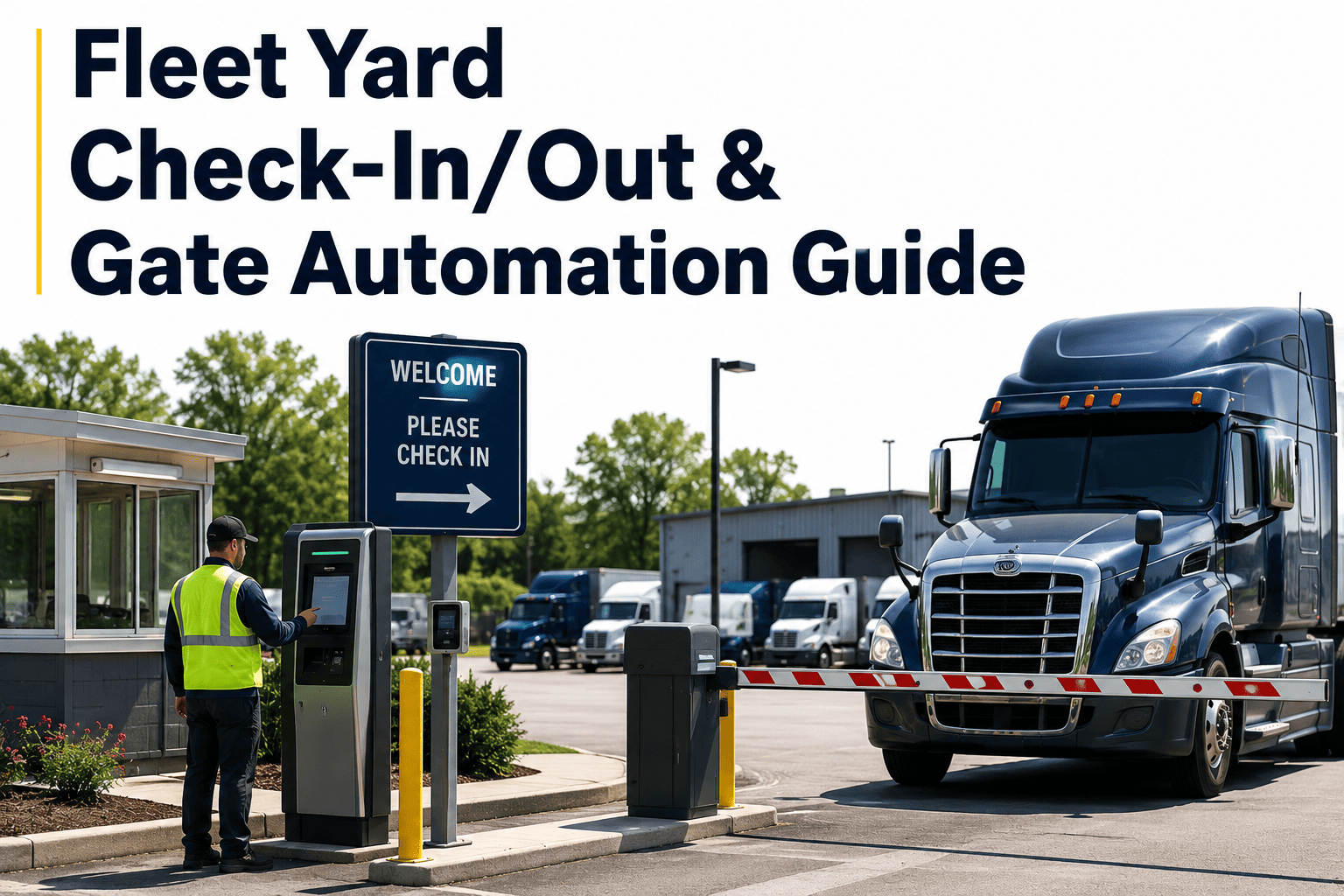
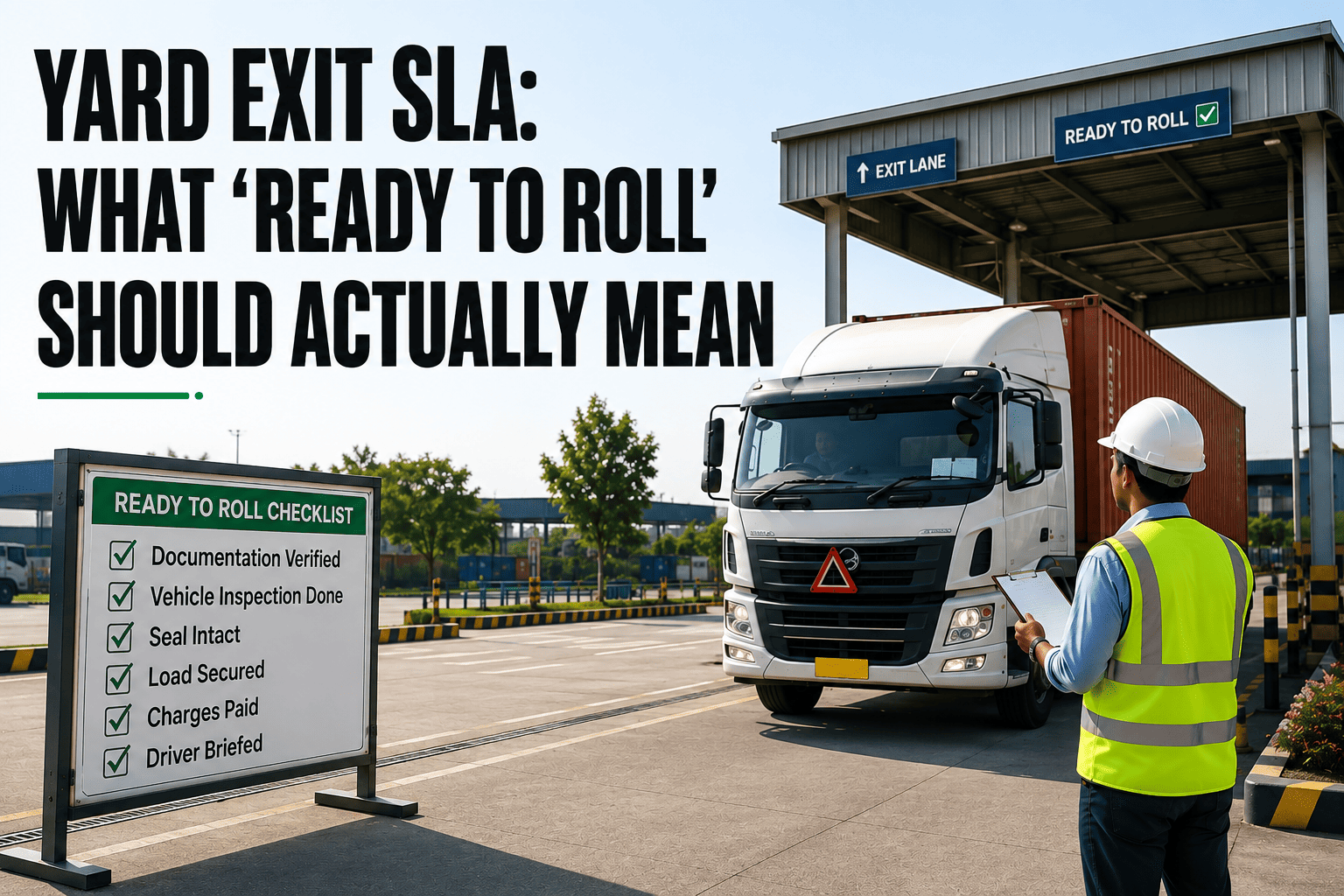
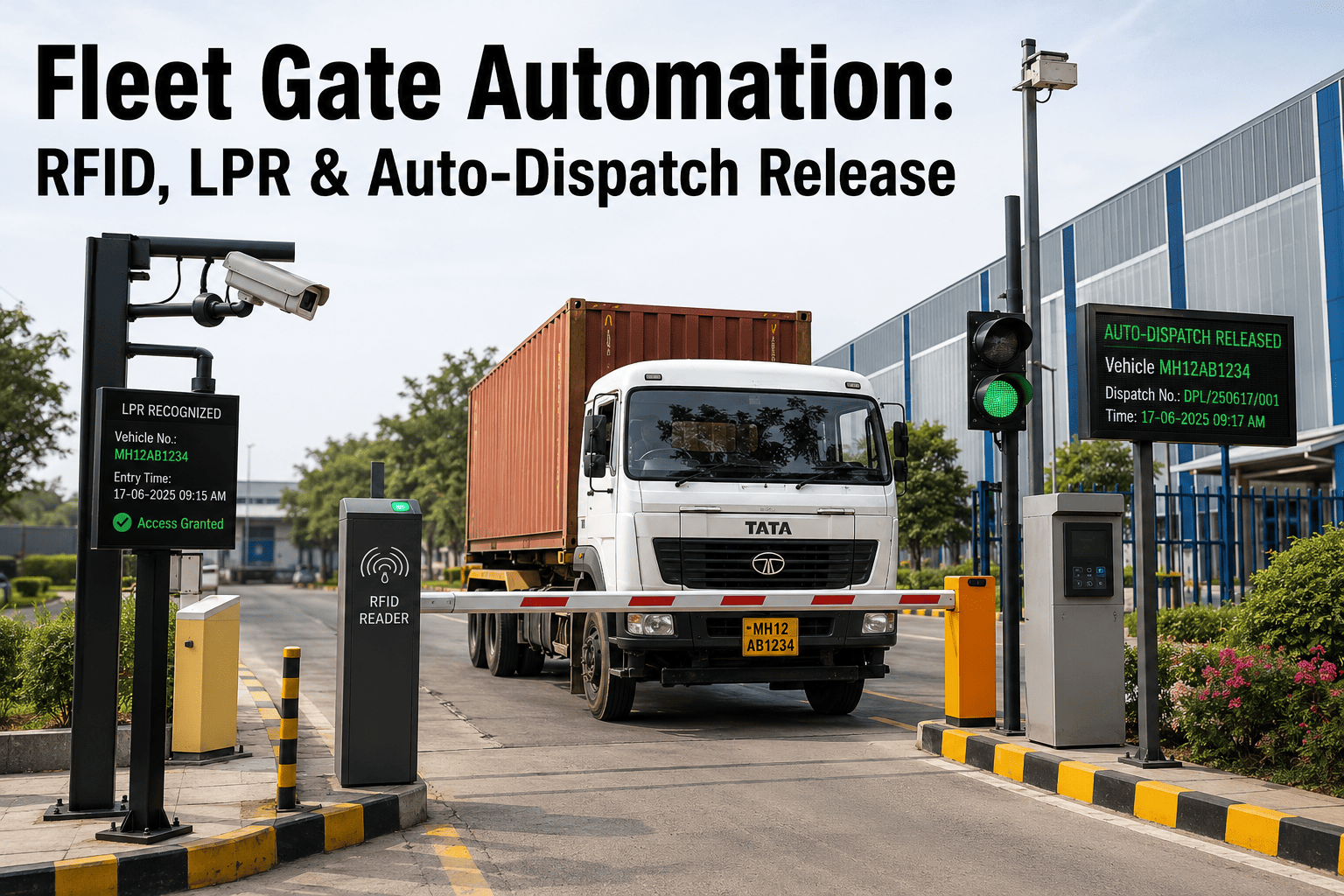
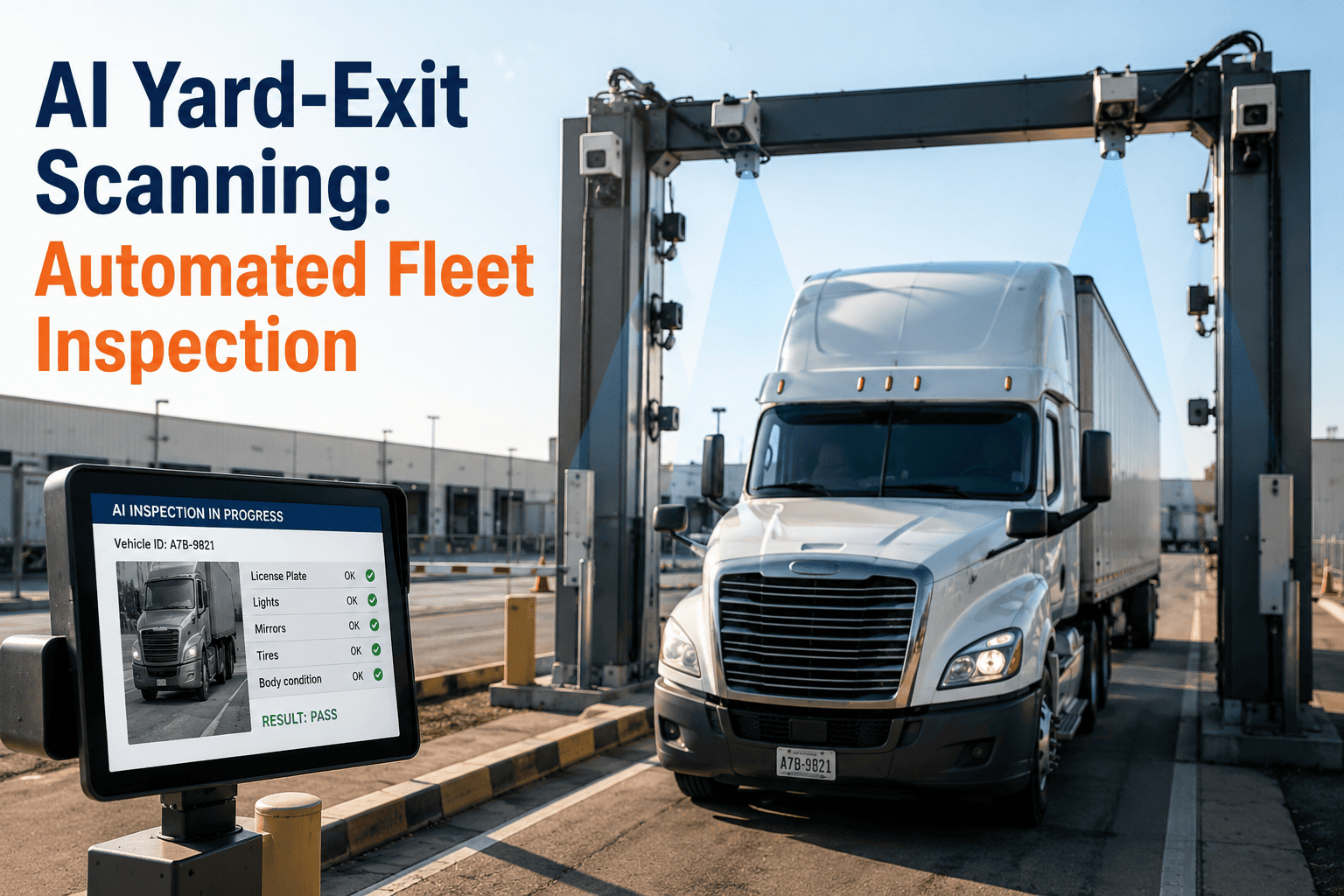
Every fleet yard runs the same nightly ritual: a driver pulls up to the gate, a guard flips through a clipboard or squints at a tablet, and somewhere behind them a queue starts to build. That manual check is where dwell time, theft risk, and audit gaps quietly begin, because a paper log cannot verify a plate, timestamp an exit automatically, or flag a vehicle that should not have left the yard. Automating check-in and check-out closes that gap by turning the gate into a digital checkpoint that captures every arrival and departure the moment it happens. See how Oxmaint's yard gate automation replaces the clipboard with a checkpoint that never misses an entry.
Yard Operations · Gate Automation · Audit-Ready Movement Log
The Gate Is Either a Bottleneck or a Checkpoint — Rarely Both
A manual gate log slows the yard down and still cannot answer a simple question: who took what vehicle out, and when. An automated gate answers it in the same second the vehicle crosses the line.
Manual Gate Log
Guard hand-writes plate, driver name, and time on a clipboard or shared tablet
Exit time is often estimated after the vehicle has already left the lot
No automatic check against PM status, open work orders, or inspection currency
Dispute over dwell time or detention billing has no verifiable timestamp
Automated Gate Checkpoint
Plate capture and badge scan identify the vehicle and driver in seconds
Entry and exit are timestamped the instant the vehicle crosses the gate
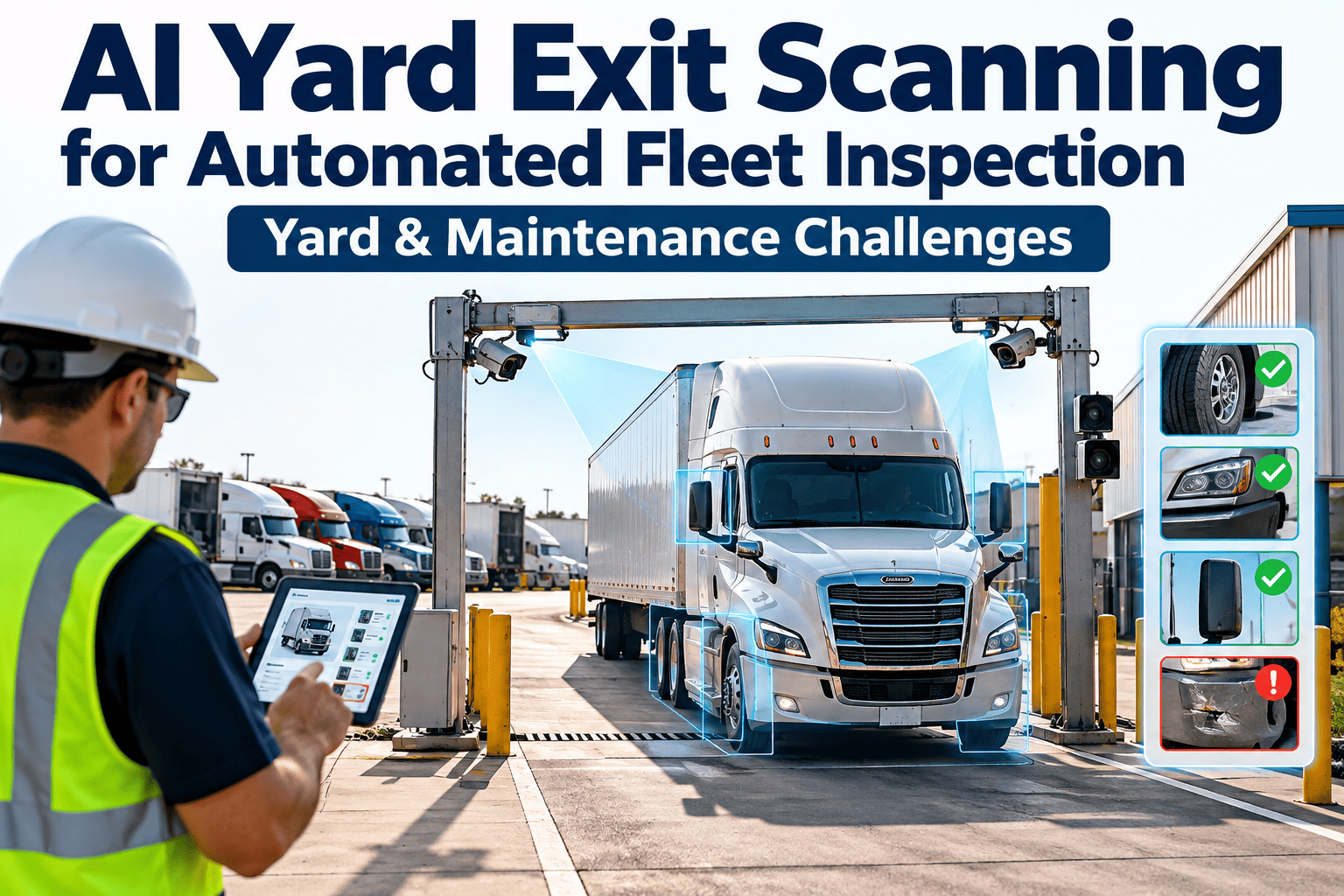
System checks PM status and inspection currency before releasing the barrier
Every movement is logged to a record retrievable by VIN in seconds
70%
Faster gate transactions with automated check-in versus a manual log
100%
Of entries and exits timestamped automatically, with no guard entry required
4 min
Average time saved per vehicle at entry when plate and badge capture replace paperwork
60 sec
Time to pull a full movement history for any vehicle during an audit
Where Manual Gate Logs Quietly Cost the Yard
None of these problems look urgent on any single night. Stacked across a month, they add up to lost dwell-time visibility, disputed billing, and a security gap nobody notices until it matters.
01
Illegible handwriting turns into billing disputes
A smudged time on a clipboard becomes a detention charge nobody can prove or disprove, and the carrier and the yard end up arguing over minutes with no record to settle it.
02
Nothing verifies the plate against the driver
A guard waving a familiar-looking truck through is not the same as a system confirming the plate, the driver badge, and the appointment all match before the barrier lifts.
03
Exit times get filled in after the fact
When the gate is busy, exit logging is the first thing skipped. The timestamp gets estimated later, and the audit trail is already broken before anyone notices.
04
A vehicle due for service leaves anyway
A manual gate has no way to cross-check PM status or an open safety defect against the vehicle rolling out. The next call is a roadside breakdown, not a scheduled repair.
Stop logging the gate by hand
Turn Every Gate Into a Digital Checkpoint
Oxmaint connects plate capture, badge scans, and PM status checks directly to the gate, so every vehicle that enters or leaves the yard is verified and logged automatically, with no clipboard in the loop.
How Automated Check-In and Check-Out Actually Works
Five steps run automatically from the moment a vehicle approaches the gate to the moment it clears the yard, with a guard needed only when the system flags an exception.
1
Pre-registration before arrival
Carrier, driver, and vehicle details are loaded ahead of time, so the gate already knows who to expect before the truck is in view.
2
Plate and badge capture at the gate
A camera reads the plate and an RFID badge or driver app confirms identity, matching both against the pre-registered record.
3
Automatic status verification
The system checks appointment validity, PM status, and inspection currency in the background, before the vehicle reaches the barrier.
4
Timestamped log and barrier release
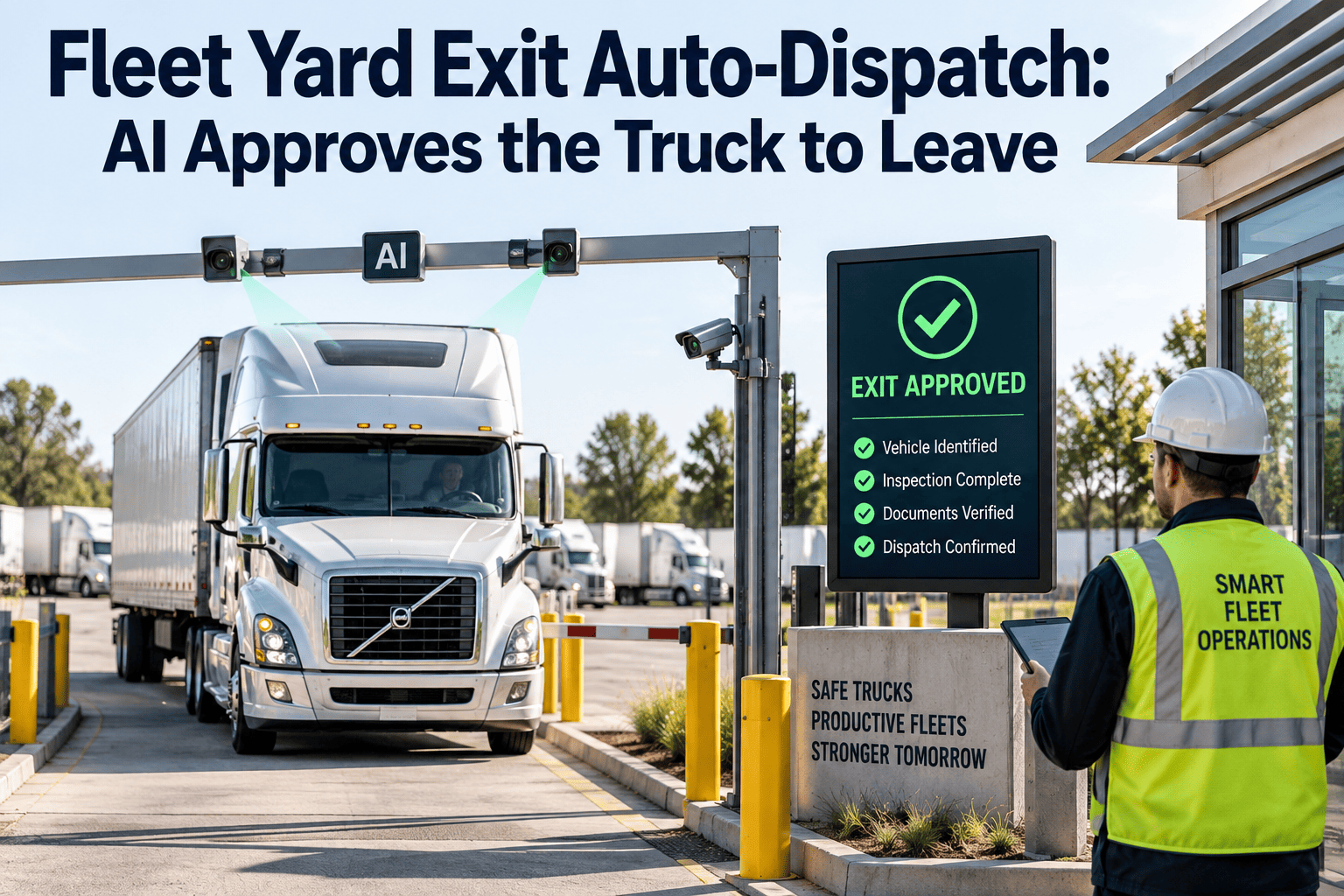
Approved vehicles get the barrier released automatically, and the entry or exit is written to the movement record the same second.
5
Exceptions route to a live queue
A mismatched plate, an expired inspection, or a vehicle with an open safety defect routes to a gate attendant instead of blocking the lane for everyone behind it.
What an Automated Gate Actually Captures
These are the pieces that, together, turn a gate from a guard station into a data source the whole yard operation can rely on.
F1
Plate capture at entry and exit
Reads the plate on approach and matches it to the pre-registered vehicle record automatically.
F2
Badge or app driver identification
Confirms the driver at the gate through an RFID badge, QR code, or the mobile app, no paperwork exchanged.
F3
PM and inspection status check
Blocks or flags a vehicle at exit if it is due for service or carrying an open safety defect.
F4
Automatic barrier release
Approved vehicles get the gate opened without a guard action, keeping the lane moving during peak hours.
F5
Exception queue for flagged vehicles
Mismatches and failed checks route to a named attendant instead of stalling every truck behind them.
F6
Timestamped movement log by VIN
Every entry and exit is written to a retrievable audit record, searchable by vehicle in seconds.
F7
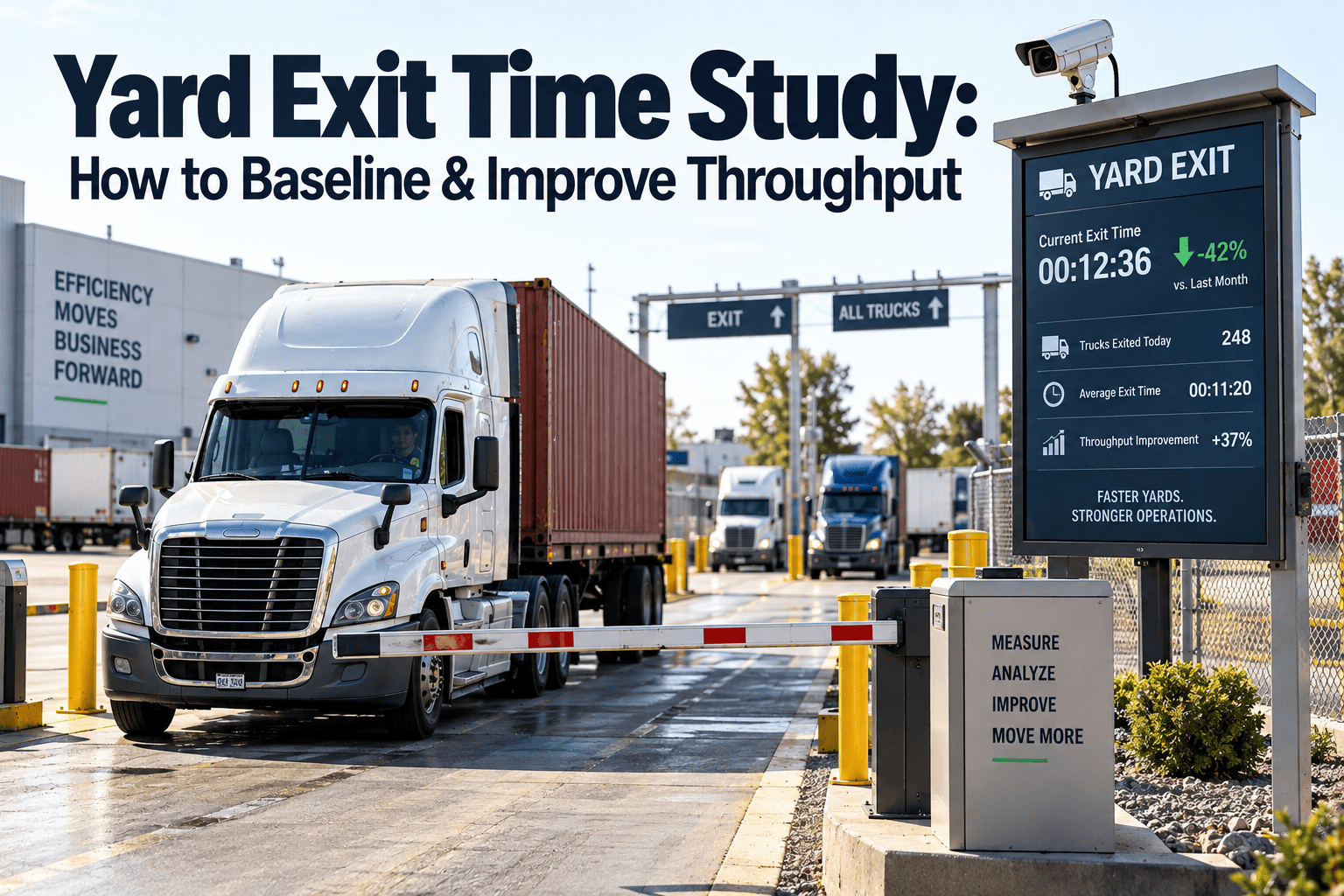
Dwell time and yard occupancy view
Shows how long each vehicle has been on site and how full the yard is, updated as vehicles cross the gate.
F8
Work order trigger on exit block
A vehicle stopped for a PM or defect flag can generate its work order directly from the gate event.
Manual Gate Log vs Automated Gate Checkpoint
| Gate function |
Manual clipboard or tablet log |
Automated gate checkpoint |
| Entry verification |
Guard visually confirms plate and driver |
Plate capture and badge scan matched automatically |
| Exit documentation |
Time often estimated after the vehicle has left |
Timestamped the instant the vehicle crosses the gate |
| PM status at exit |
Not checked unless a guard happens to know |
Checked automatically before the barrier releases |
| Dwell time visibility |
Calculated manually, hours after the fact |
Live, updated the moment each vehicle checks in or out |
| Audit record retrieval |
Hours spent searching paper logs by hand |
Full movement history by VIN in under 60 seconds |
| Gate staffing need |
Guard required at every transaction |
Guard needed only for flagged exceptions |
What Changes in the First 90 Days
A mid-size yard moving from a manual log to an automated checkpoint typically sees the gap close fast, because the gate was the slowest and least reliable step in the whole yard process.
Manual gate log
Average entry transaction4 to 6 min
Exit timestamp accuracyEstimated
Audit record retrievalHours
Vehicles exiting with a PM flag missedFrequent
Automated checkpoint
Average entry transactionUnder 60 sec
Exit timestamp accuracyExact, automatic
Audit record retrievalUnder 60 sec
Vehicles exiting with a PM flag missedBlocked automatically
See it against your own yard layout
Map Your Gate Automation Rollout in 30 Minutes
Walk through your current check-in process, the hardware you already have, and where an automated checkpoint would save the most time at your specific gates.
Frequently Asked Questions
Do we need to replace our existing gate hardware to automate check-in?
No. Most yards start with a camera and badge reader added to the existing barrier, then connect it to a
CMMS-linked gate workflow. Full barrier and kiosk upgrades usually come in a later phase, not the first one.
What happens if the plate camera cannot read a dirty or damaged plate?
The vehicle routes to the exception queue automatically instead of blocking the lane. A gate attendant confirms identity manually, and the event is still logged with a timestamp, just with a flag noting manual verification.
Can the gate actually stop a vehicle that is overdue for maintenance?
Yes, when the gate is connected to the maintenance record. A vehicle with an open safety defect or an overdue PM can be flagged at exit and routed to a supervisor instead of leaving the yard unchecked.
Does gate automation help with detention and dwell time disputes?
It removes most of the argument. Entry and exit are timestamped automatically the moment each event happens, so dwell time is calculated from an exact record instead of a guard's estimate written down later.
How long does it take to get gate automation running at one yard?
A single-gate pilot with camera and badge check-in typically runs in two to three weeks, including hardware setup and driver training.
Book a demo to scope the timeline against your gate count.
One checkpoint · every vehicle · logged the instant it moves
Replace the Clipboard With a Gate That Verifies Itself
Oxmaint connects plate capture, driver identification, and maintenance status directly to the gate, so every entry and exit is verified, timestamped, and audit-ready without a guard writing it down by hand.