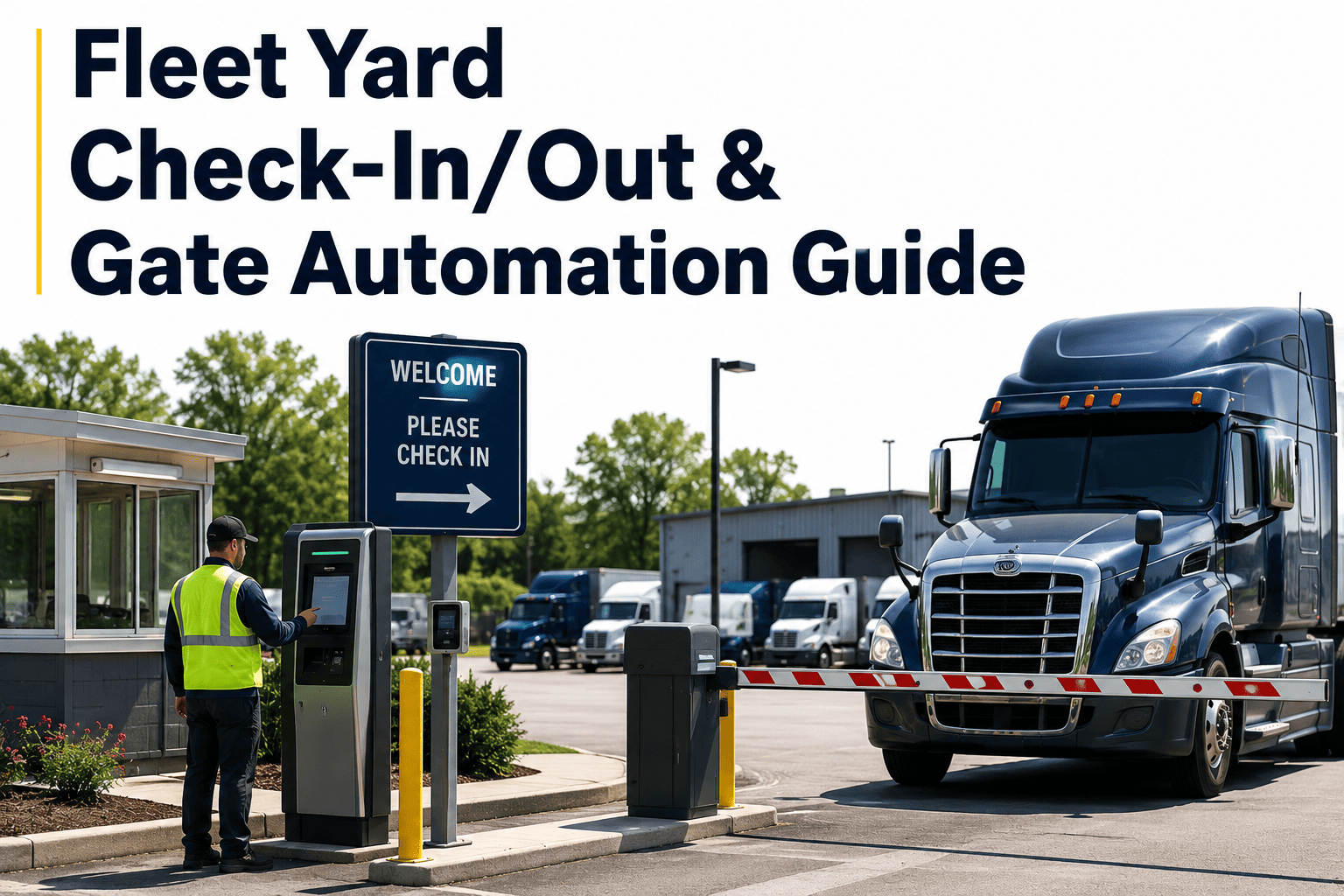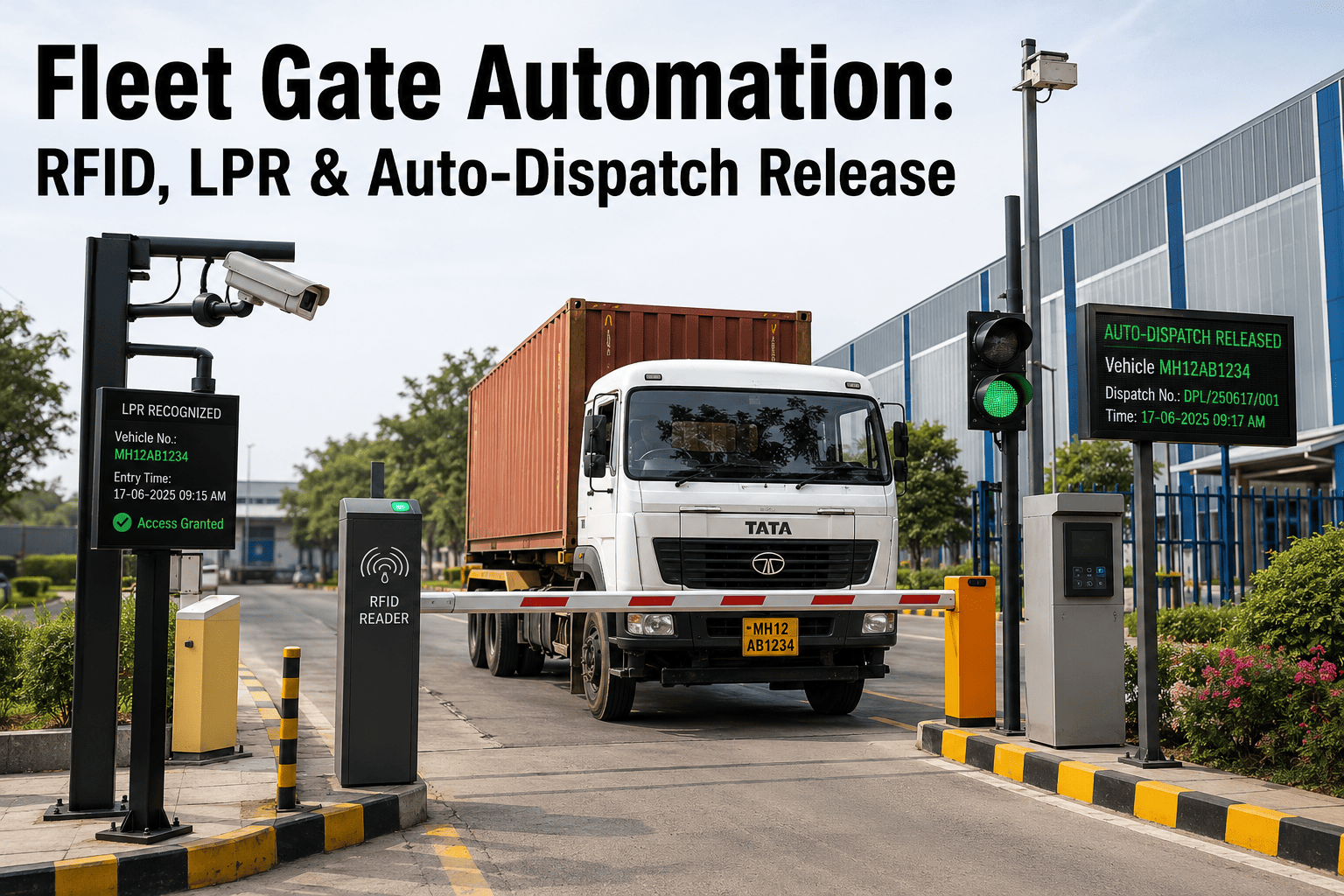
Every minute a truck idles at your yard gate is a minute it isn't earning freight revenue. Most fleets still run gate check-in the way they did twenty years ago — a guard walks out, checks a printed manifest, radios the dispatcher, and waves the driver through only after the paperwork clears. That process eats five to eight minutes per truck, and across a yard running 150 or more trucks a day, it adds up to hours of daily dwell time, driver frustration, and avoidable detention pay. RFID tags and license plate recognition cameras change that math entirely, cutting gate clearance down to as little as 12 seconds by identifying the vehicle, matching it against the dispatch schedule, and releasing the gate automatically, no guard required for the vast majority of trips. Oxmaint helps fleets plan, deploy, and manage exactly this kind of gate automation, from tag issuance to camera uptime to auto-dispatch release rules, so you can see how it maps to your own yard at app.oxmaint.ai.
Fleet Gate Automation: RFID, LPR & Auto-Dispatch Release
Stop routing every truck through a guard booth. Identify vehicles automatically, validate them against your dispatch board, and release the gate in seconds — with a full digital record of every entry and exit.
What a Manual Gate Actually Costs You
A guard-operated gate feels manageable when volume is low. It stops being manageable the moment your yard runs multiple carriers, multiple appointment windows, and drivers who show up early, late, or without paperwork in hand. Here's what actually happens during a typical manual check-in, step by step.
Truck stops at the booth
Driver rolls down the window, hands over a printed BOL or appointment confirmation.
Guard checks the paperwork
Manual lookup against a spreadsheet or whiteboard to confirm the appointment exists.
Radio call to dispatch
If anything looks off, the guard radios or calls dispatch and waits for a response.
Manual log entry
Plate number, driver name, and time are written or typed into a paper or spreadsheet log.
Gate opens, truck proceeds
Driver is directed to a dock door or yard slot, often based on the guard's memory, not a system.
RFID, LPR, or Both? Picking the Right Layer
RFID and license plate recognition solve the same problem — knowing which vehicle just arrived — but they work in fundamentally different ways, and each has blind spots the other one covers. Most high-volume yards end up running both, since neither technology alone handles 100% of the traffic reliably.
Windshield Tag Identification
A passive or active RFID tag mounted on the windshield is read by an antenna as the truck approaches. It works in rain, fog, and darkness, and can identify a vehicle anywhere on the property, not just at the gate.
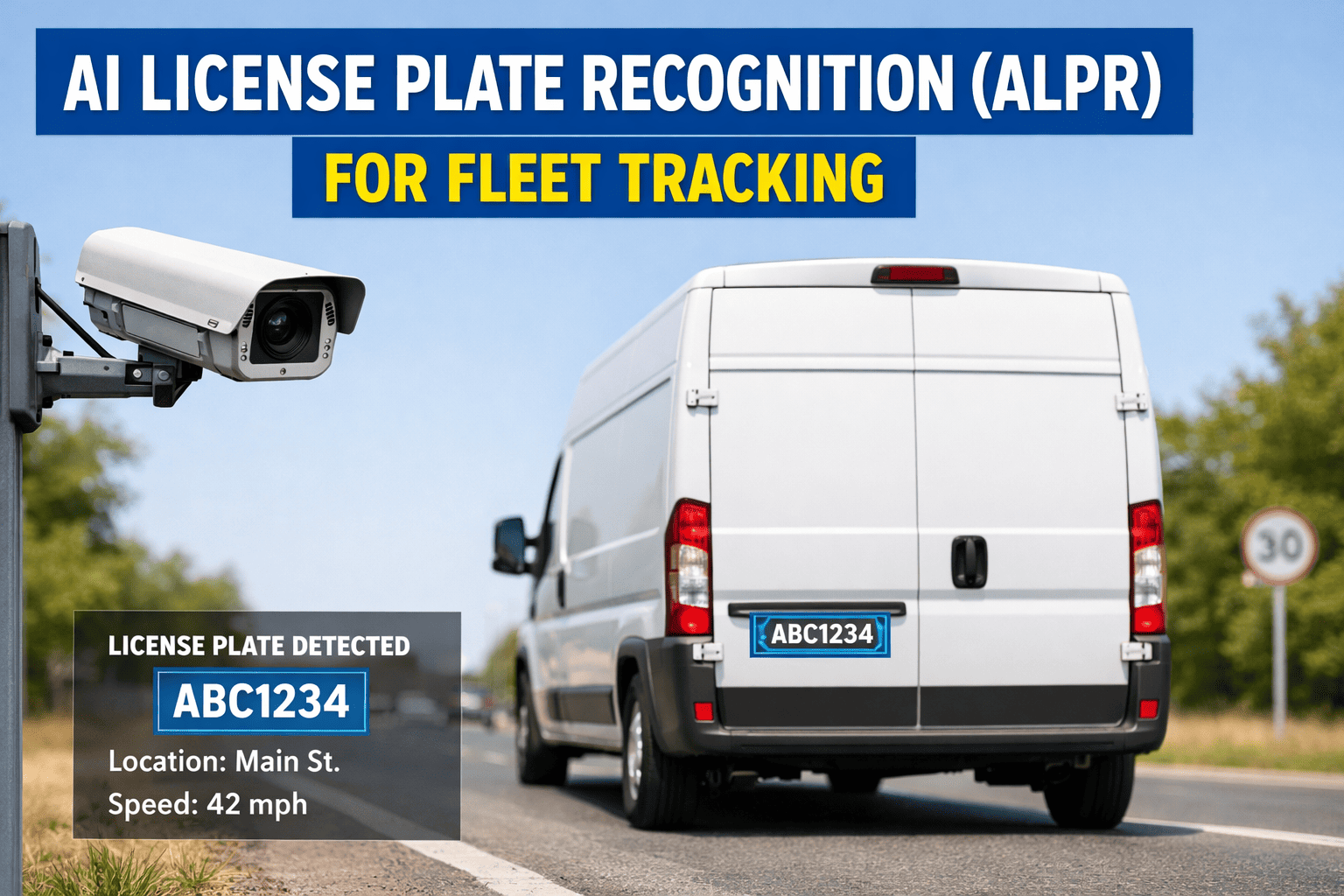
License Plate Recognition
A camera captures and reads the plate using optical character recognition as the truck rolls up, no hardware on the vehicle required. This is the only practical way to identify the 70-75% of trucks that belong to outside carriers and will never carry your RFID tag.
RFID + LPR Together
Dedicated fleet trucks clear on the tag alone; every other vehicle is caught by the camera and cross-checked against the dispatch board automatically. This combination is what actually gets a yard to sub-15-second clearance.
See Your Gate Data Before You Buy Hardware
Oxmaint maps your current truck mix, appointment volume, and gate layout to tell you whether RFID, LPR, or a hybrid setup fits your yard, then manages the rollout end to end.
How a Truck Clears Your Gate Without a Guard
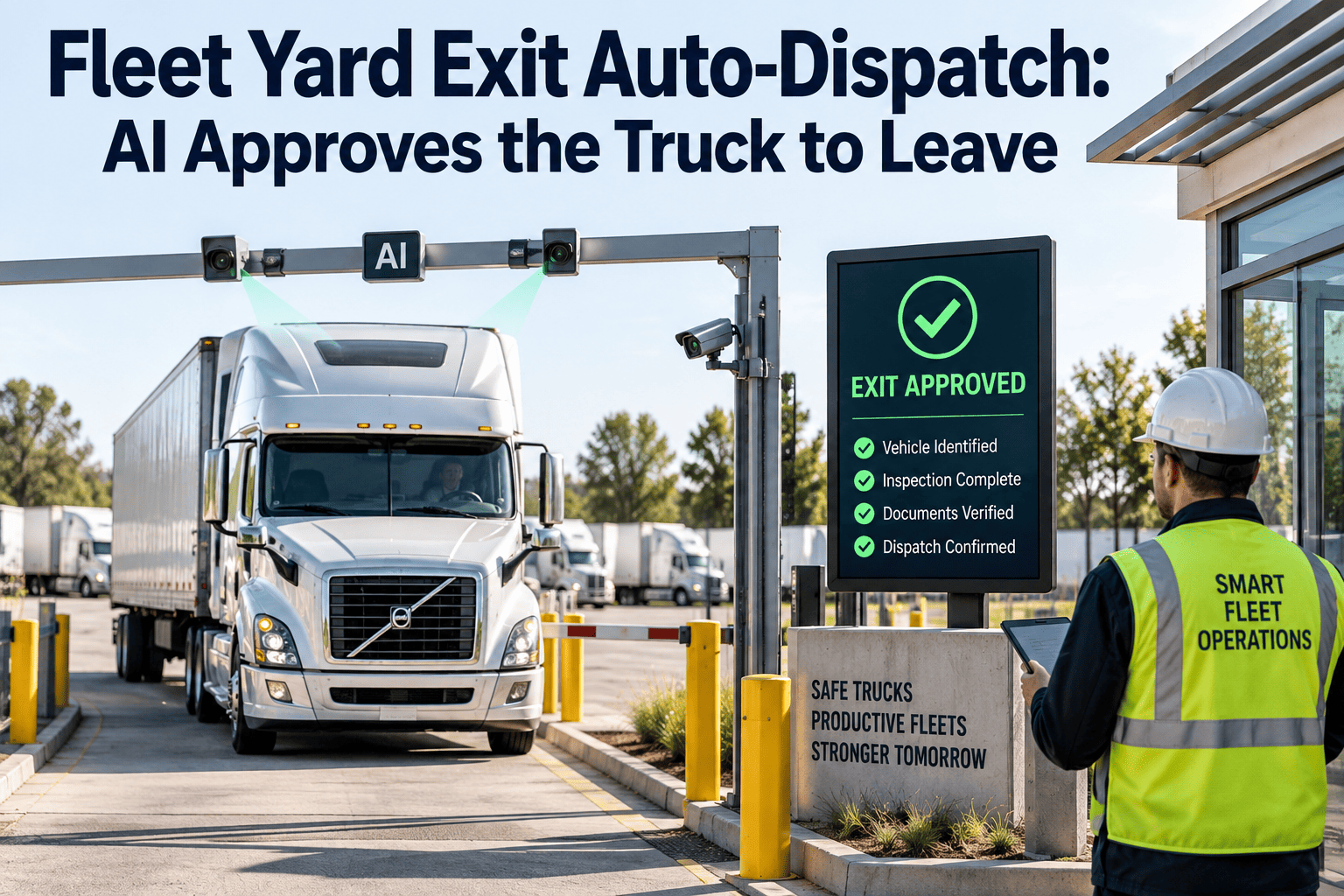
Auto-dispatch release is the layer that turns "we can see the truck" into "the gate opens by itself." Identification alone doesn't get you there — the system also has to know whether that specific truck is supposed to be there right now, and what to do if it isn't.
Vehicle is identified
The RFID reader or LPR camera captures the truck's tag ID or plate as it approaches the gate line.
System checks the dispatch board
The ID is matched in real time against appointment windows, load numbers, and manifest data in your YMS or TMS.
Compliance rules run automatically
Carrier authorization, insurance status, and HazMat flags are verified before the system decides to release.
Gate opens, event is logged
The arm raises, and a timestamped record — plate image, tag ID, appointment match — is written automatically.
Exceptions route to a human
Unmatched vehicles, expired credentials, or flagged plates get routed to a guard booth instead of waved through blind.
What It Takes to Automate a Gate
Gate automation projects fail more often from missing integration work than from bad hardware. Below is a realistic breakdown of the components involved and where budget typically goes for a mid-size yard automating one to two lanes.
| Component | Purpose | Typical Cost | Install Timeline |
|---|---|---|---|
| RFID reader & antenna | Reads windshield tags as trucks approach the lane | $3,000-$8,000 per lane | 1-2 days |
| RFID windshield tags | Vehicle-side identifier for owned/dedicated trucks | $10-$40 per truck | Ongoing issuance |
| LPR/ANPR camera | Captures and reads plates on untagged, third-party trucks | $2,500-$6,000 per lane | 1-2 days |
| Gate arm & controller | Physical barrier tied to the release decision | $4,000-$12,000 per lane | 2-4 days |
| YMS/TMS integration | Matches identified vehicles to live appointment and dispatch data | Software licensing, varies | 2-6 weeks |
| Guard booth failover station | Manual review path for exceptions and flagged vehicles | Existing infrastructure | No build required |
Manual Gate vs. Automated Gate — The Annual Numbers
A realistic cost model for a mid-size yard processing 150 trucks a day, comparing a fully staffed manual gate against an RFID plus LPR setup with a single guard on exception handling only.
Manual Gate Operation
Automated Gate (RFID + LPR)
We were running four guards across three shifts just to check trucks in. After we moved to tag and camera-based release, one person covers exceptions for the whole yard, and our average dwell time dropped by more than six minutes per truck.
Yard Operations Manager, regional distribution fleet
How Oxmaint Runs Your Gate Day to Day
Hardware gets trucks identified. What keeps a gate automated for years, not just the first month, is a system that manages tags, watches for camera downtime, and keeps every release rule current as carriers and appointments change.
Tag & Plate Registry
Issue, reassign, and retire RFID tags and pre-registered plates from one dashboard, with full history per vehicle.
Real-Time Gate Event Log
Every entry and exit is timestamped and stored automatically, replacing paper logs and spreadsheet check-ins.
Dispatch & YMS Integration
Connects gate release decisions directly to your appointment schedule so only expected trucks clear automatically.
Exception & Override Workflow
Flagged or unmatched vehicles route to a guard queue with the reason clearly shown, not a blind manual check.
Camera & Reader Uptime Monitoring
Get alerted the moment an RFID reader or LPR camera goes offline, before it silently backs up your gate line.
Compliance & Audit Reporting
Pull gate activity reports for insurance audits, security reviews, or customer contract requirements in one click.
Frequently Asked Questions
Do we need to replace RFID with LPR, or use both?
What happens if a truck arrives without an appointment?
How long does a gate automation rollout typically take?
Does gate automation replace the guard entirely?
Can Oxmaint help us decide between RFID, LPR, or a hybrid setup?
Turn Your Gate Into a 12-Second Checkpoint
Tag registry, camera monitoring, and auto-dispatch release rules, managed in one place with Oxmaint.