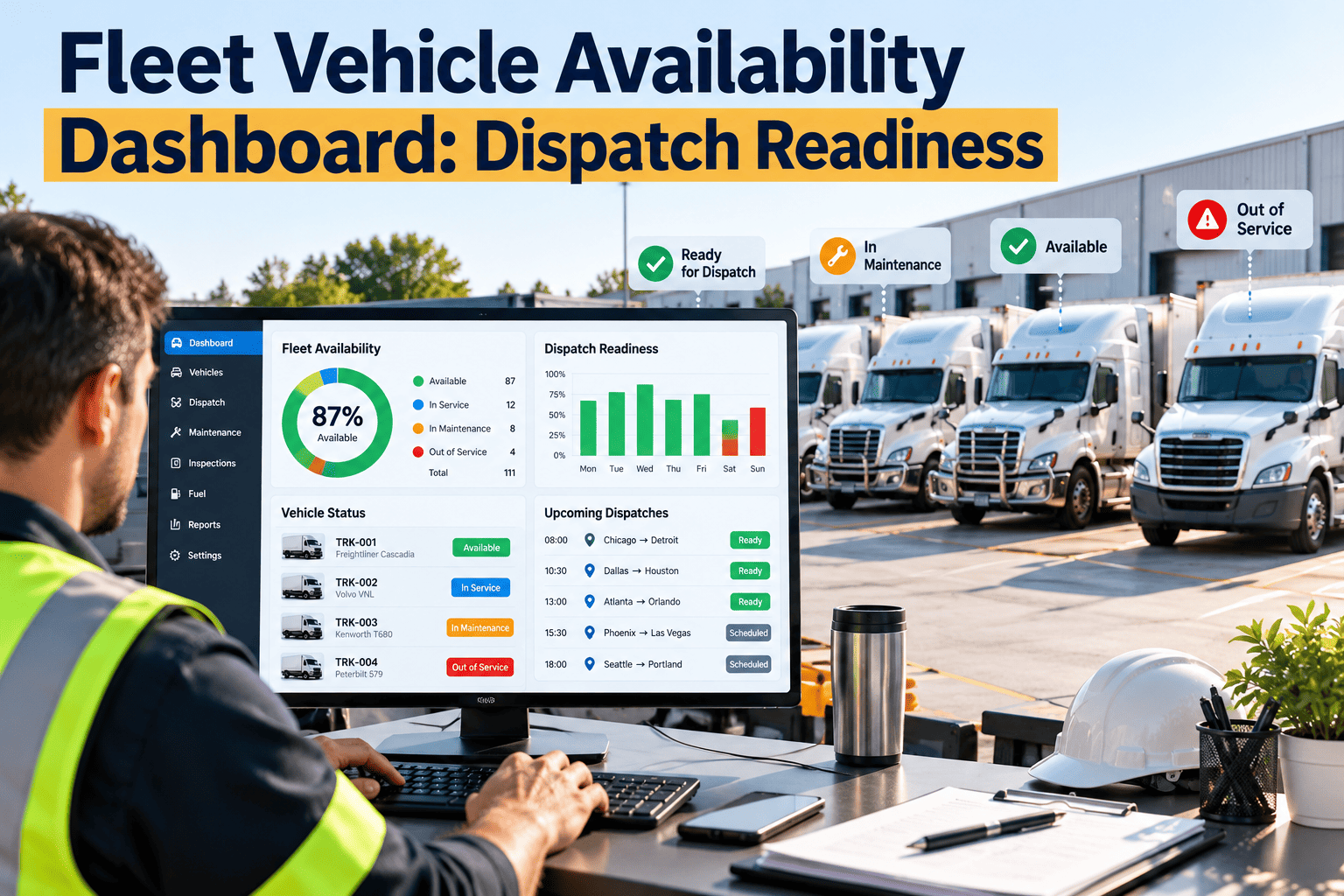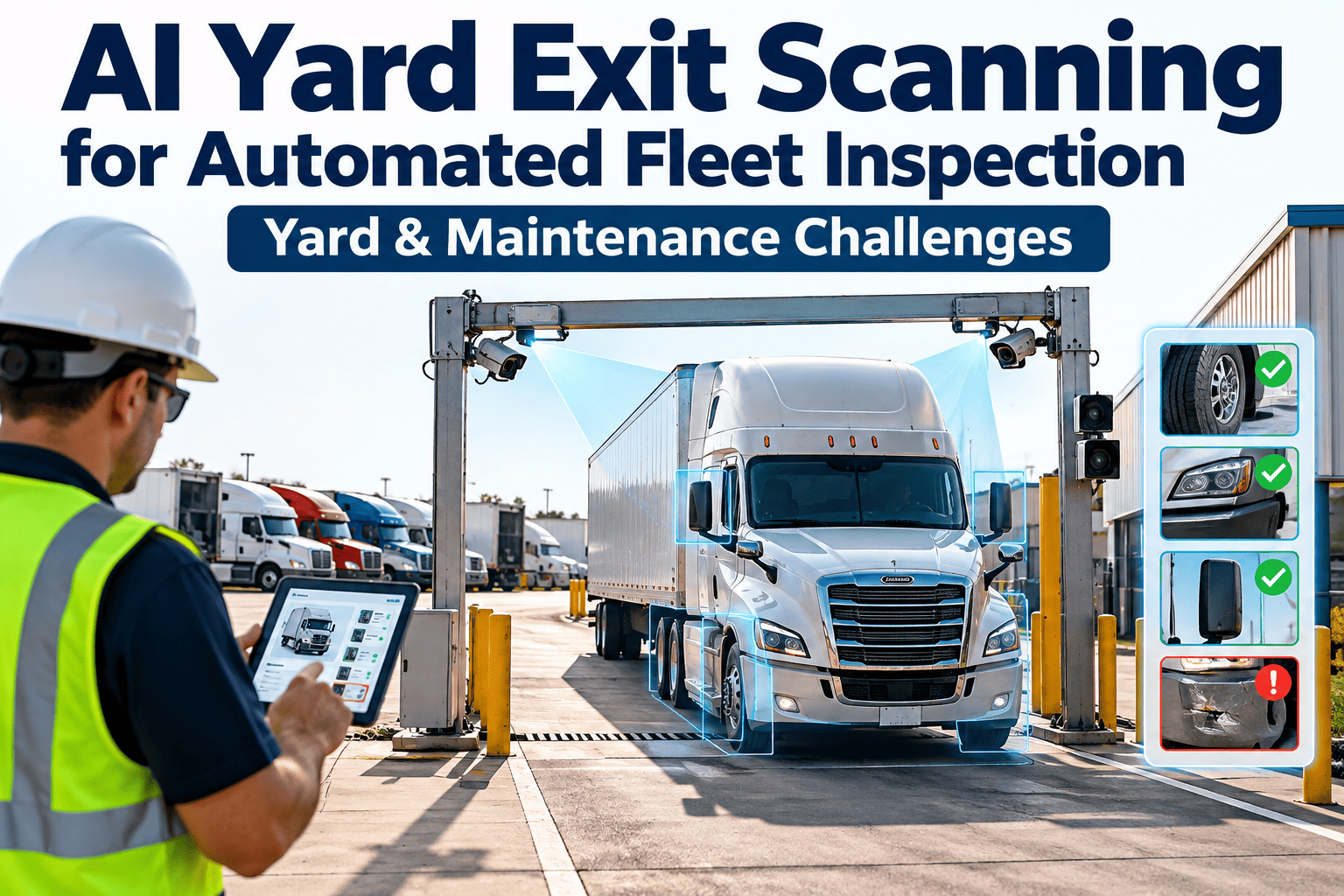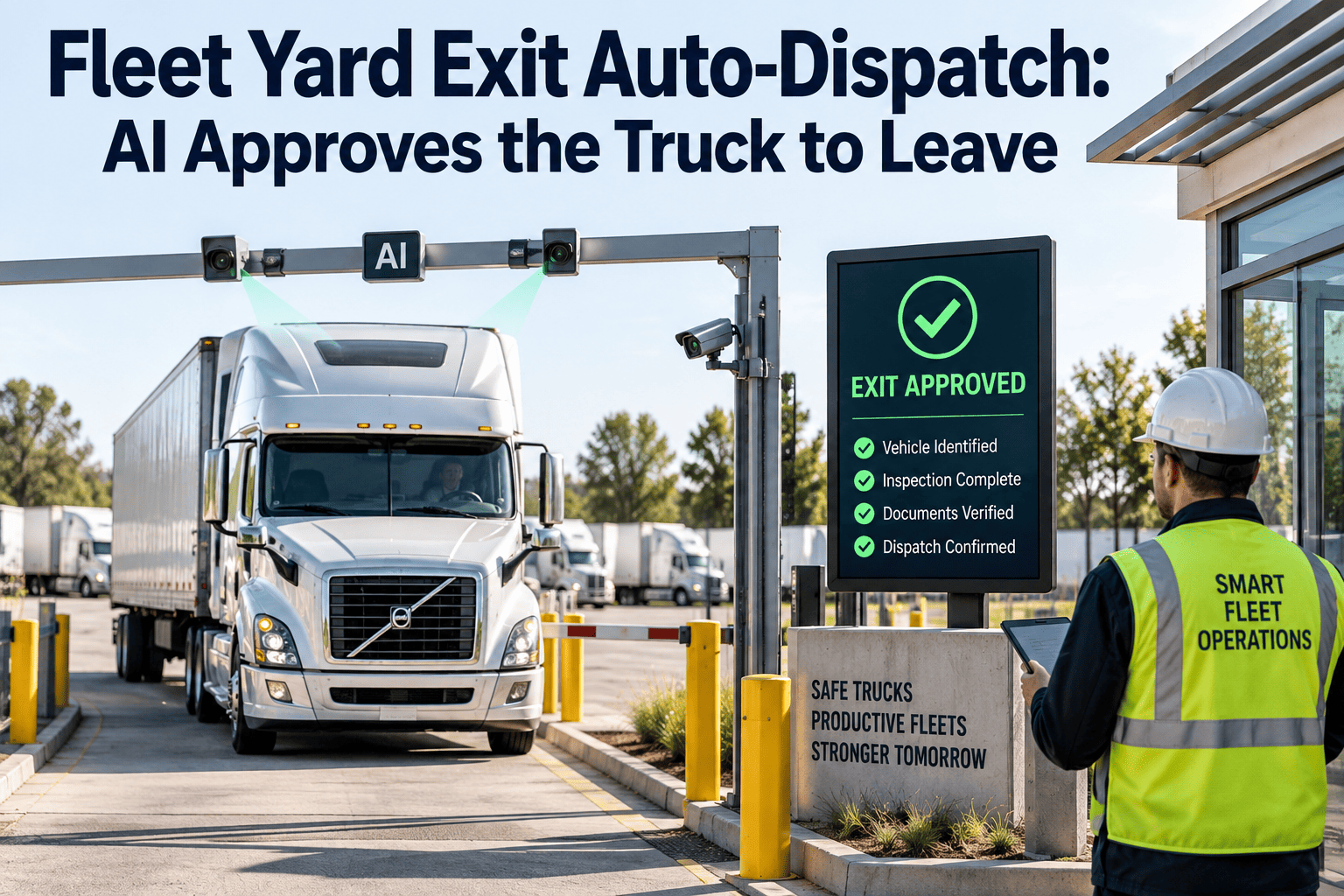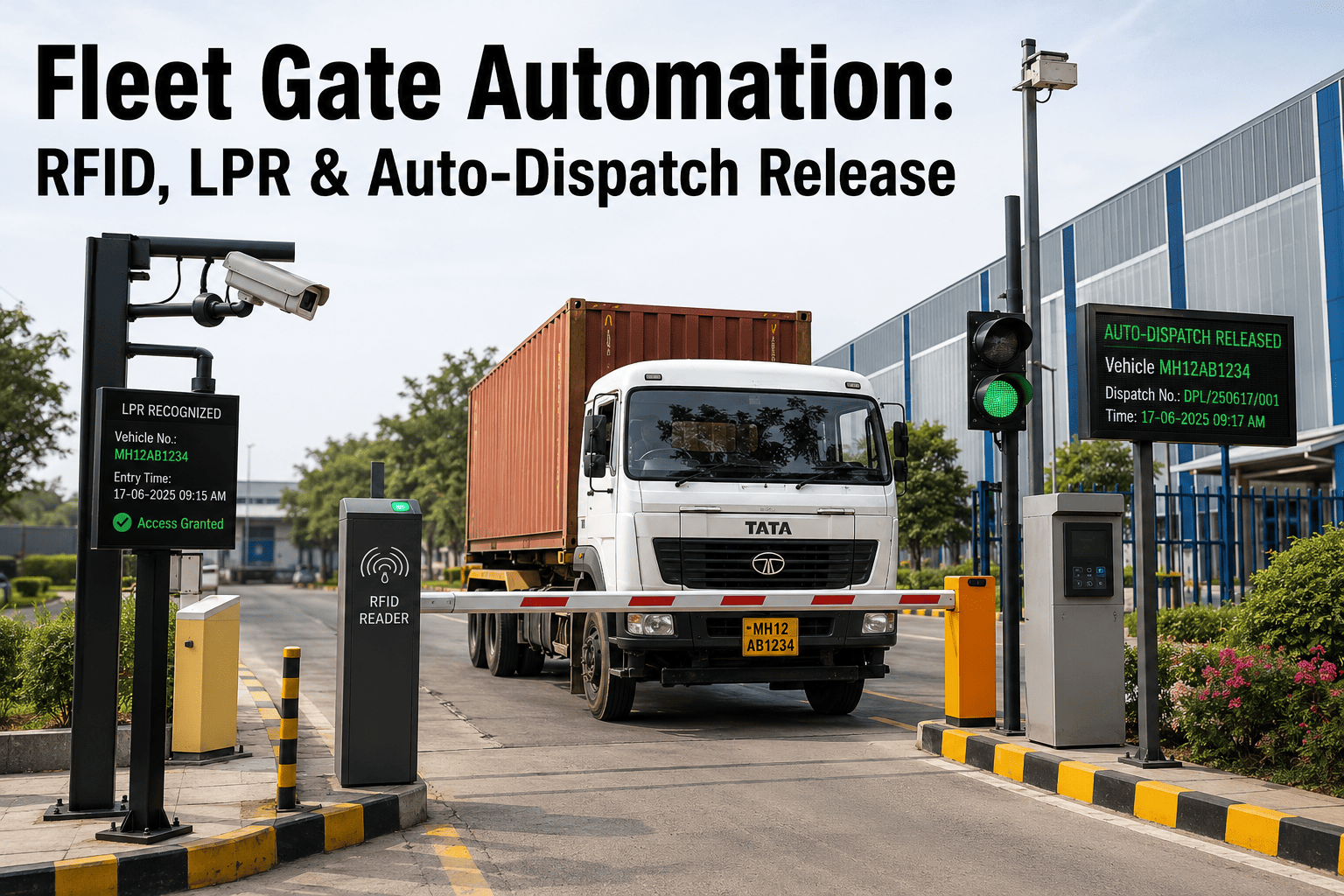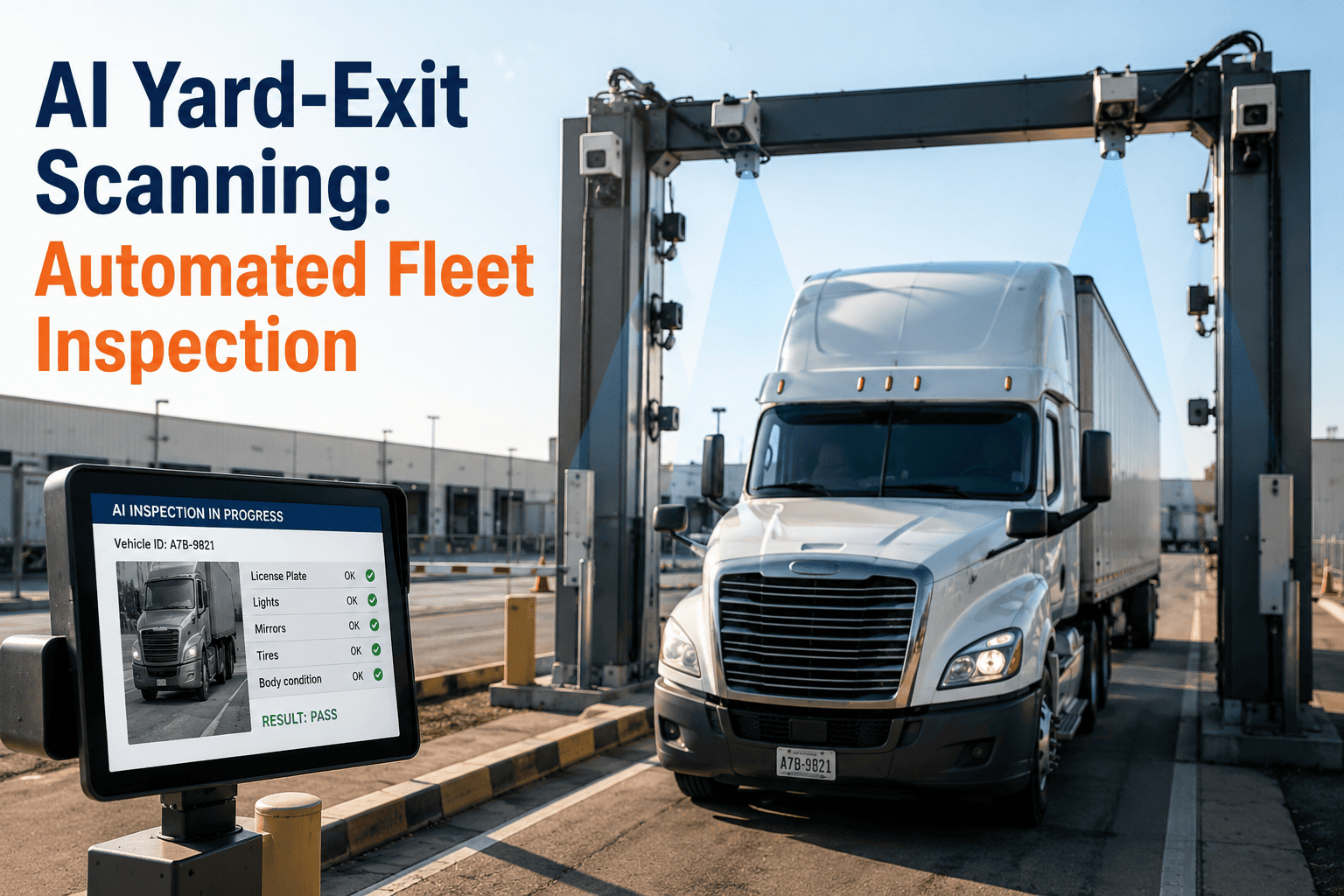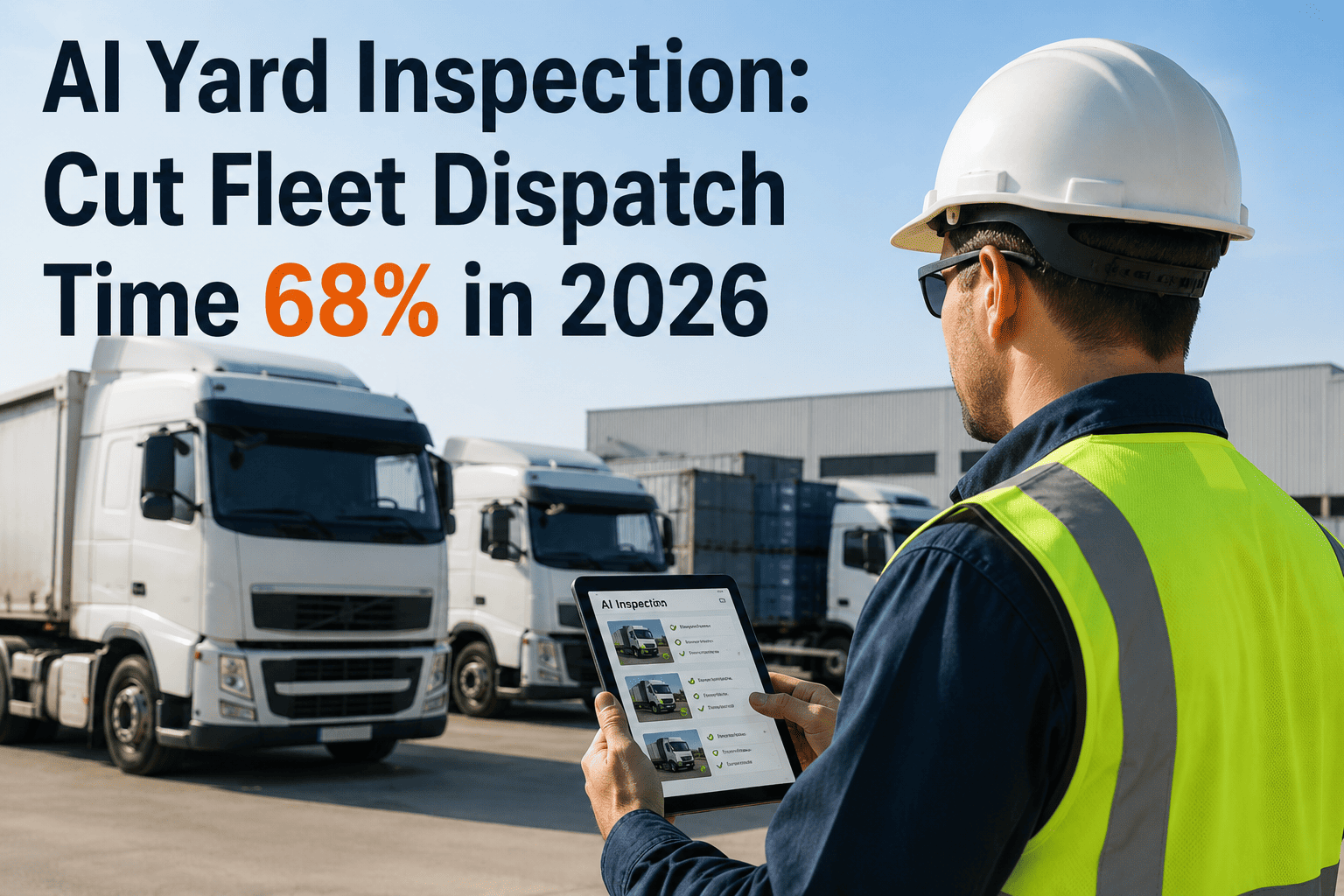
Every hour a truck spends waiting in the yard for a pre-trip check is an hour it is not earning freight revenue, and most fleets have no idea how much of that hour is wasted on inconsistent, manual inspection walk-arounds. A driver circling a tractor-trailer with a paper DVIR catches the defects he happens to notice and misses the ones he does not — tread depth that looks fine at a glance, a slow air leak that has not yet dropped pressure enough to register, a cracked mud flap bracket tucked behind the fifth wheel. AI yard inspection replaces that inconsistency with a guided, camera-driven walk-around that captures every angle of the vehicle in a fixed sequence and scores each component against a trained defect model in seconds. Fleets running AI-guided yard inspection are cutting gate-in-to-dispatch time by more than two-thirds while catching far more defects than manual walk-arounds alone. Sign in to OxMaint to see how AI yard inspection fits your dispatch workflow.
AI Yard Inspection · Fleet Dispatch Automation · OxMaint 2026
Cut Dispatch Time 68%. Catch 95% of Defects Before the Gate. AI Yard Inspection That Clears Trucks While the Driver Is Still Walking Around Them.
OxMaint AI yard inspection guides every driver through a structured photo walk-around, scores each component against a trained defect model in real time, and clears or holds the vehicle before it reaches the gate — no separate inspection lane, no waiting on a technician, no guessing what the driver actually checked.
68%
average reduction in gate-in to dispatch-cleared time reported by fleets after switching to AI-guided yard inspection
95%
of trained-model defect categories identified correctly during the guided photo walk-around, before the vehicle leaves the yard
4 min
average time for a full AI-guided walk-around and clearance decision on a standard tractor-trailer combination
3x
Fleets using AI yard inspection identify roughly three times as many pre-dispatch defects as fleets relying on a paper DVIR walk-around — not because drivers using paper forms are careless, but because a structured photo sequence checked against a defect model does not skip a panel, skip an angle, or get interrupted halfway through. The defect was almost always physically there before dispatch. The difference is whether the inspection method was built to actually find it.
How AI Yard Inspection Moves a Truck From Gate-In to Dispatch-Cleared
1
Driver Opens Guided Walk-Around
The driver opens the OxMaint app on the phone already in his pocket and starts the guided inspection sequence for the assigned unit — tractor, trailer, or straight truck, with the checklist automatically matched to vehicle type.
2
App Directs Photo Capture by Zone
The app walks the driver around the vehicle in a fixed sequence — front, driver side, rear, passenger side, undercarriage where applicable — prompting a photo at each zone so no panel or component is skipped or captured at the wrong angle.
3
AI Scores Each Photo in Real Time
Each photo is scored against a trained defect model as it is captured — tire condition, lighting function, visible fluid leaks, body damage, coupling condition — with a confidence score returned before the driver moves to the next zone.
4
Clear or Hold Decision Issued
Once the sequence is complete, the vehicle is automatically cleared for dispatch or held with a flagged defect list routed to the shop — no waiting for a technician to manually review a paper form later in the day.
5
Record Filed for DVIR Compliance
The full photo record, AI scoring, and clearance decision is filed automatically against the vehicle and driver, satisfying DVIR documentation requirements without any additional data entry step.
Manual Yard Inspection vs. AI-Guided Yard Inspection
Manual Paper Walk-Around
Inspection depth depends on the individual driver's attention that day
Defects found only if the driver happens to notice them visually
No photo record — a dispute over "was it checked" has no evidence
Flagged defects routed to the shop by radio call or verbal handoff
Average clearance time varies widely — 12 to 25 minutes per unit
OxMaint AI-Guided Walk-Around
Every unit gets the same structured, zone-by-zone photo sequence
AI defect model checks each photo against trained defect categories
Full photo and scoring record filed automatically per vehicle and driver
Flagged defects generate a work order routed to the shop instantly
Average clearance time reduced to roughly 4 minutes per unit
Every Minute a Truck Sits in the Yard Waiting on an Inspection Decision Is a Minute It Is Not on the Road. AI Yard Inspection Turns That Wait Into Four Minutes, Not Twenty.
Guided photo walk-arounds. Real-time AI defect scoring. Automatic clear-or-hold decisions. Full DVIR compliance filed without extra paperwork. OxMaint gets trucks off the yard and onto the route faster, with better defect coverage than a manual check ever reached.
What OxMaint AI Yard Inspection Actually Checks
Tires & Wheels
Tread Depth, Damage, and Inflation Signs by Position
The AI model reviews each tire photo for visible tread depth estimation, sidewall damage, uneven wear patterns, and signs of underinflation — flagging any position that falls below a configurable threshold for driver or technician follow-up before dispatch.
Lighting & Signals
Every Lamp Verified Functional at Every Zone
Headlamps, marker lights, turn signals, brake lights, and reflective tape are checked for presence and function as part of the guided sequence, catching a burned-out marker light long before it becomes a roadside citation.
Fluid & Coupling
Visible Leaks and Coupling Condition at a Glance
The undercarriage and coupling zone photos are scanned for visible fluid staining, hose condition, and fifth-wheel or pintle hook engagement, flagging anything that warrants a closer technician look before the unit leaves the yard.
Body & Structure
Damage, Cracks, and Missing Components Logged
Body panels, mud flaps, mirrors, and DOT markings are reviewed for damage or absence, with each finding logged against the vehicle record so recurring damage patterns are visible over time, not just at a single inspection.
Our yard used to bottleneck every morning between six and seven — twenty trucks lined up waiting on two inspectors. We moved to AI-guided walk-arounds on driver phones and the line disappeared within a week. Drivers do their own walk-around in about four minutes and the app tells them and dispatch immediately whether the truck is clear. We are catching things now that used to slip through until the truck was three hundred miles out.
— Terminal Operations Manager, Regional Dry Van Carrier · 140 Units · OxMaint user since 2023
Frequently Asked Questions — AI Yard Inspection
Do drivers need special hardware to run an AI yard inspection?
No. OxMaint AI yard inspection runs through a guided walk-around in the standard driver app on any smartphone. Sign in to OxMaint to configure the walk-around sequence for your fleet's vehicle types.
What happens if the AI flags a defect during the walk-around?
A flagged defect generates a work order routed to the shop instantly, and the vehicle is held from dispatch until the defect is cleared and re-inspected, with the full record filed against the unit.
Does AI yard inspection replace the federally required DVIR?
No, it strengthens it. The guided photo sequence and AI scoring produce a documented DVIR record automatically, giving fleets a defensible inspection trail rather than replacing the regulatory requirement itself.
Can AI yard inspection scale across multiple terminals?
Yes. Each terminal can run the same guided sequence with location-specific routing rules, so a flagged defect at any yard reaches the correct local shop automatically. Book a demo to see multi-terminal configuration in OxMaint.
How accurate is the AI defect model compared to a trained inspector?
The model is trained against thousands of labeled defect photos across common categories and reaches roughly 95% agreement with trained inspectors on those categories, with any low-confidence result routed for human review rather than auto-cleared.
The Truck Is Not Getting Inspected Faster by Accident. It Is Getting Inspected Faster Because the Inspection Finally Has Structure.
Guided photo walk-arounds. Real-time AI defect scoring. Automatic dispatch clearance. Full DVIR compliance on file. OxMaint gets every truck off the yard faster — with a better inspection than the stopwatch used to allow for.