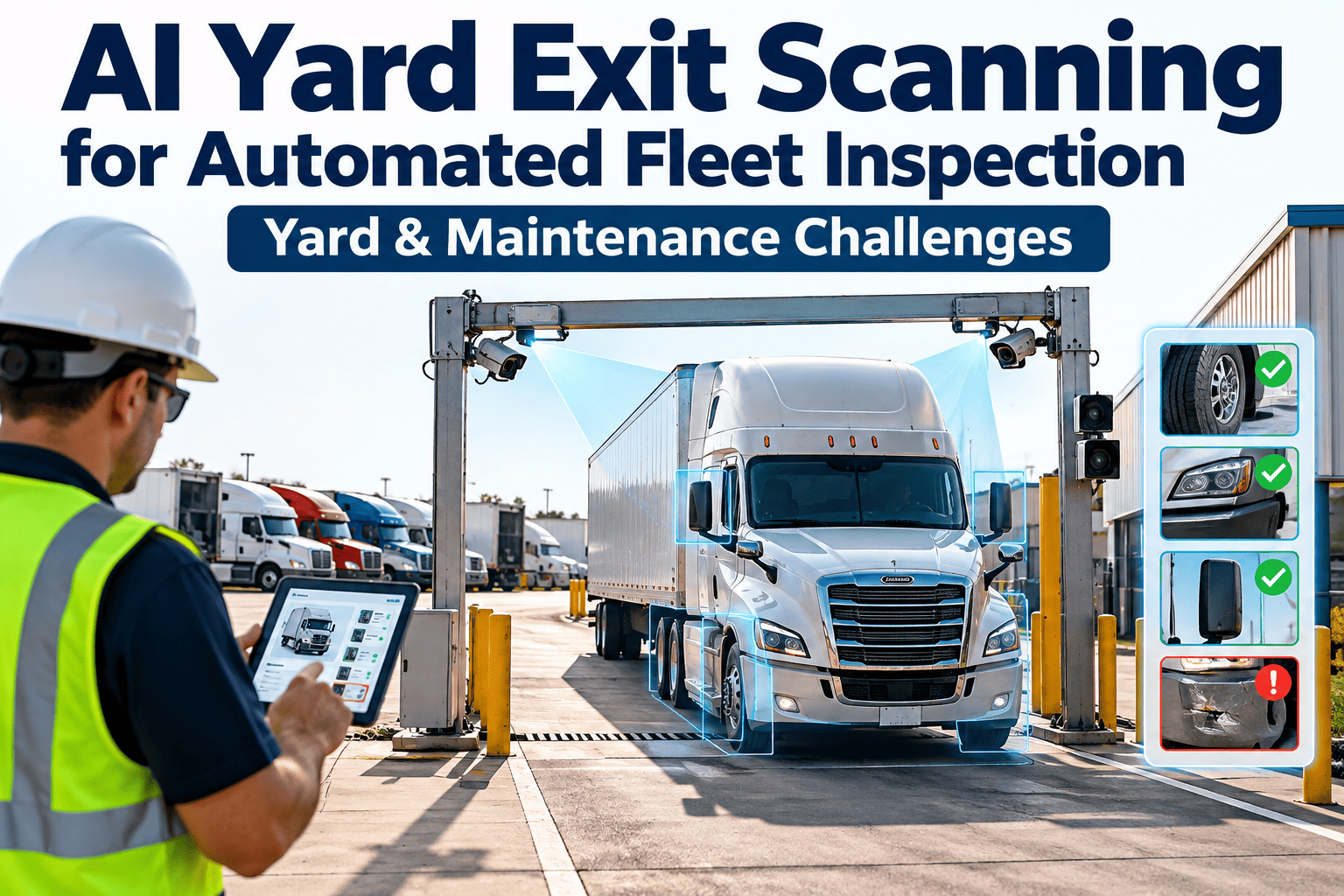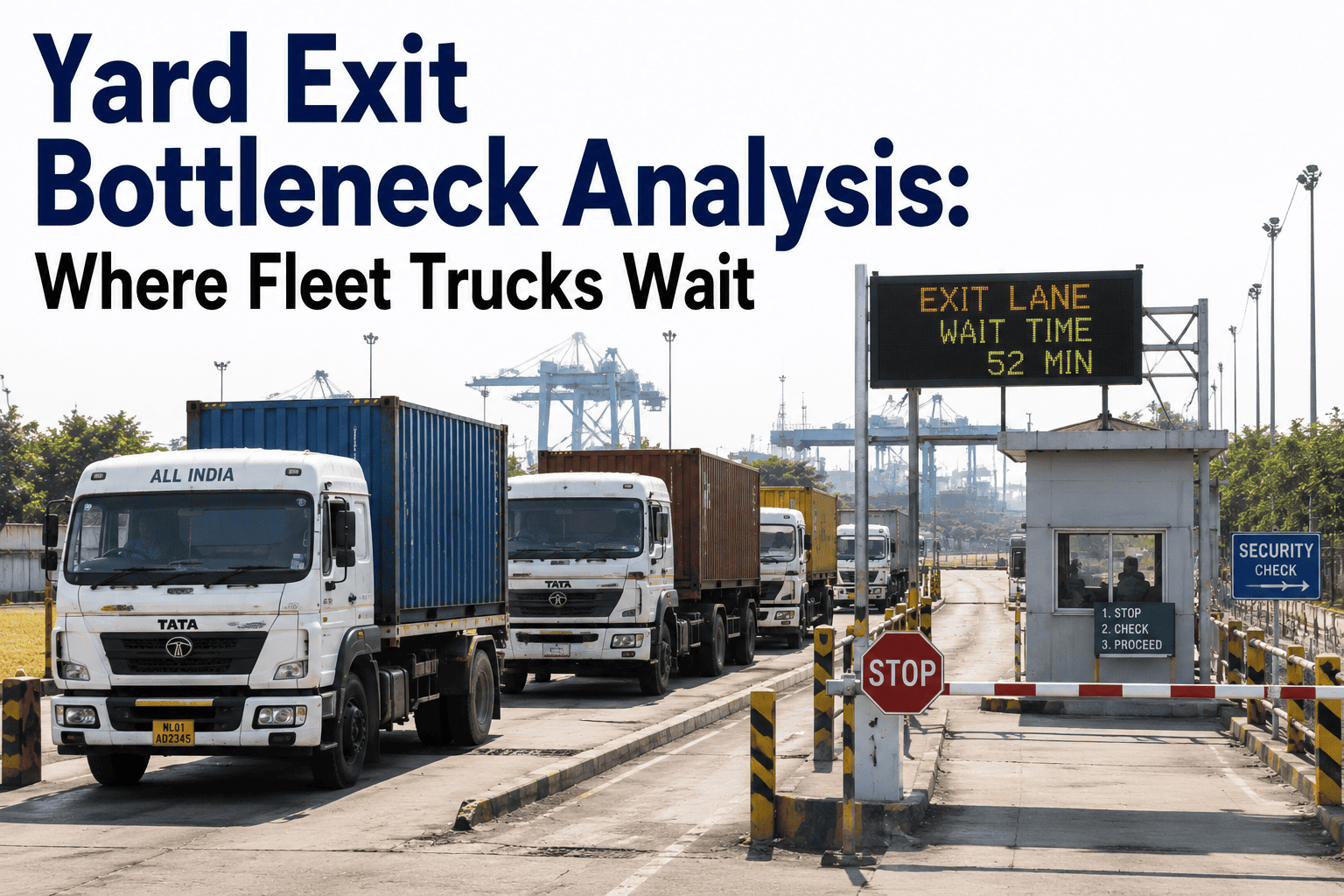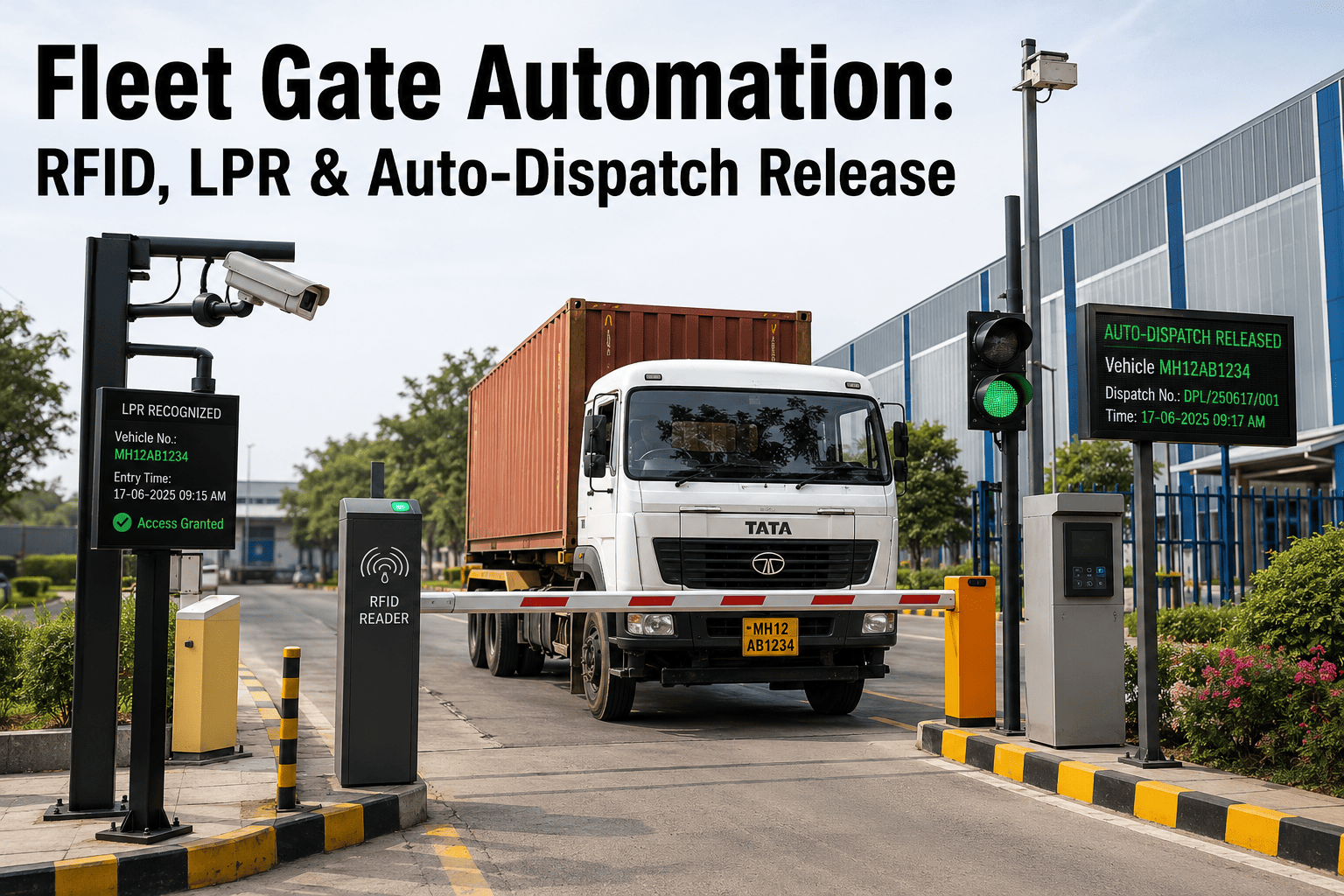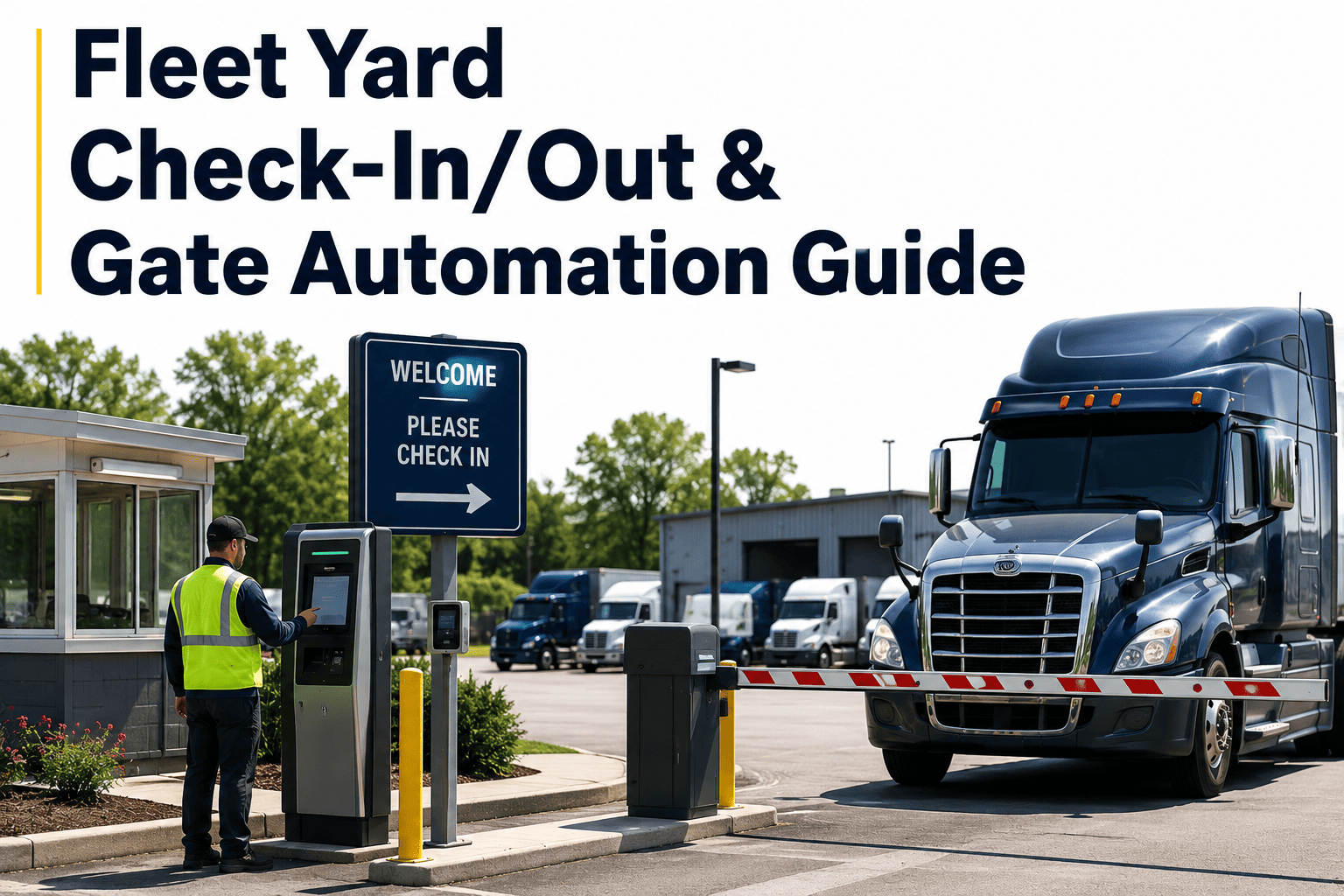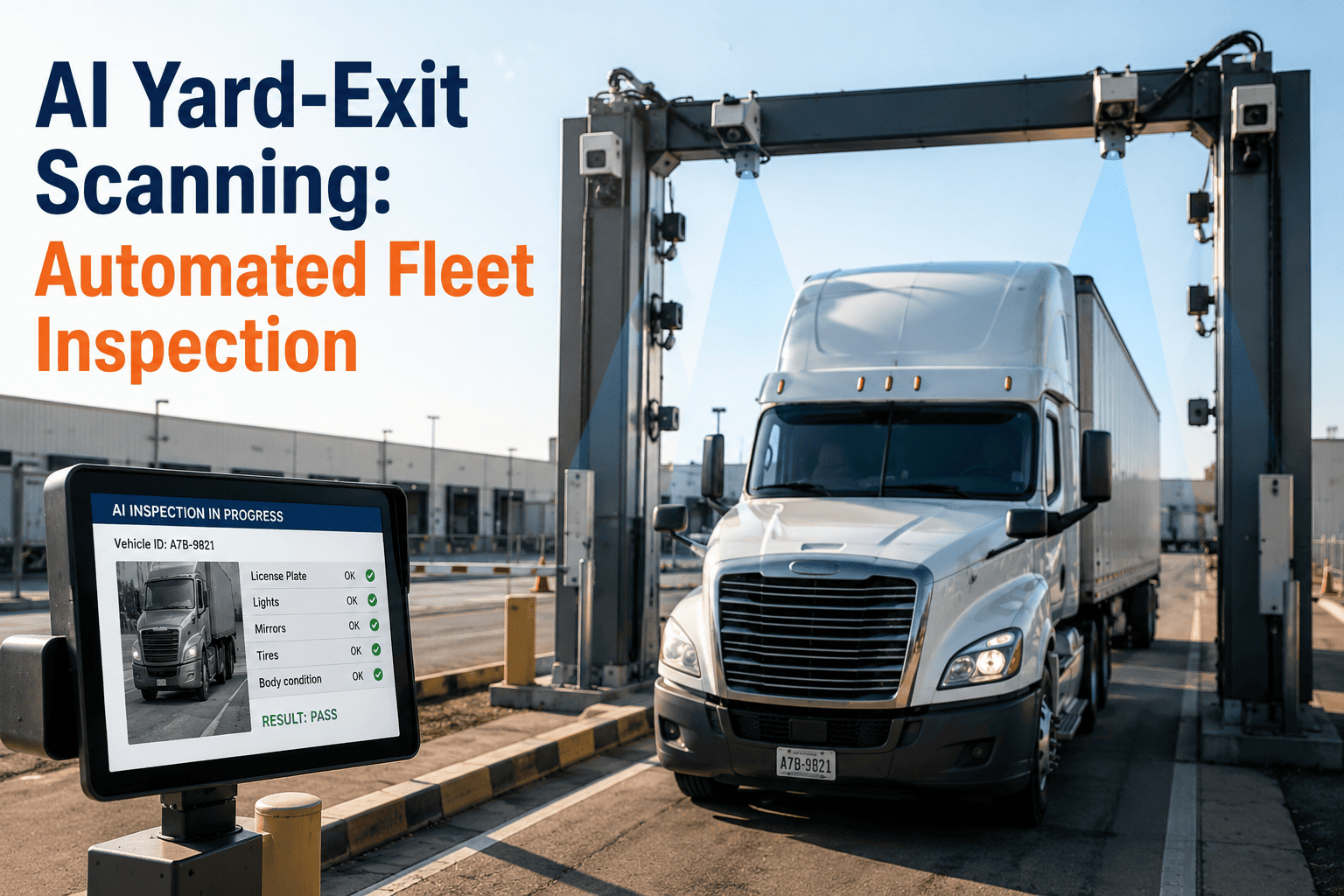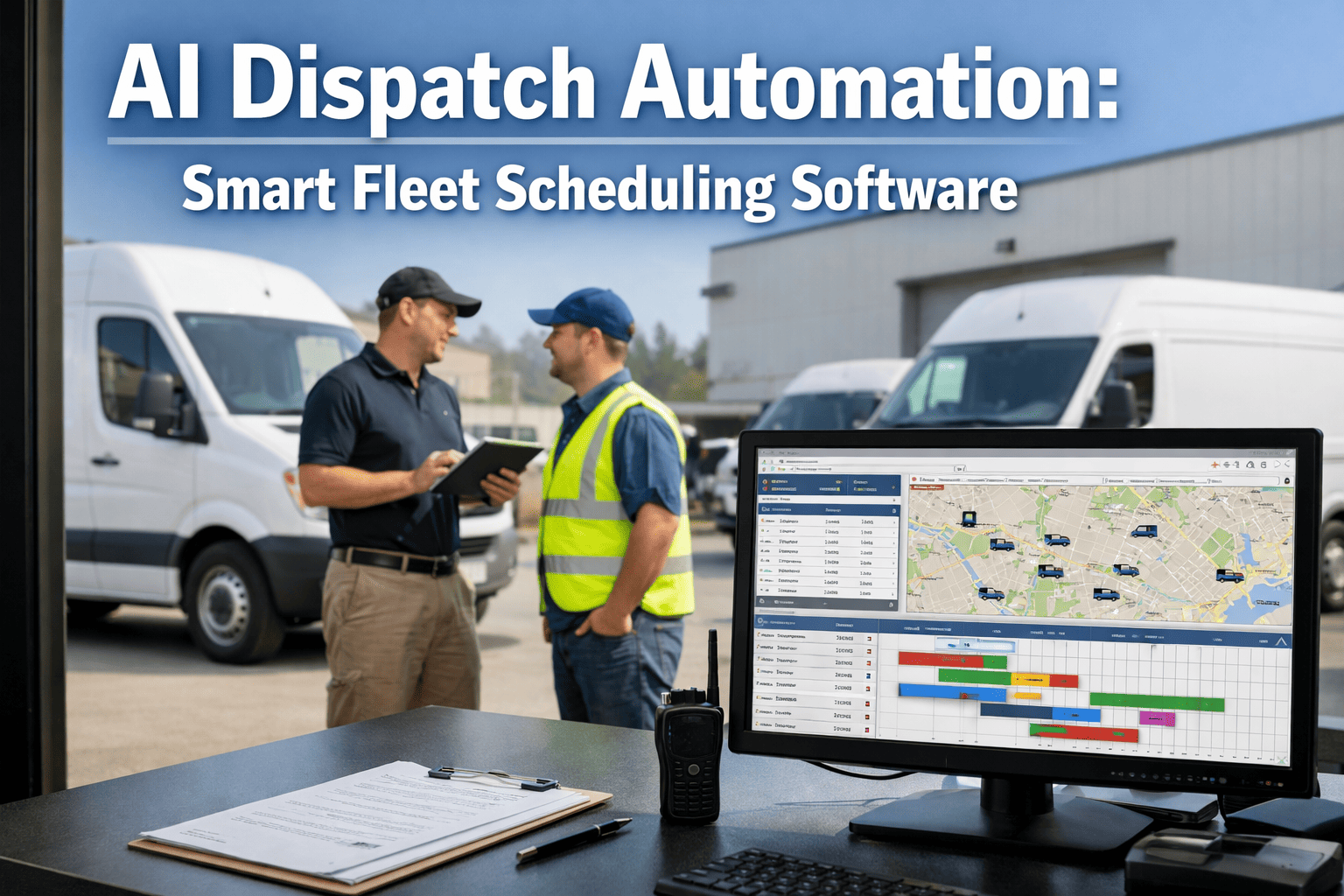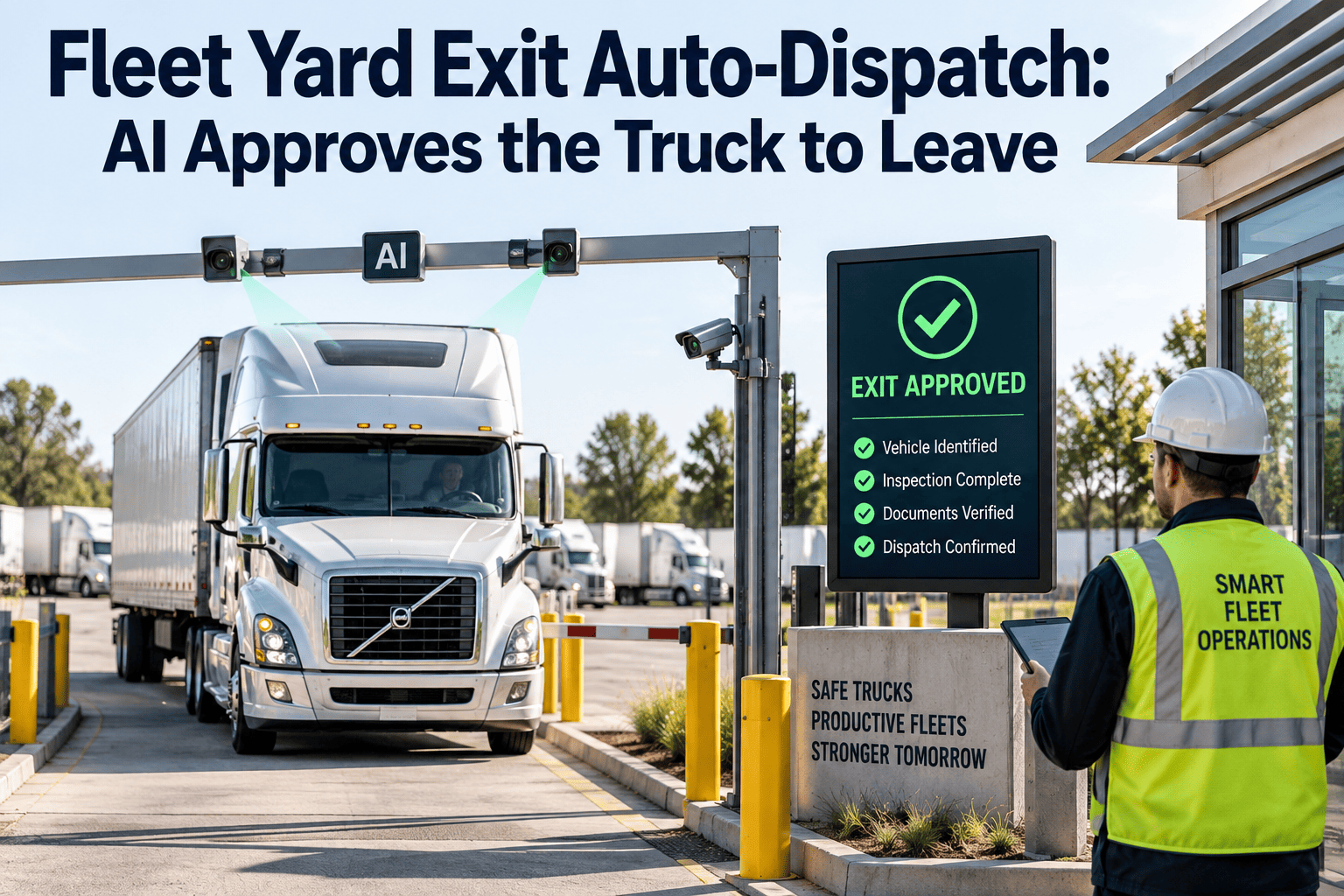
The gap between "inspection complete" and "cleared to leave the yard" is usually filled by a phone call, a radio check, or a dispatcher manually reading a paper DVIR before waving a truck through. That gap is where minutes disappear at every single exit, every single day. Auto-dispatch closes it by connecting AI-verified inspection results directly to the dispatch platform, so a truck with a clean inspection and no open defect gets released the moment the data confirms it — no human relay required. Here's how the integration between AI inspection, CMMS defect checking, and dispatch actually works.
AI clears the truck to leave — in seconds, not a phone call
When inspection, defect status, and dispatch approval all live in separate systems, every exit needs a human to bridge them. Auto-dispatch removes the bridge.
Why "inspection passed" doesn't mean "cleared to go"
Most yards already run some form of digital pre-trip or pre-departure inspection. The inspection itself is fast — a guided walkaround with photo capture can take well under a minute per vehicle. What's slow is everything that happens after the inspection closes: someone has to check whether any defect was flagged, decide if it's out-of-service or safe to run, and then tell dispatch the truck is clear. On a busy morning surge, that relay step is where trucks queue up waiting for a human who is juggling six other things.
Auto-dispatch isn't a new inspection method — it's the removal of the relay. The same inspection data that already exists gets read directly by a rules engine that knows what "clear" means, and dispatch receives the release automatically instead of waiting for someone to interpret the inspection and make the call.
The relay step also scales badly. One dispatcher can manually clear a handful of trucks during a quiet stretch without much delay, but the same dispatcher facing fifteen trucks finishing inspection within the same ten-minute window becomes the bottleneck by default — not because they're slow, but because a human reading a report and making a phone call simply can't parallelize the way a rules engine can. The queue that forms isn't a staffing problem so much as a structural one: the relay step has a fixed throughput ceiling regardless of how many trucks are ready to go.
Morning surge is where this shows up most visibly, but it isn't the only place it costs a fleet money. A dispatcher spending twenty or thirty minutes a shift on manual release calls isn't a huge number in isolation — until it's multiplied across every shift, every yard, and every day of the year, at which point it's a meaningful share of a role's total capacity spent on a task that adds no judgment a rules engine couldn't apply just as reliably for the majority of cases.
Three systems, one decision, no manual handoff
Auto-dispatch sits at the intersection of three systems that usually don't talk to each other: the AI inspection tool that captures vehicle condition, the CMMS that tracks open defects and work orders, and the dispatch or telematics platform that actually releases the truck. The integration replaces three separate lookups with one automated decision.
AI inspection captures condition
Driver completes a guided photo walkaround; the AI model flags any visible defect class in real time — leaks, tread wear, lighting, structural damage.
CMMS checks defect status
Any flagged item is matched against open work orders and severity rules — an out-of-service defect blocks release; a minor, already-scheduled item doesn't.
Dispatch receives the clearance
A clean result pushes an automatic release to the dispatch platform; a flagged result routes to a human reviewer instead of the truck simply waiting in a queue.
What actually determines an automatic release
The value of auto-dispatch depends entirely on the rules behind it. A system that auto-clears everything regardless of defect severity isn't automation, it's a liability. A system that routes every flagged item to a human, including trivial ones, doesn't save any time at all. The rules engine needs a clear severity tier to actually reduce manual review without reducing safety.
Getting that tiering right is a calibration exercise, not a one-time configuration. Fleets that start with too aggressive a definition of "clean" find themselves auto-clearing defects that should have been caught — a fast way to lose trust in the whole system after one bad incident. Fleets that start too conservative end up routing nearly everything to a human anyway, which defeats the purpose while still carrying the cost of the AI layer. The right calibration usually starts narrow — auto-clear only zero-defect inspections — and widens gradually as the audit trail shows the rules are holding.
| Inspection result | System action | Human involved? |
|---|---|---|
| No defects flagged | Automatic dispatch release | No |
| Minor defect, already on a scheduled work order | Automatic release with a logged note | No |
| New minor defect, not yet scheduled | Release + auto-generated work order | Reviewed after departure |
| Major or out-of-service defect | Release blocked, routed to maintenance | Yes, before departure |
| AI confidence below threshold | Routed to manual review by default | Yes, before departure |
See the auto-dispatch rules engine on your fleet's defect data
Walk through how OxMaint's severity rules decide what clears automatically and what still gets a human review, based on your existing inspection checklist.
AI vehicle inspection alone doesn't remove the bottleneck
AI-guided inspection tools have gotten genuinely good at what they do — confirming the right part of the vehicle is in frame, flagging known defect classes, and generating a structured, photo-backed record instead of a driver tapping "OK" without looking. But an inspection tool that produces a clean report nobody reads until the truck is already at the gate hasn't solved the exit delay, it's just moved the paperwork from analog to digital.
The throughput gain comes specifically from connecting that inspection output to the system that makes the release decision. Fleets that deploy AI inspection without wiring it into dispatch typically see better defect documentation and DOT audit readiness, which matters, but the gate queue doesn't shrink because a person is still the one reading the report and calling dispatch. The integration is the part that actually removes minutes from every exit, not the inspection accuracy improvement on its own.
This is a common sequencing mistake in yard technology purchases generally: a fleet buys the sensor or the AI model because it's the most visible, most demoable piece of the stack, and only later realizes the actual delay was happening downstream in a decision process the new tool never touched. Auto-dispatch works because it targets the decision itself, not just the data feeding it.
Rolling out auto-dispatch without skipping the trust-building step
No fleet should flip a switch and let every truck auto-clear on day one. The rollout that holds up in practice runs in stages, each one building confidence in the rules engine before removing more of the human layer.
The point of staging the rollout isn't caution for its own sake — it's that trust in an automated release decision is earned through a visible track record, not asserted by a vendor's accuracy claim. A dispatcher who has watched a shadow-mode comparison agree with their own judgment for three weeks straight will hand off the release decision willingly. A dispatcher told to trust a system on day one, with no comparison period, will quietly keep double-checking every truck anyway — which means the automation delivers none of its intended time savings even though it's technically "live."
Shadow mode
The system generates what its release decision would have been, but every truck still goes through the existing manual process. Compare the two for a set period before trusting the automation.
Auto-clear on clean inspections only
Trucks with zero flagged defects start auto-releasing first — the lowest-risk decision and usually the majority of daily traffic.
Extend to minor, pre-scheduled defects
Once clean-inspection auto-release is trusted, extend the rule to defects already tied to an open, non-urgent work order.
Audit the exceptions monthly
Review every case routed to manual review to see whether the severity rules need adjusting — too many false routes wastes the automation's value, too few risks a missed defect.
The CMMS layer that makes auto-dispatch defensible
Auto-dispatch is only as trustworthy as the defect data feeding it, and that data has to come from somewhere durable — not a spreadsheet, not a driver's memory of what was flagged last week. OxMaint is the system of record that connects inspection results, open work orders, and severity rules into the single source the dispatch decision reads from.
This matters most in the moment a decision gets questioned — an insurer disputing whether a defect existed at departure, a DOT auditor asking why a specific truck was cleared, or a maintenance manager reviewing why a flagged item didn't stop a release. Without a connected system, answering any of those questions means reconstructing the timeline from separate inspection logs, work order software, and dispatch records that may not even agree with each other on the timestamp. With everything routed through one platform, the answer is a single record instead of a cross-referencing exercise.
Defect severity rules tied to your checklist
Configure which defect classes block release automatically and which route to a scheduled repair, matched to your existing inspection checklist and DOT categories.
Auto-generated work orders from flagged defects
A new minor defect doesn't just get logged — it creates a work order automatically, so nothing flagged during an auto-cleared inspection gets forgotten.
Full audit trail for every release decision
Every auto-clear and every manual override is timestamped and logged, so a DOT audit or an insurer's question about a specific departure has a complete answer.
Dispatch integration without replacing your platform
OxMaint pushes clearance status to your existing dispatch or telematics system rather than requiring a fleet to switch platforms to get the automation.
Frequently asked questions
Does auto-dispatch replace the driver inspection, or just the release decision?
It replaces the release decision only — the driver still completes the AI-guided inspection, but the human relay step between inspection and dispatch clearance is removed for low-risk results.
What happens if the AI misses a defect?
Low-confidence results route to manual review by default rather than auto-clearing, and the audit trail lets a fleet tighten thresholds if a missed defect is found after the fact.
Can auto-dispatch integrate with our existing telematics or dispatch platform?
Yes — the integration pushes a clearance status to whatever dispatch or telematics system a fleet already runs rather than requiring a platform switch.
Is auto-dispatch only useful for large fleets?
Smaller fleets often see the fastest payback, since even a single dispatcher's time freed from manual clearance calls is a meaningful share of their total workload. You can Start Free Trial to test it on your own checklist.
How long does a rollout typically take?
A shadow-mode comparison period followed by a phased rollout to clean-inspection auto-release typically runs four to eight weeks before extending to more defect categories.
Dispatchers stop clearing trucks and start managing exceptions
The role shift that follows a successful auto-dispatch rollout is worth naming explicitly, because it's often the thing that determines whether the team embraces the change or quietly resists it. A dispatcher's job doesn't shrink — it moves from repetitive, low-judgment clearance calls toward the cases that actually need a person: an ambiguous defect, a driver dispute, a truck flagged for a reason the rules engine can't fully resolve on its own.
Framed correctly during rollout, that shift reads as relief rather than replacement — fewer interruptions during a busy shift, more time to handle the exceptions that genuinely benefit from a human decision. Framed poorly, or introduced without warning, the same change can read as the first step toward automating the role away entirely, which is exactly the kind of resistance that causes a dispatch team to quietly override the automation rather than trust it. The rollout stages above exist as much to build that trust with the team running the yard as to validate the technology itself.
Fleets that get this transition right generally involve the dispatch team in setting the severity rules rather than handing them a finished configuration. A dispatcher who helped decide which defect categories should auto-clear has a stake in the system working correctly, and is far more likely to trust an automated release than one they had no hand in designing. That same input is often the fastest way to catch a rule that looks fine on paper but doesn't match how the yard actually operates day to day.
Stop making every truck wait on a phone call to leave
Book a demo and see how AI inspection, defect rules, and dispatch clearance connect into one automatic decision inside OxMaint.
Free 14-day trial · No credit card required