A regional beverage distributor in Atlanta lost $94,000 in a single weekend when their refrigerated delivery van on a Friday afternoon route developed a reefer unit fault that the driver didn't notice for four hours. The load — 847 cases of chilled premium beverages for weekend event delivery — reached 58°F before the fault alarm finally triggered. The product was condemned. The weekend events were unserviced. Three accounts were lost to a competitor within 30 days. The reefer unit had a scheduled maintenance visit that had been deferred for six weeks because nobody had a system that flagged overdue reefer PM as a separate priority from the vehicle oil change. Temperature-controlled fleet vehicles fail in two simultaneous systems — the vehicle itself and the refrigeration unit — and most fleet management programmes only track one of them. OxMaint manages both — vehicle PM and reefer unit calibration and service — with temperature exceedance logging that creates the continuous cold chain documentation required for FDA 21 CFR Part 1 compliance and retail customer food safety audits.
Vehicle PM and Reefer Service — Both Tracked. Every Delivery Protected.
Cold chain compliance, FDA temperature records, and food delivery fleet PM — all in OxMaint for food and beverage fleets
Atlanta beverage distributor loss — one deferred reefer PM, one weekend, three accounts lost
41%
Of cold chain delivery failures traced to reefer unit maintenance gaps — not vehicle breakdowns
$2,400
Average annual cost of full reefer unit PM programme per vehicle — versus $8,000–$40,000 per condemned load event
Six Food and Beverage Fleet Vehicle Types — Cold Chain Requirements
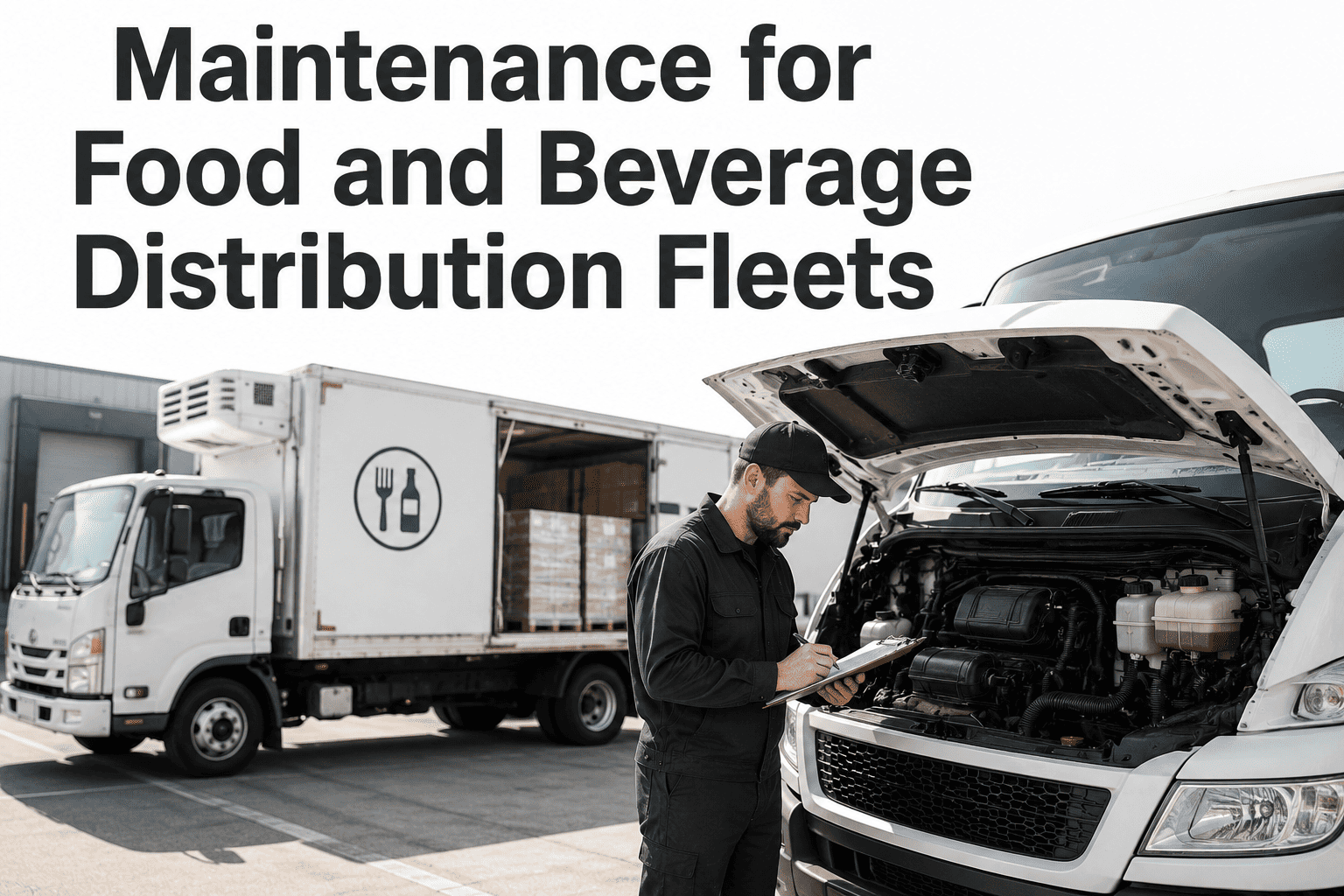
Food and beverage delivery fleets operate with one non-negotiable requirement that separates them from every other fleet category — every delivery must maintain product temperature from depot to door, continuously, without a single exceedance. Each vehicle type has distinct refrigeration system requirements and FDA documentation obligations. OxMaint manages both the vehicle and the reefer system as separate but linked assets per vehicle.
Reefer unit service every 500 operating hours — compressor belt, condenser coil clean, door seal inspection. Pre-load temperature pull-down verified before first load. Continuous temperature logging required by FDA 21 CFR Part 1. OxMaint logs every temperature record and generates exceedance alerts in real time.
Frozen Delivery Truck (−18°C or below)
Ice cream, frozen meals — zero temperature exceedance tolerance
Reefer unit defrost cycle calibration quarterly — ice build-up on evaporator coil reduces capacity and increases pull-down time. Temperature logger calibration every 6 months with traceable reference. Frozen product specification is the strictest in food distribution — a 4°C exceedance can trigger the entire load being condemned.
Multi-Temp Truck (−18°C / 2°C / ambient)
Three-zone delivery — most complex compliance
Three independent refrigeration circuits — each with separate temperature logging, separate PM schedule, and separate calibration interval. Partition integrity inspection monthly — a failed partition seal allows cross-contamination between frozen and chilled zones. OxMaint manages all three circuits as separate linked assets within one vehicle record.
Beverage Delivery Truck (ambient + chilled)
Alcoholic and non-alcoholic — mixed temperature requirements
Chilled zone requires pre-load pull-down time adequate to reach specification before loading. Ambient section load securement inspection before every route — loose beverage pallet loads are the #1 cause of vehicle damage claims in beverage distribution. Hydraulic tailgate lift service every 300 lifts — high cycle count on urban delivery routes.
Bakery / Ambient Delivery Van
Hygiene and product protection primary
No refrigeration but strict hygiene requirements — body interior cleaning programme, bread tray sanitation schedule, and ventilation system inspection. Vehicle body door seal condition is critical for ambient temperature control in summer markets. DOT inspection and standard PM apply — simpler than reefer vehicles but hygiene compliance is audited by retail customers.
Tank / Bulk Liquid Delivery
Beverage concentrate, dairy, edible oils — FDA Grade A
Tank sanitation certificate required before every load — FDA Grade A milk transport requires documented CIP cycle per delivery. Pump and valve seal inspection every 90 days. Pressure test annually. Temperature monitoring for heated bulk deliveries (chocolate, edible fat). OxMaint stores every sanitation certificate linked to the tank asset record.
OxMaint — Food & Beverage Fleet
Vehicle PM. Reefer Service. Cold Chain Records. One Platform.
OxMaint tracks vehicle maintenance and reefer unit calibration simultaneously — with continuous temperature logging that satisfies FDA, FSMA, and retail customer food safety audits.
Cold Chain Compliance Matrix — What OxMaint Tracks
Eight compliance obligations govern food and beverage delivery fleet operations — spanning FDA Food Safety Modernization Act requirements, USDA Grade A dairy transport, and major retail customer food safety audit standards. OxMaint tracks all eight with continuous temperature logging and generates compliance documentation for FDA, USDA, and Walmart/Kroger/Costco supplier audit requirements.
Compliance Activity
Vehicle Type
Standard
Interval
OxMaint
Temperature Logger Calibration
All reefer vehicles
FDA 21 CFR Part 1 / FSMA
Every 6 months — traceable
Calibration cert
Reefer Unit Annual Service
All refrigerated units
OEM / HACCP requirement
Annual + 500 operating hours
Service record
Pre-Load Pull-Down Verification
All reefer vehicles before load
FSMA Sanitary Transport
Before every load
Pre-load log
Continuous Temp Monitoring
All reefer delivery routes
FDA FSMA Rule 7
Every delivery — logged
Temp log stored
Tank Sanitation Certificate
Bulk liquid tankers
FDA Grade A PMO / USDA
Before every load
CIP cert linked
Annual DOT Inspection
All CMVs over 10,001 lbs
49 CFR 396.17
Annual — qualified inspector
DOT cert stored
Door Seal Inspection
All reefer vehicles
HACCP / retailer standard
Monthly — visual + temp test
Seal inspection log
Tailgate Lift Inspection
All vehicles with tail lifts
LOLER (UK) / OSHA 1910
Every 300 lifts or 6 months
Lift inspection cert
Swipe to view full table on mobile
Cold Chain Failure Cost — The Three Scenarios
Cold chain failures in food and beverage distribution generate costs in three overlapping categories — product loss, contract penalty, and account attrition. The three tiers below show the actual financial exposure at each point in the failure cascade for a mid-size US food and beverage distributor.
Reefer Fault — Detected Same Day
Driver catches temperature alarm — product checked, partial recovery
Product loss — partial load condemned
$2,400–$8,000
Emergency reefer repair — same-day callout
$800–$2,200
Delivery delay penalty
Minimal — same-day recovery
Total cost
$3,200–$10,200
Reefer Fault — Detected at Delivery
Full load condemned — customer impact, service failure
Product loss — full load condemned
$18,000–$94,000
Contract penalty — missed delivery SLA
$1,200–$8,400
FDA FSMA documentation gap exposure
$1,000–$10,000
Total cost
$20,000–$110,000+
OxMaint PM Programme
Reefer fault predicted — planned service visit
Product loss per year — PM programme fleet
Near zero
Annual reefer PM cost per vehicle
$1,800–$2,400
FDA and retail audit compliance rate
100% — documented
Annual saving vs reactive approach
$16,000–$88,000
"Walmart requires continuous cold chain documentation for every chilled delivery supplier. Before OxMaint, pulling that documentation for a quarterly supplier audit took two people two days. Now it exports automatically in 8 minutes. We haven't had a supplier compliance finding in 14 months."
— VP of Logistics, Chilled Food Distributor · 62 reefer vehicles · Georgia, USA
Technology That Protects Every Cold Chain Delivery
Four technology integrations connect food delivery vehicle health data, reefer unit performance, and temperature records to a single dashboard — enabling predictive reefer service before a fault occurs and generating the continuous cold chain documentation required for FDA and retail customer compliance. Connect your food delivery fleet through OxMaint.
AI Predictive — Reefer Unit Health
OxMaint AI analyses reefer unit compressor run-time patterns, pull-down temperature rate, and condenser coil delta-T to predict refrigeration capacity degradation 14 days before a fault occurs — converting a condemned load event into a planned service visit. Alerts route to the depot manager and driver before the vehicle leaves for the next shift.
Continuous Temperature Logging
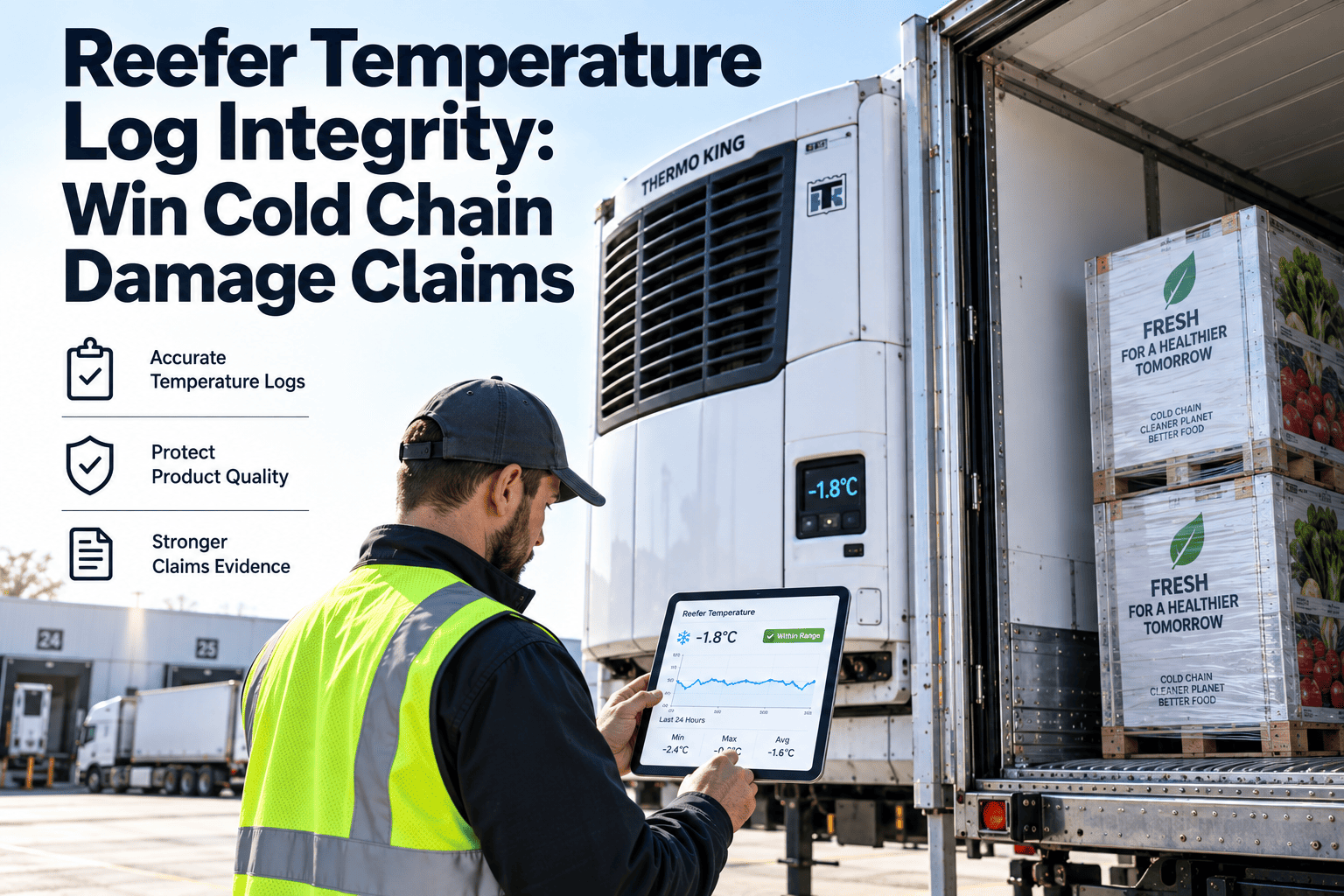
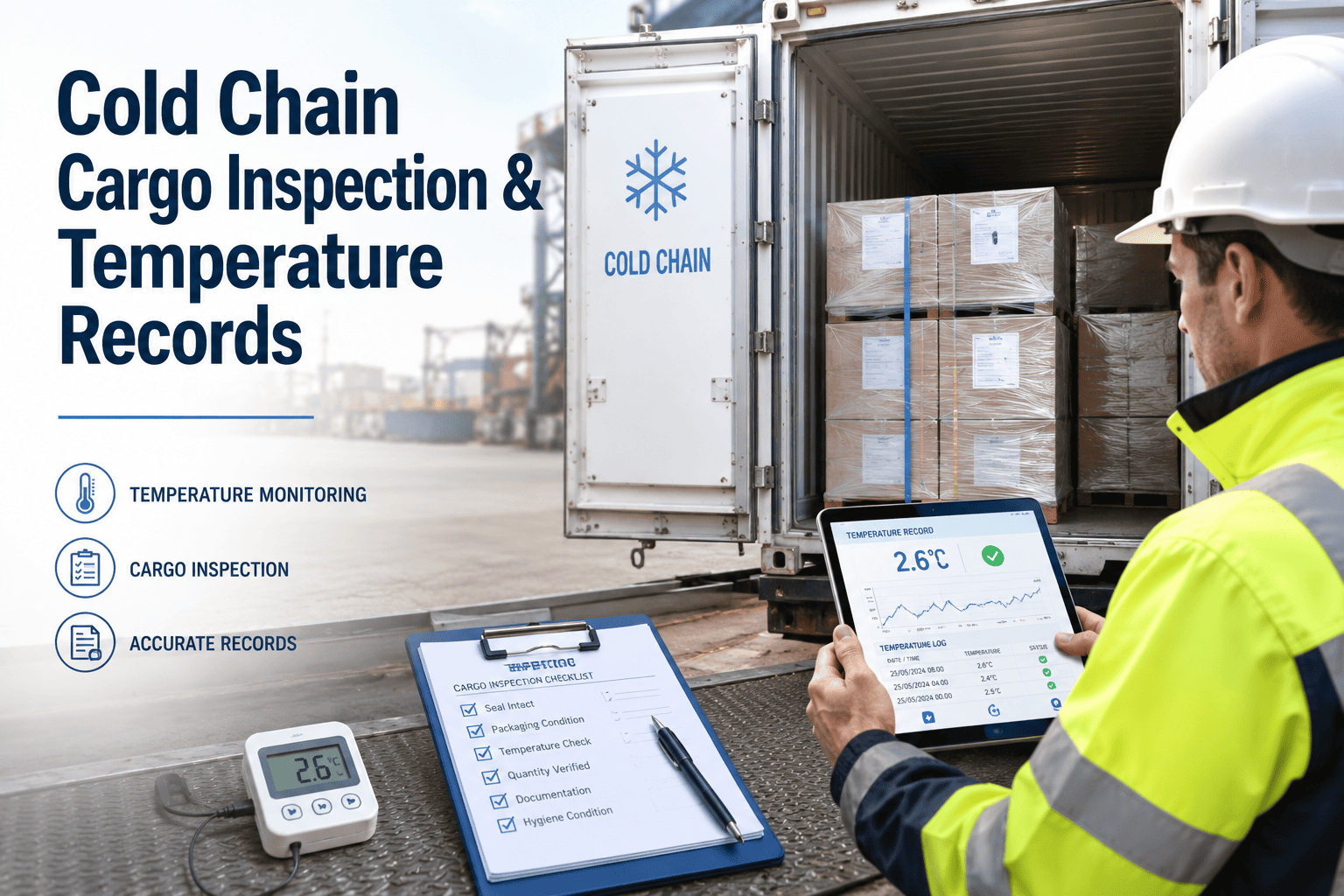
IoT temperature sensors in every reefer body transmit cargo temperature to OxMaint every 5 minutes throughout the delivery route. Every temperature record is stored per vehicle, per load, per route — with exceedance alerts sent to the fleet manager in real time. FDA 21 CFR Part 1 cold chain documentation is generated automatically for every delivery.
OBD & Telematics Integration
OBD-II data from delivery vehicles feeds OxMaint — engine hours, idle time, and vehicle fault codes trigger PM work orders automatically. High-idle events on reefer vehicles (running the refrigeration unit from the main engine) create wear patterns that OxMaint tracks separately from road-mileage PM triggers.
SAP & ERP Cold Chain Integration
OxMaint temperature exceedance events and reefer maintenance records sync with SAP or your food distribution ERP — linking cold chain compliance data to the product lot and delivery order record. Recall traceability from temperature exceedance to product batch is completed in under 10 minutes with full supply chain documentation.
Frequently Asked Questions
Q1Does OxMaint track reefer unit PM separately from vehicle PM on the same asset record?▼
Yes — each reefer vehicle is configured in OxMaint with two linked PM schedules: one for the vehicle chassis (mileage-triggered) and one for the reefer unit (operating-hours-triggered). Both are visible on the same vehicle dashboard — the fleet manager sees one record per vehicle with all compliance items.
Q2How does OxMaint generate FDA-compliant cold chain temperature records?▼
OxMaint stores continuous temperature logger data per vehicle per delivery route. Temperature records are exportable as FDA 21 CFR Part 1 compliant reports — with vehicle ID, route date, temperature readings, exceedance flags, and logger calibration certificate linked. Exportable in under 5 minutes for any FDA or retail audit request.
Q3Can OxMaint track multi-zone temperature vehicles with three separate refrigeration circuits?▼
Yes — each refrigeration zone is configured as a separate linked asset within the vehicle record. Three independent PM schedules, three temperature logger calibration records, and three continuous temperature streams all tracked under one vehicle. Partition integrity inspection is a separate checklist item per vehicle.
Q4Does OxMaint support Walmart, Kroger, or Costco supplier food safety audit requirements?▼
Yes — OxMaint compiles reefer PM records, temperature logger calibration certificates, and continuous temperature logs into a formatted supplier compliance pack. Most major US retailers accept this format for their annual food safety transport audits — exportable in under 10 minutes per vehicle or full fleet.
Q5How long does it take to deploy OxMaint across a 62-vehicle reefer fleet?▼
Full deployment — vehicle register, reefer unit PM schedules, temperature logger integration, and driver pre-load checklists — completes in 30 days for fleets up to 100 vehicles. Most food distribution fleets see their first AI reefer fault prediction alert within 45 days of go-live.