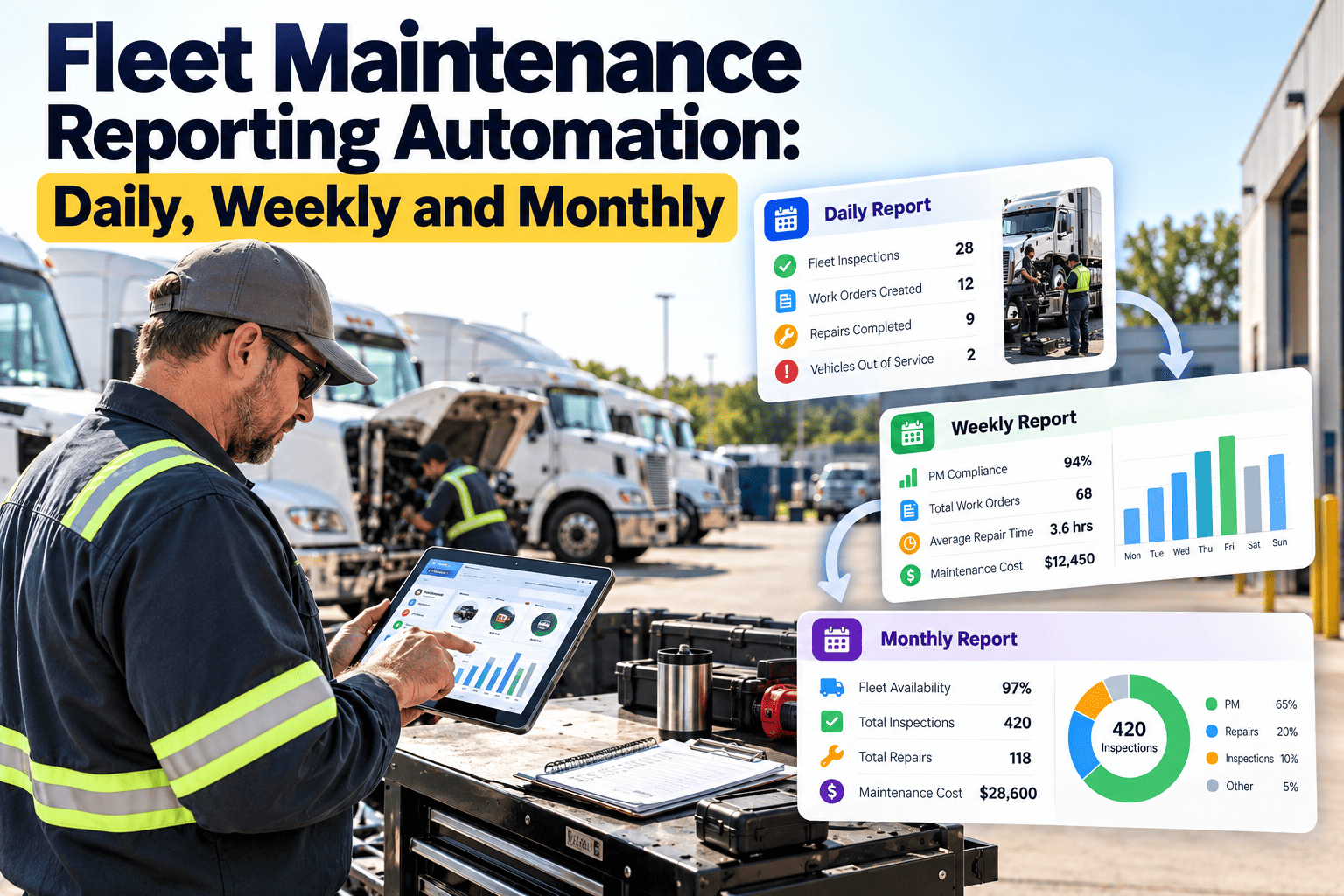
Every fleet maintenance team knows the Friday afternoon scramble — pulling numbers from three systems, formatting the same charts by hand, and rewriting the same paragraph for a different audience each week. Generative AI is closing that gap fast: fleets are now turning inspection records, work orders, and PM history into weekly summaries, compliance packs, and executive briefings by simply asking for them in plain language, with work that used to eat an afternoon finishing before the coffee goes cold. The technology is not replacing a technician's judgment or a manager's sign-off — it is removing the hours spent formatting, copying, and re-explaining data that already lives inside the CMMS. See how a plain-language request becomes a finished report inside Oxmaint's maintenance management software.
Generative AI · Fleet Maintenance Reporting
Ask For The Report. Stop Building It.
A fleet manager types one line. Oxmaint reads the underlying maintenance records and hands back a finished, traceable report before the request would have finished loading a spreadsheet.
You ask
Summarize this month's PM compliance and flag any depot below 80 percent.
Generated in 47 seconds
Monthly PM Compliance Summary
Fleet-wide PM compliance is 89 percent, up 6 points from last month.
Depot C is at 71 percent, the only site below target.
14 work orders are overdue by more than five days, 9 of them at Depot C.
Recommended: reassign a technician to Depot C for the next two weeks.
10 min
Typical time to generate a full report that used to take most of a workday
71%
Of organizations already run generative AI somewhere in daily operations
5.4%
Average weekly time saved per worker at enterprises using AI tools
60 sec
Time to export a full per-VIN audit history once records are structured
The Friday Report Grind — And What Replaces It
This is what building one maintenance report by hand still looks like at most fleets. None of these hours involve deciding anything — they are spent finding, matching, and formatting data that was already sitting in the system.
1:00 PM
Exporting CSVs from three separate systems — telematics, parts, and work orders — that were never built to talk to each other.
2:15 PM
Calling two depot managers because the spreadsheet numbers do not match what actually happened on the shop floor.
3:40 PM
Rebuilding the same chart for the third time this month, with one number changed and the formatting broken again.
5:10 PM
Proofreading a report that quietly pulled in last month's PM numbers by mistake, and starting one section over.
6:00 PM
The report finally goes out — a day late, and already a day stale by the time anyone reads it.
Same report, requested in plain language and generated straight from live CMMS data: under four minutes, and every number traces back to its source record.
Stop rebuilding the same report every week
Turn Your Maintenance Data Into A Finished Report, Not Another Spreadsheet
Oxmaint reads directly from your inspection, work order, and PM records, so a report request pulls real fleet history instead of whatever version of the spreadsheet was updated last.
How A Request Becomes A Finished Report
This is a real sequence, not a feature list — each step depends on the one before it, and a person is still in the loop before anything reaches a stakeholder.
01
Ask in plain language
"Give me last week's defect trends by depot" — typed into the app, no dashboard building, no pivot table required.
02
The request maps to real records
The question is matched against structured work orders, inspections, PM history, and parts logs already inside the CMMS — never free text guesswork.
03
A draft report assembles itself
Narrative summary, relevant charts, and flagged outliers are generated automatically, with every line tied back to the record it came from.
04
A person reviews before it ships
The manager checks the draft, adjusts tone or emphasis where needed, and approves it — nothing reaches a stakeholder unread.
05
The report distributes itself
Recurring reports land in the right inbox on schedule automatically; one-off requests export and share instantly.
Report Types Your Team Can Generate On Demand
Weekly PM Compliance Summary
A plain-language recap of what is due, what is overdue, and which depot needs attention this week.
Compliance & Audit Pack
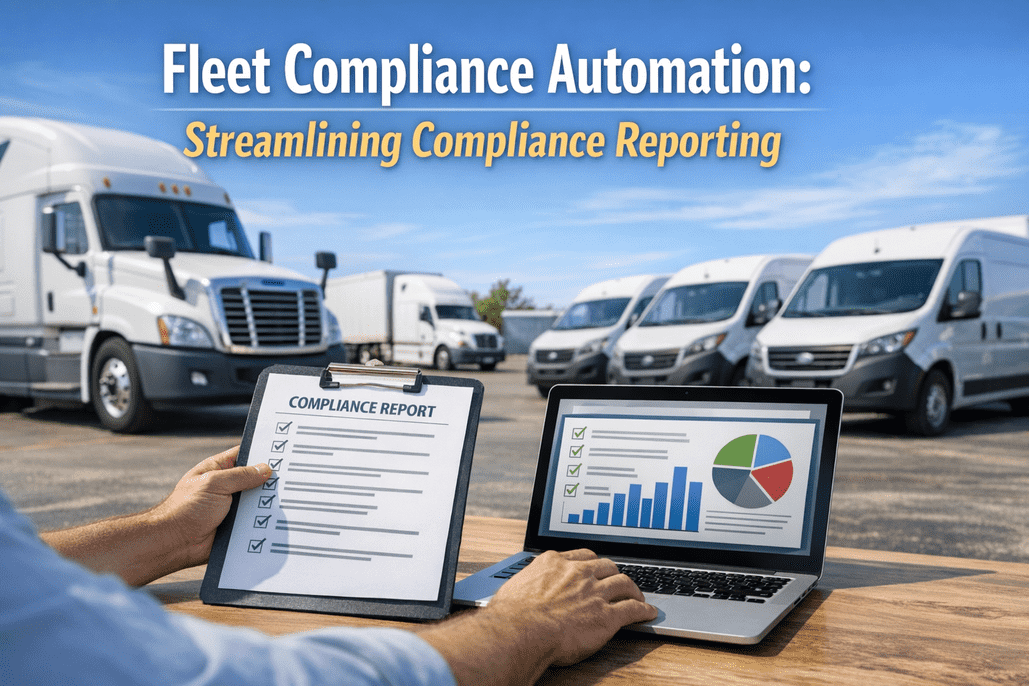
DVIR history, inspection sign-offs, and repair records compiled into one exportable document per vehicle.
Executive KPI Briefing
A board-ready overview of utilization, cost per mile, and downtime trends without the underlying spreadsheets.
Defect & Downtime Trend Report
Recurring failure patterns surfaced across the fleet before they turn into a run of roadside breakdowns.
Repair Cost & Parts Report
Cost per work order and parts spend by depot, with warranty-eligible repairs flagged automatically.
Technician Performance Report
Jobs closed, average repair time, and first-time-fix rate, summarized without a manual timesheet review.
Manual Reporting vs Generative AI Reporting
Built On Real Maintenance Data, Not Guesses
The trust question every fleet manager asks first is fair: can this be handed to an auditor or a customer? Three safeguards make the answer yes.
Every line traces back to a record
Numbers in a generated report link to the underlying inspection, work order, or PM record — never an unexplained output.
A person signs off before anything ships
Draft reports route to a manager for review and approval, so nothing reaches an auditor or a customer unread.
Built on the CMMS you already run
No separate reporting database, no re-entry — the same work order and inspection history is the operational record itself.
See it run on your own fleet numbers
Watch A Report Generate From Your Real Maintenance Records
A short walkthrough is enough to show what a plain-language request pulls from your existing CMMS, and how the finished report compares to the version your team builds by hand today.
Frequently Asked Questions
Q1
Does generative AI actually understand our maintenance data, or is it just summarizing text?
It maps your plain-language request to structured work orders, inspections, and PM history already inside the CMMS, not general text it is guessing at. You can see this mapped against your own fleet data by
starting a free trial.
Q2
Can a generated report be trusted for a DOT or customer audit?
Yes, when every figure links back to a signed-off inspection or work order and a manager reviews the draft before it goes out.
Book a demo to see a sample audit pack generated end to end.
Q3
Do we need to change our CMMS or import data separately to use this?
No — generative reporting runs directly off the records your team is already logging, so there is no second database to maintain.
Start a free trial to connect it against your current data.
Q4
How long does it take to get this running for our fleet?
Most teams are generating their first report within days, since the underlying inspection and work order data is already structured once it lives in the CMMS.
Book a demo to map the setup against your current systems.
Q5
What happens if the AI gets a number wrong?
Because every line cites its source record, an incorrect figure is easy to trace and correct, and the manager review step catches most issues before a report ever ships.
Try it yourself to see the source links in a draft report.
One request, one finished report, every source traceable
Give Your Team The Hours Back That Reports Are Quietly Taking
Oxmaint turns the maintenance data your team already logs into weekly summaries, compliance packs, and executive briefings — generated on request, reviewed by a person, and ready before the deadline instead of after it.