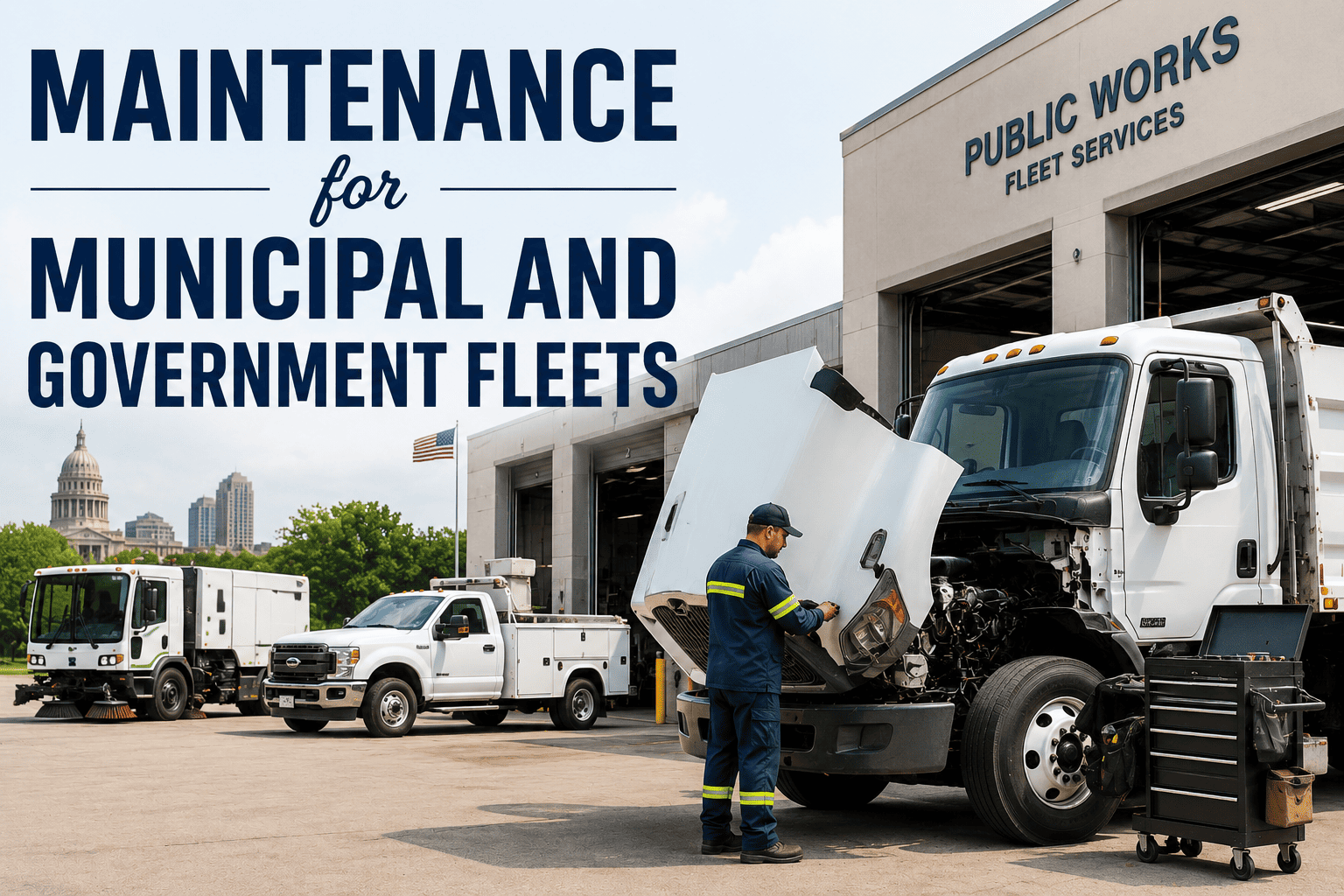
Government and municipal fleet management operates under constraints that no private fleet director faces: procurement cycles measured in years, budget authorities that expire at fiscal year-end, union labor agreements that govern who performs each maintenance task, and public accountability requirements that make every maintenance dollar visible to citizens and auditors. The average government vehicle is 7.4 years old — nearly double the private sector average of 3.9 years — because replacement requires multiple budget approval cycles, competitive bid processes, and legislative authorisation that can take 18–36 months from decision to delivery. OxMaint's CMMS supports public sector fleet operations with the documentation, compliance tracking, and reporting capabilities that government fleet directors need to justify maintenance spending to council members, city managers, and the public.
Government and Municipal Fleet Management: Unique Challenges and CMMS Solutions
Aging fleets, fiscal year constraints, procurement regulations, union labor, and public accountability — how CMMS addresses every challenge unique to government fleet operations, from small city departments to large county agencies.
The Fiscal Year Cycle — What Fleet Managers Face Every Quarter
Government fleet budgets follow the fiscal calendar, not the vehicle maintenance calendar. Every quarter brings a distinct set of constraints, spending windows, and reporting obligations that private fleet operators never encounter. Understanding this cycle is the first step to working within it — and using CMMS data to prepare for each phase before it arrives rather than reacting to it after. OxMaint generates quarterly fleet expenditure reports in the format required by budget offices, council submissions, and audit preparation — without additional administrative work from the fleet team.
Fleet Age and Procurement Lead Time: The Double Constraint
Government fleets age because replacement is slow. A private fleet operator who needs 10 new vans can have them on route within 6–8 weeks. A city fleet director who needs 10 new police cruisers must issue a competitive bid, award a contract, and wait for manufacturer allocation — a process that routinely spans 18–24 months. The vehicle in service during that wait continues to age, accumulate repair cost, and consume a growing share of the maintenance budget. The only lever available to government fleet directors during this waiting period is predictive maintenance — keeping the aging fleet running efficiently until the replacement cycle completes. OxMaint's PM scheduling and OBD integration extend the serviceable life of aging government vehicles and document the maintenance investment that justifies replacement to budget authorities.
Public Accountability & Compliance Scoring — Your Current Risk Level
Government fleet directors face a compliance and accountability standard that private operators do not — every maintenance decision is potentially subject to public records requests, council scrutiny, and audit review. A missing inspection record is not just a safety risk — it is a liability exposure and a political problem. The scoring framework below rates five compliance dimensions that government fleet directors must manage. Most public sector fleets without a CMMS sit at Score 2 or 3 — with significant audit exposure on documentation, compliance history, and cost justification.
CMMS Implementation Stack for Government Fleets — Five Layers
Implementing a CMMS in a government fleet environment requires a specific sequencing that accounts for union labor classification, procurement approval requirements, and existing record systems. The five-layer stack below represents the correct implementation order — each layer depends on the one below it being established first. Rushing to Layer 4 (telematics integration) without Layer 2 (compliance calendar) in place creates data without accountability. OxMaint's government fleet onboarding process follows this sequencing — with dedicated support for union labor configuration and public records compliance from day one.
Technology Integration: OBD, Digital Twin, AI Camera, and SAP
Government fleet technology adoption has historically lagged the private sector — procurement lead times, IT security review requirements, and budget cycle timing all slow technology deployment. But the technology that is now accessible through SaaS CMMS platforms — OBD telematics integration, AI Digital Twin lifecycle modelling, and AI Camera Vision depot inspection — is directly applicable to the government fleet's most pressing challenges: extending aging fleet life, documenting maintenance for public accountability, and generating the cost-per-vehicle data that justifies replacement to budget authorities. SAP and ERP integrations connect CMMS maintenance data to the government financial management systems that auditors and CFOs actually use.
Our city council asked for a full maintenance cost breakdown for our 84-vehicle fleet before the budget vote. Three years ago that would have taken four weeks of manual spreadsheet work. With OxMaint, we pulled the full report — cost per vehicle, PM compliance rate, and year-over-year comparison — in 20 minutes. The budget passed without a single question about fleet spending.
Frequently Asked Questions
Government Fleet Management, Fully Documented.
OxMaint gives public sector fleet directors the audit trail, compliance records, and budget reporting they need — free to start, no IT procurement process required.