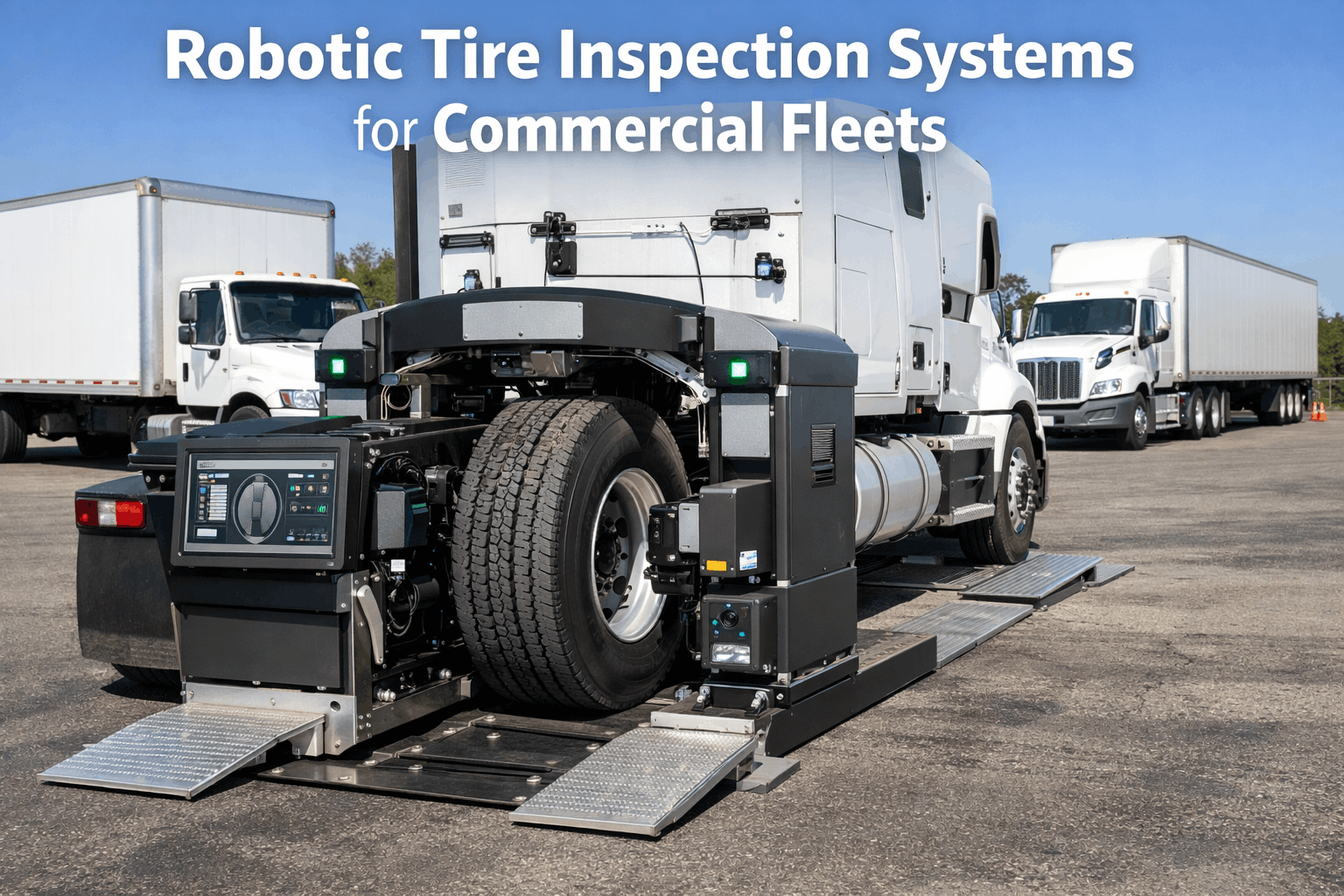
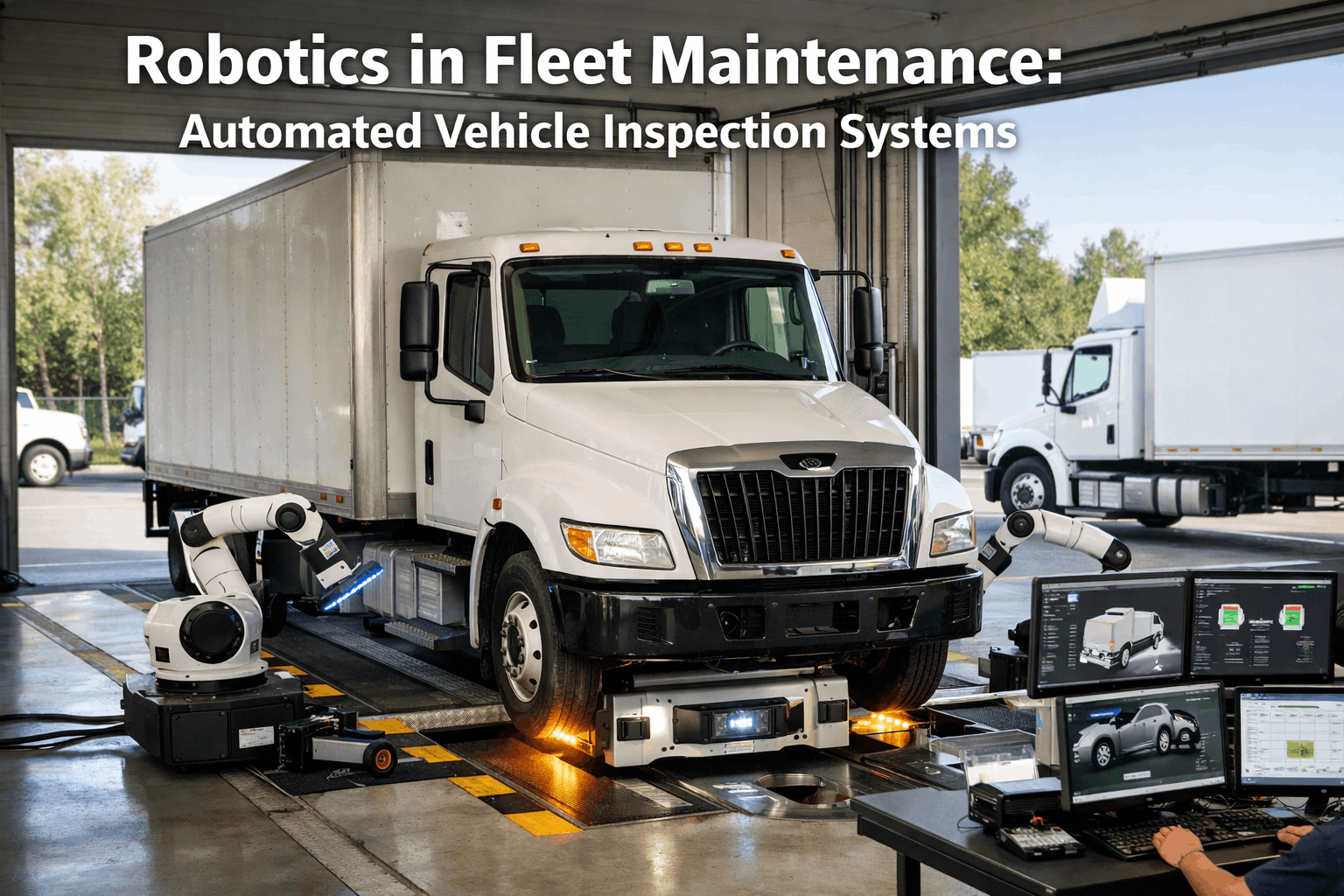
Fleet operations are no longer confined to a single yard or depot. Vehicles are spread across cities, states, and sometimes entire countries. Keeping every asset maintained, compliant, and road-ready is a logistical puzzle that traditional methods simply cannot solve. Enter GPS-enabled maintenance robots, a breakthrough fusion of robotics, telematics, and CMMS technology that is redefining how distributed fleets stay operational. These intelligent systems use real-time GPS positioning to locate, diagnose, and service vehicles wherever they are, eliminating guesswork, reducing downtime, and delivering maintenance precision at scale.
What Are GPS-Enabled Maintenance Robots
GPS-enabled maintenance robots are autonomous or semi-autonomous machines equipped with satellite positioning, onboard diagnostics sensors, and wireless connectivity. They navigate to fleet vehicles across distributed locations, perform inspections, run diagnostics, and even execute minor repairs without requiring a centralized service bay. Each robot transmits its position and task status in real time to a centralized CMMS dashboard, giving fleet managers complete visibility over maintenance operations no matter how geographically dispersed their assets are.
Unlike traditional maintenance workflows that depend on scheduled depot visits, these robots bring the service to the vehicle. Equipped with thermal sensors, vibration analyzers, and computer vision, they can assess brake wear, tire pressure, fluid levels, engine health, and battery conditions directly at the vehicle's GPS-reported location. The result is a dramatic reduction in vehicle downtime and a shift from reactive repairs to truly predictive maintenance. If you manage a distributed fleet and want to centralize your maintenance data, sign up for OxMaint to see how CMMS integration makes this possible.
Why Distributed Fleets Need Robotic Maintenance
Managing maintenance across multiple locations has always been the Achilles' heel of fleet operations. Vehicles operating in different regions face varying road conditions, climate stressors, and regulatory requirements. Coordinating technicians, parts, and schedules across all these variables is expensive and error-prone. GPS-enabled maintenance robots solve this by acting as mobile service units that follow your fleet wherever it operates.
Consider a logistics company running 500 trucks across 12 states. Each state has different DOT inspection requirements, seasonal road conditions, and proximity to service centers. A truck breaking down in a rural stretch of Montana costs far more than the same breakdown near a depot in Chicago. GPS maintenance robots stationed at strategic hub locations can reach any vehicle within their coverage radius, performing condition-based inspections that account for local terrain, climate wear patterns, and mileage since last service. The robot does not just check a box on a schedule; it reads the actual condition of brake pads, measures tire tread depth with laser precision, and analyzes engine vibration signatures against baseline performance data for that specific vehicle.
The numbers tell a compelling story. The robot fleet management software market was valued at approximately $703 million in 2025 and is projected to reach $1.4 billion by 2030. Meanwhile, predictive maintenance powered by telematics has been shown to cut unplanned breakdowns by up to 47%. For fleets already using GPS tracking, which now includes 92% of commercial fleets in the US, adding robotic maintenance capabilities is a natural evolution. If fleet downtime is eating into your bottom line, book a demo with OxMaint and explore smarter maintenance coordination.
Robots travel to the vehicle, eliminating transit time to service bays and keeping assets in the field longer.
Thermal, vibration, and visual sensors detect issues at the point of operation before they become failures.
AI algorithms analyze sensor data to predict component degradation and auto-generate work orders in CMMS.
Every inspection is GPS-stamped, time-logged, and stored digitally for DOT and regulatory audits.
Fleets using predictive telematics report 15-20% lower operating costs through optimized maintenance cycles.
Centralized dashboards provide unified views of robot activity and fleet health across every location.
GPS Positioning Accuracy and What It Means for Maintenance
Standard GPS provides accuracy within 3 to 5 meters, which is sufficient for general vehicle tracking but inadequate for robotic maintenance tasks that require precise vehicle identification in crowded yards. This is why advanced maintenance robots use RTK (Real-Time Kinematic) GPS correction, which narrows accuracy to 1 to 2 centimeters. At this precision level, a robot can distinguish between two trucks parked side by side in a depot, navigate to the correct vehicle's engine compartment access point, and align its diagnostic sensors with specific components.
RTK positioning works by receiving correction signals from a base station with a known fixed position. The base station measures satellite signal errors caused by atmospheric interference and relays corrections to the robot in real time. For distributed fleets, this means deploying small, inexpensive base stations at key locations such as distribution centers, truck stops, and customer loading docks. The robot's onboard GPS receiver processes these corrections to compute its position with centimeter-level confidence. This level of accuracy is what separates a maintenance robot from a simple GPS tracker: it does not just know which yard the vehicle is in, it knows exactly where on the vehicle to perform each inspection task.
The Role of CMMS in GPS Robotic Maintenance
A GPS-enabled maintenance robot is only as effective as the system that manages its data. This is where a robust CMMS platform like OxMaint becomes essential. Every diagnostic reading, inspection result, and repair action performed by a maintenance robot is automatically transmitted to the CMMS. This creates a single source of truth for all fleet maintenance activities, regardless of how many locations or robots are involved.
The integration works both ways. The CMMS analyzes historical maintenance data alongside real-time robot diagnostics to prioritize which vehicles need attention most urgently. It schedules robot deployments based on asset criticality, geographic proximity, and compliance deadlines. It also tracks parts inventory across distributed locations, ensuring that when a robot identifies a component that needs replacement, the right part is available at the nearest depot. For fleet managers looking to unify their maintenance operations, sign up for OxMaint and bring every location under one intelligent platform.
What makes this integration particularly powerful is the feedback loop it creates. Every inspection performed by a robot enriches the CMMS database with condition data for that specific vehicle. Over time, the system learns degradation patterns unique to each asset: how quickly brake pads wear on a truck that primarily runs mountain routes versus one that operates on flat highways, how engine oil degrades faster in vehicles running in extreme heat, or how battery health declines in cold-climate fleets. This vehicle-specific intelligence allows the CMMS to predict with increasing accuracy when each component will need attention, shifting from generic maintenance schedules to truly individualized service plans.
Key Technologies Powering Fleet Maintenance Robots
The convergence of several technologies makes GPS-enabled maintenance robots possible. Understanding these components helps fleet managers evaluate solutions and plan adoption strategies effectively.
Centimeter-level accuracy ensures robots reach the exact vehicle location, even in large yards or remote sites.
3D mapping and visual recognition allow robots to navigate obstacles and identify vehicle components for inspection.
Vibration, thermal, and pressure sensors on robots communicate with vehicle OBD-II ports for deep diagnostics.
Algorithms process sensor data to predict failures, optimize robot routes, and prioritize maintenance tasks.
Low-latency connectivity enables real-time data transmission between robots, vehicles, and the CMMS cloud.
Centralizes all data, automates work orders, manages compliance, and provides analytics dashboards for decision-making.
These technologies are not futuristic concepts. They are actively being deployed across logistics, construction, mining, and transportation fleets worldwide. The Robot-as-a-Service model has grown by 31% recently, making advanced robotics accessible even to mid-sized fleet operators without massive capital expenditure. To see how a modern CMMS ties all these technologies together, book a demo with OxMaint and experience the platform firsthand.
How Robots Perform Specific Fleet Inspections
Understanding what a GPS maintenance robot actually does at the vehicle level helps fleet managers appreciate the depth of automation these systems deliver. Each inspection type leverages different sensor combinations and produces specific data outputs for the CMMS.
Infrared thermal cameras measure brake rotor and pad temperatures immediately after vehicle use. Abnormal heat patterns indicate uneven pad wear, seized calipers, or warped rotors. The robot compares thermal readings against the vehicle's historical baseline stored in the CMMS, flagging deviations as minor, moderate, or critical. Ultrasonic thickness gauges measure remaining pad material to within 0.1mm accuracy.
Laser profilometers scan the entire tire surface to measure tread depth at multiple points, detecting uneven wear caused by alignment issues or improper inflation. Sidewall inspection uses high-resolution cameras with AI-trained image recognition to identify bulges, cracks, and impact damage. Tire pressure sensors verify PSI levels against the manufacturer's specification for the current load weight.
Vibration sensors attached magnetically to engine mounts, transmission housings, and differential cases measure frequency spectra. Machine learning models compare these vibration patterns against known failure signatures for bearing wear, gear tooth damage, and misalignment. OBD-II wireless connectivity pulls diagnostic trouble codes, fuel trim data, and coolant temperature trends directly from the vehicle's ECU.
Optical sensors measure oil, coolant, and transmission fluid levels through reservoir sight glasses. Oil quality analyzers evaluate viscosity, particulate contamination, and oxidation levels using infrared spectroscopy, determining whether the oil has remaining useful life or requires immediate replacement. Coolant concentration and pH levels are tested to prevent corrosion damage to engine water jackets.
Ready to Modernize Your Fleet Maintenance
OxMaint's CMMS platform integrates with GPS telematics, IoT sensors, and robotic maintenance systems to give you complete control over distributed fleet operations.
Industries Adopting GPS Maintenance Robotics
The adoption of GPS-enabled maintenance robots is accelerating across industries that operate large, geographically distributed vehicle fleets. Each sector presents unique challenges that robotic maintenance is uniquely positioned to solve.
Long-haul trucks spread across thousands of miles benefit from en-route diagnostics and predictive servicing. A robot at a rest stop hub can inspect an arriving truck's brakes after a mountain descent, checking for thermal damage that would be invisible during a standard walkaround.
Heavy equipment operating in remote, harsh environments gets on-site inspection without transport to centralized workshops. Excavators, haul trucks, and loaders in dusty pit environments receive air filter analysis, hydraulic line pressure checks, and undercarriage wear assessments where they operate.
Service vehicles covering vast territories receive location-aware maintenance scheduling. A utility company with line trucks scattered across rural counties can deploy robots that adjust inspection protocols based on whether a truck has been operating in sandy soil, wet marshland, or paved suburban roads.
Buses operating from multiple depots get standardized inspection protocols delivered by robots, ensuring uniform compliance across every location. Pre-route brake checks, exhaust emission sampling, and emergency exit verifications are completed before the first run each morning.
Regardless of your industry, the principle remains the same: bringing maintenance to the vehicle rather than the vehicle to maintenance. This fundamentally changes fleet economics and operational uptime. If your fleet spans multiple locations, sign up for OxMaint to start centralizing your maintenance data today.
Geofencing and Automated Maintenance Triggers
One of the most practical applications of GPS in robotic fleet maintenance is geofencing, where virtual geographic boundaries trigger automated actions when vehicles enter or exit defined zones. When a truck arrives at a distribution center geofence, the CMMS automatically checks the vehicle's maintenance status. If the last brake inspection was 15,000 miles ago or the engine oil has exceeded its recommended service interval, the system dispatches a maintenance robot to the vehicle's parking position without any manual intervention from the fleet manager.
Geofences can be configured at multiple levels of specificity. A depot-level geofence might trigger a full pre-trip inspection for every vehicle that has been away for more than 48 hours. A customer site geofence might log arrival and departure times for billing purposes while simultaneously checking tire pressures that could indicate a slow leak developing during the delivery route. Highway rest stop geofences positioned along known problematic corridors, such as steep mountain grades or extreme temperature zones, can trigger targeted checks on the systems most stressed by those conditions. All of this happens automatically through the CMMS, with the fleet manager only notified when an issue actually requires human decision-making. To automate maintenance triggers across your fleet locations, book a demo with OxMaint and see geofence-driven workflows in action.
Measuring ROI From GPS Robotic Maintenance
Fleet managers evaluating GPS-enabled maintenance robots should focus on measurable outcomes. The return on investment comes from several interconnected improvements that compound over time.
The cost savings extend beyond direct maintenance expenses. When unplanned breakdowns drop by 47%, the cascading effects include fewer missed deliveries, reduced emergency towing costs, lower insurance claims from roadside incidents, and improved driver retention since drivers strongly prefer operating well-maintained vehicles. The Robot-as-a-Service subscription model means fleets can start with robots at their highest-volume locations and scale coverage as ROI is proven, without committing to large capital purchases upfront. Ready to see the numbers for your fleet? Sign up for OxMaint to explore how centralized CMMS data powers smarter maintenance decisions.
Transform Your Fleet Maintenance Operations
Join thousands of fleet managers who are using OxMaint to centralize maintenance, automate compliance, and integrate with the latest GPS and telematics technologies.
Frequently Asked Questions
What are GPS-enabled maintenance robots
GPS-enabled maintenance robots are autonomous or semi-autonomous machines that use satellite positioning to navigate to fleet vehicles at distributed locations. They perform diagnostics, inspections, and minor repairs on-site using thermal cameras, vibration sensors, laser profilometers, and OBD-II connectivity, transmitting all data to a centralized CMMS platform like OxMaint in real time.
How do GPS maintenance robots reduce fleet downtime
By bringing maintenance directly to the vehicle instead of requiring depot visits, these robots eliminate transit time. Their predictive diagnostics identify issues before they cause breakdowns. For example, a vibration anomaly detected in a transmission bearing during a routine robot inspection can be scheduled for repair during the vehicle's next planned stop, avoiding a costly roadside failure.
What types of inspections can maintenance robots perform
Modern maintenance robots perform thermal imaging for brake and bearing analysis, laser scanning for tire tread depth and wear patterns, vibration analysis for engine and drivetrain health, fluid quality testing using infrared spectroscopy, electrical system diagnostics through OBD-II connectivity, visual inspection for structural damage using AI-trained computer vision, and exhaust emission sampling for regulatory compliance.
How does CMMS integration work with maintenance robots
Maintenance robots transmit diagnostic data wirelessly to the CMMS platform. OxMaint automatically creates work orders, updates asset records, logs inspection results with GPS timestamps, and triggers compliance alerts. Over time, the CMMS builds vehicle-specific degradation models that enable increasingly accurate predictive maintenance scheduling tailored to each asset's operating conditions.
What is the cost of implementing GPS robotic maintenance
Costs vary based on fleet size and complexity. The Robot-as-a-Service model, which has grown 31% recently, allows fleets to access robotic maintenance through subscription plans rather than large capital purchases. Combined with a CMMS platform like OxMaint, most fleets see positive ROI within 12-18 months through reduced downtime, lower repair costs, and improved technician utilization.
Can GPS maintenance robots work in remote or off-road locations
Yes. GPS-enabled robots with RTK positioning achieve centimeter-level accuracy even in remote areas by using correction signals from local base stations. Robots designed for construction and mining applications feature ruggedized chassis, all-terrain mobility systems, and dust-sealed sensor housings that allow them to operate in challenging environments including mud, gravel, and extreme temperatures.
What is geofencing and how does it trigger automated maintenance
Geofencing creates virtual geographic boundaries around locations like depots, customer sites, and rest stops. When a vehicle enters a geofence, the CMMS automatically checks its maintenance status and dispatches a robot if service is due. This eliminates manual scheduling and ensures no vehicle misses a required inspection regardless of which location it arrives at.
How does OxMaint support distributed fleet maintenance
OxMaint provides a centralized CMMS platform that unifies maintenance data from all locations. It integrates with GPS telematics and IoT sensors, automates work order creation based on real-time diagnostics and geofence triggers, tracks compliance across jurisdictions, manages parts inventory at distributed depots, and provides real-time dashboards for multi-site fleet operations with vehicle-specific predictive analytics.