Every fleet manager knows the feeling — a driver mentions a grinding noise three days after it started, and now a routine fix is a roadside breakdown. A driver defect reporting program closes that gap by turning every pre-trip and post-trip walkaround into a structured signal your maintenance team can act on immediately. Done right, it shortens defect-to-repair time from hours to minutes and stops small issues from becoming multi-day downtime events. This template walks through the exact components — from inspection checklists to escalation rules — that separate fleets with predictable uptime from fleets stuck firefighting. Build yours using OxMaint's defect reporting tools.
DVIR & Defects · Free Program Template
Driver Defect Reporting Program Template That Actually Cuts Downtime
A repeatable framework for capturing, routing, and resolving vehicle defects before they strand a driver or fail a roadside inspection.
4-6 hrs
Avg defect-to-repair time on paper logs
<45 min
Defect-to-repair time with digital routing
14,000
Accidents prevented yearly by proper DVIRs
The Five Building Blocks of a Defect Reporting Program
A defect report is only as useful as the workflow behind it. Most programs fail not because drivers won't report issues, but because the report disappears into a drop box, a group chat, or a stack of paper nobody checks twice a day. These five blocks form the backbone of a program that actually drives repairs forward.
01
Standardized Checklist
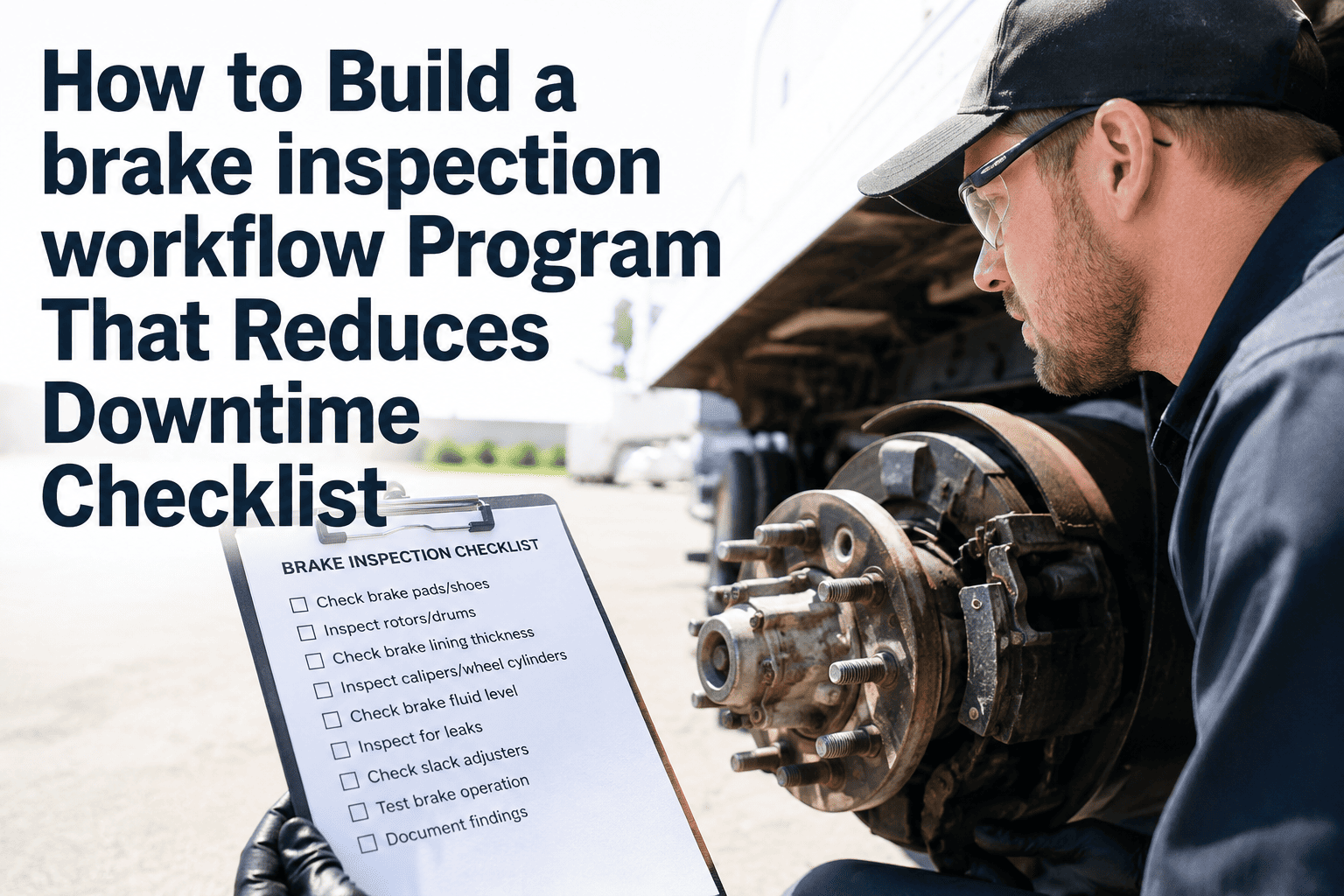
Every driver uses the same structured checklist for pre-trip and post-trip inspections, covering brakes, tires, lights, fluid leaks, and steering — no freeform notes that get skipped under time pressure.
02
Severity Classification
Defects are tagged minor, major, or out-of-service at the point of reporting, so dispatch knows instantly whether a vehicle can finish its route or needs to be pulled immediately.
03
Photo Documentation
A photo attached to each flagged item gives technicians a head start on diagnosis and creates a timestamped record that holds up during a compliance review.
04
Instant Routing
The report doesn't wait for someone to check a folder — it routes straight to the maintenance queue as a work order the moment the driver submits it.
05
Closed-Loop Certification
A mechanic signs off on the repair, the driver is notified, and the certification is stored — satisfying the federal requirement to document defect correction before redispatch.
Build Your Defect Severity Matrix
Not every defect demands the same response. Classifying severity at the point of inspection — rather than leaving it to a supervisor's judgment hours later — is what allows a program to scale across a large fleet without bottlenecks.
| Severity | Example Defect | Dispatch Action | Response Window |
|---|
| Out-of-Service | No brakes, missing mirror, fuel leak | Vehicle grounded immediately | Before next trip |
| Major | Worn tire tread, slow air leak, cracked windshield | Schedule repair within shift | Same day |
| Minor | Interior light out, loose trim panel | Log and schedule at next PM | Within 7 days |
| Cosmetic | Scratched paint, faded decal | Note only, no urgent action | Next scheduled service |
Why Paper-Based Defect Reporting Quietly Drains Your Fleet
The hidden cost of paper isn't the paper itself — it's the lag between when a driver notices a problem and when a technician sees it. That lag is where small defects become large repair bills.
Paper or Verbal Reporting
Reports sit in a drop box until someone manually checks it
No severity tagging — every issue looks equally urgent or unimportant
No photo evidence, so technicians diagnose blind on arrival
Recurring defects on the same vehicle go unnoticed across drivers
Certification of repair is hard to prove during an audit
OxMaint Digital Defect Reporting
Report becomes a work order automatically, no manual handoff
Severity tags drive automatic routing and dispatch alerts
Photo and GPS timestamp attached to every flagged item
Fleet-wide defect trends surface repeat issues by component
Repair certification stored and exportable in minutes for audits
Five Mistakes That Quietly Break Defect Reporting Programs
Most fleets don't fail at defect reporting because drivers refuse to participate — they fail because the process around the report is broken. These are the most common gaps that turn a well-intentioned program into another ignored checklist.
Treating Every Defect as Equal Priority
Without severity tagging, a loose floor mat and a brake issue land in the same queue, and urgent repairs get buried under low-priority noise.
No Confirmation Loop for Drivers
When drivers report an issue and hear nothing back, they stop reporting minor defects altogether — assuming nobody is reading the forms anyway.
Inspection Time Too Short to Be Useful
A two-minute walkaround on a multi-axle vehicle cannot meaningfully check brakes, tires, lights, and fluid levels — rushed inspections produce rushed reporting.
No Fleet-Wide Trend Review
Individual defect reports get resolved one at a time, but nobody looks across vehicles to catch a part or component failing repeatedly across the fleet.
Repair Certification Never Gets Documented
A defect gets fixed, but if there's no signed certification on file, the fleet still carries audit risk as if the repair never happened.
What to Measure Once Your Program Is Live
A defect reporting program isn't a one-time setup — it needs ongoing measurement to confirm it's actually reducing downtime rather than just generating more paperwork. Track these indicators monthly to know if the program is working.
Defect-to-Work-Order Time
How long between a driver flagging an issue and a work order being created. This is the single clearest sign of whether routing is automated or manual.
Inspection Completion Rate
Percentage of scheduled pre-trip and post-trip inspections actually completed, not skipped or rubber-stamped.
Repeat Defect Rate
How often the same component on the same vehicle gets flagged again within 30 days — a signal that root cause repairs aren't sticking.
Out-of-Service Defect Volume
Count of defects severe enough to ground a vehicle — a rising trend points to inspection or maintenance gaps upstream.
Defect Reporting, Built In
Turn Every Driver Into an Early Warning System
OxMaint connects pre-trip inspections directly to your maintenance workflow — so a defect reported at 7 AM becomes a scheduled repair by 7:15, not a breakdown by noon.
Rolling Out the Program: A 4-Step Launch Plan
1
Define Your Checklist
Build vehicle-specific inspection checklists covering every component that affects safety or compliance.
2
Train Drivers on Severity Tagging
Walk drivers through real examples so classification stays consistent across the entire fleet.
3
Connect Reports to Work Orders
Eliminate the manual handoff — every flagged defect should generate a work order without anyone re-typing it.
4
Review Trends Monthly
Pull fleet-wide defect data to spot recurring component failures before they cause downtime fleet-wide.
Frequently Asked Questions
What is a driver defect reporting program?+
It's a structured process where drivers document vehicle defects during pre-trip and post-trip inspections, and those reports route directly into a maintenance workflow. Learn how to set one up with
OxMaint's inspection tools.
How does defect severity tagging reduce downtime?+
Tagging defects as minor, major, or out-of-service at the point of inspection lets dispatch and maintenance prioritize instantly, instead of treating every report as equally urgent or discovering severity hours later.
Is electronic defect reporting accepted for compliance?+
Yes. Electronic driver vehicle inspection reports are recognized for compliance purposes, provided they capture the same required details as a paper DVIR, including defect description, certification of repair, and driver review.
What's the biggest reason defect programs fail?+
The most common failure point is a gap between reporting and routing — drivers report defects, but the information sits unread instead of becoming an actionable work order for the maintenance team.
Can a defect reporting program scale across a large fleet?+
Yes, as long as routing and severity tagging are automated. Manual review processes that work for ten vehicles break down at scale — a digital workflow keeps response times consistent fleet-wide. See how with
a personalized demo.
OxMaint · Defect Reporting Program
Stop Losing Hours Between a Defect Report and a Repair
Every minute a defect report sits unread is a minute closer to a breakdown, a missed route, or a failed roadside inspection. OxMaint connects driver inspections directly to your maintenance team — so reporting a defect and resolving it happen in the same workflow, not two disconnected systems.