A Driver Vehicle Inspection Report that a driver fills out in 30 seconds, checks "no defects," and hands to a dispatcher without a technician ever reviewing it is not a safety programme — it is a liability record that proves the fleet knew defects were not being properly reported. Federal Motor Carrier Safety Regulations under 49 CFR Part 396 require drivers to submit a written DVIR at the end of each day they operate a commercial motor vehicle, and the carrier is required to certify that each defect reported has been repaired or that repair is not necessary before the vehicle is dispatched again. This page gives fleet safety directors, maintenance managers, and compliance officers a complete driver defect reporting framework covering DVIR compliance, technician review workflows, defect escalation, and CMMS integration — structured so every reported defect creates a traceable work order in OxMaint's fleet inspection management platform before the vehicle re-enters service.
DVIR & Defects · Inspection Management · Fleet Compliance
Driver Defect Reporting: Checklist, KPIs, and CMMS Workflow
A complete DVIR compliance and defect management framework for fleet operations — from driver-reported defects at end of shift to technician repair certification before the next dispatch, with every step traceable in your CMMS.
The Defect Lifecycle
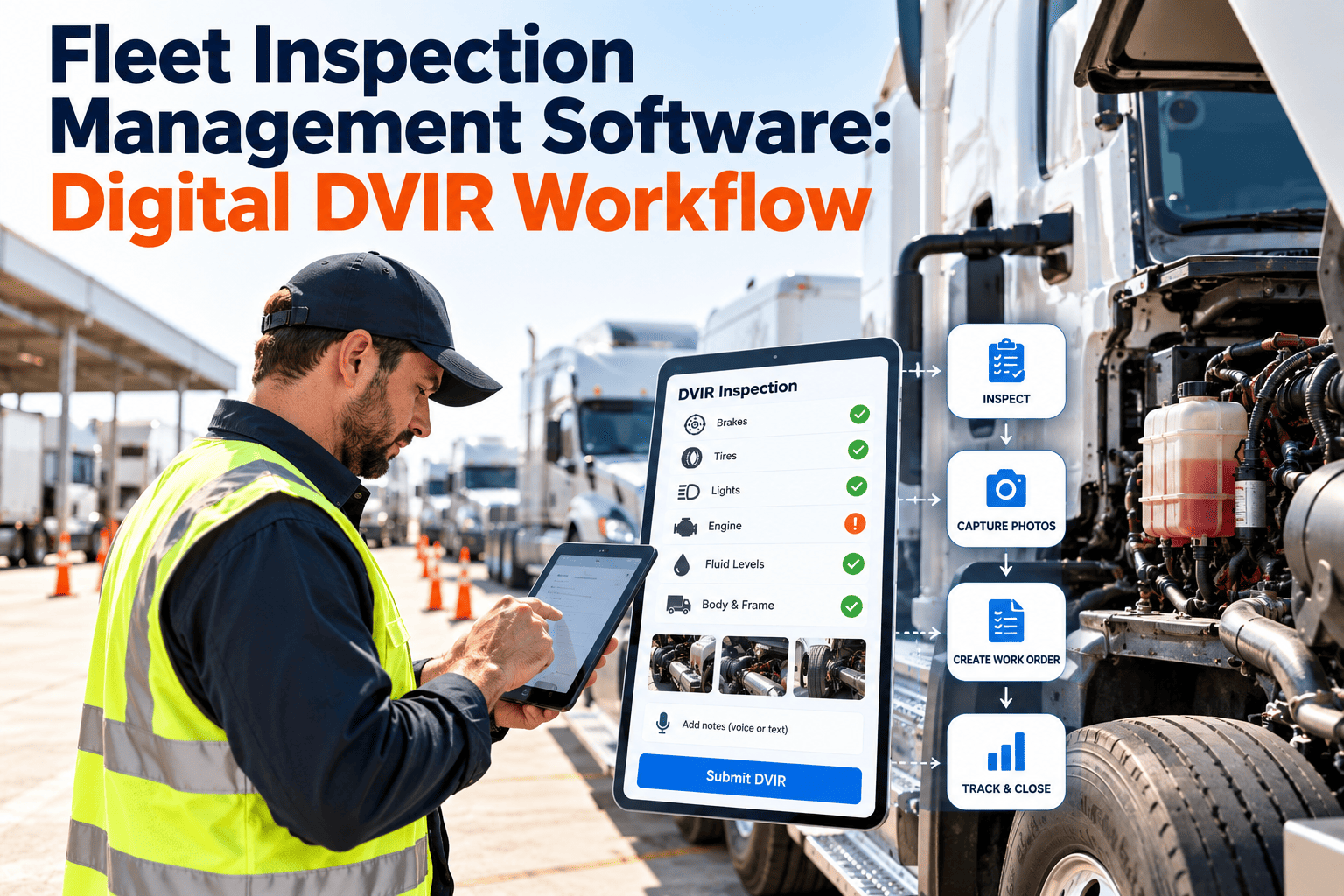
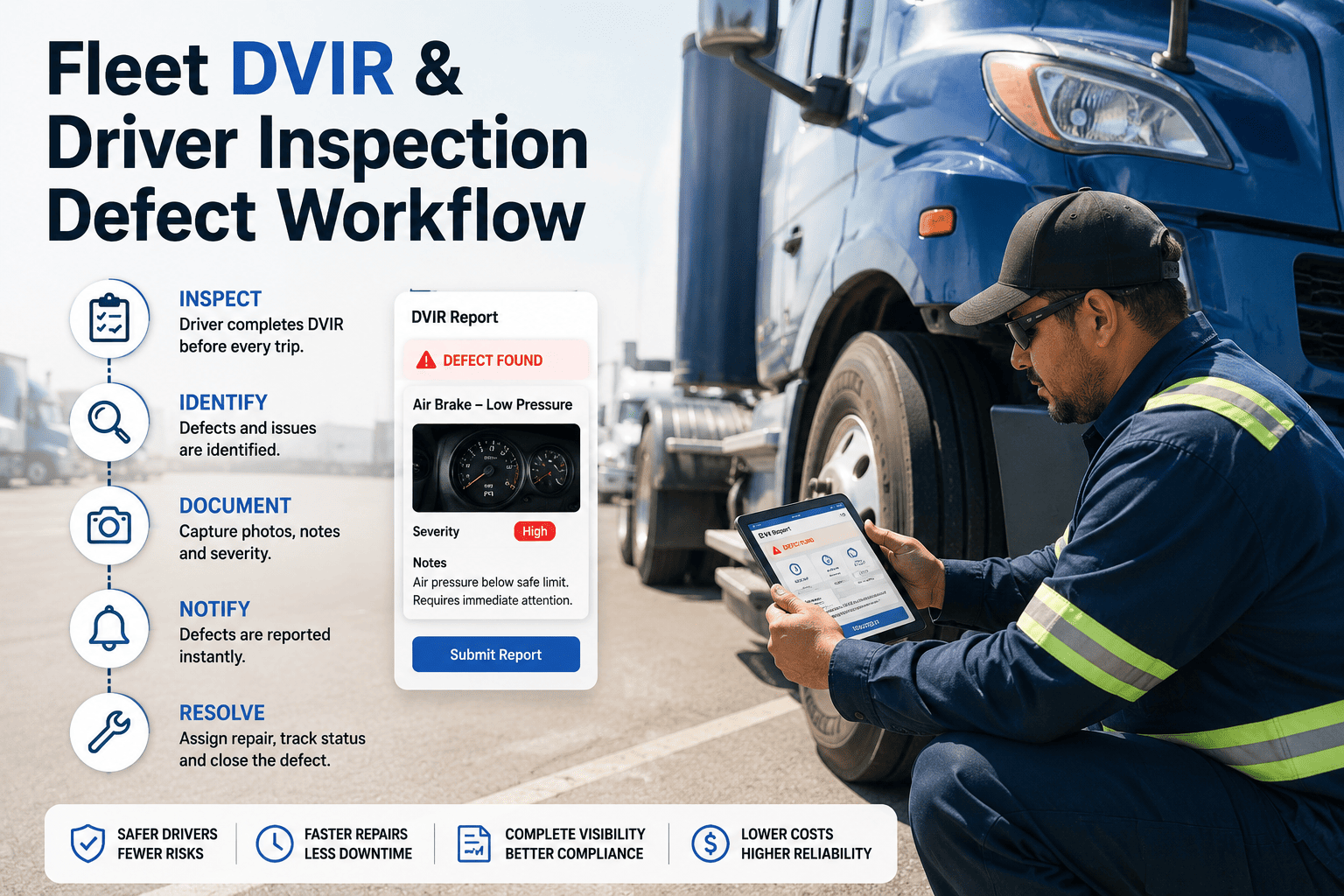
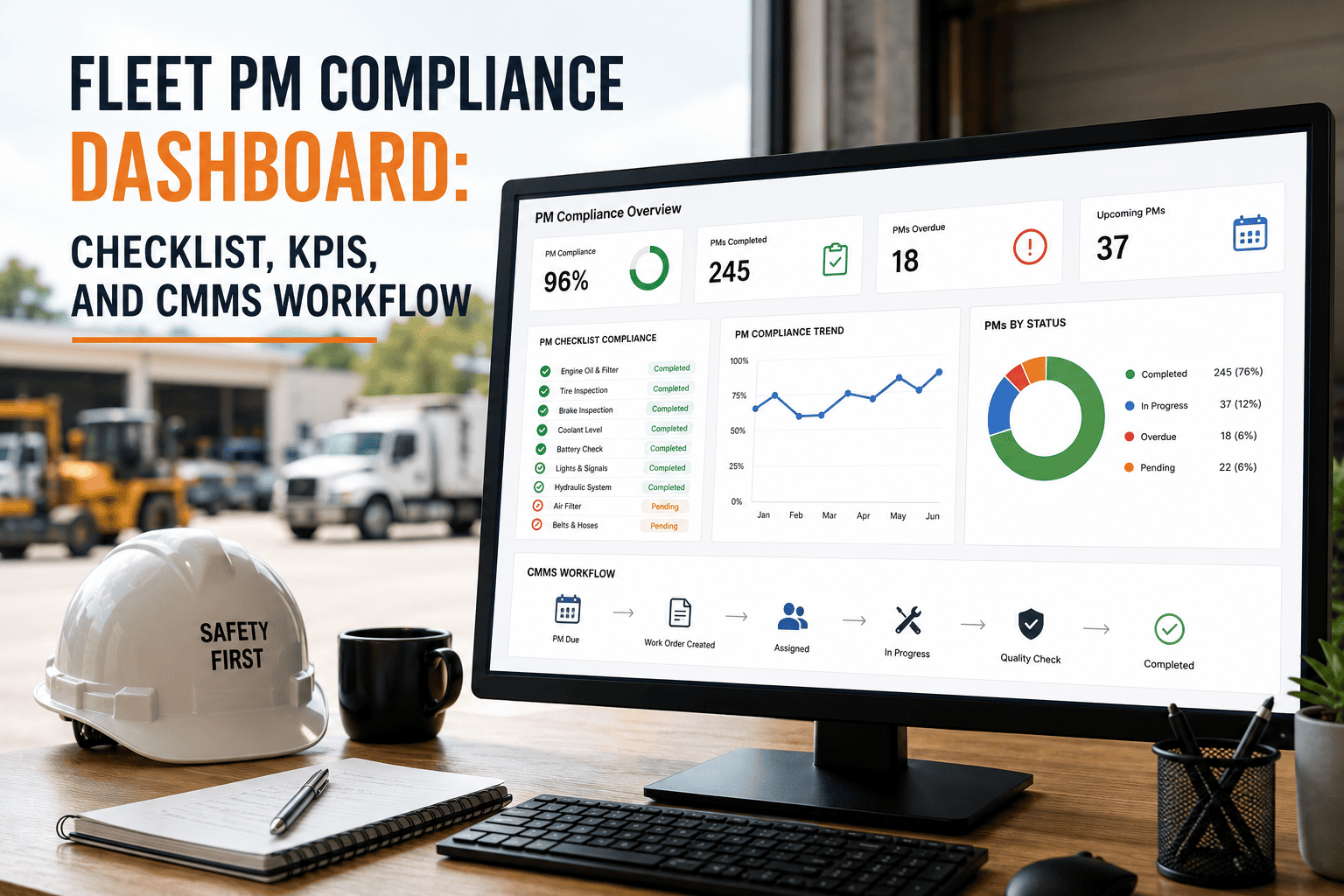
How a Defect Moves From Driver Report to Cleared Vehicle
01
Driver Reports
Driver completes DVIR at end of shift, noting any defects or deficiencies that affect safe operation or regulatory compliance
→
02
CMMS Work Order
Reported defect generates a work order in the CMMS automatically, assigned to a technician with the vehicle unit number and defect description
→
03
Technician Reviews
Technician inspects the reported defect, certifies repair completed or confirms no repair required, and signs off in the CMMS
→
04
Vehicle Released
Next driver reviews the prior DVIR certification and signs the new DVIR before departure — completing the regulatory loop
What 49 CFR Part 396.11 Actually Requires
Driver Obligation
Submit a written DVIR at the end of each driving day listing any defects or deficiencies affecting safe operation or regulatory compliance — even if there are none to report
Carrier Obligation
Certify in writing that each reported defect has been repaired or that repair is not necessary before the vehicle is dispatched again by the next driver
Next Driver Obligation
Review and sign the previous DVIR before operating the vehicle — confirming they have read the prior defect report and repair certification
Retention Requirement
DVIRs must be retained for a minimum of 3 months at the principal place of business and must be available for inspection by FMCSA within 48 hours of request
Category 01
Driver DVIR Completion Checklist
A DVIR that is not completed correctly at the driver level produces no compliance value — and a carrier that receives a blank or "no defect" DVIR from a driver who has been operating a vehicle with a known brake defect has greater liability exposure than a carrier with no DVIR programme at all. Driver DVIR quality is the foundation of the defect reporting system.
Pre-trip and post-trip DVIR completion confirmed for all drivers — all drivers confirm completion of a pre-trip inspection and submission of a post-trip DVIR at the end of each operating day; DVIRs received in the CMMS or dispatch system within 1 hour of end-of-shift; missing DVIRs generate an alert to the dispatcher and a follow-up call to the driver before the next morning dispatch cycle
D Fleet Dispatcher · Daily DVIR receipt confirmation log
DVIR inspection coverage verified — each DVIR reviewed to confirm the driver has addressed all required inspection areas: brakes, steering mechanism, lights and reflectors, tyres, horn, windshield wipers, mirrors, coupling devices (where applicable), emergency equipment, and cargo securement; a DVIR that lists "no defects" without indicating which areas were inspected does not meet the regulatory standard for a thorough inspection
D Fleet Safety Director · DVIR completeness review
Defect description specificity reviewed and drivers coached on vague reports — defect descriptions reviewed for specificity; "brakes feel soft" is not a defect report — "left front brake pulls on application at speeds above 35 mph" is; drivers who submit vague defect descriptions receive coaching on the 5-element defect report format: location, symptom, conditions, frequency, and any associated warning indicators observed
W Fleet Safety Director · DVIR quality review and driver coaching log
Driver signature and vehicle identification confirmed on every DVIR — every submitted DVIR confirmed to include driver signature, date, vehicle unit number, and odometer reading; unsigned or unidentified DVIRs rejected and resubmitted before end of day; DVIR records retained in the CMMS with the vehicle's asset file and cross-referenced to the corresponding repair work order where a defect was reported
D Fleet Dispatcher · DVIR documentation compliance check
Category 02
Technician Review and Repair Certification Checklist
The regulatory requirement is not that the defect is repaired — it is that the carrier certifies in writing that the defect has been repaired or that no repair is necessary. That certification must be made before the vehicle is dispatched again. A repair that is completed but not certified in the DVIR record is a compliance gap, not a compliance success.
All defect-reported DVIRs generate a CMMS work order within 2 hours of receipt — any DVIR reporting a defect or deficiency automatically creates a work order in the CMMS assigned to a technician; work order includes the DVIR reference number, vehicle unit number, defect description, and required completion status before the next dispatch cycle; unassigned work orders from defect DVIRs trigger an escalation alert to the maintenance manager after 2 hours
D Maintenance Manager · Defect DVIR work order creation log
Safety-affecting defects classified as out-of-service before the next dispatch — all defects affecting brakes, steering, tyres, lights, coupling devices, or load securement reviewed by a technician before the vehicle is dispatched; technician determines whether the defect renders the vehicle out of service under 49 CFR Part 396 Appendix G criteria; out-of-service defects result in the vehicle being removed from the dispatch queue until the repair is certified complete
D Lead Technician · Safety defect classification and OOS determination log
Repair certification recorded in CMMS and linked to original DVIR — after repair, technician records the repair completed, parts used, and certification statement in the CMMS work order; work order status updated to "certified repaired" or "no repair required — reason documented"; CMMS work order linked to the original DVIR record so the complete defect-to-certification chain is accessible as a single audit trail
D Technician · DVIR repair certification and CMMS work order closure
Next driver reviews and signs the previous DVIR before departure — dispatchers confirm that the next driver has reviewed the prior DVIR and signed it before the vehicle leaves the yard; next driver signature recorded in the CMMS alongside the repair certification; vehicles with uncertified prior-day defects are held from dispatch until the certification is completed and the next driver has signed the prior DVIR
D Fleet Dispatcher · Next-driver DVIR sign-off confirmation log
OxMaint converts every DVIR defect report into a CMMS work order automatically — so no reported defect slips through to the next dispatch without a technician review, a repair certification, and a complete audit trail linking the driver's report to the signed-off repair, all accessible from a single vehicle asset file.
Category 03
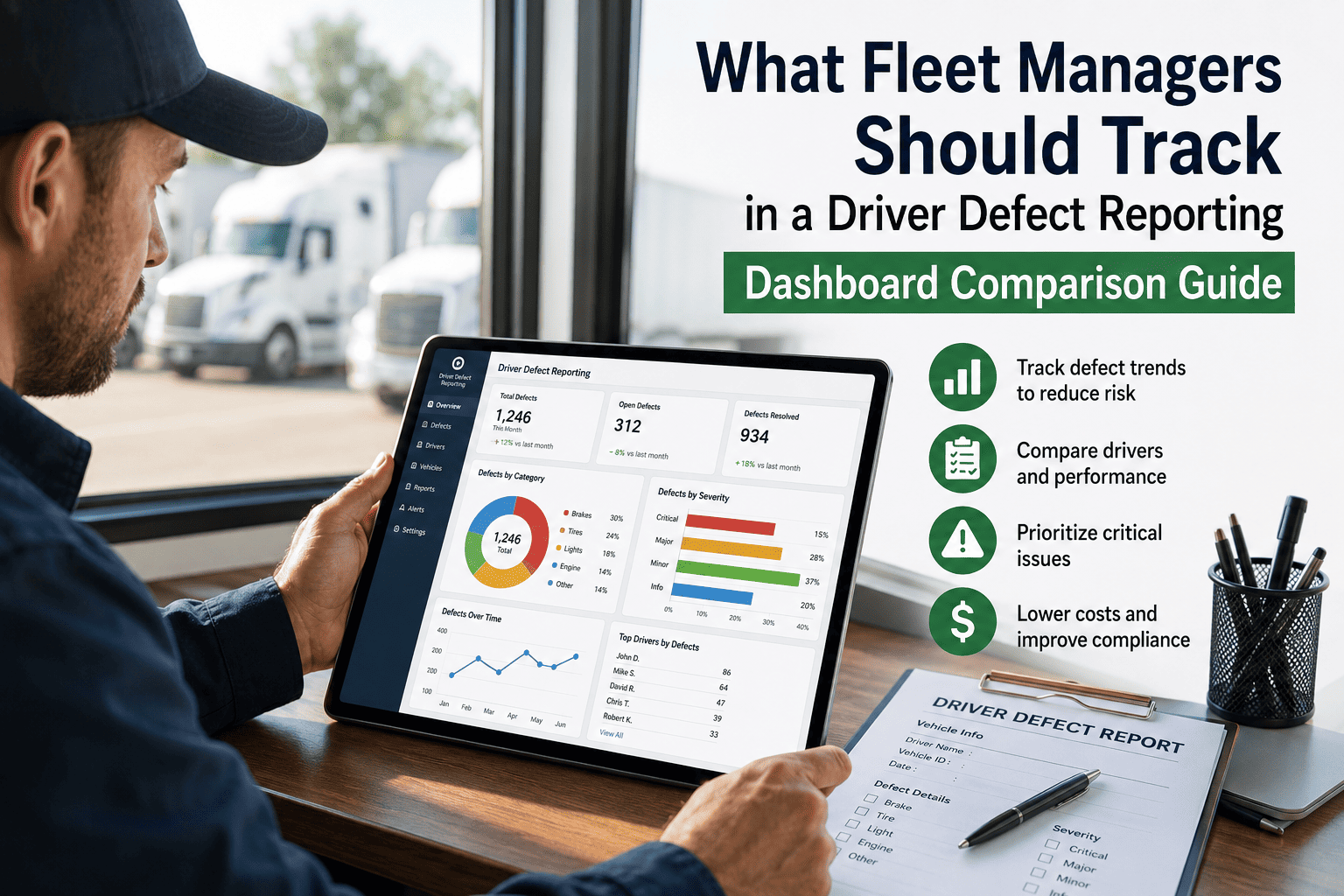
Monthly Defect Trend Review Checklist
A repeat brake defect on the same vehicle reported three times in one month is not a driver reporting problem — it is a brake system component failure that the DVIR programme has correctly identified and that the maintenance programme has not resolved. Monthly defect trend review turns individual DVIR records into a predictive maintenance signal.
Repeat defect reports by vehicle reviewed and root-caused — all vehicles with two or more defect reports in the same system category during the month identified; repeat defects reviewed for whether the initial repair was effective or whether the defect recurrence indicates a component failure, a maintenance procedure error, or an inspection standard gap; repeat defect vehicles scheduled for a comprehensive system inspection
M Maintenance Manager · Repeat defect trend analysis report
Defect category distribution reviewed for fleet-wide patterns — defect reports from the month categorised by system (brakes, lighting, tyres, engine, etc.) and compared against the prior three months; an increase in lighting defect reports across multiple vehicles may indicate a PM programme gap in lighting inspection; fleet-wide patterns require a programme response, not just individual vehicle repairs
M Fleet Safety Director · Monthly defect category distribution review
DVIR submission rate and quality score reviewed by driver — submission rate (DVIRs submitted vs driving days) and quality score (defect descriptions meeting specificity standard) calculated for each driver; drivers with submission rates below 95% or quality scores below the fleet standard receive targeted coaching; recognition provided to drivers with consistently high-quality DVIR submissions to reinforce the programme's value
M Fleet Safety Director · Driver DVIR performance review
KPIs
Five KPIs That Prove Your Defect Reporting Programme Is Working
| KPI |
How to Measure |
Target |
Frequency |
| DVIR Submission Rate |
DVIRs submitted / Total driver operating days |
100% |
Daily / Monthly |
| Defect-to-Work-Order Rate |
Defect DVIRs with CMMS work order created / Total defect DVIRs |
100% |
Daily / Monthly |
| Repair Certification Cycle Time |
Average hours from defect DVIR received to repair certified |
Under 12 hrs |
Monthly |
| Defect Repeat Rate |
Vehicles with same defect reported 2+ times in a month / Total fleet |
Below 2% |
Monthly |
| Pre-Dispatch OOS Hold Rate |
Vehicles held pre-dispatch for uncertified defects / Total dispatch events |
0% |
Daily / Monthly |
FAQs
Frequently Asked Questions
Is a DVIR required even if the driver finds no defects?
What happens if a defect is reported but not repaired before the next dispatch?
If a reported defect is not repaired and not certified before the next driver takes the vehicle, the carrier is in violation of 49 CFR Part 396.11(c). If the defect meets out-of-service criteria under Appendix G to Subchapter B, the carrier faces civil penalties and the driver faces an out-of-service order at the next roadside inspection. The next driver's signature on the prior DVIR is also non-compliant if the repair certification is absent.
Book a demo to see how OxMaint blocks vehicle dispatch until all defect certifications are complete.
Can electronic DVIRs replace paper reports?
Yes. FMCSA amended 49 CFR Part 396 to permit electronic DVIRs, provided the electronic system meets specific requirements: the driver and certifying official must be able to sign electronically, the records must be retained and accessible for the required 3-month period, and the system must prevent alteration of a submitted DVIR. A CMMS with an integrated electronic DVIR module meets these requirements and creates an automatic link between the defect report and the repair work order.
How do you train drivers to write better defect reports?
Effective defect report training focuses on the 5-element format: location (which specific component or area), symptom (what the vehicle is doing or not doing), conditions (when it occurs — speed, load, temperature), frequency (every time, intermittent, or once), and any associated warning indicators. A 15-minute monthly toolbox talk reviewing the month's DVIR quality scores and showing examples of well-written and poorly written defect descriptions improves quality measurably within 60 days.
OxMaint's DVIR quality scoring module flags low-quality submissions for immediate coaching follow-up.
What is the most commonly missed DVIR requirement in DOT audits?
The next driver's signature on the prior DVIR is the most frequently cited DVIR violation in FMCSA compliance reviews. Carriers correctly require drivers to submit post-trip DVIRs and technicians to certify repairs, but the final step — confirming the next driver has reviewed and signed the prior DVIR before departure — is often not enforced at the dispatcher level. This creates a complete regulatory gap even when all other steps are followed correctly.
Close the Defect Loop
Every Defect Reported. Every Repair Certified. Every Vehicle Cleared Before Dispatch.
OxMaint's DVIR module turns driver defect reports into automatic CMMS work orders, tracks repair certifications against each reported defect, and blocks vehicle dispatch until the full certification chain is complete — so your fleet is never one roadside inspection away from an out-of-service order on a defect your own driver already reported.