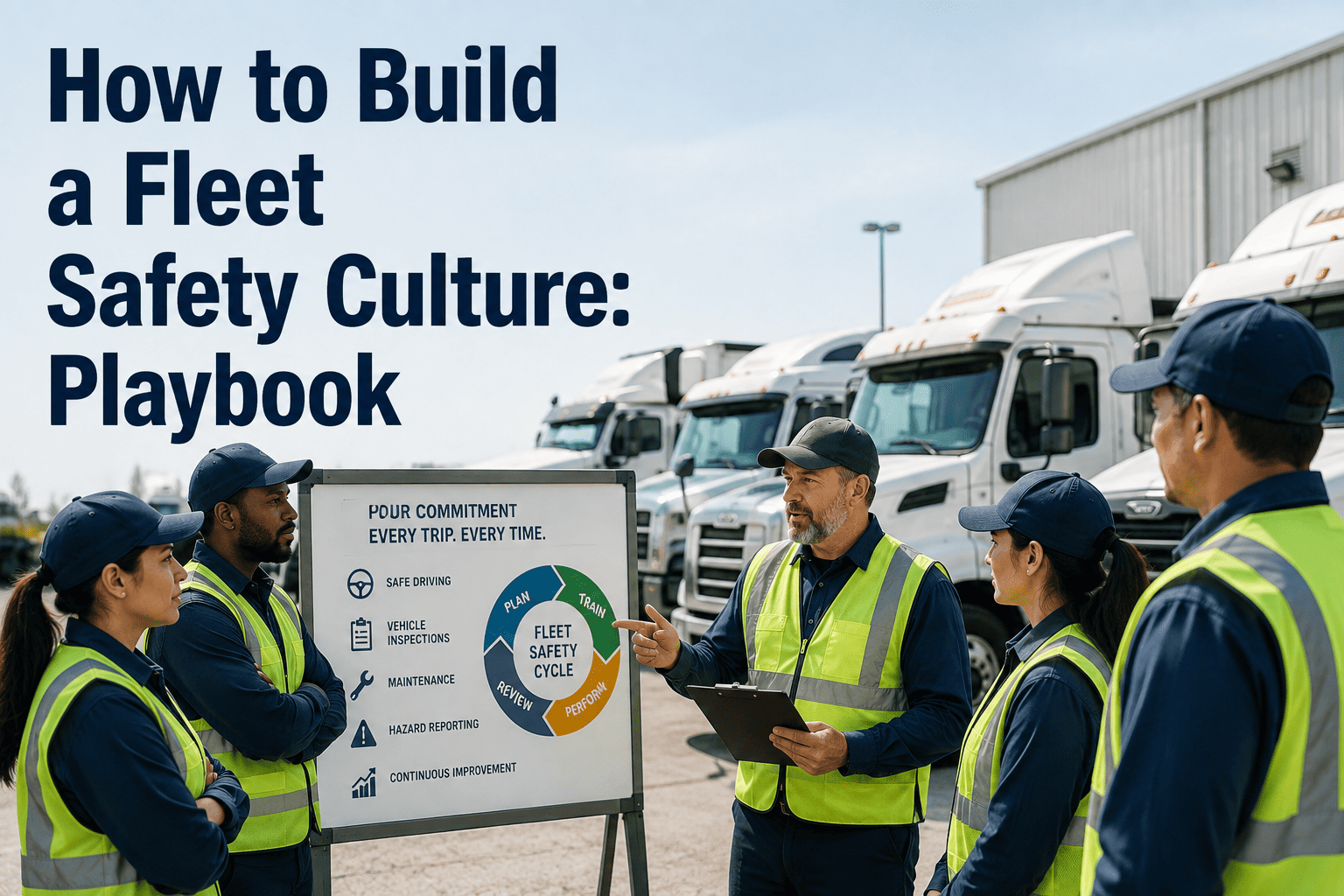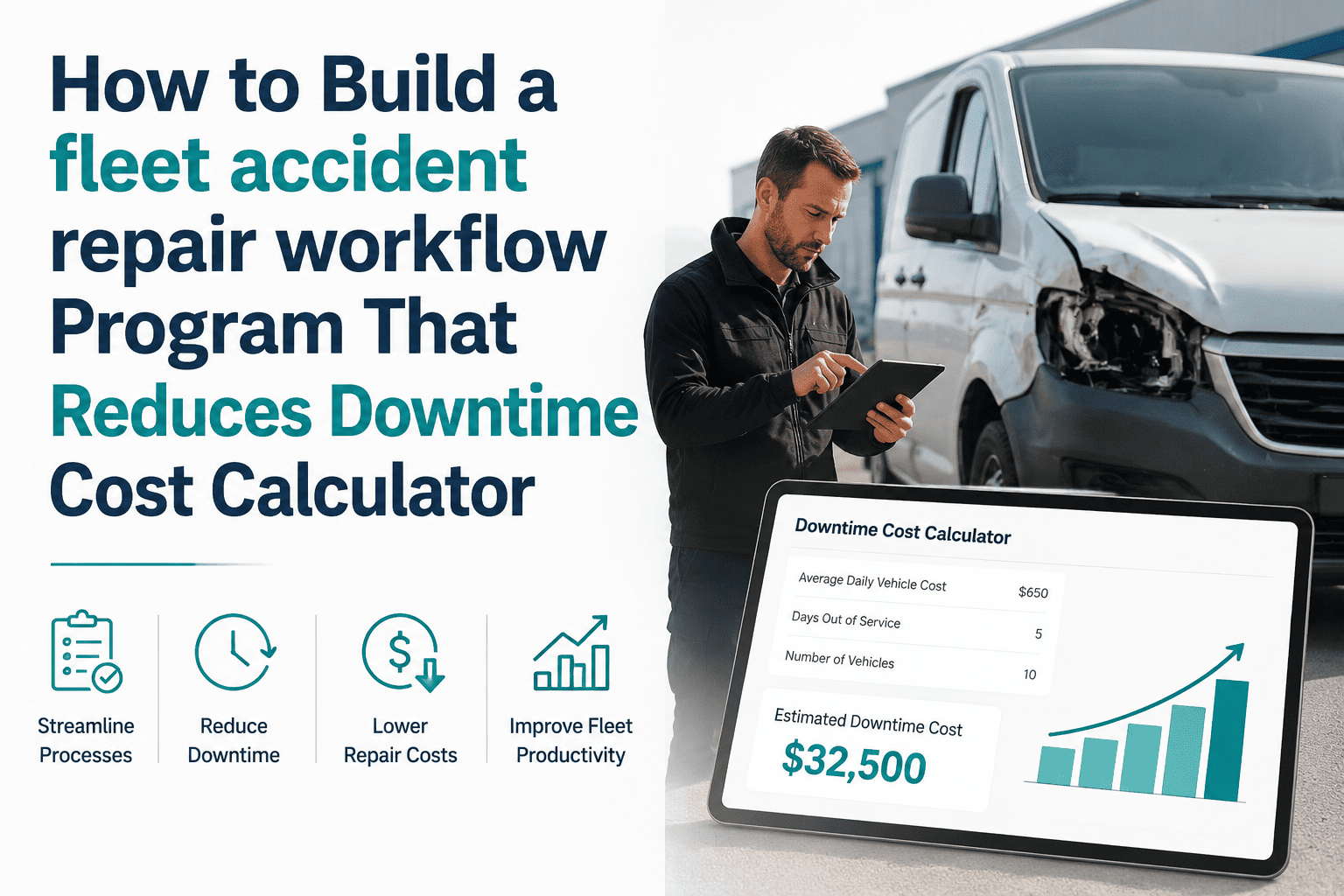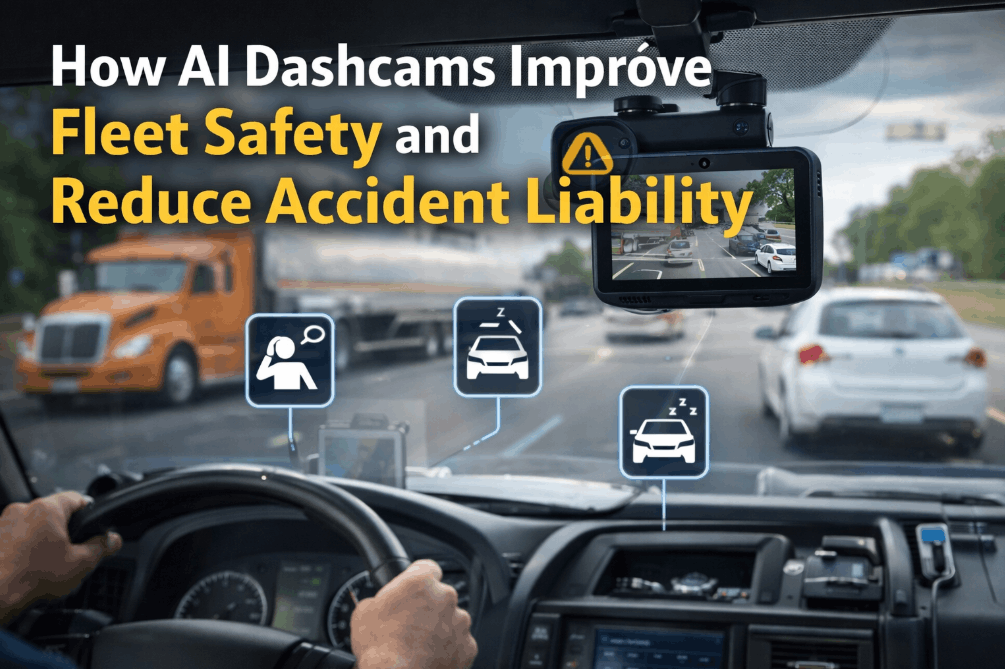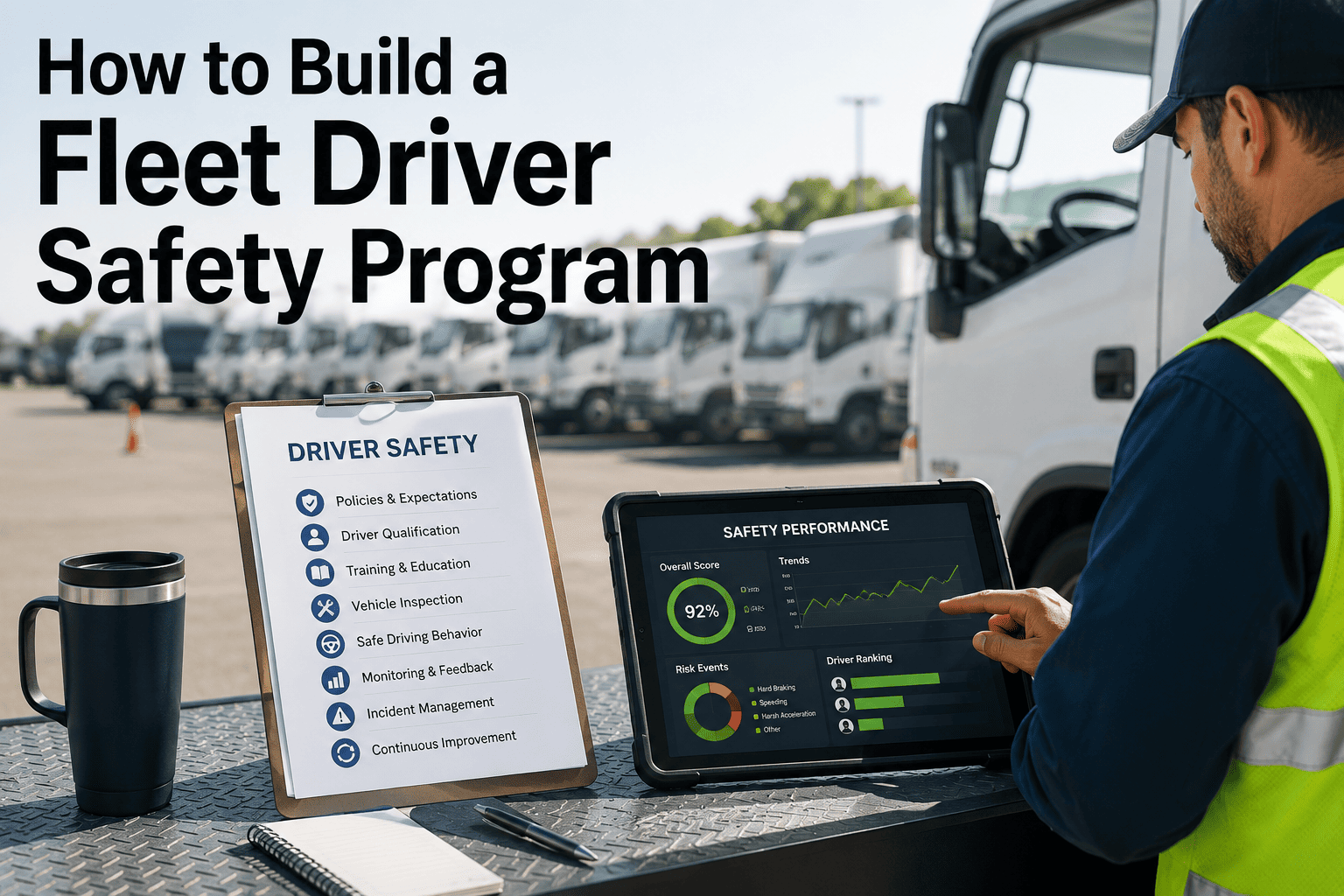
Transportation incidents account for well over a third of all workplace fatalities in the United States, and preventable collisions drain tens of billions of dollars from employers every year in repairs, downtime, and claims. Most of that risk does not come from equipment failure — it comes from driver behavior, including distraction, fatigue, speeding, and harsh braking events that repeat unnoticed until a crash forces the review. Fleets that move from reacting to incidents toward a structured driver safety program consistently see fewer accidents and lower insurance costs within the first year. Building that program means connecting policy, risk scoring, coaching, and vehicle readiness into a single workflow instead of scattered spreadsheets. This guide walks through exactly how to build one, and how OxMaint's AI-powered CMMS ties driver risk data directly to maintenance so safety gains actually hold.
Is your fleet one bad habit away from a six-figure accident?
Most preventable crashes trace back to the same handful of driver behaviors, repeated for months before anyone reviews them. A structured driver safety program catches those patterns early — before they become a claim, a CSA flag, or a lawsuit.
Why driver behavior is your biggest source of fleet risk
Vehicle condition matters, but the accidents that cost fleets the most almost always start with a driver decision made under pressure. These are the four behaviors safety leaders see repeat most often before a claim is filed.
Distracted Driving
Phones, dispatch messages, and in-cab systems pull attention off the road for seconds at a time — long enough at highway speed to close the gap on a stopped vehicle ahead.
Fatigue & Drowsy Driving
Reaction time drops sharply after extended hours behind the wheel, and fatigue rarely shows up in a log until it has already caused a lane drift or late brake.
Speeding & Harsh Acceleration
Small, repeated speed violations rarely trigger a conversation on their own, yet they are one of the strongest predictors of a driver's next preventable collision.
Harsh Braking & Following Too Close
Rising traffic volume has shrunk the average following distance across the industry, leaving less margin for error when a lead vehicle stops suddenly.
The 5 pillars every fleet driver safety program needs
A driver safety program is not a training video played once a year. It is five connected pieces working together, each one feeding data to the next.
A Written, Enforced Safety Policy
Clear, documented expectations on speed, phone use, seatbelts, and following distance — signed by every driver and reviewed on a set schedule, not left as a binder no one reads.
Driver Risk Scoring
A single score per driver built from incident history, inspection records, and behavior trends, so managers know who needs coaching before the next accident, not after.
Targeted Coaching, Not Generic Training
Coaching tied to a driver's actual events — a specific hard-braking pattern or a repeated late delivery caused by rushing — lands far better than a yearly refresher course everyone forgets.
Incident Review & Root Cause Tracking
Every incident, near-miss, and inspection failure logged in one place, reviewed for the pattern behind it — not just the paperwork needed to close the file.
Maintenance & Vehicle Readiness Integration
Worn brakes, bald tires, and overdue inspections turn a minor driver mistake into a major accident — safety and maintenance data belong in the same system, not two separate ones.
What changes when a fleet formalizes its safety program
The difference between a fleet running on reactive habit and one running a structured program shows up fast, across every metric that affects the bottom line.
| Metric | Without A Formal Program | With A Structured Program |
|---|---|---|
| Preventable accident frequency | Trends upward year over year | Reduced 40–60% within 12 months |
| Commercial auto insurance premium | Rises with every claim filed | Can fall 30–50% with a clean claims history |
| Driver turnover | Higher, tied to stress and unclear expectations | Lower, with clear coaching and recognition |
| CSA / DOT audit exposure | Reactive, scrambling before a review | Documentation ready year-round |
| Crash litigation exposure | Severe, with limited documented defense | Reduced by a documented, enforced record |
How to build a fleet driver safety program in 6 steps
Skip the binder. This is the sequence that turns a safety program from a policy document into a habit that actually reduces accidents.
Audit your accident and inspection history
Pull the last 12–24 months of incidents, near-misses, and failed inspections and look for patterns by driver, route, and vehicle rather than treating each event on its own.
Write a clear, enforceable safety policy
Set specific, measurable rules on speed, phone use, seatbelts, and rest — vague policies are the ones that get ignored under deadline pressure.
Deploy driver risk scoring
Score every driver from incident history, inspection results, and behavior trends so managers can see who needs attention before the next event.
Build a coaching workflow tied to real data
Trigger a coaching conversation automatically when a driver's score crosses a threshold, with the specific event attached — not a generic reminder email.
Connect maintenance readiness to driver risk
Flag vehicles with overdue brake, tire, or inspection work so a mechanical issue never compounds a driver's mistake into a serious accident.
Review KPIs every quarter
Track accident frequency, coaching completion, and inspection pass rates quarterly, and adjust the policy where the data shows it is not working.
Your next preventable accident is already on the books — you just haven't seen the data yet
See how OxMaint turns incident history, inspections, and vehicle condition into one driver risk view your safety team can act on this week.
How OxMaint keeps your driver safety program measurable
A safety program only works if the data behind it lives in one place. OxMaint connects training, incidents, coaching, and vehicle condition so nothing falls through the cracks.
Training & Certification Tracking
Assign, schedule, and track driver training and certifications in one record, so no one is behind on a requirement without you knowing.
Incident & Near-Miss Documentation
Log every incident and inspection failure with photos, notes, and driver detail, building a defensible record instead of a scattered paper trail.
Coaching Workflow Integration
Turn a flagged event straight into an assigned coaching task, with the record attached, so follow-up happens automatically instead of by memory.
Maintenance-Linked Safety Scoring
Pull vehicle condition and inspection status into the same view as driver behavior, so risk is scored on the full picture, not driver data alone.
Fleet driver safety program — frequently asked questions
What is a fleet driver safety program?
A fleet driver safety program is a structured set of policies, risk scoring, coaching, and maintenance practices built to reduce accidents and driver risk. It replaces one-off training with an ongoing, measurable process. Learn more with a free OxMaint demo.
How much can a driver safety program reduce accidents?
Fleets running a formalized, enforced safety program commonly see accident frequency drop by roughly 40–60% within the first year, along with meaningful reductions in commercial auto insurance premiums.
What should a driver safety policy include?
A strong policy sets specific, measurable rules on speed, phone use, seatbelts, following distance, and rest, along with a clear coaching and consequence process. Vague or unenforced policies rarely change behavior.
How does driver risk scoring work?
Risk scoring combines incident history, inspection results, and driving behavior trends into a single number per driver, making it easy to see who needs coaching before their next preventable event.
How does maintenance connect to driver safety?
Worn brakes, bald tires, and overdue inspections can turn a minor driving mistake into a serious accident, so safety data and maintenance data need to live in the same system. See how with a free trial of OxMaint.
Build a driver safety program that actually holds up under a claim
Training tracking, incident documentation, coaching workflows, and maintenance readiness — all connected in one AI-powered CMMS built for fleet safety leaders.
Free 14-day trial · No credit card