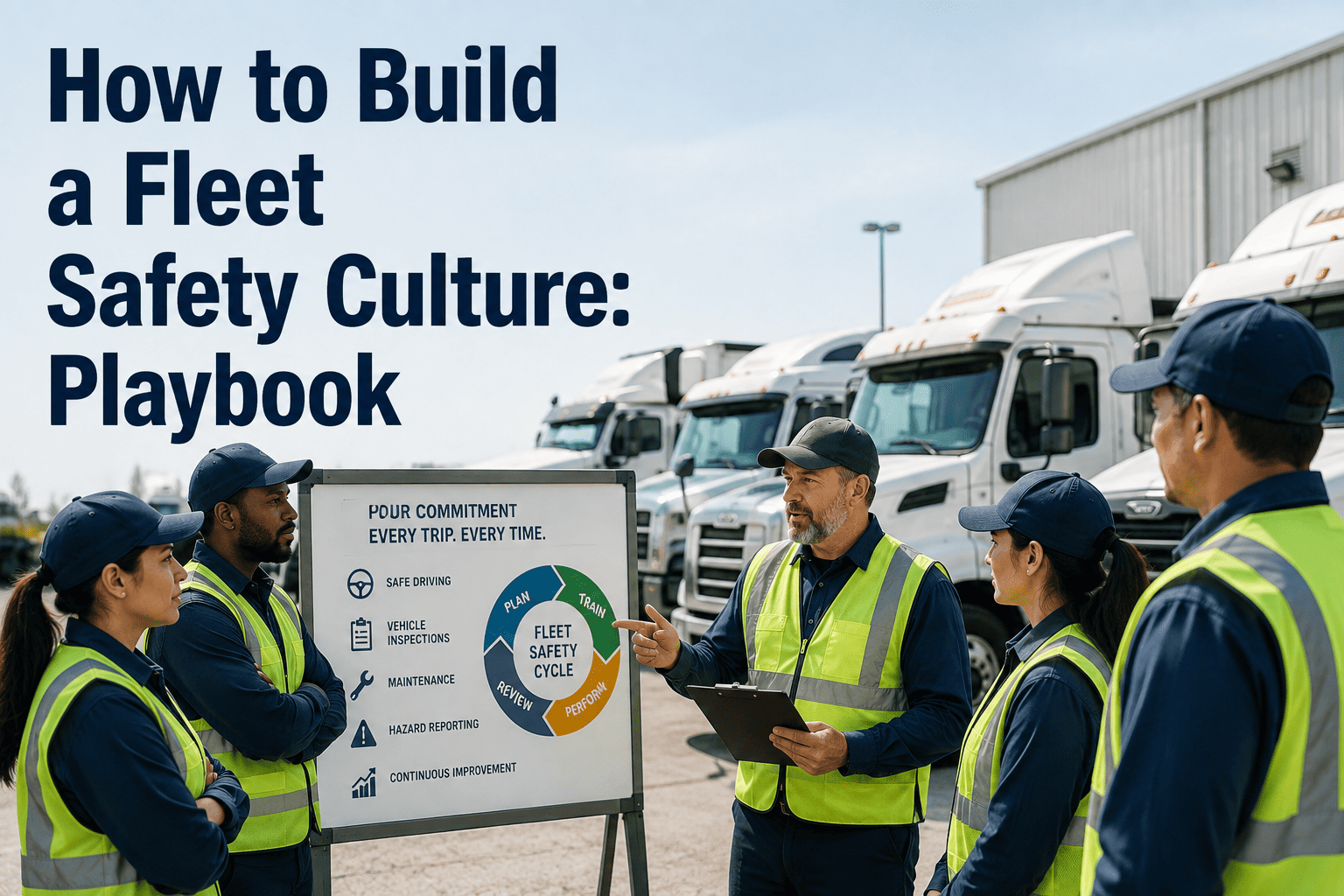
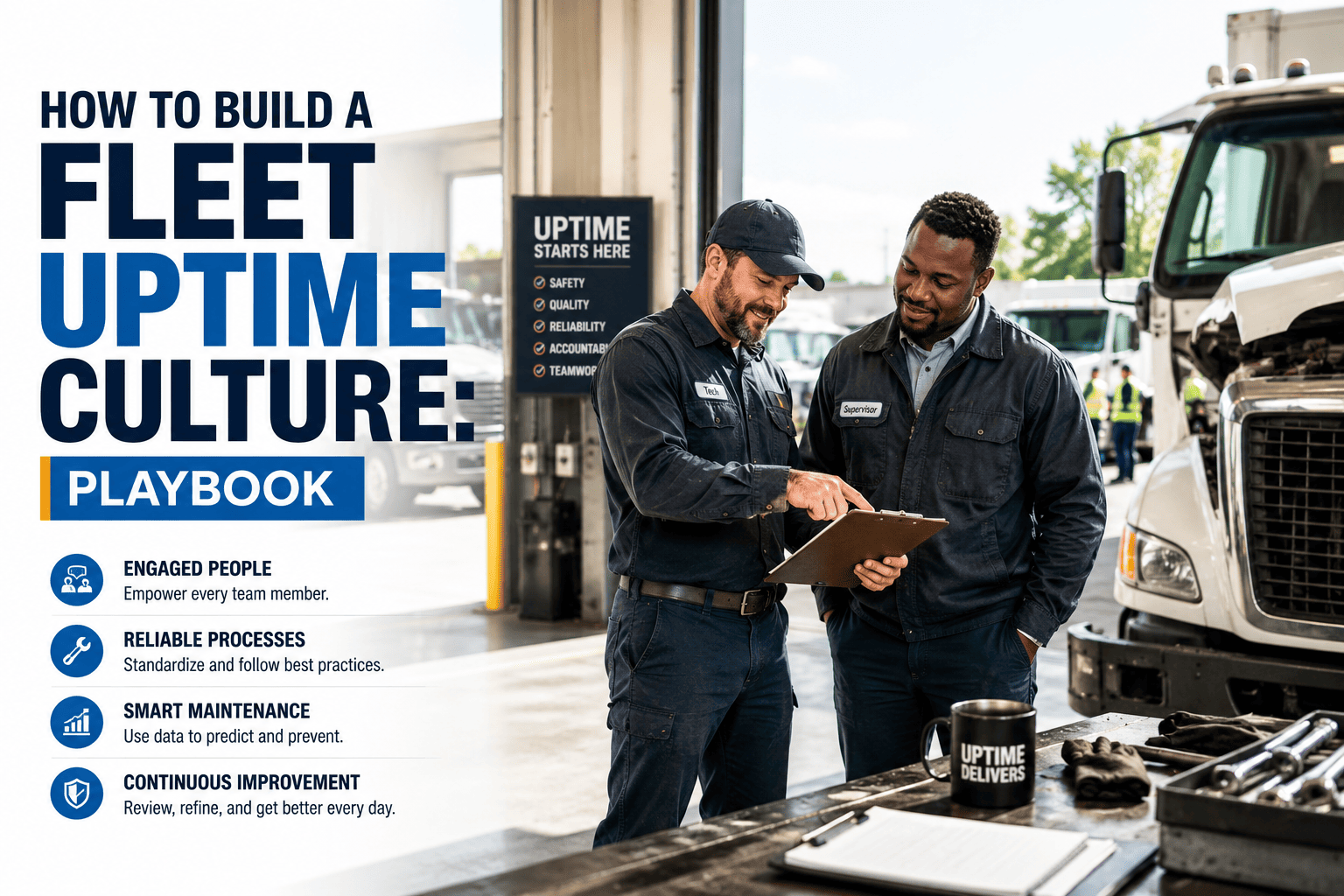
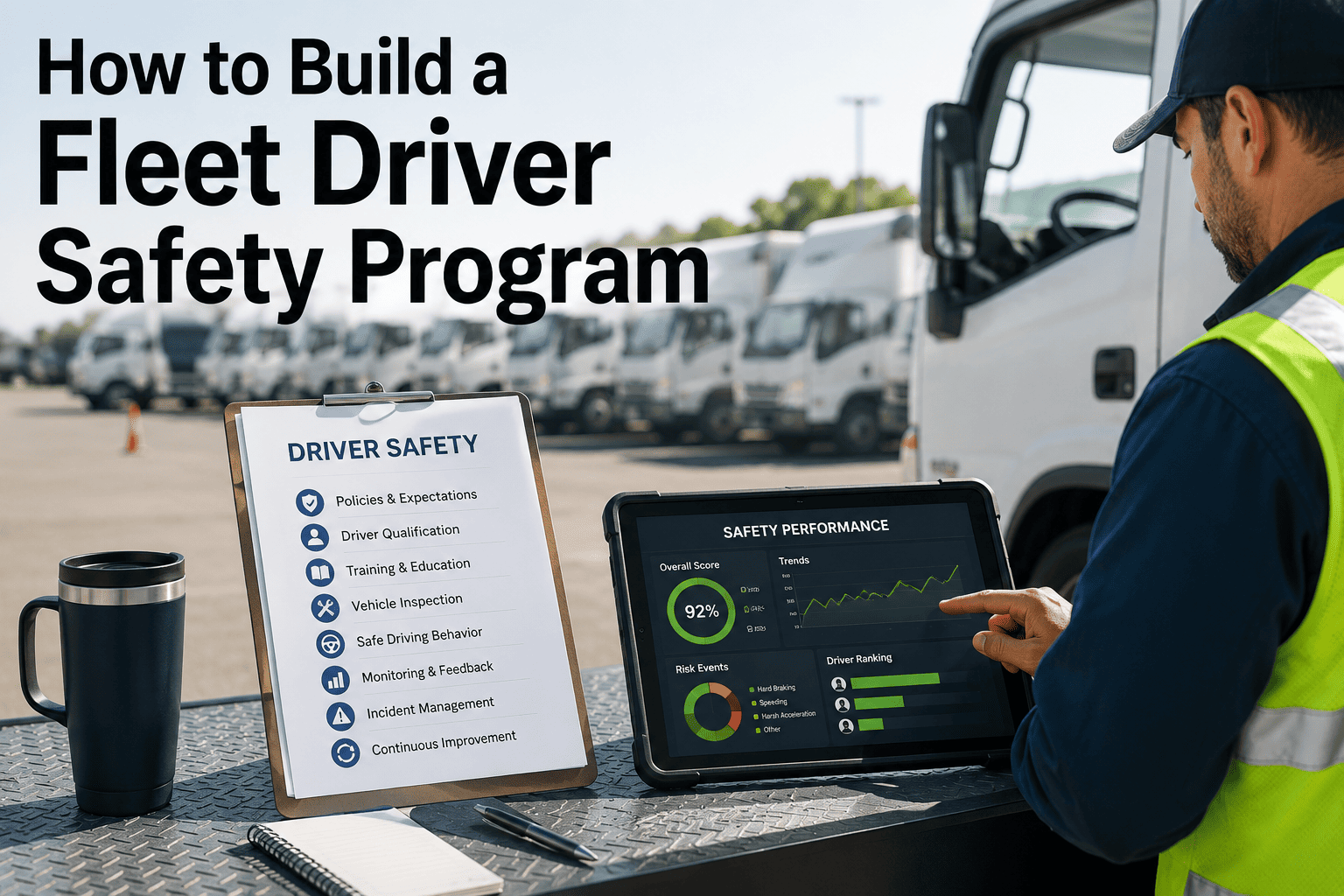
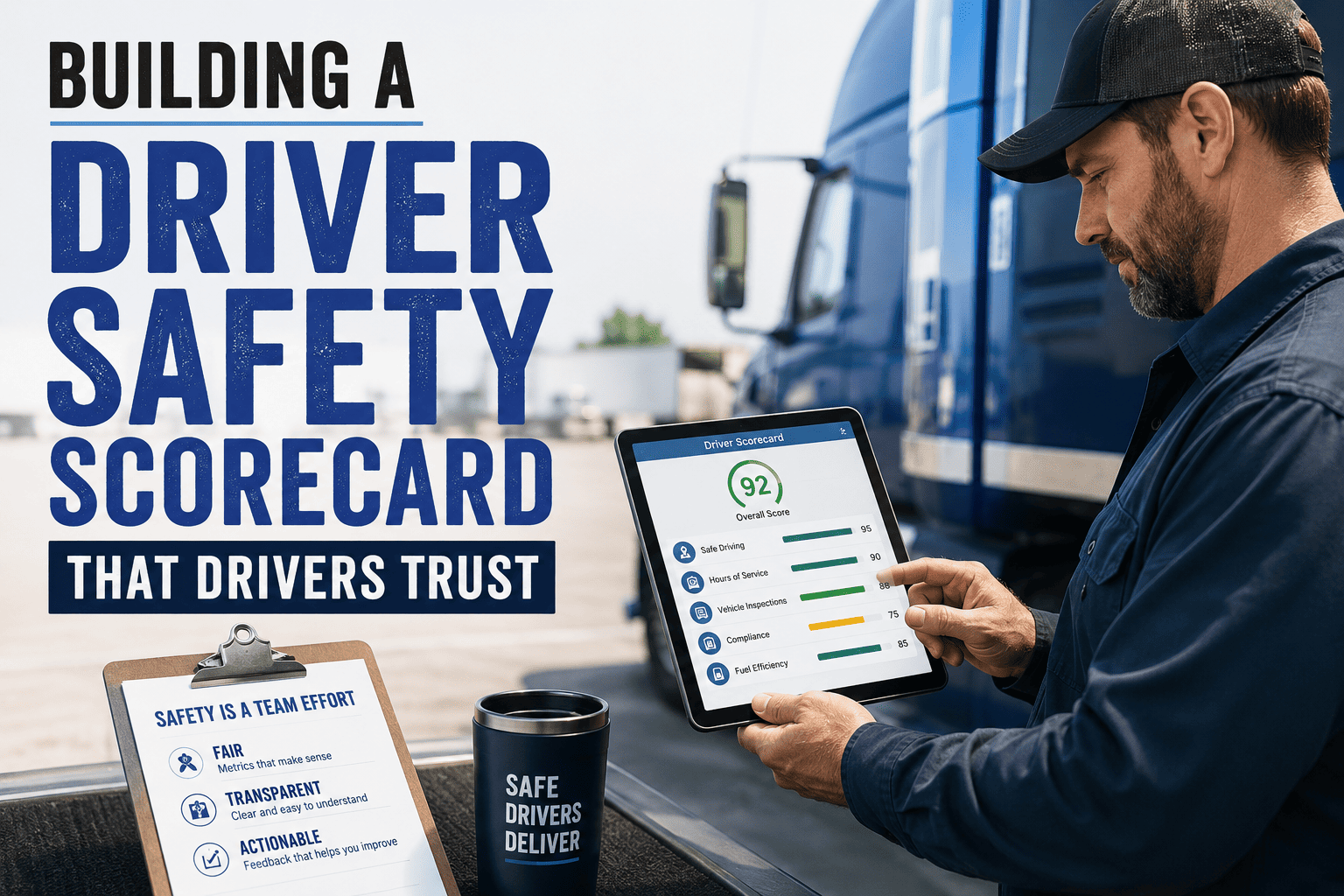
Every fleet has a safety policy binder somewhere on a shelf — thick, well-intentioned, and rarely opened after the first week. Yet the same fleets keep logging preventable collisions, skipped pre-trip inspections, and near misses nobody mentioned until the following Monday. A safety culture is not a policy; it is what a driver actually does at 5 AM on a rural stretch when no supervisor is watching, and what a technician does when a defect looks minor but feels wrong. Fleets that treat safety as a compliance checkbox keep paying for it in incidents, turnover, and insurance premiums no matter how many memos go out. Building a fleet safety culture that survives a real shift takes a workflow, not a slogan — see how OxMaint's maintenance management software gives fleets the near-miss reporting, KPI visibility, and recognition loop that make safety stick.
Fleet Safety Culture · Playbook · 2026
The Real Test of Fleet Safety Culture Happens When No One Is Watching
Policy documents don't ride in the cab or stand at the bay. These four moments are where a real safety culture either holds or quietly breaks — and they are exactly what a safety workflow has to be built around.
5:12 AM · Rural Route
Driver feels a pull in the steering before sunrise
In a real safety culture, the driver logs it as a near miss on the spot, not after it becomes a breakdown. The report reaches a technician before the next shift starts.
9:40 AM · Main Bay
Technician spots the same wear pattern twice this month
A culture that tracks patterns turns two similar defects into a fleet-wide alert, not two isolated work orders filed and forgotten.
1:15 PM · Toolbox Talk
A new hire asks a question instead of guessing
Psychological safety shows up as more questions asked, not fewer complaints filed. A culture that punishes questions gets silence, then surprises.
4:30 PM · HQ
Fleet manager reviews near-miss data before it becomes a claim
Weekly review of leading indicators, not just last month's accident report, is what separates a fleet reacting to safety from a fleet running it.
70%
of serious fleet incidents are preceded by an unreported near miss
3–5x
higher cost of a reactive incident versus one caught at the near-miss stage
85%
higher driver retention reported in fleets with a trusted safety culture
90%
fewer repeat incidents when near-miss reports are closed with visible action
Why Safety Policies Don't Change Behavior on the Road
A fleet running on policy alone rarely looks unsafe from the outside — inspections happen, forms get signed, toolbox talks get held. But five quiet patterns are eroding trust between the road and the office, and each one is invisible until someone actually looks for it.
01
Near-miss reports vanish into inboxes nobody reviews
A driver files a report once, hears nothing back, and stops filing. The data that could have prevented the next incident was captured and then ignored.
02
Safety metrics live in a silo dispatch and drivers never see
The safety scorecard sits in a leadership deck. The people whose behavior it measures have no idea it exists, so nothing changes.
03
Recognition only shows up after something goes wrong
Discipline without recognition teaches people to hide problems, not to raise them. The best catch of the month goes unnoticed while the worst incident gets a meeting.
04
Training is an annual event, not a daily habit
A once-a-year certification refresh does not compete with the muscle memory built on every shift in between.
05
Nobody who reports a problem ever sees it get fixed
A defect flagged and a claim avoided are the same event to the technician who found it — if they never hear which one happened, the incentive to look closely disappears.
Six Practices That Turn Safety Policy Into Fleet Safety Culture
These are not new rules to add to the binder. They are the operating habits that decide whether the safety program is something people live inside of, or something they route around.
01
Make near-miss reporting a workflow, not a suggestion
Why: Drivers stop reporting the moment a form disappears into an unread inbox. Unreported near misses become the incidents nobody saw coming.
How: Build a mobile report with a photo, a location, and a routed owner. Acknowledge every report within the same shift.
KPI · Near-miss reports per driver per month, trending up
02
Give drivers and technicians visibility into safety KPIs
Why: A dashboard only leadership sees changes nothing on the road. People protect what they can actually see and measure.
How: Post depot-level safety scores and inspection compliance somewhere drivers and technicians check daily.
KPI · Frontline dashboard views per week
03
Close the loop on every report, visibly
Why: The fastest way to kill a reporting culture is silence after a report. Silence reads as "nothing changed, why bother."
How: Route each report to a named owner with a deadline. Notify the reporter the moment the fix ships.
KPI · Time from report to closed action < 7 days
04
Recognize safe behavior, not only unsafe behavior
Why: A culture built only on discipline teaches people to hide problems. Recognizing good catches teaches people to surface them instead.
How: Run a lightweight recognition workflow — a monthly shoutout, a score bonus, a depot leaderboard.
KPI · Drivers recognized at least once per quarter
05
Feed inspection data into the same safety picture
Why: A worn brake pad flagged in an inspection is a safety signal, not just a maintenance ticket. Treating them separately hides the connection.
How: Route defect severity into the same dashboard technicians and safety leads both use.
KPI · Safety-relevant defects visible on the shared dashboard
06
Review leading indicators weekly, not after an incident
Why: Quarterly meetings review what already happened. A weekly look at near-miss volume catches what is about to happen next.
How: Run a 20-minute Monday review of near misses, defect trends, and PM compliance per depot.
KPI · Weekly safety review cadence, zero missed weeks
Stop running safety as a once-a-quarter memo
Turn Your Safety Policy Into a Daily Habit
OxMaint gives every driver and technician a mobile-first near-miss reporting workflow, KPI visibility across every depot, and a recognition loop backed by real maintenance data — so safety becomes a habit the fleet runs on, not a binder nobody opens.
What a Real Fleet Safety Culture Program Runs On
Six connected pieces, not one big safety software purchase. Miss one and the rest quietly stop working — reporting without recognition dies, and recognition without data is just a guess.
P1
Near-miss reporting workflow
Mobile log with photo and location, routed automatically to a named owner with a resolution deadline.
P2
Safety KPI visibility
Depot and driver-level scorecards visible to the people the scores describe, not only to leadership.
P3
Recognition workflow
Safe-behavior shoutouts and depot leaderboards that run on the same cadence as the incident review.
P4
Inspection-to-action loop
Defects tied directly to a safety severity tier, not left as a generic maintenance ticket.
P5
CMMS maintenance foundation
Every safety decision backed by real inspection and repair history, not a memory of what happened last time.
P6
Leadership review cadence
A weekly dashboard review that replaces the quarterly report nobody reads until after an incident.
Compliance-Only Fleet vs Culture-Driven Fleet
The gap between the two is not effort — most fleets already work hard at safety. It is whether the data loop closes, and whether the people closest to the risk can see it.
| Dimension |
Compliance-only fleet |
Culture-driven fleet |
| Near-miss reporting |
Rarely logged, no clear owner |
Logged same-shift, tracked to closure |
| Safety KPI visibility |
Leadership only, reviewed monthly |
Drivers and technicians, reviewed weekly |
| Recognition |
Discipline after incidents only |
Recognition and coaching, ongoing |
| Inspection-to-safety link |
Separate systems, no shared view |
Same dashboard, same defect data |
| Driver retention |
Higher turnover, lower trust |
Longer tenure, higher trust |
| Incident cost trend |
Flat or rising year over year |
Declining year over year |
Building the Culture in Four Phases, Not One Rollout
A safety culture announced all at once feels like a slogan. Built in phases, with real data at each step, it feels like something the fleet actually decided to do.
Phase 1
Listen and baseline · Weeks 1–4
Collect current near-miss and incident data. Survey how much drivers trust the reporting process today. Pick one receptive depot to pilot the changes.
Phase 2
Close the loop · Weeks 5–8
Launch mobile near-miss reporting at the pilot depot. Assign owners and resolution deadlines. Notify every reporter the moment their issue is fixed.
Phase 3
Recognize and surface · Weeks 9–16
Launch the recognition workflow. Put KPI dashboards in front of drivers and technicians, not only leadership. Extend to two more depots using the pilot's numbers.
Phase 4
Sustain fleet-wide · Weeks 17–24
Weekly leadership review becomes routine. Remaining depots onboard using the pilot's playbook and pre-vs-post results.
What a Safety Culture Shift Recovers in Year One
Reference fleet · 8 depots · 180 drivers · pre-program baseline
Near-miss reports logged per driver per month0.4
PM and inspection compliance fleet-wide58%
Driver turnover rate, annualized34%
12-month near-miss reports per driver per month3.1
12-month PM and inspection compliance89%
12-month driver turnover rate19%
Preventable incident reduction35–45%
Typical time to a measurable culture shift6–9 months
Safety KPIs a Fleet Director Should Watch Monthly
Target ↑ Trending
Near-miss reports per driver
Rising numbers early in a program are a good sign — they mean trust is building, not that risk is increasing.
Target < 7 days
Time to close a report
The single biggest predictor of whether reporting continues. Slow closure quietly ends a reporting culture.
Target > 90%
Inspection compliance per depot
Tracked by depot, not fleet-wide, so one strong yard cannot hide a weak one.
Target > 80%
Dashboard adoption by drivers
Percentage of drivers and technicians who check safety KPIs weekly, not just leadership.
Target > 1 per quarter
Recognition frequency per driver
A culture that only corrects and never recognizes will keep losing its best reporters.
Target ↓ Declining
Incident severity trend
The lagging indicator that proves the leading indicators above are actually working.
From binder policy to daily behavior
See What a Closed-Loop Safety Culture Looks Like on Your Fleet
A short walkthrough is enough to map your current near-miss process, spot where reports go quiet, and see what a mobile-first reporting and recognition workflow would look like for your depots.
Expert Take
Most fleets I have worked with already have a safety policy that would pass an audit. What they don't have is a loop — a way for a driver's report to visibly turn into a fix, and for a technician's catch to visibly turn into recognition. Without that loop, people stop reporting long before anyone notices, and the fleet finds out it lost its early warning system only after the incident it would have prevented. The data has to be visible to the people generating it, not just the people reviewing it at the end of the month.
Marcus Ibe, CDS
Fleet safety consultant · 15 years in commercial fleet risk management · former safety director for a regional distribution carrier
Frequently Asked Questions
How long does it take to build a real fleet safety culture?
Most fleets see a measurable shift in near-miss reporting and PM compliance within 6 to 9 months when the program runs in phases.
Book a demo to map a timeline against your depot count.
What is the real difference between a safety program and a safety culture?
A program is the policy, forms, and training. A culture is whether drivers and technicians act on that policy when nobody is checking. One is written down; the other is what actually happens on shift.
Why do near-miss reports usually die inside a fleet?
Reports go into an inbox with no owner and no deadline. The reporter hears nothing back, assumes it did not matter, and stops reporting. Closing the loop visibly is what keeps reporting alive.
Does building a safety culture require new telematics hardware?
No. The core loop — reporting, KPI visibility, recognition, and closure — runs on a mobile workflow and existing inspection data. Telematics can enrich it later, but it is not a prerequisite.
How is fleet safety culture connected to maintenance software?
Every safety-relevant defect is first a maintenance event. A CMMS that routes inspection data into the same dashboard as near-miss reports is what gives a safety culture real numbers to run on.
Start a free trial to see it against your own inspection data.
One workflow · every driver · every depot
Build the Safety Culture Your Fleet Talks About Into the One It Actually Runs On
OxMaint gives fleets the near-miss reporting, KPI visibility, and recognition workflow that turn a safety policy into a daily habit — backed by the maintenance data that makes every safety decision provable, not assumed.