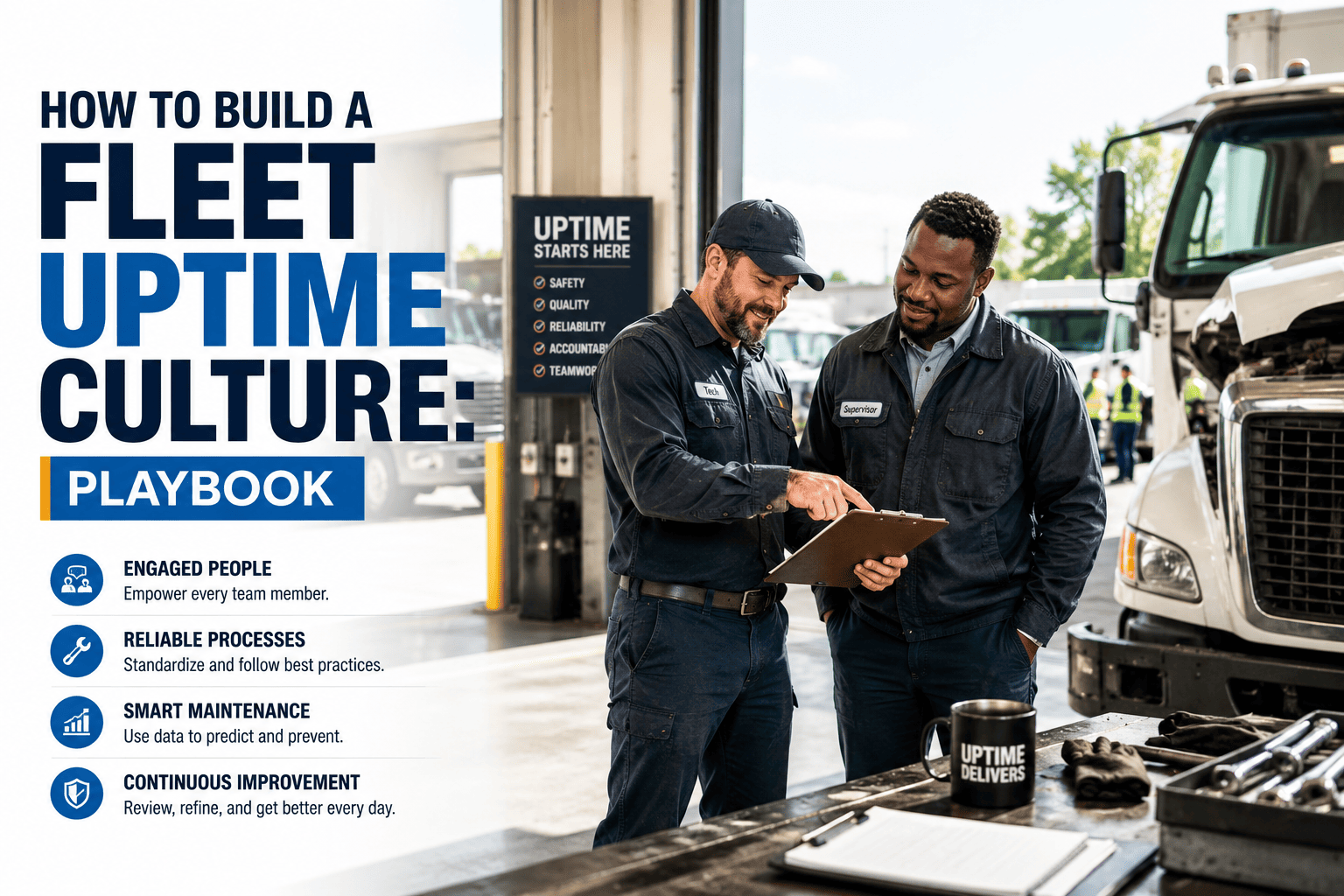
A regional carrier running 340 tractors had every tool a fleet could want — telematics, a CMMS, scheduled PM intervals — and trucks still broke down on the road every week. The dashboards said uptime was fine. The yard said otherwise. What the fleet was missing wasn't software; it was a culture where every driver, dispatcher, and technician treated uptime as their own job, not just the shop's problem. Building that kind of fleet uptime culture takes more than a memo — it takes daily visibility, shared accountability, and habits reinforced until reliability becomes instinct instead of a monthly KPI review. Sign in to OxMaint to see how fleets turn maintenance data into an uptime habit, or book a demo to walk through the playbook with our team.
Uptime Isn't a Metric. It's a Habit Your Whole Fleet Has to Practice.
Most fleets chase uptime with better software and stricter PM schedules — and still get blindsided by breakdowns. A real fleet uptime culture turns every driver, dispatcher, and technician into a stakeholder in reliability, backed by the visibility and accountability a modern CMMS provides.
The 5 Pillars of a Fleet Uptime Culture
Visibility for Everyone
Drivers and dispatchers see the same vehicle health data as the shop — no blind spots, no surprises at the dock.
Shared Accountability
Uptime becomes an operations goal, not a maintenance-department metric nobody else answers for.
Frictionless Reporting
A defect logged in seconds from a phone gets fixed. A defect mentioned verbally three days later doesn't.
Recognition & Feedback
Drivers who report early need to see the fix happen — closing that loop is what makes the habit stick.
Data-Backed Decisions
CMMS analytics show which habits are working and where the culture effort needs to focus next.
How Fleets Build Uptime Culture, Step by Step
Measure current uptime, downtime causes, and where reporting is breaking down today.
Build one simple daily habit — a digital pre-trip check and defect log every driver actually uses.
Dashboards, alerts, and recognition keep the habit alive past the first few weeks.
CMMS data proves the culture is working and points to the next priority to tackle.
OxMaint gives every driver, dispatcher, and technician the same real-time view of fleet health — so accountability isn't a slogan, it's a dashboard everyone checks.
Reactive Maintenance Culture vs a Fleet Uptime Culture
Who Owns What in an Uptime Culture
| Role | Daily Habit | What They Track | Tool Used |
|---|---|---|---|
| Driver | Digital pre-trip inspection | Defects, wear, warning signs | Mobile app |
| Dispatcher | Vehicle status check before assignment | Availability, open work orders | CMMS dashboard |
| Technician | Log root cause on every repair | Repeat failures, part life | Work order history |
| Fleet Manager | Weekly uptime review | KPI trends, downtime cost | Analytics dashboard |
| Ops Leadership | Monthly culture scorecard | Adoption rate, recognition | Reporting suite |
Our drivers used to mention a rattling brake weeks after they first heard it. Now they log it before they leave the yard, and our shop sees it before it turns into a roadside call. That shift didn't come from new software — it came from making uptime everyone's problem, not just ours.
Frequently Asked Questions
OxMaint gives your whole fleet the visibility and accountability to make reliability a habit, not a hope.