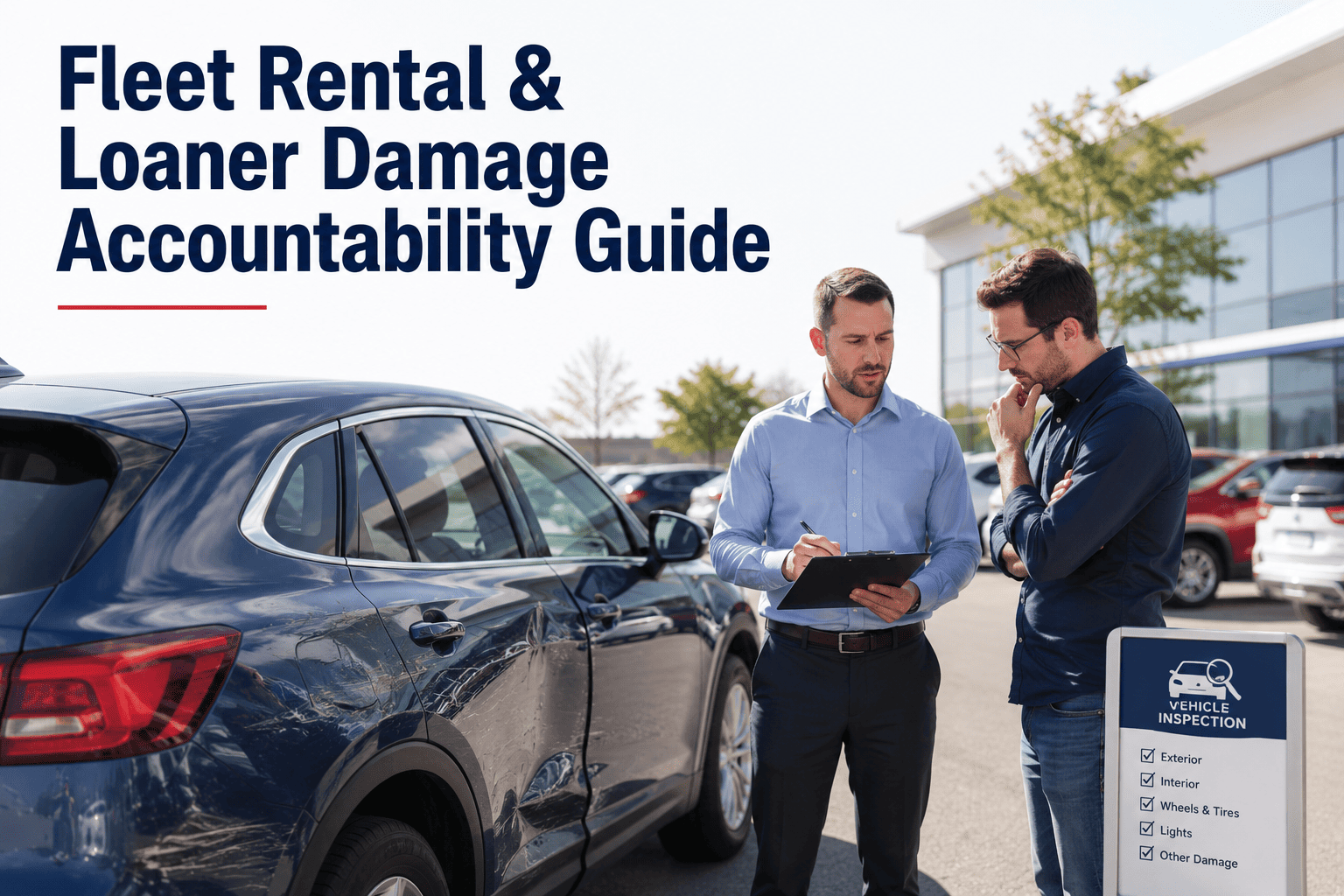
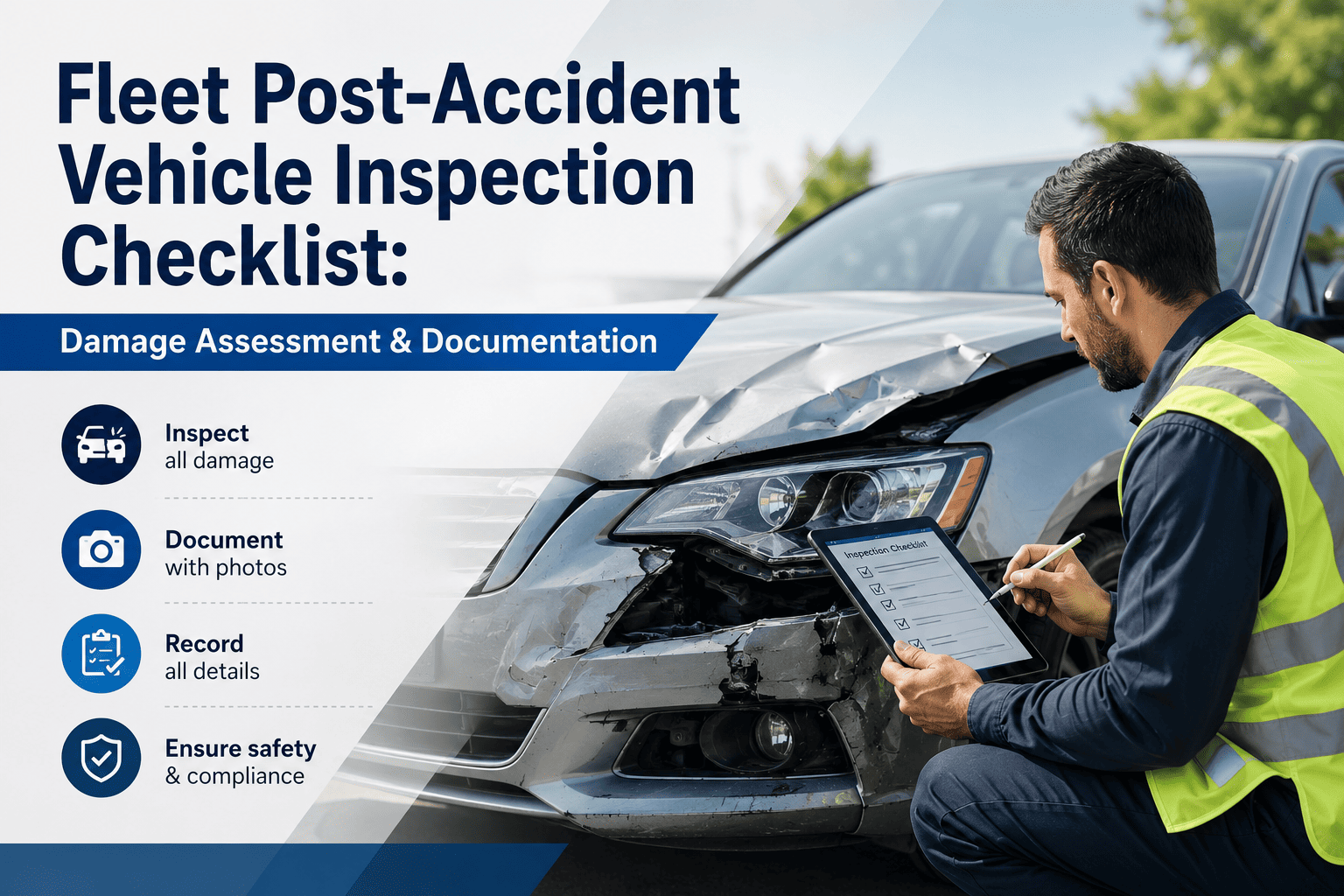
A fleet manager hands the keys of a spare pickup to a technician whose own truck is in the shop for a transmission repair. Four days later the truck comes back with a dented tailgate and a cracked taillight, and nobody can say whether it happened in the shop yard, at a job site, or in the technician's own driveway. Rental and loaner vehicles change hands more often, sit outside normal assignment records, and travel through more locations than any other class of fleet asset — which is exactly why damage on them is the hardest cost to trace back to a cause. Without a documented condition record at handoff and return, the repair bill quietly becomes a fleet overhead cost instead of a recoverable one. OxMaint AI turns every loaner and rental handoff into a timestamped condition record, so damage accountability doesn't disappear between drivers.
Fleet Rental & Loaner Accountability · Damage Tracking · OxMaint CMMS
Loaner and Rental Vehicles Change Hands Constantly. Most Fleets Have No Record of Who Had the Damage Last.
OxMaint AI documents condition at every check-out and check-in — photos, mileage, fuel level, and existing damage — so a dent found at return can be traced to the exact handoff where it happened, instead of written off as an unrecoverable repair.
60%+
of fleet operations report loaner and rental damage costs go unrecovered because no condition record links the damage to a specific driver or handoff
3-5x
more custody handoffs on loaner and rental units compared to permanently assigned vehicles, multiplying the points where damage goes unnoticed
48 hrs
the window after which a damage claim against a borrower becomes difficult to enforce without check-out and return documentation
$1,200+
typical repair cost absorbed per undocumented loaner incident, compounding across a fleet running several loaners a month
72%
of loaner and rental disputes trace back to a single missing step — no photographed condition record at check-out. When a vehicle leaves the yard undocumented, there is no baseline to compare against at return, and the fleet absorbs a cost a five-minute inspection could have assigned correctly.
Six Places Where Rental and Loaner Accountability Breaks Down
No Check-Out Condition Baseline
Loaner keys often change hands at a service counter with no formal inspection beyond a quick visual check. Without a photographed baseline of existing scratches, dents, tire wear, and interior condition, there is nothing objective to compare against when the vehicle comes back a week later.
Inconsistent Return Inspections
Return inspections depend on whoever is at the counter and how busy the shift is. A rushed glance in a parking lot misses hairline cracks, curb rash, or interior stains that only become obvious under closer inspection days later, by which point the borrower has moved on.
Multiple Drivers, One Vehicle Record
A loaner assigned for a week may pass through two or three drivers if the original borrower swaps shifts, hands the vehicle to a coworker, or the loan gets extended. Without a per-handoff log, damage gets attributed to whoever signed the paperwork last, not whoever actually caused it.
Delayed Damage Discovery
Damage noticed a week after return is nearly impossible to attribute with confidence. Was it there at check-in? Did it happen at a job site? Did another driver use the vehicle in between checkout and the discovery? Every day of delay erodes the evidence trail further.
Third-Party Rental Blind Spots
Vehicles rented from an outside agency during surge periods, storm response, or breakdown coverage often bypass internal inspection workflows entirely. That leaves the fleet exposed to a rental company's own one-sided damage claim, with no independent record to dispute it.
No Link Between Damage and Repair Cost
Even when damage is caught, many fleets have no workflow connecting the incident to a work order, a cost code, or a specific handoff period. The repair gets logged as routine maintenance spend instead of a chargeable event tied to a driver or borrower.
Why Loaner and Rental Damage Is Different From Fleet Damage
Damage on a permanently assigned fleet vehicle is comparatively easy to trace — one driver, one route pattern, one maintenance history. Loaner and rental vehicles break that model entirely. The same pickup might be checked out by a technician on Monday, a facilities coordinator on Wednesday, and sit idle in a satellite yard over the weekend before a fourth person picks it up Tuesday morning. Each handoff resets the context a fleet manager would normally rely on to explain new wear or damage.
The financial exposure compounds because loaner and rental units are frequently the vehicles a fleet cares about protecting the most — they represent flexible capacity, cover downtime for other assets, and in the case of external rentals, come with a contractual damage clause the fleet has agreed to in advance. A fleet that cannot produce its own condition evidence is negotiating from a position of weakness against a rental agency's inspection report, and internally, a fleet that cannot show which employee had custody of a damaged loaner has no basis for a charge-back conversation.
The OxMaint Custody Chain — From Check-Out to Closed Claim
Step 1
Check-Out Record
Photos, mileage, fuel level, and existing damage notes are timestamped before the key leaves the counter, tied to the borrower's name and the vehicle's asset record.
Step 2
In-Use Log
Any incident reported during the loan period — a parking lot scrape, a warning light — is logged against the same custody record, keeping the chain unbroken.
Step 3
Return Inspection
A matching check-in inspection compares current condition against the check-out photos automatically, flagging new damage the moment the vehicle comes back.
Step 4
Claim & Work Order
Flagged damage generates a work order and cost record linked to the responsible custody period, ready for driver charge-back or claim submission.
OxMaint · Rental & Loaner Damage Accountability
Stop Absorbing Damage Costs That Belong to a Specific Handoff
Photographed check-out and check-in records, automatic condition comparison, and work orders tied to the responsible custody period — all from OxMaint.
What OxMaint Captures at Every Loaner and Rental Handoff
A consistent handoff record is only useful if it captures the same details every time, regardless of which staff member is at the counter. OxMaint standardizes six data points into every check-out and return, so the record is complete whether the loaner desk is quiet or slammed.
Exterior photo set — all four sides plus roof and undercarriage where accessible
Interior condition, odometer reading, and fuel or charge level
Existing damage notes carried forward automatically from the last return inspection
Borrower identity and authorized use, linked to the driver or technician record
Expected return date and mileage cap, with automatic overdue flagging
Digital sign-off from both the issuing staff member and the borrower
Where Rental and Loaner Accountability Matters Most
Internal Motor Pool Loaners
Shared pool vehicles checked out for a single trip or a full day are the highest-turnover asset class in most fleets, sometimes changing hands three or four times in a single week. OxMaint's fast check-out flow keeps a photographed baseline current without slowing down pool desk operations during a busy morning rush.
Service Department Loaner Fleets
Vehicles loaned out while a customer's or employee's own unit is in the shop often travel further and see less oversight than any other fleet category, sometimes for a week or more at a time. OxMaint ties the loaner's condition record to the same work order as the repair it is covering for, so both histories stay together.
Disaster and Surge Rental Units
Storm response, seasonal demand spikes, and breakdown coverage often mean renting from outside agencies on short notice, sometimes without time for a careful walkaround. OxMaint applies the same check-out and return workflow to rented units, protecting the fleet from a one-sided damage claim after the vehicle goes back.
Seasonal Rental Additions
Fleets that add rented capacity for harvest, construction, or peak retail season need condition records that don't disappear once the rental period ends and the unit goes back to the agency. OxMaint's inspection history stays attached to the fleet's own cost records long after the vehicle itself is returned.
Multi-Location Loaner Rotations
Loaner vehicles that move between branches or yards lose their paper trail at every transfer, since each location typically keeps its own informal log. OxMaint keeps the custody chain intact across locations, so a unit checked out at one site and returned at another still has one continuous, complete history.
Third-Party Rental Integrations
When rentals are booked through an outside agency, OxMaint's inspection workflow still applies at pickup and drop-off, capturing the same photo and condition data a fleet would gather on its own vehicles — giving the fleet independent evidence to reconcile against the rental company's invoice.
Manual Loaner Tracking vs OxMaint Accountability Workflow
| Accountability Factor | Manual Tracking | OxMaint AI |
|---|
| Check-out condition record | Rarely documented | Photographed and timestamped |
| Return inspection consistency | Depends on staff and shift | Standardized checklist every time |
| Damage-to-driver traceability | Lost after handoff | Linked to custody record |
| Multi-location visibility | Paper trail breaks | Unified across sites |
| Third-party rental coverage | Not tracked internally | Same workflow applied |
| Repair cost attribution | Logged as routine maintenance | Tied to responsible handoff |
40%+
more loaner and rental damage costs successfully attributed and recovered at fleets using OxMaint's check-out and return workflow
5 min
average time added to a loaner check-out for a full photographed condition record — small against the cost of an unrecoverable repair
$1,200+
average repair cost per incident that stays traceable to the responsible custody period instead of a general maintenance write-off
The dent on a returned loaner isn't a mystery if the fleet has a photo of the bumper from the day it left the yard. Most damage disputes aren't lost because the damage is unclear — they're lost because nobody captured what the vehicle looked like before it left.
OxMaint AI makes the check-out photo the default, not the exception, so every loaner and rental handoff has a starting point to compare against.
The Real Cost of Skipping the Handoff Record
The math behind loaner and rental damage accountability is simple once it's laid out. A single undocumented incident costs a fleet the full repair bill with no recovery path — often over a thousand dollars once parts, labor, and downtime are factored in. Across a fleet running a dozen loaner check-outs a month, even a modest share of undocumented incidents adds up to a recurring line item that never shows up as its own budget category, because it gets absorbed into general maintenance spend instead of tracked as preventable loss.
The fix doesn't require a new process built from scratch — most fleets already do some version of a check-out inspection. The gap is consistency: the same six data points captured the same way, every time, whether the loaner desk is quiet or three people are waiting in line. That consistency is what turns a condition note into evidence a fleet can actually use, whether the conversation is with an employee, a customer, or a rental company's claims department.
Frequently Asked Questions — Rental and Loaner Damage Accountability
Does OxMaint require special hardware to photograph loaner and rental vehicles at check-out?
No additional hardware is needed. Check-out and return inspections are completed from a phone or tablet camera through the
OxMaint app, with photos, mileage, and notes stored against the vehicle's asset record automatically as part of the handoff.
Can OxMaint track vehicles rented from an outside agency, not just internally owned loaners?
Yes. The same check-out and check-in workflow applies to rented units picked up from a third-party agency, giving the fleet its own independent condition record to reconcile against the rental company's invoice or damage claim.
How does OxMaint handle a loaner that passes through more than one driver during the loan period?
Each handoff creates its own custody record with its own timestamp and photo set, so a vehicle that moves between drivers mid-loan keeps a continuous, attributable chain rather than one record covering everyone who touched it.
What happens when damage is found at return that wasn't present at check-out?
OxMaint flags the discrepancy automatically by comparing return photos against the check-out baseline, then generates a work order and cost record tied to the responsible custody period for driver charge-back or insurance claim submission.
Can fleet managers see loaner and rental damage trends across the whole fleet?
Yes. OxMaint aggregates check-out and return data across all loaner and rental units, showing which vehicles, locations, or time periods generate the most incidents.
Book a demo to see the reporting on your own fleet's data.
The Damage on Your Next Returned Loaner Is Only a Mystery If Nobody Photographed It First.
OxMaint AI documents condition at every check-out and check-in, so rental and loaner damage stays traceable to the handoff that caused it, instead of absorbed as a routine repair cost.