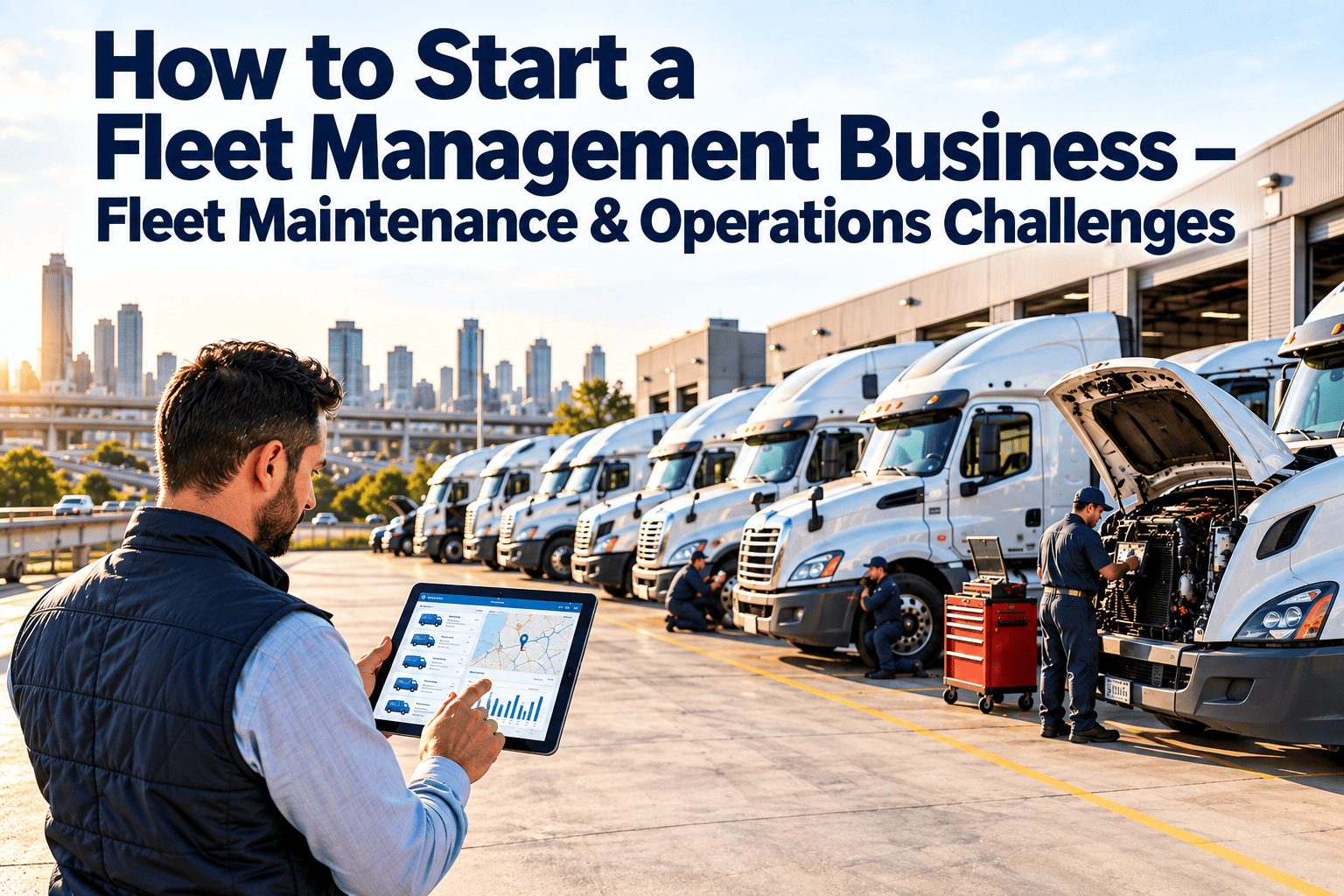
Starting a fleet management business looks straightforward from the outside: buy or lease vehicles, sign customers, put drivers on the road. What actually determines whether the business survives its first eighteen months is something far less visible — whether maintenance is built into the operating model from day one, or bolted on after the first breakdown strands a customer's shipment. Founders who treat maintenance as an afterthought discover that a single unplanned engine failure can wipe out a month of margin on a five-truck fleet, and by the time the business is running twenty vehicles, reactive repairs are quietly eating the business alive. This guide walks through how to start a fleet management business the right way, with maintenance and operations built into the foundation rather than added later, and where a tool like Oxmaint fits into that foundation.
How to Start a Fleet Management Business Without Letting Maintenance Sink It
A practical framework for new fleet operators covering licensing, vehicle acquisition, maintenance planning, driver readiness, compliance, and the systems that keep a growing fleet profitable instead of reactive.
Why Most New Fleet Businesses Underestimate Maintenance
Fleet management businesses are usually launched by people who understand logistics, sales, or driving — not necessarily asset lifecycle management. Maintenance gets treated as a line item to deal with once a truck actually breaks down, rather than a system that has to exist before the first vehicle is dispatched.
The Formation Sequence: Business Setup Before the First Vehicle Moves
Before maintenance strategy even enters the picture, the legal and financial structure of the business has to be in place. Skipping or rushing this stage tends to surface as insurance gaps or licensing problems exactly when the fleet is under the most operational pressure.
The Operational Challenges That Break New Fleet Businesses
Once vehicles are on the road, a predictable set of operational challenges shows up. Recognizing them in advance is far cheaper than learning them through a failed contract.
Choosing the Right Fleet Size and Vehicle Mix to Start
New operators often overestimate how many vehicles they can maintain properly in year one. A smaller, well-maintained fleet with high uptime consistently outperforms a larger fleet where half the vehicles are down for repair at any given time.
| Fleet Stage | Typical Vehicle Count | Maintenance Approach | Common Risk |
|---|---|---|---|
| Launch Phase | 1–5 vehicles | Owner-managed or single technician, digital PM schedule from day one | Underpricing services without accounting for maintenance cost per mile |
| Early Growth | 6–20 vehicles | Dedicated maintenance coordinator, mix of in-house and outsourced repair | Maintenance tracking outgrows spreadsheets, records fragment |
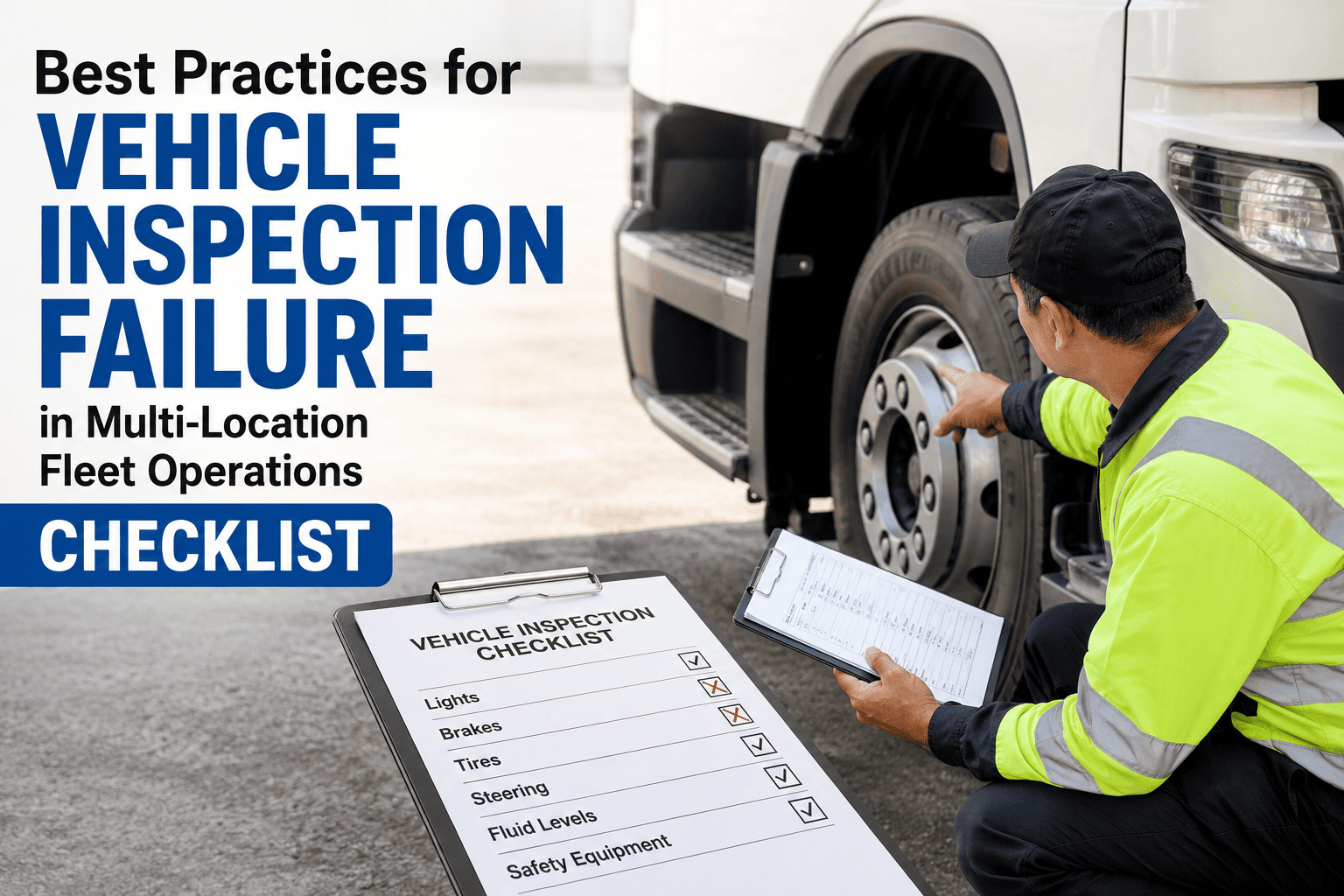
| Scaling Phase | 21–75 vehicles | CMMS-driven scheduling, dedicated shop or preferred vendor network | Inconsistent inspection compliance across multiple locations |
| Established Fleet | 75+ vehicles | Full preventive and predictive maintenance program with reporting dashboards | Aging asset segments driving disproportionate repair cost |
Building the Preventive Maintenance Backbone
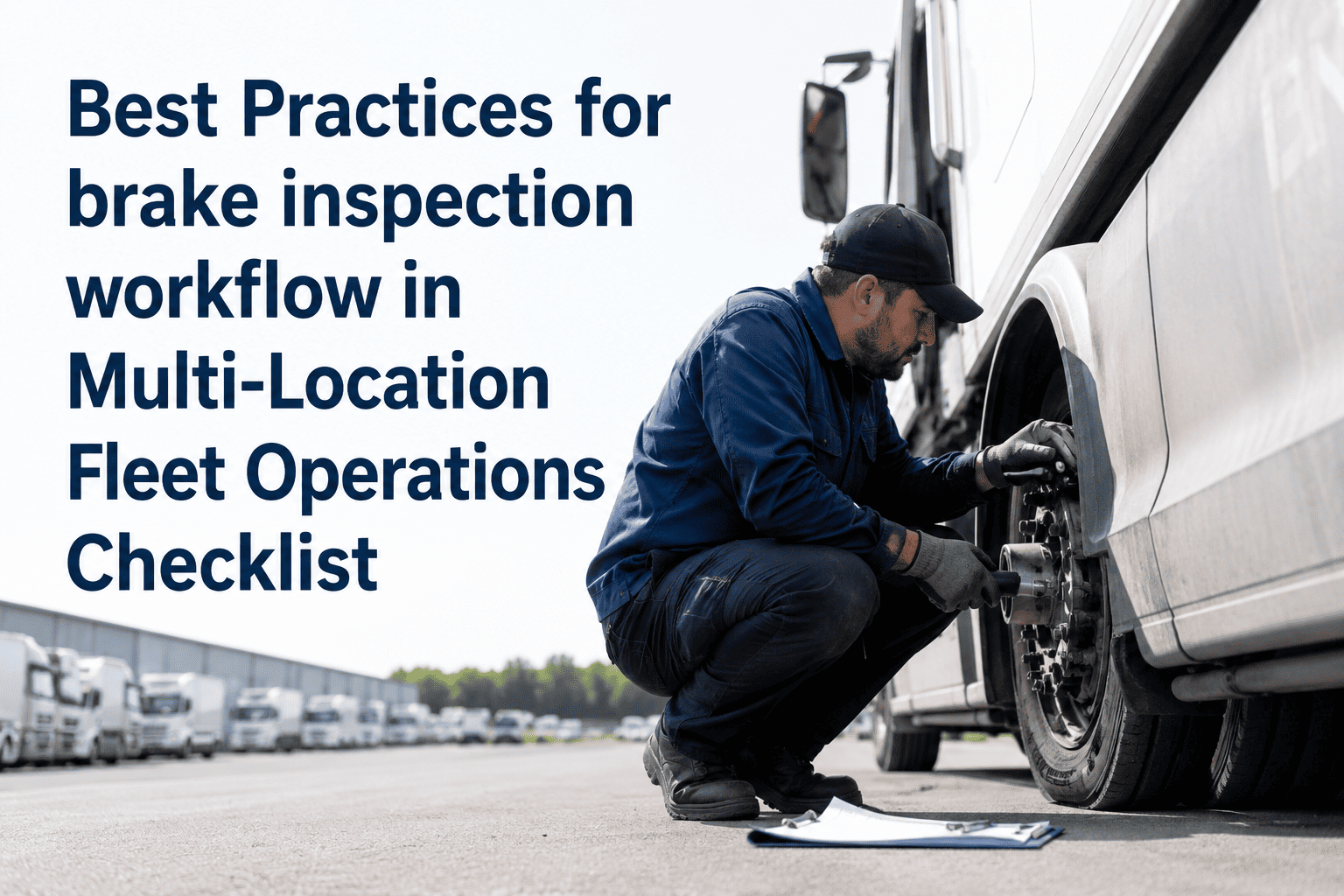
Preventive maintenance is the single highest-leverage decision a new fleet management business makes. It is far cheaper to build the habit early than to retrofit discipline into a fleet that has already learned to operate reactively.
Compliance and Documentation From the First Day
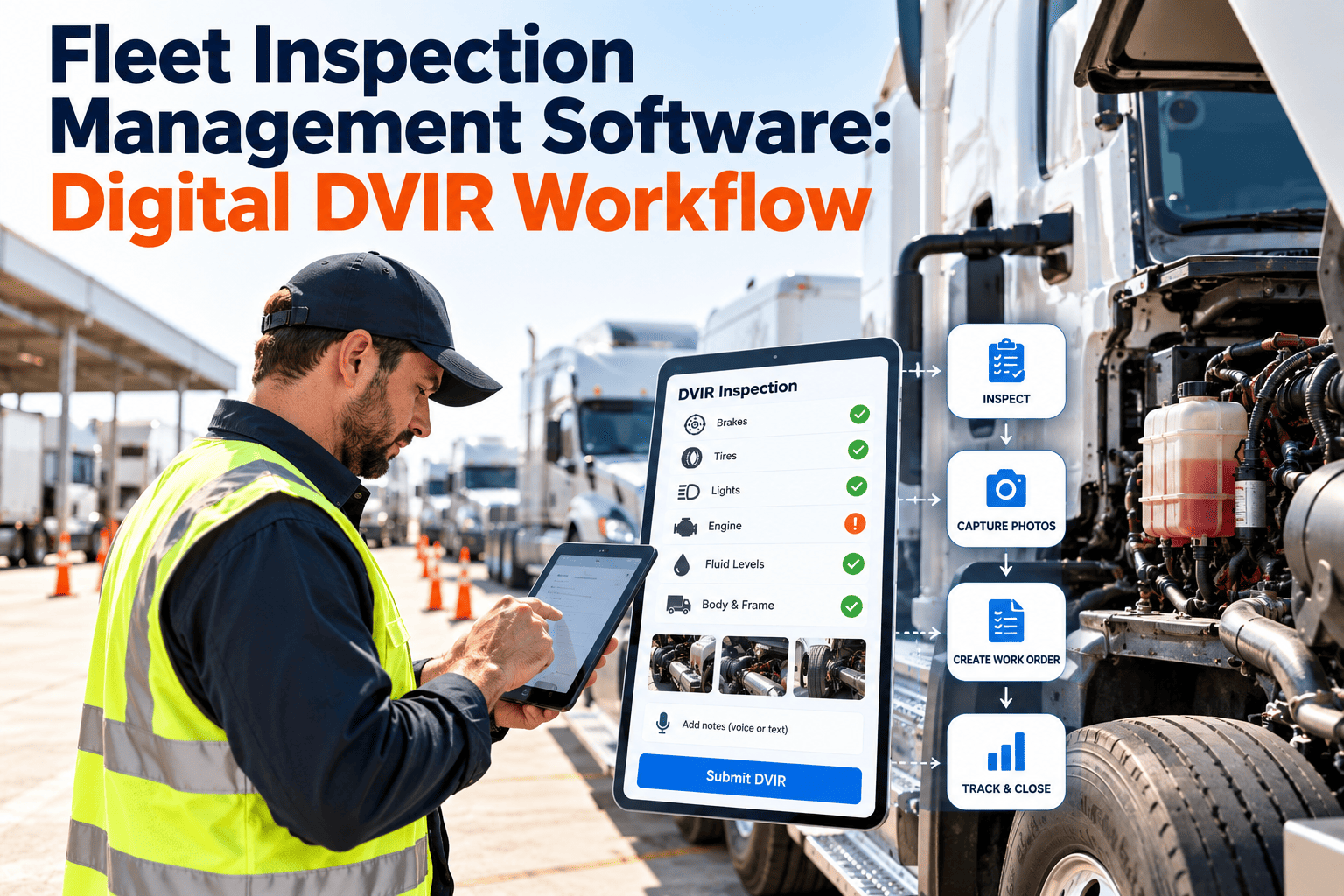
Depending on jurisdiction and vehicle class, a fleet management business may be subject to DOT inspection rules, driver vehicle inspection report requirements, and equipment certification schedules. Building a compliance-ready record system early removes one of the most common causes of new-fleet audit failures.
Digital inspection records, timestamped photos, and technician sign-offs create a defensible audit trail that paper logs rarely provide, and they matter just as much to a commercial client evaluating a new fleet vendor as they do to a regulator.
Start Your Fleet Business With a Maintenance System, Not a Spreadsheet
Oxmaint gives new fleet operators preventive maintenance scheduling, digital inspections, work orders, and asset history in one system, so the business scales without maintenance chaos catching up to it.
Staffing and Technician Strategy for a New Fleet
Most fleet businesses under ten vehicles do not need a full-time technician on staff. The more common model is a preferred repair partner combined with a driver-executed inspection routine, scaling to an in-house technician once the fleet crosses roughly fifteen to twenty vehicles.
Technology Decisions New Fleet Operators Should Not Delay
Fleet management software decisions made in the first year tend to stick, because migrating vehicle history and records later is disruptive. Choosing a maintenance-first platform early avoids the common trap of adopting a dispatch or telematics tool that treats maintenance as an afterthought.
A CMMS built for fleets should support mobile-first inspections, automatic preventive maintenance triggers, parts inventory tracking, and reporting that shows cost per vehicle and cost per mile over time. These are the numbers that determine whether the business is actually profitable once maintenance is accounted for, not just whether trucks are moving.
Common Mistakes First-Time Fleet Operators Make
Frequently Asked Questions
Most successful new fleet businesses start with a small, tightly managed group of vehicles rather than scaling quickly, since maintenance discipline is easier to establish and keep consistent at a smaller scale. Book a demo to talk through a maintenance plan sized to your starting fleet.
Yes, because the record-keeping habits built at five vehicles are the ones that either scale cleanly or have to be rebuilt later. Starting with a digital system avoids a disruptive migration once the fleet grows. Sign up to set up your first vehicle records for free.
Most fleets under fifteen vehicles are better served by an outsourced or hybrid model, reserving an in-house technician for the point where downtime cost clearly outweighs the fixed cost of staffing.
At minimum, inspection reports, maintenance history, driver vehicle inspection reports, and any required certifications for the vehicle class and jurisdiction should be stored digitally and tied to each asset.
Preventive maintenance reduces the frequency of high-cost reactive repairs and unplanned downtime, both of which directly erode margin on a fleet that is still building its customer base. Book a demo to see how a PM schedule is built inside Oxmaint.
Give Your Fleet Business a Maintenance Foundation It Won't Have to Rebuild Later
Oxmaint helps new and growing fleet operators run preventive maintenance, inspections, work orders, and asset records from a single mobile-first system.