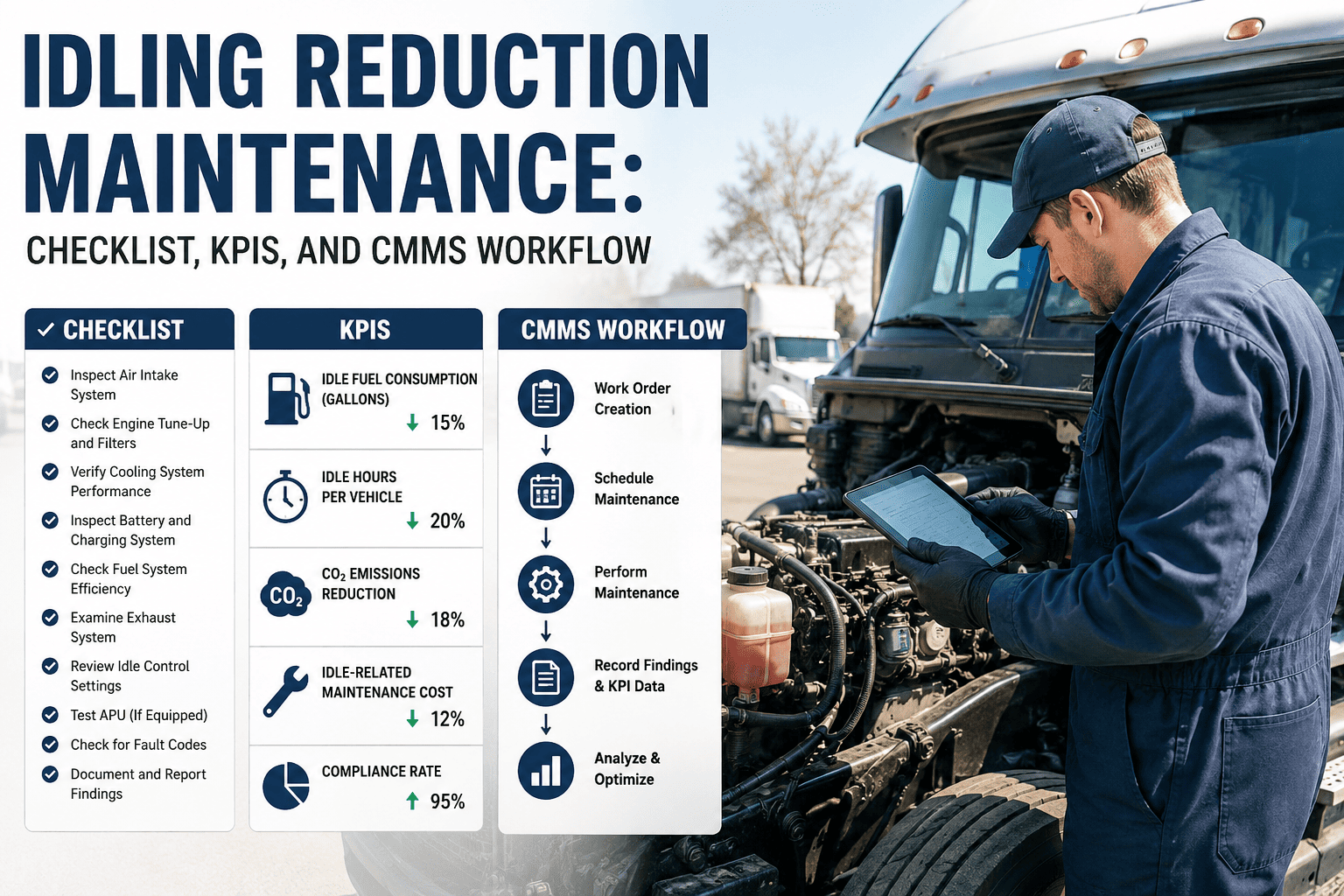
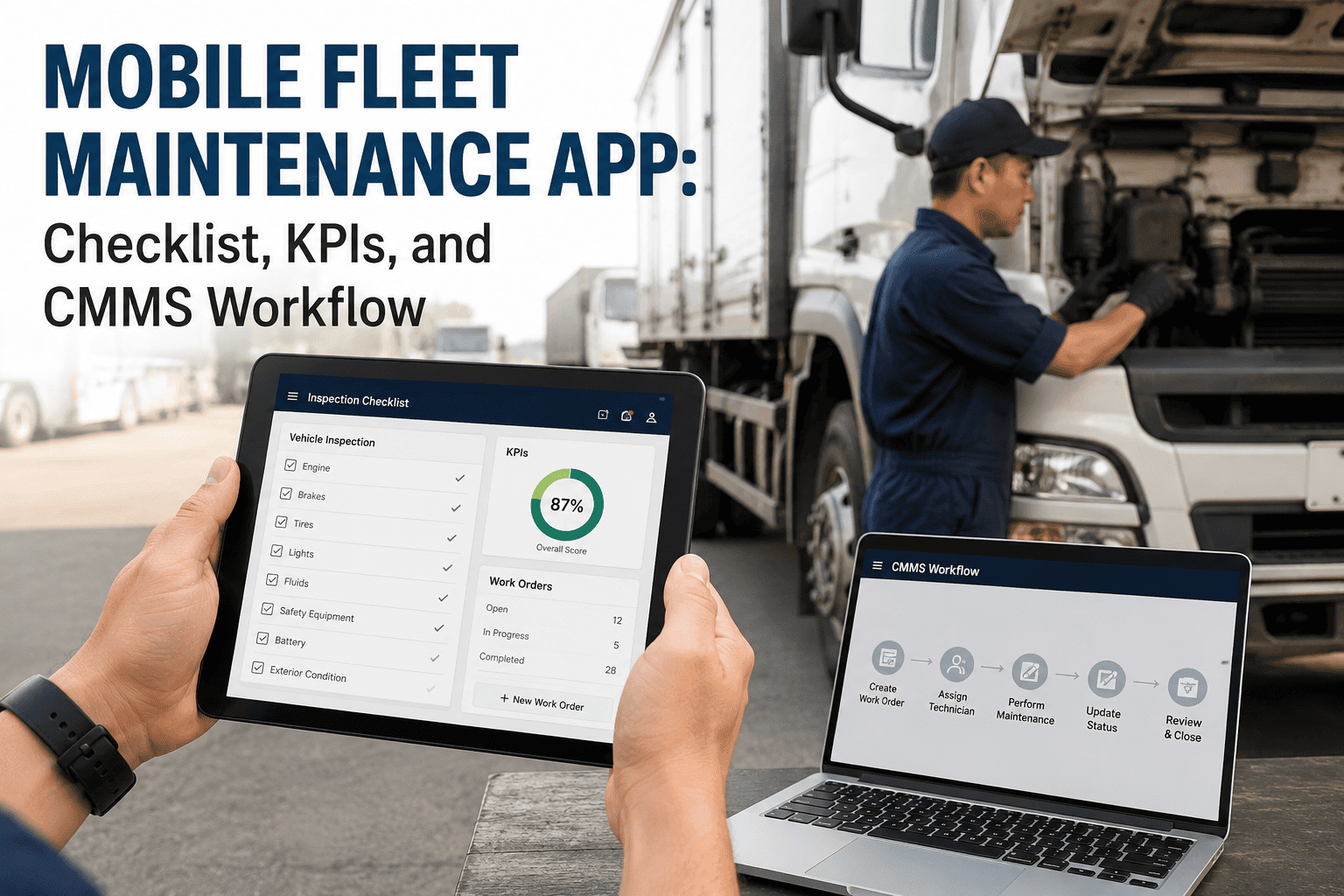
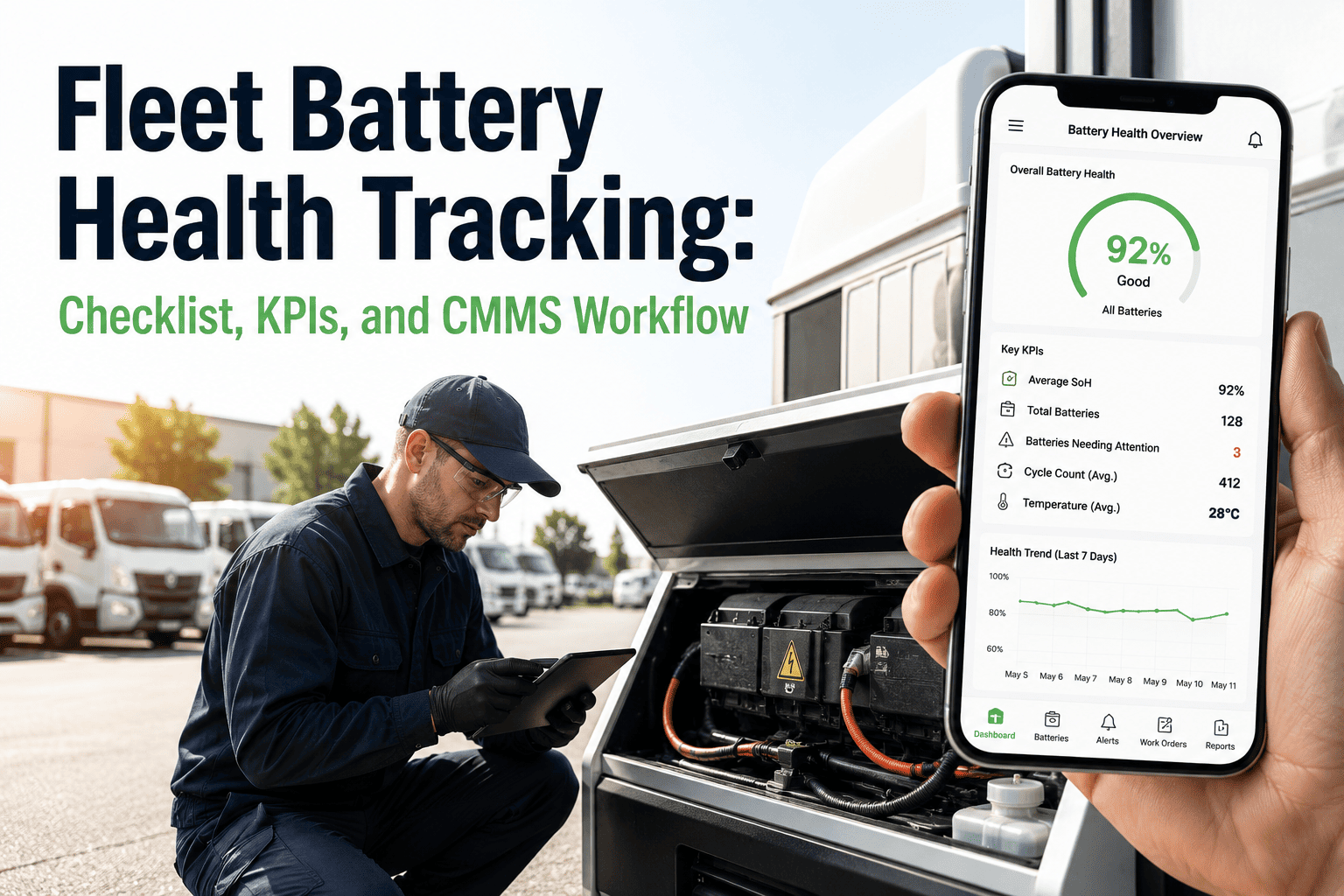
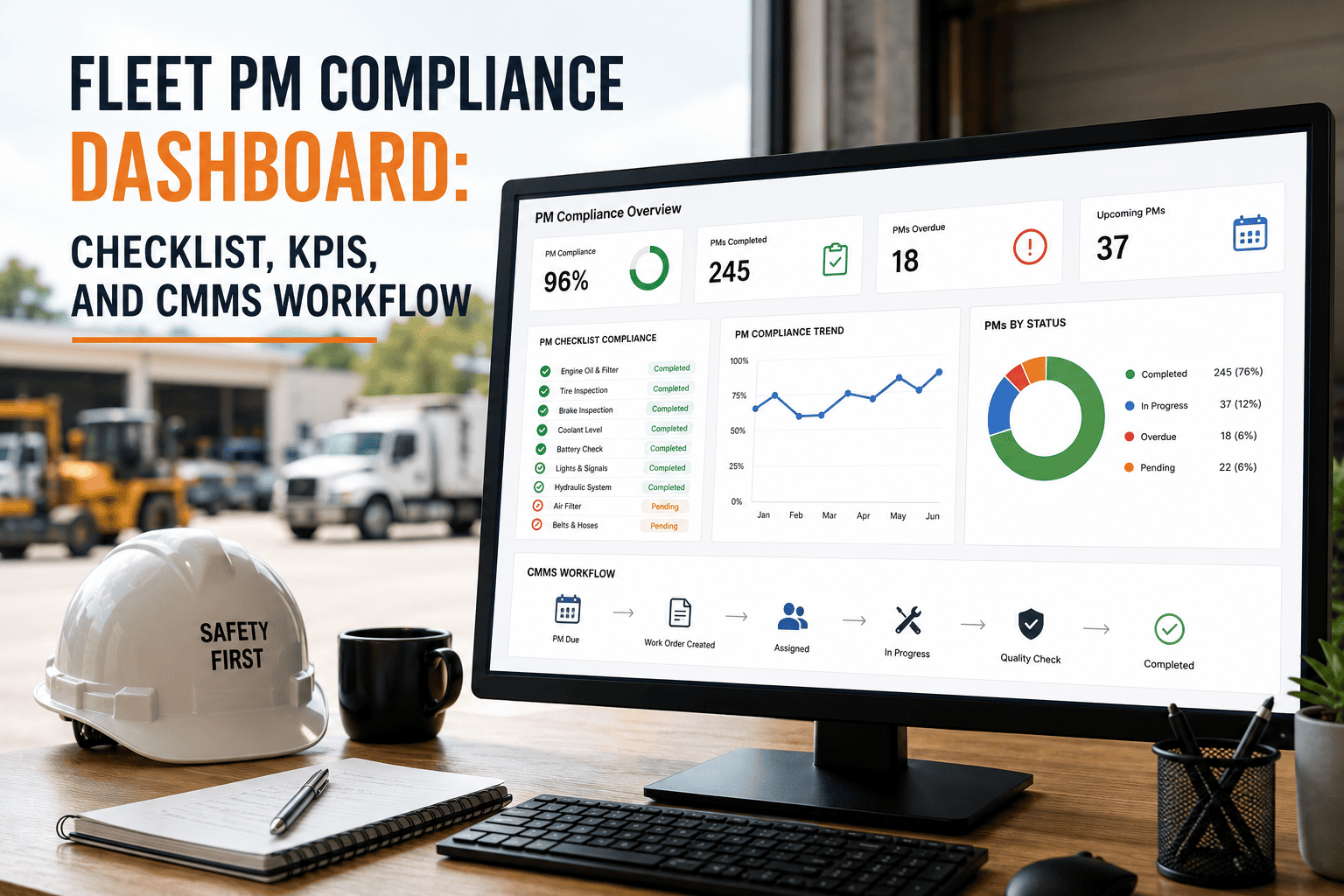
Excessive engine idling is one of the most overlooked sources of fuel waste and premature engine wear in fleet operations. A diesel engine idling for one hour burns roughly a gallon of fuel while producing zero productive output — and at scale, that cost compounds fast. This page gives fleet maintenance managers a structured idling reduction checklist, the KPIs that actually matter, and a CMMS workflow that automates idle tracking, work order creation, and driver accountability. Whether you manage 20 vehicles or 2,000, reducing idle time is one of the highest-ROI maintenance strategies available — no capital expenditure required. Sign up free on OxMaint to start tracking idle KPIs and automating your fleet maintenance workflow today, or book a demo with our fleet specialists.
Cut Idle Time. Cut Costs. Automate With OxMaint.
OxMaint lets fleet teams track idle KPIs, trigger PM work orders based on engine hours, and hold drivers accountable — all from one CMMS dashboard built for real fleet operations.
Why Idling Reduction Is a Maintenance Priority
Most fleet managers treat idling as a fuel problem. It is — but it is also a maintenance problem. Every unnecessary idle hour accelerates engine wear, clogs DPF filters, degrades oil, and triggers emissions system faults that generate costly repair events. The maintenance team pays for idling long after the fuel bill is processed.
1 gal
Fuel burned per hour of diesel idle
800+
Extra engine hours per year from 2hr daily idle
3x
Faster DPF clogging rate from low-load idling
$2,800
Avg annual idle fuel cost per vehicle at $4/gal
Idling Reduction Pre-Drive Checklist
This checklist is designed for driver pre-trip use and fleet supervisor audits. It covers the human behaviors, vehicle conditions, and environmental factors that drive excessive idling in commercial fleets.
Driver Behavior Checks
Engine Warm-Up Time Compliance
Modern diesel engines require no more than 3–5 minutes of warm-up in most ambient temperatures. Drivers warming up for 20–30 minutes is a habit-driven fuel drain. Document your fleet's engine warm-up policy and verify compliance during pre-trip inspections.
Cab Comfort vs. Engine-On Practice
Drivers idling for HVAC comfort at rest stops and loading docks account for a significant portion of fleet idle hours. Verify that drivers are using APU (Auxiliary Power Unit) or shore power where available, and that idle shutdown systems are armed and functional.
Loading Dock Idle Protocol Adherence
Loading and unloading dwell time is the single largest source of idle hours in delivery fleets. Check that drivers follow dock idle-off procedures: engine off within 5 minutes of stopping at a dock, with keys documented in dispatch logs.
Traffic Queue Idle Shutdown
Drivers sitting in known traffic queues for more than 10 minutes should shut down and restart — a practice that saves fuel with no measurable starter wear in modern commercial vehicles. Verify this behavior is covered in driver training and reinforced via telematics alerts.
Vehicle System Checks
Automatic Engine Idle Shutdown System
Verify the idle shutdown timer is enabled, set to the correct duration (typically 5–10 minutes depending on jurisdiction), and that override functions are not being used habitually. Log shutdown system status in your CMMS asset record for each vehicle.
Idle Management Module Calibration
Vehicles with factory or aftermarket idle management modules (including those from Kenworth, Peterbilt, and Freightliner) should be checked for correct threshold settings. Miscalibrated modules allow idle bypass, negating the system's entire purpose.
APU Fuel, Oil, and Belt Condition
APUs eliminate main engine idling for sleeper cab HVAC and power needs — but only if they are operational. Check APU fuel level, oil condition, and belt integrity at every scheduled PM. A non-functional APU becomes a direct driver of main engine idle hours.
Telematics Idle Reporting Configuration
Confirm that your telematics system is configured to flag idle events above your defined threshold and transmit them to your fleet management platform. In OxMaint, these events can trigger automated work order review or driver scorecards without manual intervention.
DPF and EGR Condition in High-Idle Vehicles
Low-speed idling produces incomplete combustion that accelerates DPF soot loading and EGR deposit buildup. For vehicles with high historical idle ratios, schedule DPF regen force cycles and EGR cleaning intervals more aggressively than standard PM schedules call for.
Operational Environment Checks
Cold Climate Idle Policy Definition
Cold-weather operations legitimately require longer warm-up and idle periods for fuel gelling, hydraulic system warm-up, and windshield clearing. Define clear cold-start protocols for ambient temperatures below 20°F and document these as exceptions in your idle KPI reporting to avoid skewed data.
Regulatory Idle Restriction Compliance
Many urban areas (including California, New York, Texas metro areas) restrict commercial vehicle idling to 5 minutes or less. Verify your fleet policy meets the most restrictive regulation in your operating zone — non-compliance results in fines that exceed the cost of proper idle management systems.
Depot Shore Power Availability Review
Verify that shore power hookups at your depot are functional, accessible, and actually used by drivers during overnight or extended stops. Shore power eliminates idle entirely for parked vehicles — document which vehicles use shore power and which rely on APU or main engine idle in your CMMS.
Idling KPIs That Fleet Managers Should Track
Raw idle hours are meaningless without context. These are the KPIs that translate idle data into actionable maintenance and operational decisions.
Idle Ratio (%)
Total idle hours divided by total engine hours. Industry benchmark for over-the-road fleets is under 20%. Delivery and urban fleets typically run 25–35%. Anything above 40% signals a systemic behavior or mechanical issue requiring investigation.
Target: Under 20% OTR / Under 35% Urban
Idle Fuel Cost Per Vehicle
Monthly idle hours multiplied by fuel burn rate and fuel price. Track at individual vehicle level to identify outliers. Vehicles with idle fuel cost more than 15% of total fuel spend are candidates for APU installation or behavior intervention.
Target: Under 10% of total fuel spend per vehicle
Equivalent Mileage Wear
One hour of idle adds roughly 25–33 miles of engine wear depending on load and temperature. Use this conversion to adjust PM trigger mileage intervals for high-idle vehicles — a 100,000-mile PM schedule on a vehicle with 500 idle hours/year is effectively a 112,500-mile schedule.
Formula: (Idle Hours x 30) + Odometer Miles
DPF Regen Frequency
Track passive and active DPF regeneration events per 1,000 miles. Elevated regen frequency is one of the earliest indicators of chronic low-load idling damage to the aftertreatment system. Rising regen rates without mileage increase signal idle-driven soot loading.
Benchmark: Active regen under 1 per 500 miles
Oil Degradation Rate
High-idle vehicles accumulate engine hours faster relative to miles driven — meaning their oil degrades on an hour basis, not a mileage basis. Track oil analysis results against idle hour history to calibrate oil change intervals for high-idle units. Extending intervals on idle-heavy vehicles causes accelerated engine wear.
Adjust oil change trigger: hours OR miles, whichever first
Driver Idle Compliance Rate
Percentage of idle events that fall within your defined policy limits (e.g., under 10 minutes at a single stop). Track per driver and per route. Persistent non-compliance on a specific route indicates a dock wait time problem, not a driver behavior problem — two very different solutions.
Target: 85% of events under policy threshold
CMMS Workflow for Idle Reduction Management
Idle data is only valuable if it flows into maintenance decisions. This is the CMMS workflow that connects telematics idle data to PM scheduling, work orders, and asset health scoring in OxMaint.
01
Connect Telematics to OxMaint Asset Registry
Map each vehicle's telematics device to its OxMaint asset record via VIN. Configure idle event thresholds — typically 5 or 10 minutes — so that events above the threshold are flagged and recorded against the vehicle's maintenance history automatically.
02
Set Engine-Hour-Based PM Triggers
Replace mileage-only PM triggers with dual-mode triggers: miles OR engine hours, whichever is reached first. For a vehicle averaging 2 idle hours per day, engine hours will often trigger PM before mileage thresholds — this is correct and prevents under-maintenance of high-idle assets.
03
Automate DPF Monitoring Work Orders
Configure OxMaint to generate a DPF inspection work order when a vehicle's active regen frequency exceeds your baseline. Link the work order to the vehicle's idle ratio KPI so technicians have context before opening the hood — idle-driven DPF problems are handled differently than mileage-driven ones.
04
Build Monthly Idle Compliance Reports
Use OxMaint's reporting module to generate monthly per-vehicle and per-driver idle compliance summaries. Share these with operations managers and HR — idle reduction is only sustained when drivers see their numbers and understand the maintenance cost implications of non-compliance.
05
Track Cost Avoidance as an Outcome Metric
In OxMaint's asset cost module, tag PM work orders that were directly triggered by idle-related faults (DPF cleaning, oil changes, EGR service). Aggregate these costs monthly and compare against pre-program baseline. This is how you prove ROI to fleet leadership and secure budget for APU investments or telematics upgrades.
Idle Reduction Technology Comparison
Multiple technology options exist for fleet idle reduction. The right choice depends on vehicle class, duty cycle, climate, and budget. This comparison gives fleet managers a structured framework for technology selection.
| Technology |
Best For |
Idle Reduction |
Approx. Cost |
Maintenance Impact |
| Automatic Engine Shutdown |
All diesel vehicles |
30–50% |
$200–$500 |
Minimal — software-based |
| Diesel APU |
Sleeper cab OTR trucks |
85–95% |
$8,000–$12,000 |
Requires separate PM schedule |
| Battery-Electric APU |
Regional routes, mild climates |
90–100% |
$5,000–$9,000 |
Battery health monitoring required |
| Fuel-Fired Heater |
Cold-climate cab heat |
60–80% (heating) |
$1,500–$3,000 |
Annual combustion system service |
| Shore Power Systems |
Depot-based fleets |
100% at depot |
$1,000–$3,000/bay |
Outlet and cord inspection per PM |
| Telematics Idle Alerting |
All fleets, driver coaching |
15–30% |
$25–$60/mo/vehicle |
Drives behavior-based PM improvements |
Track Idle KPIs and Automate PM Triggers in OxMaint
Connect your telematics data to OxMaint's CMMS, set engine-hour-based PM triggers, and generate idle compliance reports that actually change driver behavior. Fleets using OxMaint reduce idle-related maintenance costs by an average of 22% in the first year.
Frequently Asked Questions
Does idling really damage a diesel engine faster than driving?
Yes. Low-load idling produces incomplete combustion, which causes fuel dilution of engine oil, DPF soot loading, and EGR deposit buildup — none of which occur at the same rate during normal driving loads. High-idle fleets consistently show elevated DPF cleaning costs and shorter oil analysis intervals in fleet maintenance data.
Track idle-driven maintenance costs in OxMaint.
How do I set the right idle threshold for KPI reporting?
Start with 10 minutes as a universal threshold for urban and regional fleets. For OTR sleeper operations, 5 minutes is more aggressive but achievable with APU support. Review your first month of data before finalizing thresholds — your goal is a benchmark that captures genuine non-compliance without flagging legitimate operational idle events.
Book a demo to configure idle KPIs in OxMaint.
Can OxMaint automatically create work orders based on idle events?
Yes. OxMaint connects to telematics platforms via API and can trigger inspection work orders when idle ratios exceed defined thresholds, or when DPF regen frequency rises above baseline. This replaces manual monitoring and ensures high-idle vehicles receive timely maintenance intervention.
Sign up to configure automated idle-based work orders.
What is the fastest way to reduce fleet idle time without buying hardware?
Enable automatic engine shutdown timers on all vehicles, share monthly idle reports with drivers, and add idle compliance to driver scorecards. Behavioral interventions alone reduce idle time by 15–30% within 90 days in most fleets — at zero hardware cost. OxMaint's reporting module makes this data visible in minutes.
How do I adjust PM intervals for high-idle vehicles?
Use a dual-trigger approach: PM fires at the earlier of your mileage threshold OR your engine-hour threshold. For a vehicle idling 2 hours per day, add 30 equivalent miles per idle hour to the odometer reading when calculating PM timing. OxMaint supports both mileage and engine-hour triggers on a per-asset basis.
Book a demo to set up hour-based PM triggers.
Start Your Idle Reduction Program in OxMaint Today
Build a complete idling reduction workflow — checklists, KPI dashboards, automated work orders, and driver compliance reports — inside OxMaint's CMMS. No spreadsheets. No manual data entry. Just real results from your fleet data.