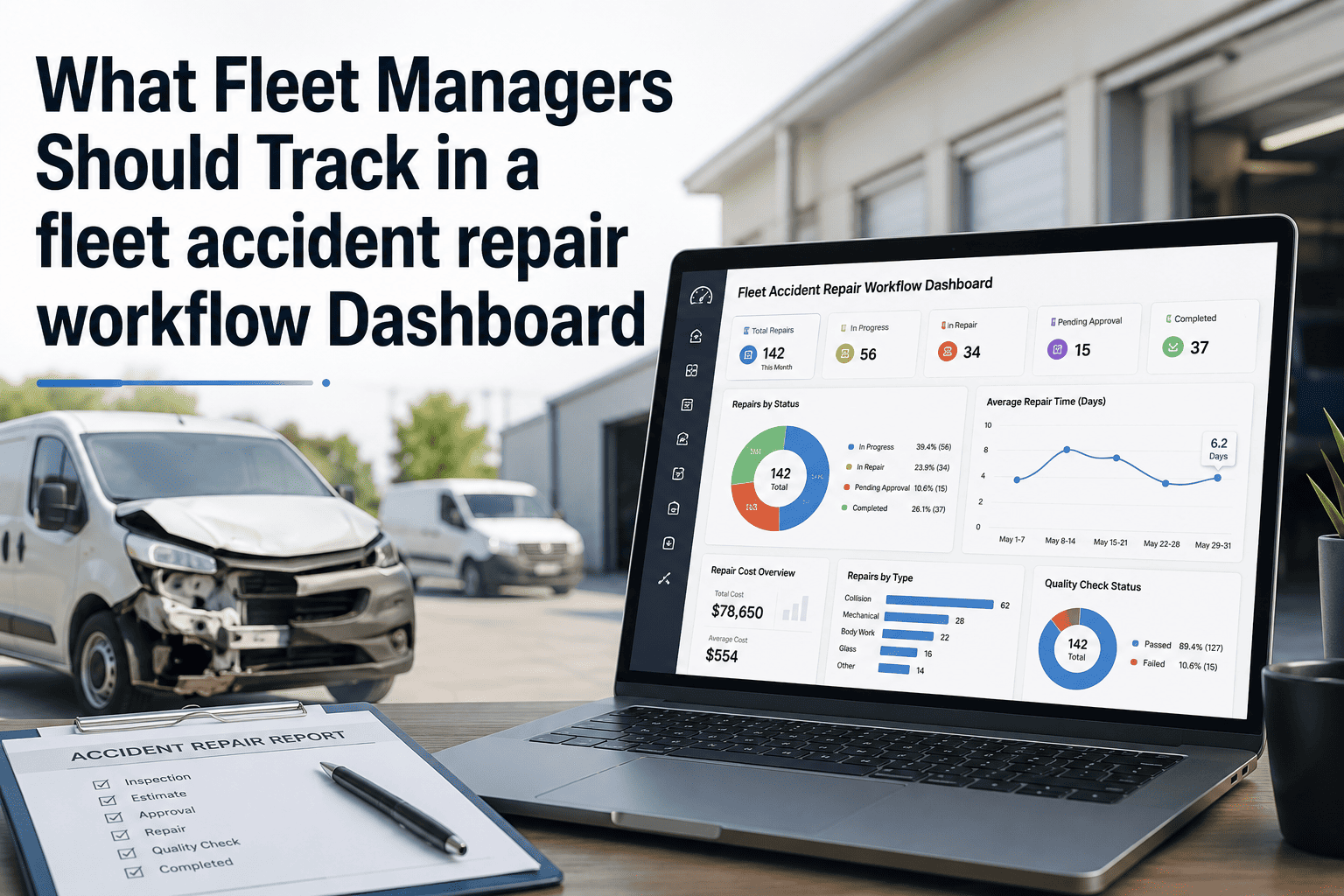
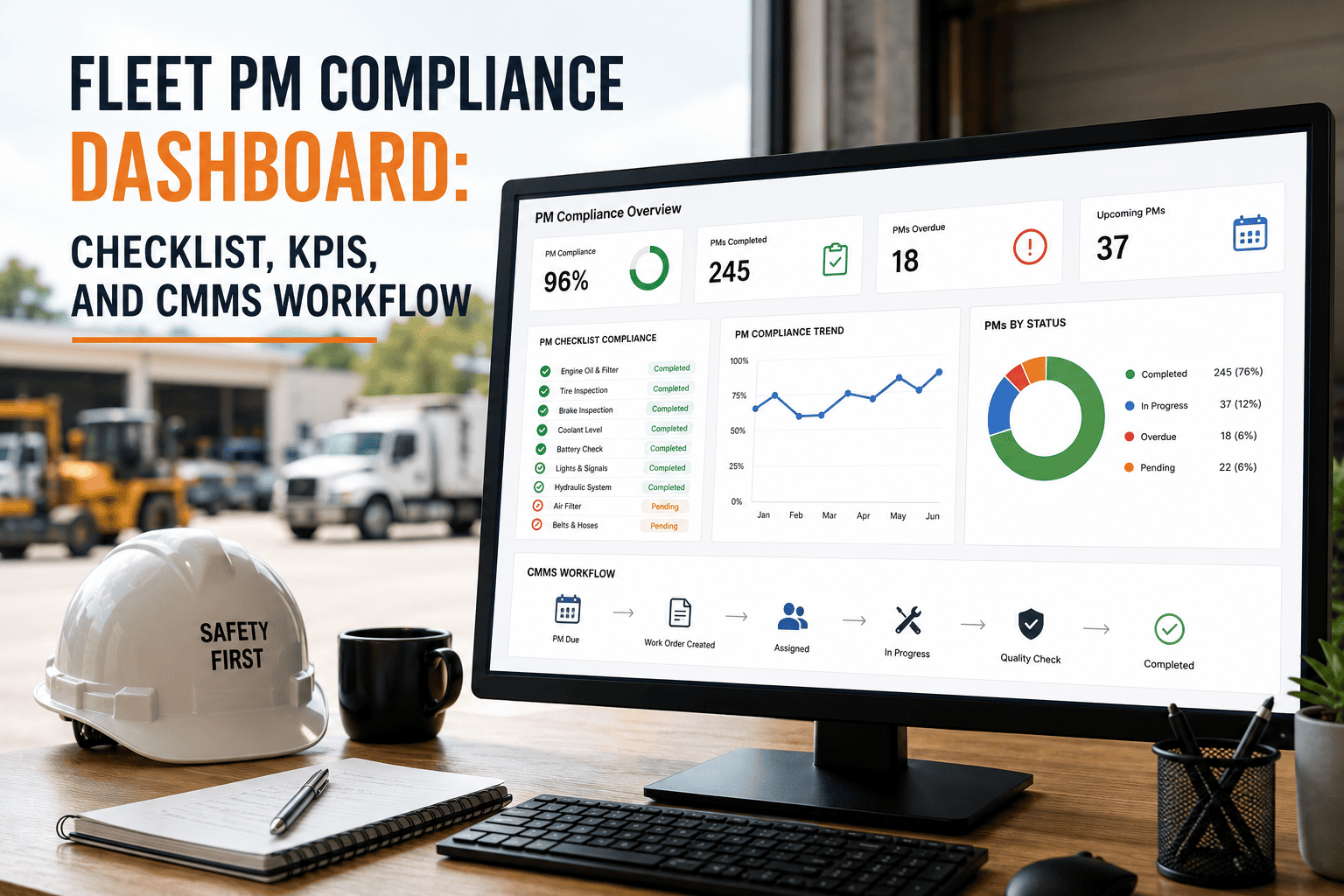
A fleet manager who only reviews a collision after the repair invoice lands has already lost control of the two things that determine the final cost — how fast the claim was opened and how well the damage was documented at the scene. Fleet accident repair is a systematic workflow that runs from the first minute after impact through subrogation recovery, and every step skipped adds directly to downtime and dollars. This checklist gives your fleet safety directors, dispatchers, and claims coordinators a complete step-by-step framework covering scene response, claim intake, repair execution, and close-out — structured so every incident is traceable in your OxMaint compliance platform from the roadside to the final signed invoice.
Fleet Accident Repair Workflow Checklist: Scene to Sign-Off Guide
A category-by-category checklist covering scene response, claim intake, repair shop assignment, teardown and estimate review, quality sign-off, and subrogation recovery — built for fleets where a slow first response quietly inflates every claim that follows.
Scene Response & Safety
The first fifteen minutes at the scene are about safety and evidence, not fault. Every driver should be trained to follow the same sequence regardless of how minor the collision appears.
Claim Intake & Insurer Notification
Insurance carriers process structured, fact-only information faster than a delayed or speculative report, and the two-hour target exists because every downstream step waits on this one.
A claim that lives across a phone call, a text thread, and a paper folder is a claim that drifts. OxMaint keeps every photo, estimate, and sign-off attached to the vehicle record from the first incident report to the final invoice, so nothing gets lost between the roadside and the shop.
Repair Shop Assignment & Teardown
Where the vehicle goes and how fast the teardown happens determines whether hidden damage surfaces as an early supplement or a late one that stalls the entire repair timeline.
Repair Execution & Cost Tracking
A repair that runs without active tracking is a repair that drifts past its committed timeline, and every extra day is downtime cost the fleet absorbs directly.
Quality Check & Sign-Off
The vehicle should never be signed back into service on trust alone. A short quality check at pickup catches issues that are far harder and costlier to fix once the vehicle is back on the road.
Subrogation & Close-Out Recordkeeping
Closing the repair file is not the end of the workflow. Recoverable cost and recurring incident patterns are both left on the table if this final category gets skipped.
Five Metrics That Reveal a Broken Claims Process
| Metric | How to Measure | Target | Frequency |
|---|---|---|---|
| Claim Open Time | Incident time to insurer notification | Under 2 hours | Per incident |
| Repair Cycle Time | Vehicle drop-off to return-to-service date | Under 9 days average | Monthly |
| Supplement Rate | Claims with late supplements / total claims | Below 15% | Monthly |
| Subrogation Recovery | Recovered cost / eligible third-party cost | As close to 100% as state law allows | Quarterly |
| Rental Cost per Incident | Total rental spend / number of claims | Trending down year over year | Quarterly |
Frequently Asked Questions
How fast should a fleet open an insurance claim after an accident?
Best-practice fleets target claim submission within two hours of the incident, since insurers process structured information faster and delays compound at every later step. OxMaint logs the incident timestamp automatically so this window is easy to track.
Why does teardown timing matter so much to the repair cost?
A teardown completed within 24 to 48 hours surfaces hidden damage as an early supplement instead of a late one, which keeps the adjuster's approval moving and prevents the repair from stalling mid-way.
Should a fleet always pursue subrogation after an at-fault third-party accident?
Yes where state regulation permits it — most insurers only pursue a small fraction of recoverable comparative-negligence claims, leaving real money unclaimed unless the fleet actively tracks eligible cases. Ask about subrogation tracking in a live walkthrough.
What documentation actually speeds up an accident claim?
Wide shots, close-ups of each damaged panel, an adjacent undamaged panel for context, witness details, and the police report number, all captured at the scene rather than reconstructed later from memory.
How does a CMMS improve accident repair tracking compared to email and phone calls?
A CMMS keeps every photo, estimate, supplement, and technician sign-off attached to one vehicle record with timestamps, replacing the scattered emails and phone threads where details usually get lost. See how OxMaint structures an accident record end to end.
Every Incident Logged. Every Repair Tracked. Every Dollar Recovered.
OxMaint turns this checklist into a structured digital record — incident capture, shop assignment, supplement tracking, and sign-off — so your fleet gets vehicles back on the road faster and never leaves recoverable cost on the table.