Last-mile delivery is the most operationally intensive segment of commercial logistics — and the most expensive, consuming 53% of total supply chain cost. Urban delivery vehicles completing 80–120 stops per day accumulate brake wear at 4–6× the rate of highway vehicles covering the same mileage, yet most fleets apply standard PM intervals designed for long-haul duty cycles. The result is predictable: 35–45% higher unplanned breakdown rates, mid-route failures that cascade into 40+ missed deliveries, and SLA penalties that compound daily. Every dollar saved on a deferred oil change gets spent three times over on emergency roadside recovery, cargo rescheduling, and driver overtime. OxMaint adapts PM schedules to stop-frequency duty cycles — so every last-mile vehicle is maintained against the operating reality it actually faces, not the highway template it inherited.
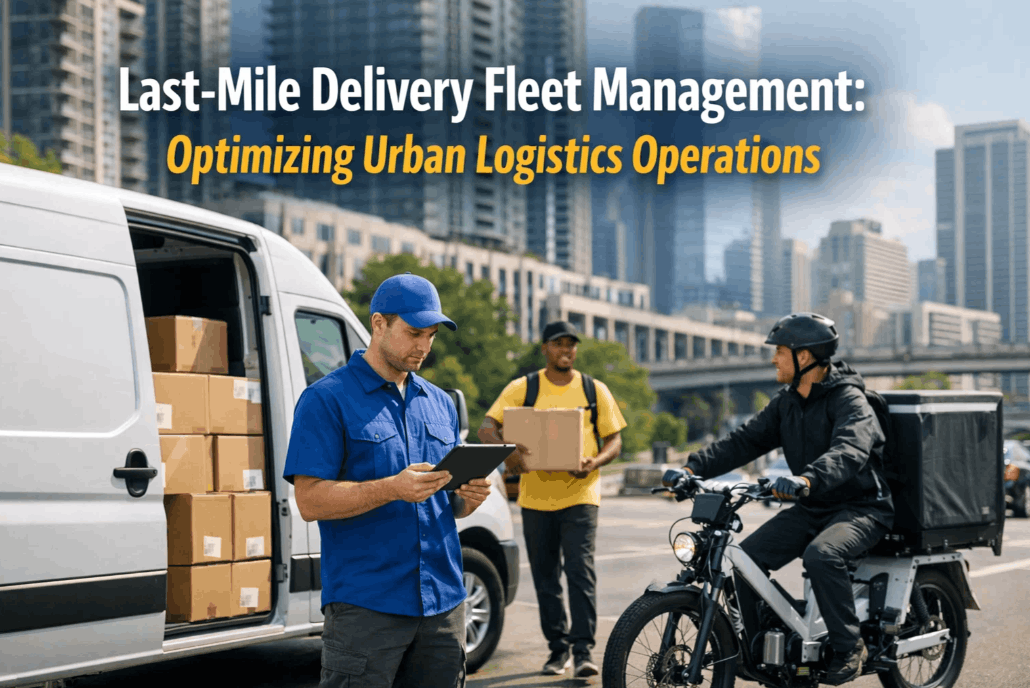
Last-Mile Delivery Fleet Management: Optimizing Urban Logistics Operations
How last-mile delivery fleets reduce cost-per-stop, minimize urban breakdown exposure, and scale efficiently — through route density planning, vehicle right-sizing, driver productivity systems, micro-depot strategies, and CMMS maintenance programs calibrated for stop-and-go duty cycles.
Why Last-Mile Fleet Management Is a Different Discipline
Last-mile delivery fleet management shares almost nothing operationally with long-haul or regional distribution fleet management — despite both being categorized as "commercial fleet operations." The vehicles are different, the duty cycle is different, the driver management challenges are different, the maintenance requirements are different, and the cost drivers are different. A fleet director who transfers long-haul management practices to a last-mile urban operation without adaptation will systematically underperform on every metric — higher vehicle costs from incorrect PM intervals, higher driver turnover from poor productivity management, higher cost-per-delivery from suboptimal route density, and higher SLA failure rates from vehicle downtime occurring mid-route rather than at depot. The disciplines that separate high-performing last-mile operations from average ones are specific and learnable — and they are all data-driven.
Stop-and-Go Maintenance: Recalibrating PM for Urban Duty Cycles
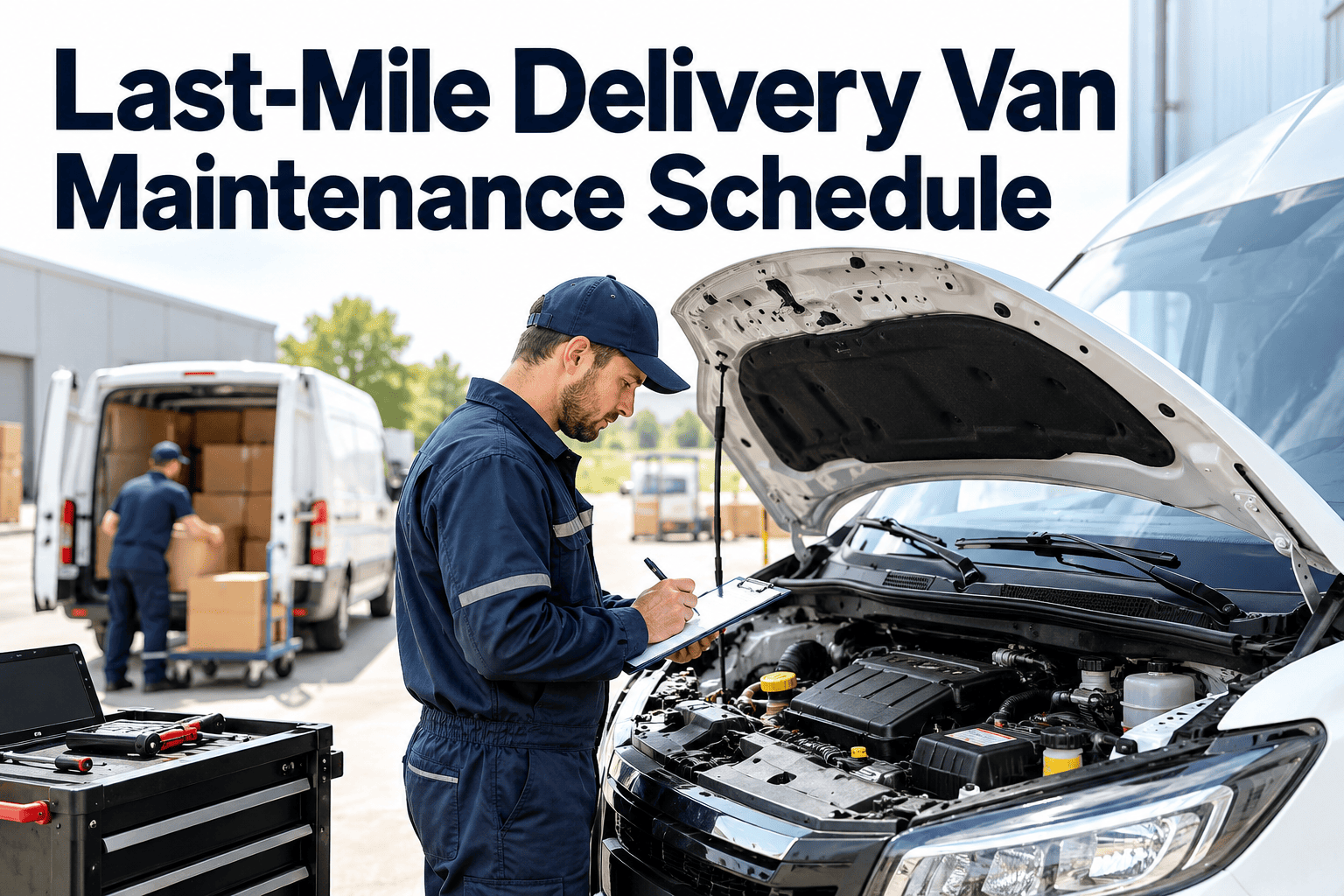
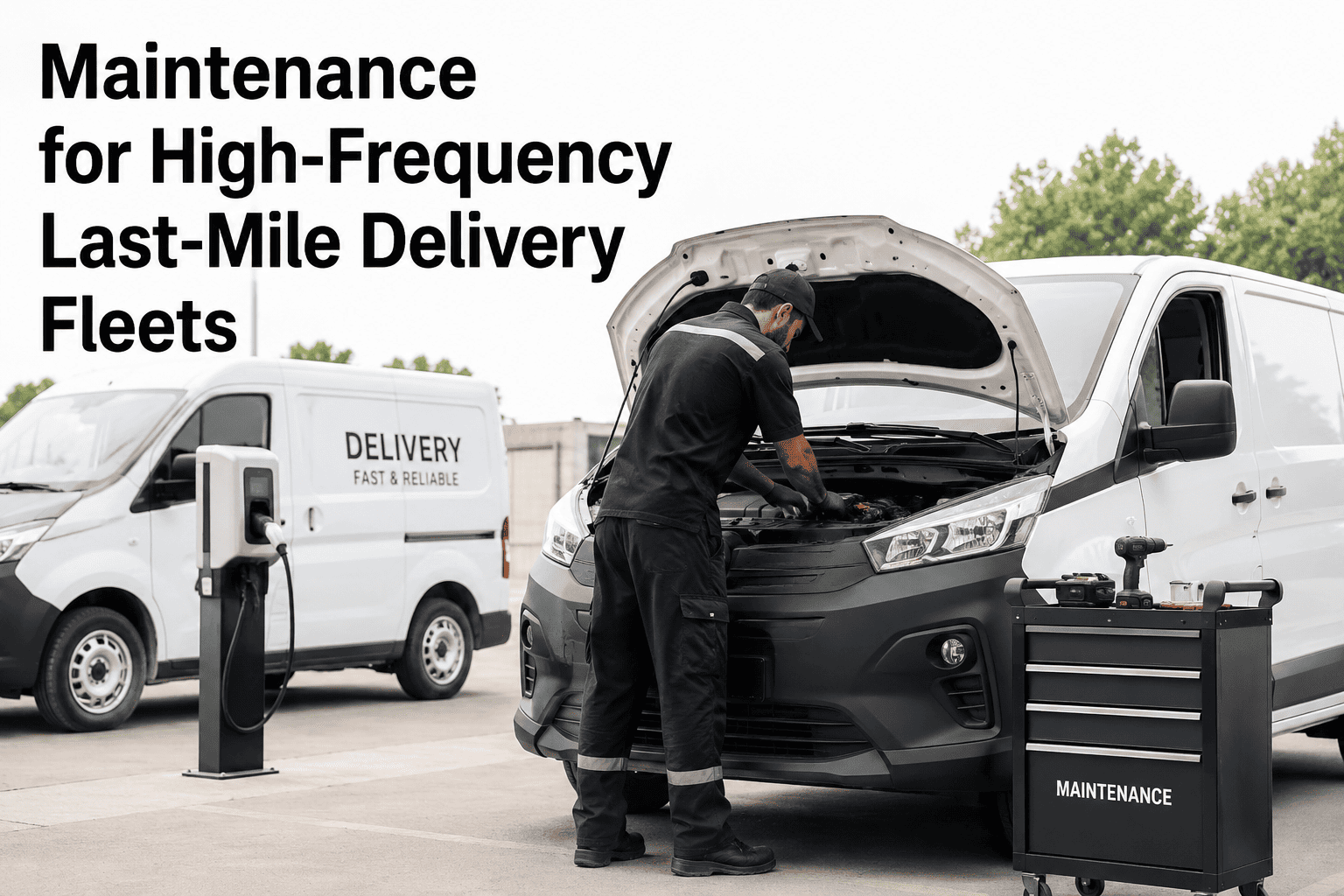
The single most impactful change a last-mile fleet operator can make to their maintenance program is switching brake and transmission PM triggers from mileage-only to stop-count-adjusted intervals. A delivery van completing 100 stops per day in urban traffic accumulates the equivalent brake wear of a highway vehicle driving 4× the mileage — because each stop is a full friction braking event at low speed, generating heat in the rotor and pad that mileage-based intervals are not calibrated to capture. The result: brake pads replaced at 25,000-mile intervals on a last-mile vehicle that needs them at 12,000–15,000 miles, generating the roadside failure risk that mileage-based programs systematically miss. OxMaint's stop-count-adjusted PM scheduling calculates wear-equivalent mileage from telematics stop data — so your last-mile vehicles get the maintenance they actually need, not the interval their mileage suggests.
Route Density Planning: The Primary Cost-Per-Stop Lever
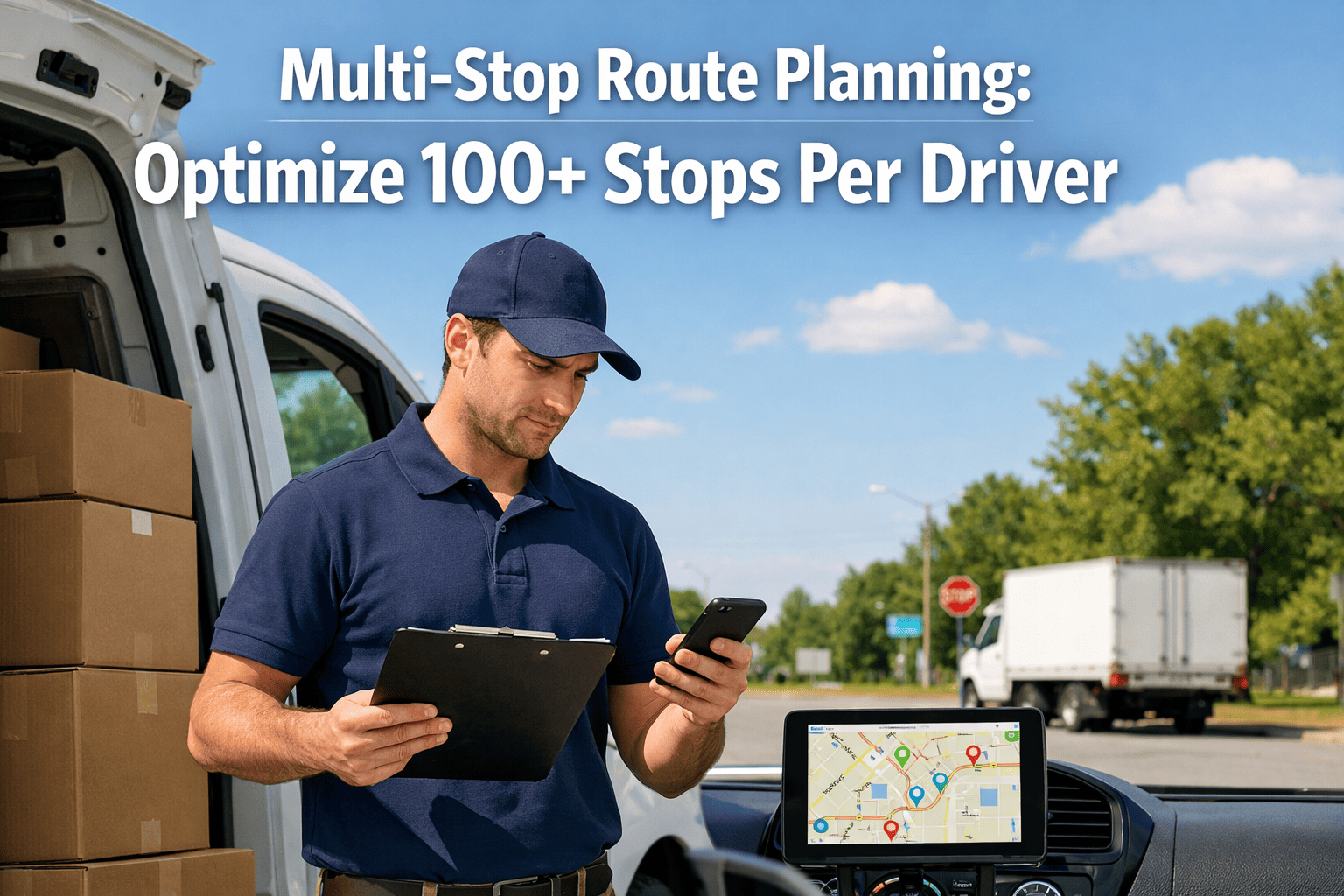
Route density — the number of delivery stops achievable within a defined geographic area per vehicle per day — is the single most powerful cost efficiency lever in last-mile fleet operations. A route optimized for density reduces the deadhead miles between stops, compresses total route distance for the same stop count, and allows the same number of deliveries with fewer vehicles. The opposite — low-density routing where vehicles traverse the same neighborhoods multiple times on different routes — inflates cost-per-stop without increasing throughput. In practice, the difference between an optimized dense route and an unoptimized overlapping route for a 25-stop urban territory is 18–24 miles of additional driving — generating $28–$38 in added fuel and wear cost per vehicle per day. At fleet scale across 50 vehicles, that is $700,000–$950,000 annually in recoverable route inefficiency.
Vehicle Right-Sizing: Matching Asset to Route
Last-mile delivery fleets are chronically over-vehicled for their actual urban requirements. The default procurement bias toward larger cargo vans — chosen for maximum payload capacity — ignores the operational reality that urban delivery density, parking constraints, and stop-frequency economics often favor smaller vehicles. A Class 2 cargo van that fits in a standard parking space, makes turns without repositioning, and navigates building loading bays without driver maneuvering overhead delivers the same stop count as a Class 3 vehicle on dense urban routes — at 18–25% lower fuel cost, lower insurance premium, and lower acquisition cost. Right-sizing analysis using GPS utilization and cargo fill-rate data consistently identifies 20–30% of urban delivery fleets operating oversized vehicles on routes where a smaller vehicle class would deliver the same throughput at lower cost per stop.
Micro-Depot Strategy: Reducing Urban Congestion Cost
The micro-depot model — small urban consolidation points positioned within 3–8 miles of high-density delivery zones — addresses the most expensive cost driver in urban last-mile logistics: the dead-mileage penalty of dispatching from a peripheral depot into a dense city center. A vehicle departing from a suburban distribution center to a downtown delivery zone may drive 12–18 miles before making its first stop, then 12–18 miles back — consuming 25–35% of driver shift time and fuel budget in non-revenue transit. A micro-depot positioned within 2–3 miles of the delivery zone eliminates that transit overhead, enabling each vehicle to spend 85–90% of shift time on productive delivery stops rather than 65–70%. The fleet-wide impact is significant: the same number of drivers and vehicles achieves 25–35% higher stop throughput simply from depot proximity.
We were burning 40 minutes per driver per day just getting in and out of the city from our main depot. After opening two micro-depots and switching to OxMaint for stop-based PM scheduling, our cost per delivery dropped from $7.20 to $4.40 in six months. The maintenance savings alone paid for the micro-depot lease.
Driver Productivity in Last-Mile Operations
Driver productivity in last-mile delivery is measured differently than in long-haul operations. The relevant metric is stops per hour — not miles per hour. A driver completing 14 stops per hour on a dense urban route is performing at the top of industry benchmarks; a driver completing 8 stops per hour on the same route is generating a 43% higher cost-per-delivery for every hour they operate. The productivity gap between top-quartile and bottom-quartile last-mile drivers on equivalent routes typically runs 35–45% in stops per hour — making driver productivity management one of the highest-leverage cost levers available to last-mile fleet operators. The variables that drive the gap are: stop sequence efficiency (whether the driver takes the optimized path or their own), dwell time at each stop, vehicle loading organization, and familiarity with the delivery zone.
Adapt Your Maintenance Program to Your Actual Duty Cycle
OxMaint calibrates PM intervals to stop-count and urban duty cycles — not highway templates. Free to start, no hardware required.
CMMS Maintenance for Last-Mile Fleets: What Needs to Change
A CMMS deployed on a last-mile fleet without configuration for urban duty cycles will generate PM work orders at the wrong intervals, flag vehicles for service that don't need it, and miss vehicles that do — because its trigger logic reflects highway-duty assumptions. Correct CMMS configuration for a last-mile fleet requires four changes from the standard setup: stop-count as a PM trigger dimension alongside mileage, shorter brake and transmission service intervals calibrated to stop frequency, a high-priority downtime protocol that routes breakdowns to the nearest qualified repair facility rather than back to depot, and a vehicle-by-vehicle cost-per-stop analytics layer that identifies outlier vehicles consuming disproportionate maintenance cost relative to their delivery output. OxMaint's CMMS configuration for last-mile fleets includes all four adaptations — ready to deploy against your vehicle list from day one, without custom development.
Key Performance Metrics for Last-Mile Fleet Operations
Frequently Asked Questions
Cut Your Cost Per Delivery Stop by 22%. OxMaint Makes It Measurable.
OxMaint's last-mile CMMS platform combines stop-count-adjusted PM scheduling, urban breakdown protocols, cost-per-stop analytics, and driver productivity tracking — giving delivery and logistics directors the operational data to reduce cost per stop, maximize vehicle uptime in urban routes, and scale efficiently as delivery density grows.