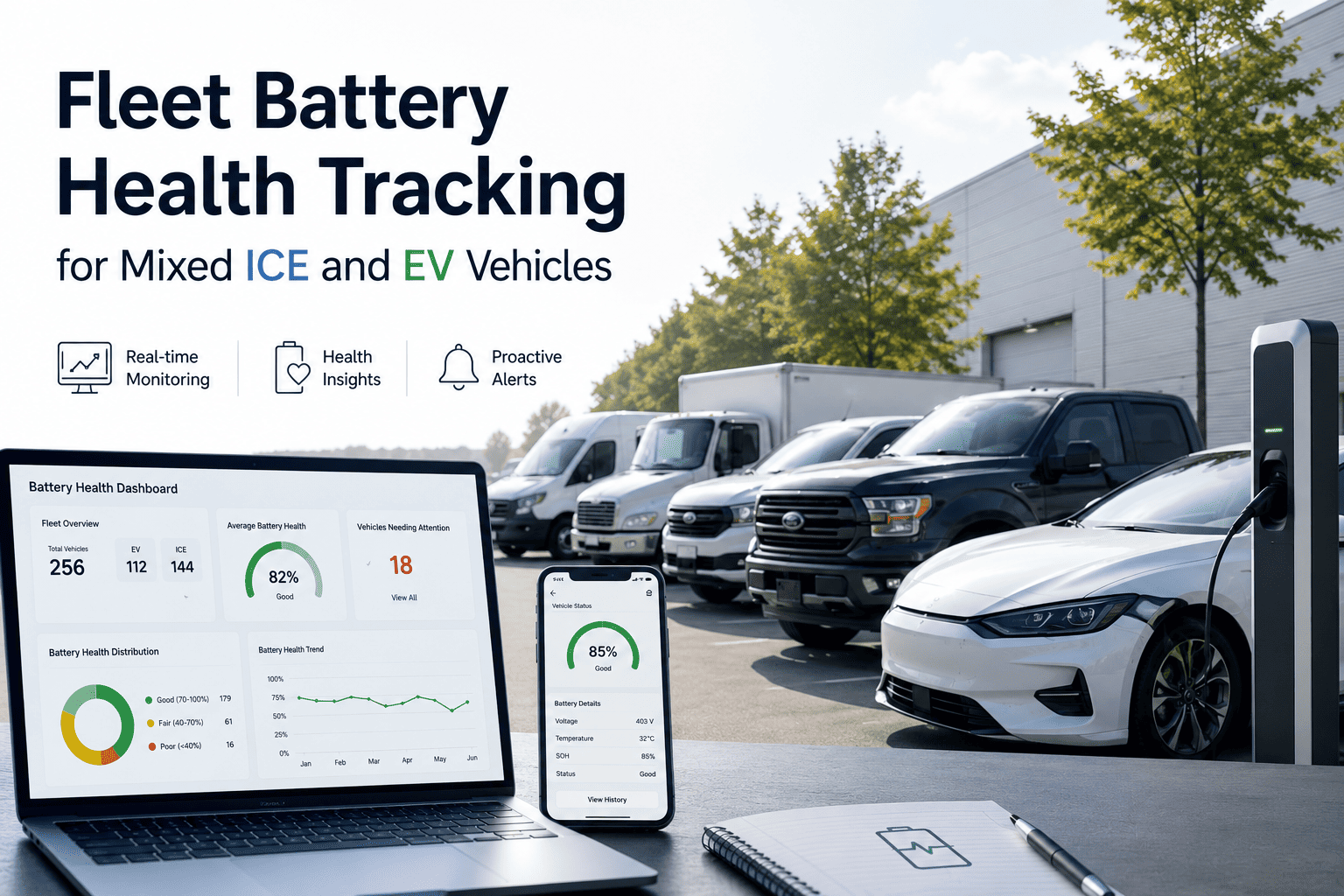
A 50-vehicle mixed fleet has two completely different maintenance languages running at once. The diesel trucks speak in oil pressure, mileage intervals, and exhaust temperature. The EVs speak in state-of-health, charge cycles, and thermal drift — and most maintenance teams are still trying to read that second language using tools built only for the first. The result is a battery problem nobody sees until a vehicle shows up at the gate with 40% less range than it had eight months ago. OxMaint's fleet battery health tracking brings ICE and EV maintenance into one workflow, where degradation is caught as a trend, not a breakdown. Start a free trial to see your mixed fleet's battery data in one place.
Battery Maintenance · Mixed Fleet · 2026
One Platform for the Batteries You Can See and the Ones You Can't
Diesel trucks and electric vehicles fail differently, age differently, and need to be inspected differently. OxMaint tracks both — engine hours on one side, state-of-health on the other — inside a single maintenance record per vehicle.
The Blind Spot
Why Mixed Fleets Lose Track of Battery Health First
ICE Vehicles
Engine hours and mileage drive every service interval
Oil analysis and exhaust readings are decades-old, well-understood signals
A failing component usually gives audible or visible warning before it strands a vehicle
EV Vehicles
Charge cycles and depth of discharge matter more than mileage
State-of-health degrades silently — there is no smell, sound, or leak to notice
A battery pack can lose 15% of usable range before a driver ever files a complaint
Most fleet software was built for one column of this table. OxMaint was built to read both — on the same dashboard, against the same vehicle record, without a second login.
The Real Cost of Waiting
What Four Years of Ignored Battery Data Actually Costs
Battery degradation is mathematical, not random. A pack losing 2% of capacity per year reaches the 80% range threshold — the point most fleets retire a battery from front-line duty — at roughly year ten. The same pack run without thermal monitoring, with frequent fast-charging above 80%, and with no state-of-health tracking hits that same threshold by year six.
Year 10
Monitored Pack
Reaches 80% threshold on schedule, with 12 to 18 months of advance replacement planning
Year 6
Unmonitored Pack
Hits the same threshold four years early, with no warning and no budget plan in place
That four-year gap costs $80,000 to $120,000 per vehicle in accelerated replacement across a 50-unit EV fleet — a cost driven entirely by missing data, not by the battery itself.
OxMaint Battery Tracking
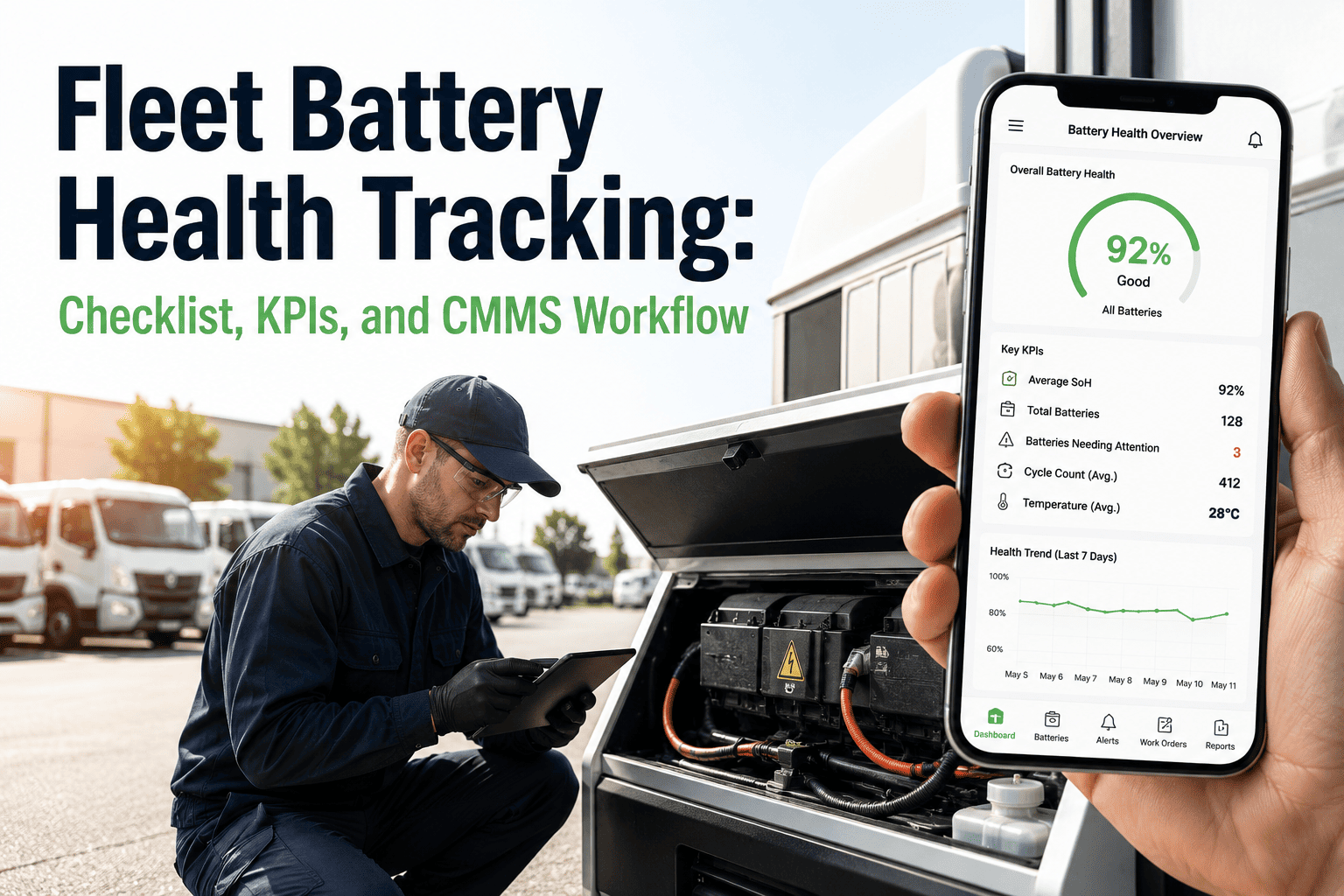
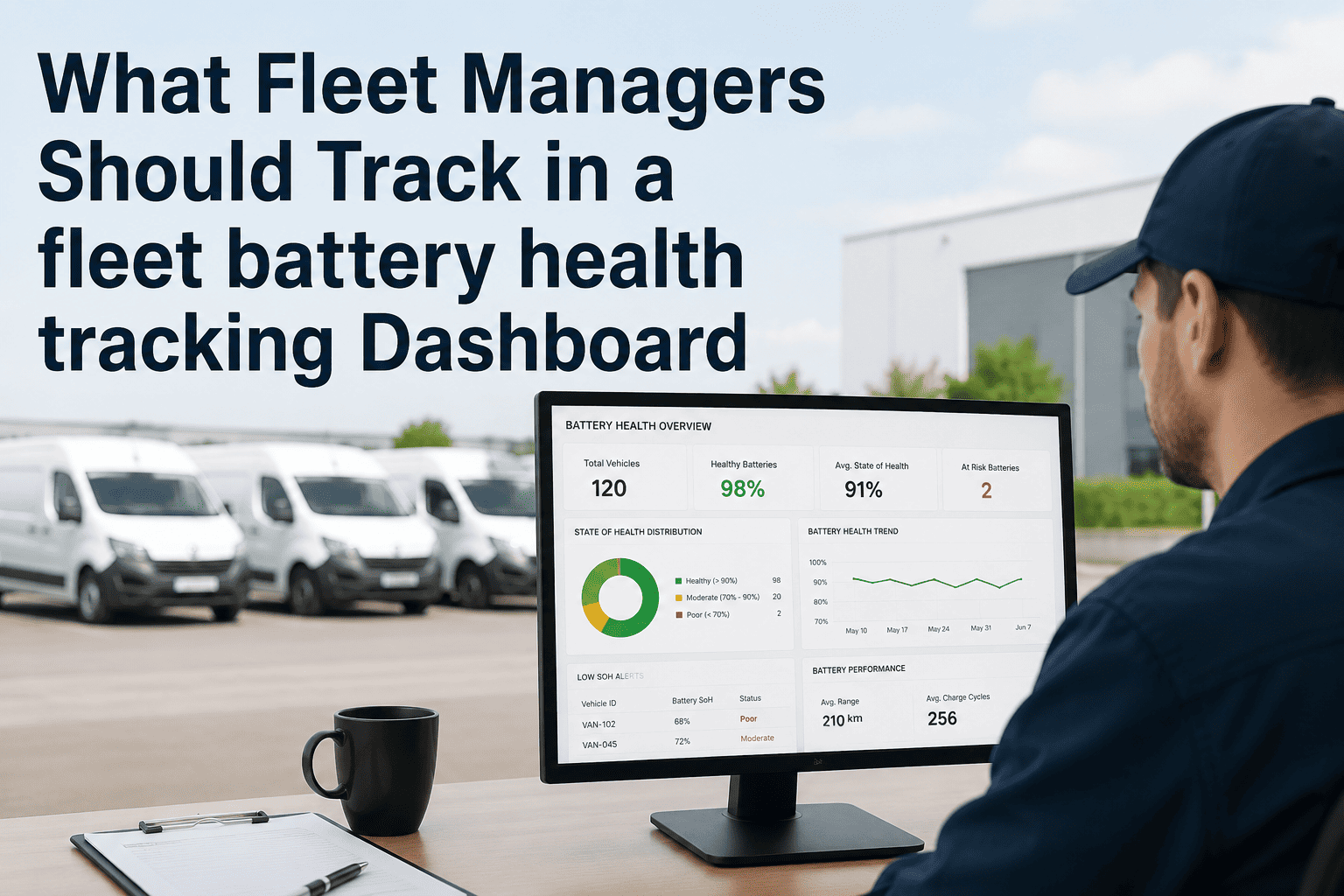
OxMaint pulls state-of-health, charge cycles, and thermal events from your EV telematics directly into the same work order system that runs your diesel PM schedules.
What OxMaint Tracks Per Vehicle
The Five Battery Metrics That Predict a Failure Before It Happens
State of Health
Trended over the full life of the pack, not just a single reading, so a slow decline shows up as a line instead of a surprise.
Charge Cycle Count
Every full and partial charge logged against the vehicle, since cycle count predicts remaining pack life more reliably than calendar age.
Thermal Events
Excessive heat during charging or operation is the single biggest accelerant of degradation, and OxMaint flags it the moment it happens.
Depth of Discharge
Repeatedly draining a battery far below recommended levels shortens its life — this metric shows which routes are doing the most damage.
Degradation Rate
The annual percentage of capacity lost, compared against fleet benchmarks, so you know which vehicles are aging normally and which are not.
One Vehicle Record
How a Diesel Truck and an EV Look Side by Side in OxMaint
AI Predictive Maintenance
From Battery Data to a Replacement Plan, Automatically
Raw battery telemetry is only useful if someone is reading it every day. OxMaint's AI layer reads it continuously, comparing each vehicle's degradation curve against fleet benchmarks and surfacing the vehicles that need attention before a driver ever notices reduced range.
01
Degradation Curve Projection
SoH trends are projected forward to estimate the exact month a battery will cross its replacement threshold, 12 to 18 months in advance.
02
Fleet Benchmark Comparison
Each vehicle's degradation rate is compared against similar vehicles in the fleet, so outliers aging faster than normal are flagged early.
03
Threshold-Triggered Work Orders
When a vehicle's state of health crosses a configured threshold, a work order is generated automatically with the relevant battery history attached.
04
Replacement Budget Forecasting
Projected replacement dates roll up into a fleet-wide forecast, giving finance teams a real budget timeline instead of a guess.
Common Questions
Battery Health Tracking — What Fleet Managers Ask
Do we need separate software for our diesel fleet and our EVs?+
No. OxMaint manages both vehicle types on one platform, with diesel PM schedules and EV battery thresholds running side by side on the same dashboard.
Start a free trial to see a mixed fleet configured.
How does OxMaint get battery data without extra hardware?+
OxMaint connects to your existing EV telematics provider through API and pulls state-of-health, charge cycle, and thermal data directly — no additional sensors or hardware installation required.
What happens when a battery crosses a health threshold?+
A work order is created automatically with the vehicle's degradation history attached, and the maintenance manager is alerted to schedule inspection or replacement before range becomes a problem.
Can OxMaint help us plan battery replacement budgets in advance?+
Yes. Degradation curves are projected forward per vehicle, rolling up into a fleet-wide replacement forecast that finance teams can use for budgeting 12 to 18 months ahead.
Book a demo to see the forecast view.
How long does it take to set up battery tracking for an existing fleet?+
Most fleets connect their telematics provider and see historical battery data populate within a single day, with threshold alerts active immediately after setup.
OxMaint · Battery Health Tracking
The Battery That Gets Tracked Today Doesn't Strand a Vehicle Next Quarter.
OxMaint gives mixed fleets one place to watch engine hours and state-of-health side by side — with AI-driven alerts that turn raw battery telemetry into a replacement plan you can budget for, instead of a breakdown you have to react to.