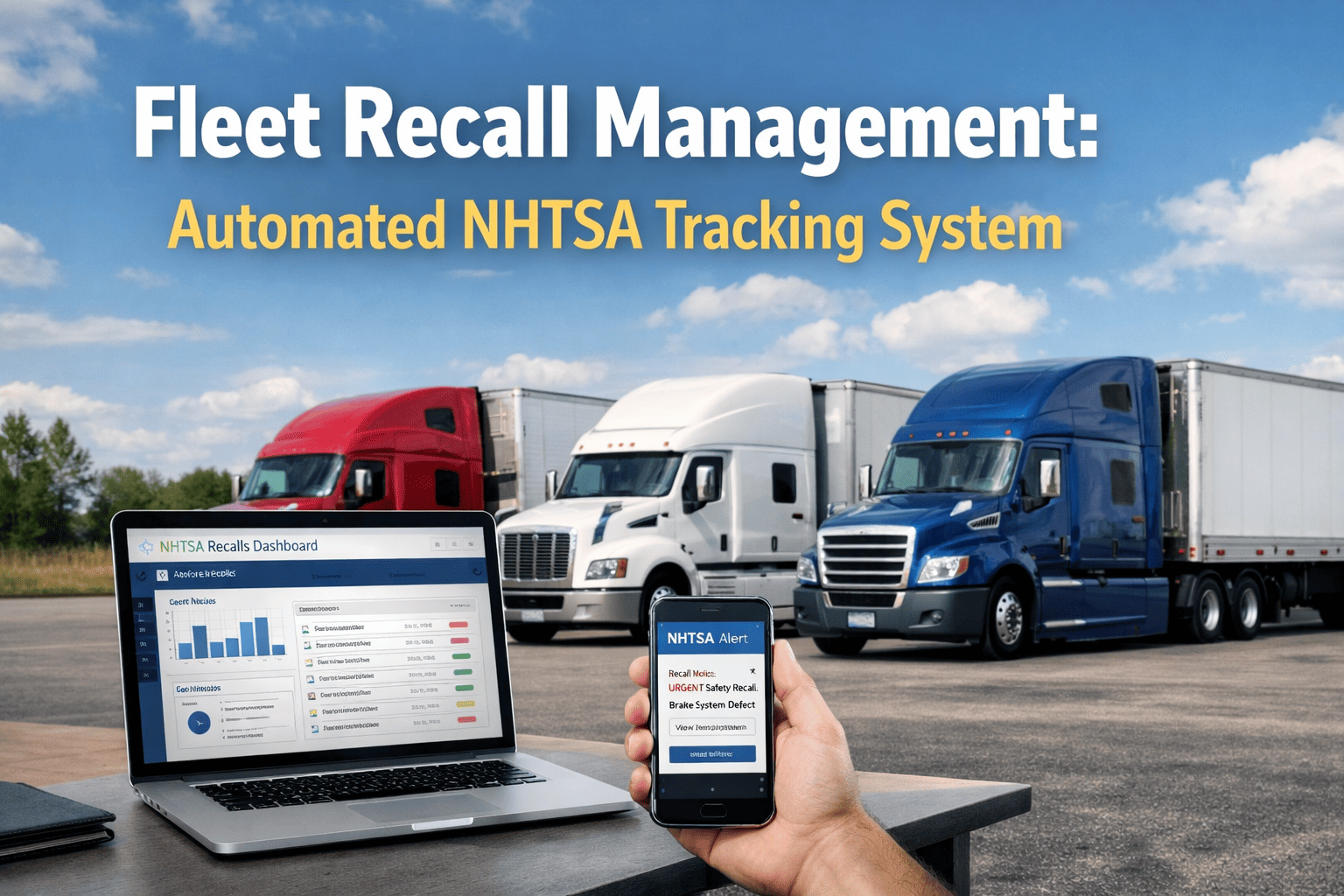
Vehicle recalls affect 15% of commercial fleets annually, and the average open recall remains unresolved for 127 days — during which every affected vehicle operates with a known safety deficiency that creates liability exposure for the fleet operator regardless of whether the recall was acknowledged. NHTSA issued over 900 recall campaigns in 2024 alone, and the coordination burden of tracking notifications, scheduling dealer appointments, pulling vehicles from service, and documenting completion falls entirely on the fleet maintenance team. Oxmaint automates recall tracking, dealer scheduling coordination, completion documentation, and compliance reporting across your entire fleet. If your recall management process depends on checking NHTSA manually, start a free trial or book a demo to see how automated recall management works for fleets of your size.
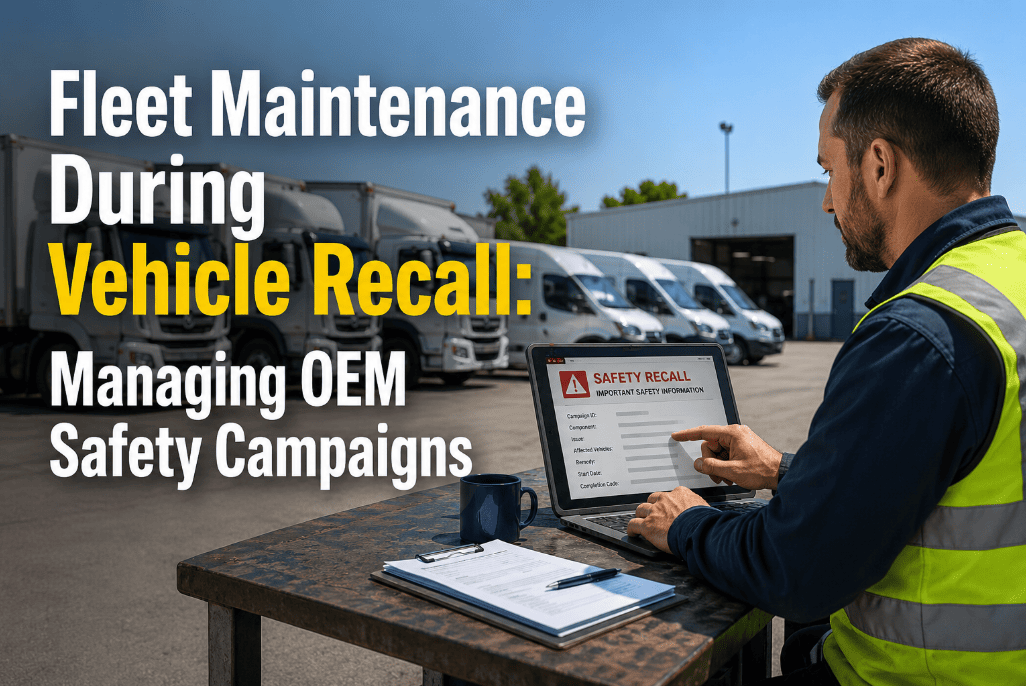
Fleet Maintenance During Vehicle Recall: Managing OEM Safety Campaigns
15% of commercial fleets have active open recalls at any given time. Tracking notifications, scheduling dealer service, documenting completion, and maintaining uptime during recall campaigns requires a systematic CMMS workflow — not email folders and spreadsheets.
An Open Recall Is Not a Maintenance Task — It Is a Liability Event
Every day a vehicle operates with a known open recall, the fleet operator carries legal exposure that no insurance policy fully mitigates. The recall notification establishes knowledge — and knowledge without documented action establishes negligence in any post-incident litigation. Oxmaint converts every recall notification into a tracked work order with dealer scheduling, vehicle pull coordination, completion verification, and compliance documentation — closing the liability window systematically across every affected vehicle. See how recall management works in Oxmaint — start a free trial or book a demo to walk through the workflow with your VIN list.
Understanding the Four Types of OEM Recall Campaigns That Affect Fleets
Not all recalls carry the same urgency, the same repair scope, or the same operational impact. Understanding the campaign type determines how the fleet schedules the work, communicates with drivers, and manages uptime during the completion process.
Federally mandated by NHTSA when a safety-related defect is identified. OEM must notify all owners and provide a free remedy. Fleet operators are legally expected to address safety recalls promptly. Operating a vehicle with a known open safety recall after notification creates documented negligence exposure. Examples: brake system failures, steering loss, airbag defects, fire risk conditions.
Issued when a vehicle does not meet EPA or CARB emissions standards due to a manufacturing defect or software error. Non-compliance can affect vehicle registration renewal, DOT inspection pass rates, and fleet operating authority in regulated jurisdictions. Remedies typically involve ECM reprogramming or component replacement at the dealer.
OEM-initiated campaigns that address quality issues, premature wear, or customer complaints without a formal NHTSA defect determination. Typically extend warranty coverage or provide free repairs for a specific component. Not federally mandated but represent cost-free maintenance that fleets should schedule proactively to avoid paying for the same repair out-of-pocket later.
Technical guidance issued to dealer service departments describing known issues and approved repair procedures. TSBs do not require owner notification and are not tracked by NHTSA — but they often describe conditions that will eventually become recall campaigns. Fleets that track TSBs proactively address known issues before they escalate to formal recalls or roadside failures.
Six Reasons Fleet Recall Completion Rates Remain Below 80%
Industry data shows that commercial fleet recall completion rates average 72% — meaning 28% of recalled vehicles continue operating with known defects. The barriers to completion are not ignorance or indifference — they are operational and logistical challenges that overwhelm manual tracking processes.
OEM recall notifications arrive by mail or email to the fleet's registered address — often the corporate office, not the maintenance department. Notifications sit in mailrooms or general email inboxes for weeks before reaching the person responsible for scheduling the work. 31% of fleet managers report learning about active recalls from DOT inspectors rather than from the OEM notification.
Determining which specific vehicles in the fleet are affected by a recall campaign requires matching the recall VIN range against the fleet register. Without a CMMS that stores VINs and can cross-reference recall campaigns, this matching is done manually — consuming 2–4 hours per recall campaign for a 200-vehicle fleet and producing spreadsheets that become outdated immediately.
Most recall repairs must be performed at authorized OEM dealer service departments. Dealer service capacity is limited — particularly for commercial vehicle recalls that require heavy-duty bays. Scheduling 15–40 vehicles through a single dealer service department without disrupting fleet operations requires coordination that paper-based systems cannot sustain.
Every vehicle pulled from service for a recall repair creates a capacity gap in fleet operations — routes must be covered by spare vehicles, loads must be redistributed, and drivers must be reassigned. Without advance scheduling visibility in the CMMS, recall repairs compete with PM services, corrective repairs, and DOT inspections for the same limited shop and spare-vehicle capacity.
Dealer service invoices documenting recall completion are returned as paper receipts or emailed PDFs. These documents must be matched to the specific vehicle, stored, and made retrievable for DOT inspections and insurance audits. In most fleets, recall completion records are scattered across glove compartments, email attachments, and filing cabinets — not linked to the vehicle's CMMS record.
For 23% of recall campaigns, the remedy parts are not immediately available at the dealer — creating a backorder situation where the vehicle remains in service with a known defect until parts arrive. Without CMMS tracking of the parts-wait status, these vehicles fall into a documentation gap where the recall is acknowledged but neither completed nor actively monitored.
How Oxmaint Manages the Full Recall Lifecycle for Commercial Fleets
Oxmaint replaces the email-and-spreadsheet recall management process with a systematic CMMS workflow that tracks every recall from notification through completion verification — across every affected vehicle in the fleet. Fleets ready to close their recall liability gaps can start a free trial or book a demo to see the recall workflow configured for their fleet.
When a recall campaign is identified, Oxmaint cross-references the recall VIN range against the entire fleet register — instantly identifying every affected vehicle by unit number, location, current assignment, and operational status. No manual spreadsheet matching, no guesswork about which vehicles are in scope.
Each affected vehicle receives an individual recall work order with the campaign number, defect description, remedy procedure, and priority classification. The work order is assigned to the fleet coordinator and tracks through scheduling, dealer appointment, vehicle pull, completion, and verification stages with full status visibility.
Recall work orders are scheduled against fleet capacity — balancing dealer appointment availability, spare vehicle inventory, route coverage requirements, and existing PM and repair schedules. Oxmaint shows the fleet coordinator which vehicles can be pulled for recall service on which dates without creating operational coverage gaps.
Every recall work order shows its current status: notification received, appointment scheduled, vehicle at dealer, repair in progress, parts on backorder, completed and verified, or documentation pending. The fleet dashboard shows total open recalls, average days open, and completion percentage — the same view a DOT auditor would request.
Dealer service invoices, completion certificates, and NHTSA recall completion verification records upload directly to the vehicle's CMMS record — linked to the specific recall work order. When a DOT inspector asks for recall completion documentation during a roadside inspection, the record is accessible from the driver's mobile device in seconds.
Generate a complete recall compliance report showing every recall campaign affecting the fleet, every affected vehicle, current completion status, average days to completion, and any vehicles with open recalls beyond the target SLA. Export for insurance underwriters, corporate risk managers, and regulatory inspections in a single report.
Manual Recall Tracking vs. CMMS-Managed Recall Workflow
What Fleets Measure After Implementing CMMS Recall Management
Systematic tracking with status visibility and escalation closes the 28% completion gap that manual processes leave open across the fleet
From 127-day average to under 41 days — VIN matching in minutes, scheduling coordination in the same system, documentation at completion
Open recall documentation accessible from driver mobile device at roadside — proving either completion status or scheduled appointment date
Each vehicle moved from "known open recall" to "documented completion" removes the negligence exposure that plaintiff attorneys target in post-incident discovery
Frequently Asked Questions
Is a fleet operator legally required to complete vehicle recalls?+
How should fleets handle recalls when dealer parts are on backorder?+
Can Oxmaint track recalls from multiple OEMs across a mixed fleet?+
Should fleets schedule recall repairs during the same service visit as PM?+
Close Every Open Recall in Your Fleet — Systematically
Every open recall is an open liability. Oxmaint tracks every campaign, every affected vehicle, and every completion record — first recall work orders generated in week one.