Fleet maintenance has crossed a turning point. The clipboard, the paper work order, the end-of-day phone call to confirm a repair — these workflows are not just inefficient in 2026, they are actively costing fleets money. The global mobile field service management market reached $5.1 billion in 2024 and is projected to hit $15.9 billion by 2032, growing at 15.3% CAGR. That growth is not driven by technology trends — it is driven by fleet managers who realized that their technicians were spending 40% of their day on administrative tasks that a mobile platform can eliminate. When a driver reports a defect from the road, a technician logs a repair from the yard, and a manager approves a work order from their phone — all in real time, all in a single system — the result is faster turnaround, better compliance documentation, and measurable cost reduction. This guide covers what mobile maintenance solutions are, why they are the defining shift in modern fleet management, and how Oxmaint's mobile-first platform delivers results from day one. Ready to see it in action? Sign up free or book a demo with our fleet team.
$15.9B
Mobile Field Service Management Market by 2032
45%
Reduction in vehicle downtime with proactive mobile maintenance
40%
Of technician time lost to administrative tasks in paper-based operations
35%
Average maintenance cost reduction after mobile CMMS deployment
Experience a Cloud-Native Fleet CMMS Built for Real Operations
Oxmaint combines mobile work orders, real-time inspection management, preventive maintenance scheduling, and fleet analytics in a single platform. Deploy in days. See results in weeks.
What It Is
What Are Mobile Maintenance Solutions for Fleet Management?
Mobile maintenance solutions are cloud-based platforms that move every fleet maintenance workflow — work orders, inspections, defect reporting, parts requests, compliance records — from paper and desktop to smartphones and tablets used by the people doing the actual work: technicians, drivers, and supervisors in the field.
Real-Time Work Orders
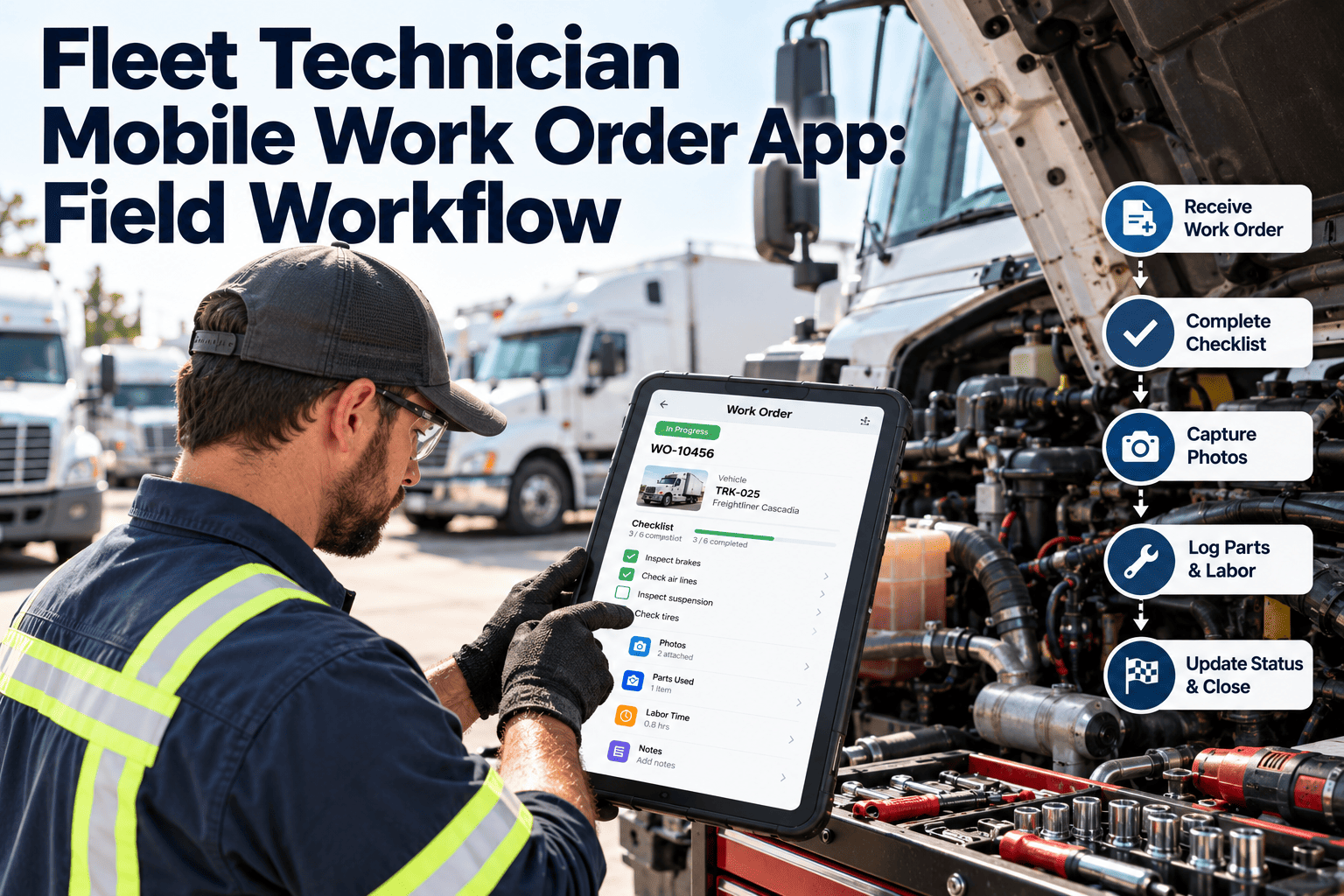
Work orders created, assigned, updated, and closed on mobile — capturing labor time, parts used, and repair notes at point of work, not reconstructed hours later at a desk.
Digital Inspections
Pre-trip, post-trip, and DOT inspections completed on mobile checklists with photo capture and digital signatures — generating audit-ready records automatically.
Instant Defect Reporting
Drivers report defects from any location via mobile app. The defect automatically creates a work order and notifies the maintenance team — no radio calls, no paper forms, no delays.
Preventive PM Scheduling
Maintenance intervals triggered by mileage, engine hours, or calendar dates — alerts sent to technicians via mobile, ensuring no service is missed regardless of where the vehicle is operating.
Parts and Inventory Access
Technicians check parts availability, submit requests, and log parts usage directly from mobile during a repair — keeping inventory records accurate without a separate data entry step.
Compliance Documentation
Every inspection, work order, and defect repair generates a timestamped, person-attributed compliance record that satisfies FMCSA, DOT, and OSHA requirements without manual assembly.
The Real Cost of Paper
What Paper-Based Fleet Maintenance Is Actually Costing You
Fleet managers running paper and spreadsheet maintenance systems tend to underestimate the true cost — because it shows up in slow repairs, missed services, and compliance gaps rather than a single line item.
$760
Per-Day Breakdown Cost
Every unplanned vehicle breakdown costs $448–$760 in lost revenue before towing, emergency labor, and parts are added. Fleets running reactive maintenance average 3–4x more breakdowns than preventive operations.
4.8x
Emergency vs. Planned Repair Cost
Emergency repairs cost 4.8x more than the same work planned and scheduled. Paper-based maintenance misses service intervals, creating exactly the emergency repair cycle that drains maintenance budgets.
93%
DOT Audit Non-Compliance Rate
Only 7% of motor carriers pass a DOT compliance review without a single violation. Incomplete paper inspection records and missing maintenance logs are the most common causes of violations and out-of-service orders.
15 hrs
Weekly Admin Waste Per Technician
Maintenance technicians in paper-based operations lose an average of 15 hours per week on administrative tasks — writing up work orders, filing paper records, and hunting down maintenance history — time that should be spent on actual repairs.
How It Works
8 Mobile Workflows That Replace Paper-Based Fleet Maintenance
Oxmaint's mobile platform covers every maintenance workflow from first inspection to final compliance record — each one built for the way fleet maintenance actually happens in the field.
01
Mobile Pre-Trip and Post-Trip Inspections
Drivers complete digital DOT inspection checklists on their phone before and after every trip. Failed items generate automatic work orders sent to the maintenance team — creating an unbroken compliance record with zero manual follow-up.
02
Real-Time Defect Reporting and Work Order Creation
A driver reports a brake issue from a highway rest stop via mobile. The defect creates a work order, notifies the nearest technician, and flags the vehicle for inspection before the next dispatch — in under 60 seconds from report to assignment.
03
Preventive Maintenance Alerts and Scheduling
Service intervals tracked by mileage, hours, or calendar send automated alerts to technicians via mobile app — ensuring oil changes, tire rotations, filter replacements, and safety checks are never missed regardless of vehicle location.
04
Mobile Work Order Management
Technicians receive, update, and close work orders from mobile — logging labor time, parts used, repair notes, and photos. Every step is timestamped and linked to the vehicle's permanent maintenance record without a separate data entry process.
05
QR Code Asset Scanning
Technicians scan the QR code on any vehicle to instantly pull complete maintenance history, open work orders, inspection records, and service schedules — no system logins, no searching by asset number. The entire vehicle record in one scan.
06
Parts Request and Inventory Management
Technicians check parts stock, submit requests, and log usage from mobile during the repair. Inventory deducted automatically. Reorder alerts triggered when stock falls below threshold — eliminating the parts delays that stretch repairs across multiple days.
07
Offline Capability for Remote Operations
Oxmaint works without internet connectivity — technicians complete inspections, log work orders, and update records in offline mode. Data syncs automatically when connection is restored — critical for operations in remote yards, tunnels, or areas with poor coverage.
08
Compliance Reporting and Audit Documentation
Every mobile action generates a timestamped, person-attributed compliance record. DOT audit documentation — inspection logs, maintenance records, defect repair history — is retrievable from a single dashboard in minutes, not hours of paper assembly.
Before vs. After
Paper-Based Fleet Maintenance vs. Oxmaint Mobile Platform
Measurable Results
What Oxmaint Fleet Customers Measure After Mobile Deployment
45%
Reduction in Vehicle Downtime
Proactive mobile PM scheduling and instant defect-to-work-order workflows prevent the unplanned breakdowns that account for 45% of total fleet downtime in reactive operations.
35%
Lower Maintenance Costs
Planned maintenance costs 4.8x less than emergency repair. Fleets moving from reactive to mobile-preventive operations consistently achieve 30–35% total maintenance cost reduction within 12 months.
38%
Higher Fleet Utilization
Faster repair turnaround, real-time vehicle status visibility, and eliminated scheduling gaps increase fleet utilization by 38% — meaning more revenue-generating vehicle availability without adding units.
100%
DOT Compliance Record Coverage
Every inspection, defect, repair, and maintenance action generates a compliant timestamped record automatically. Zero documentation gaps, zero scrambling before audits, zero violations from missing paper records.
Platform Capabilities
Oxmaint Mobile Features Built Specifically for Fleet Operations
Mobile-First Design
Built for smartphones and tablets first — not a desktop system with a mobile app bolted on. Every workflow is optimized for use with one hand, in a maintenance bay, on a loading dock, or at a remote yard.
Telematics Integration
Connect data from any GPS or telematics provider — engine diagnostics, fault codes, mileage, and fuel consumption flow into Oxmaint to trigger automated PM alerts and predictive maintenance workflows.
Digital DVIR Forms
Pre-configured Driver Vehicle Inspection Reports for trucks, trailers, buses, and light vehicles. DOT and FMCSA compliant out of the box — customizable for specific vehicle types and regulatory requirements.
Multi-Site Management
Manage vehicles across multiple depots, yards, and locations from a single dashboard. Site-specific configurations with unified reporting for fleet managers and operations leadership viewing cross-site performance.
AI-Powered Predictive Alerts
Machine learning models analyze telematics and maintenance history to forecast component failures before they occur — generating automated work orders for the maintenance team days or weeks before breakdown risk peaks.
Analytics and Reporting Dashboard
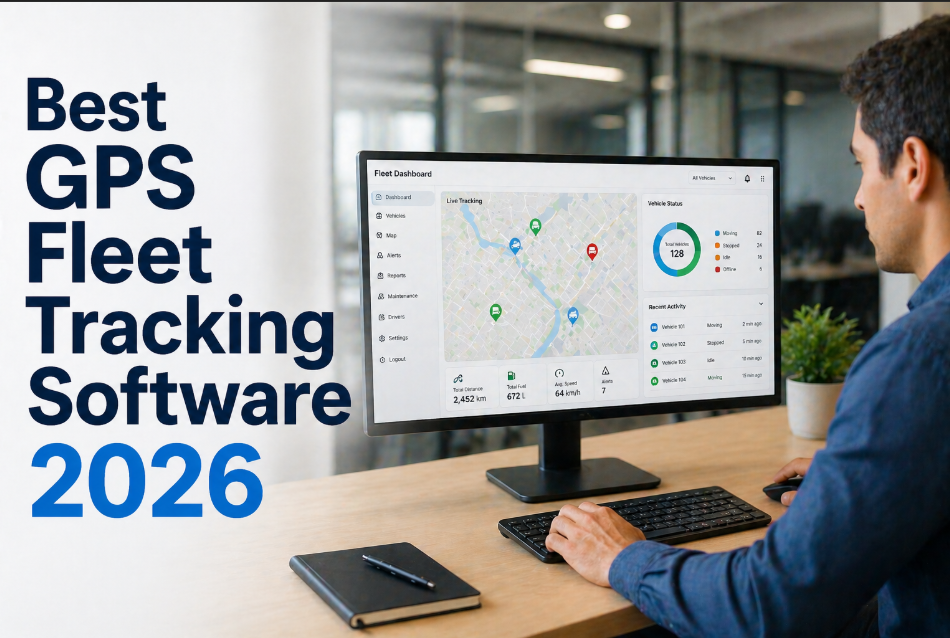
Live dashboards showing fleet KPIs: vehicle uptime, maintenance cost per mile, PM compliance rate, work order velocity, and technician performance — exportable for operations leadership and ownership reporting.
Frequently Asked Questions
Mobile Fleet Maintenance — What Fleet Managers Ask First
What is a mobile maintenance solution and how is it different from traditional fleet management software?
A mobile maintenance solution is a cloud-based platform designed to move every fleet maintenance workflow — inspections, work orders, defect reporting, PM scheduling, parts management — to smartphones and tablets used by drivers and technicians in the field. Traditional fleet management software was built for desktop use at a central office, meaning field teams had to wait until they returned to a terminal to log work, creating delays, data gaps, and compliance risks. Mobile solutions eliminate the desktop dependency entirely. Technicians close work orders in the maintenance bay. Drivers submit defects from the road. Managers approve actions from any device. The result is real-time data accuracy, faster repair cycles, and automatic compliance documentation that paper-based operations cannot match.
Sign up for Oxmaint to see the difference in your own operation, or
book a demo with our fleet team.
How does mobile maintenance software reduce fleet downtime and operating costs?
Mobile maintenance reduces downtime and costs through three compounding mechanisms. First, real-time defect reporting converts driver observations into maintenance work orders in under 60 seconds — preventing small issues from becoming major breakdowns because they were reported too slowly through manual channels. Second, mobile PM alerts ensure preventive service intervals are never missed regardless of where vehicles are operating — catching the brake wear, fluid degradation, and filter blockages that become emergency failures in reactive operations. Third, mobile inspection checklists enforce pre-trip and post-trip checks that identify safety defects before they result in roadside breakdowns or DOT out-of-service orders. Together, these workflows shift fleet operations from reactive — where emergency repairs cost 4.8x planned maintenance — to preventive, consistently delivering 30–45% cost reduction.
Book a demo to see Oxmaint's preventive maintenance workflows in a live fleet environment.
How quickly does Oxmaint deploy for a fleet operation and what does the process involve?
Most fleet operations are live on Oxmaint within days — not weeks or months. The deployment process has three phases. Days 1–2: vehicle and asset data import — uploading vehicle registry, driver roster, and existing maintenance schedules. Oxmaint's onboarding team handles this directly. Days 3–5: configuration — setting up inspection checklists, PM intervals, work order workflows, compliance templates, and user access for technicians, drivers, and managers. Training takes 2–4 hours per role group via the mobile app and requires no classroom sessions or IT department involvement. Days 6–14: go-live — live operations with Oxmaint support monitoring data quality and workflow accuracy. Because Oxmaint is cloud-based and mobile-first, there is no server installation, no hardware procurement, and no IT infrastructure project. For multi-site fleets, additional depot configurations are added in the same workflow without separate implementation projects.
Sign up free to start your deployment today.
Does Oxmaint support DOT and FMCSA compliance documentation for fleet inspections?
Yes — DOT and FMCSA compliance documentation is built into Oxmaint's core inspection workflows, not added as a separate compliance module. Pre-configured Driver Vehicle Inspection Report (DVIR) templates for trucks, trailers, buses, and specialty vehicles are included out of the box and customizable for specific fleet types. Every inspection captures the driver name, date, vehicle identifier, inspection items, defect notation, and digital signature — generating a compliant DVIR record automatically from the driver's mobile device. Defect repairs are linked to the original inspection record, creating the unbroken defect-to-repair documentation chain that FMCSA audits require. The complete inspection log for any vehicle is retrievable in under 5 minutes from Oxmaint's audit dashboard. In 2026, only 7% of carriers pass DOT audits without a violation — paper-based inspection records are the most common reason for failures.
Book a demo to see Oxmaint's compliance documentation in a live audit scenario.
Can Oxmaint handle mixed fleets — including electric vehicles — across multiple depot locations?
Oxmaint manages any combination of vehicle types in a single platform — diesel trucks, light commercial vehicles, electric vehicles, hybrid fleets, construction equipment, and specialty vehicles. Each vehicle type has its own maintenance schedules, inspection checklists, and compliance requirements configured independently, while sharing a unified fleet dashboard for cross-vehicle and cross-site visibility. For electric vehicles specifically, Oxmaint tracks battery health metrics, charging cycle counts, and EV-specific inspection items alongside traditional combustion vehicle maintenance — critical as commercial EV fleets surpassed 38,000 units in the U.S. in 2026 and continue expanding. For multi-site operations, each depot or yard runs its own workflow configuration while contributing to portfolio-level reporting that gives operations leadership and fleet owners a single view across the entire operation.
Sign up free to configure your fleet structure, or
book a demo to see multi-site management in action.
Mobile Maintenance Is No Longer Optional. It Is the Competitive Standard.
Oxmaint gives your drivers, technicians, and fleet managers the mobile tools to prevent breakdowns, maintain compliance, and reduce operating costs — with a platform that deploys in days and requires no IT project. Join 1,000+ fleet operations already running on Oxmaint.