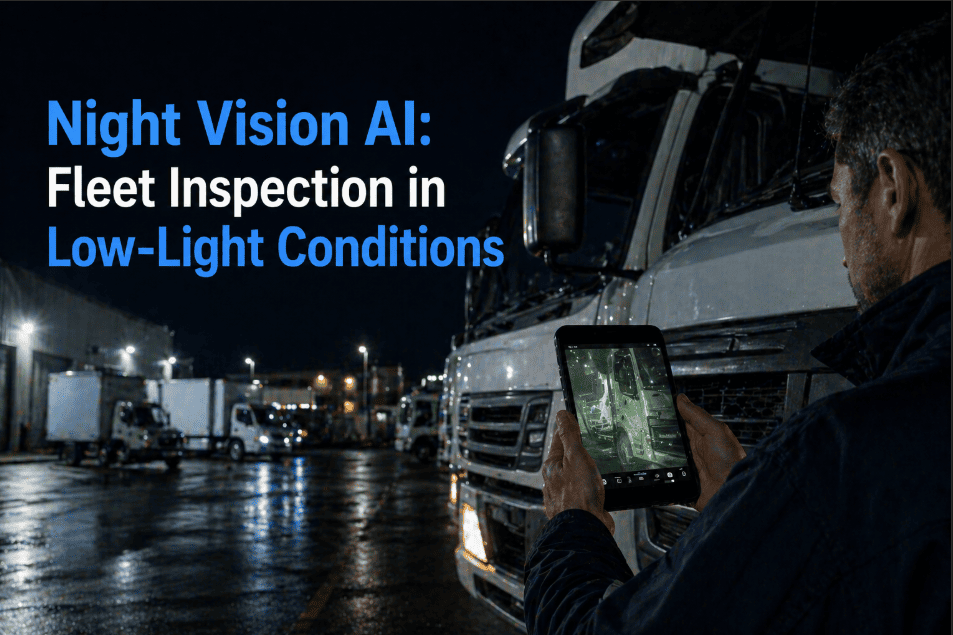
A regional logistics carrier operates a 90-truck fleet across three distribution centers — and 60% of their pre-trip inspections happen between 4am and 6am, in yards that are barely lit. The operations director knew his drivers were missing defects in the dark. He didn't know how many until he ran a side-by-side test for one quarter: every truck inspected by a driver in the predawn yard was re-inspected by a daytime technician under shop lighting. The daytime inspector found defects on 38% of the trucks the morning driver had passed clean — tire damage, fluid weep, loose air lines, cracked marker lights. None of those drivers were doing a bad job. They simply could not see what they were being asked to inspect. AI vision systems with infrared and low-light enhancement now make night-shift inspections as reliable as daytime ones. If your fleet runs predawn, post-sunset, or 24-hour operations, sign up to try Oxmaint free for 30 days or book a demo.
Night-Shift Fleet Inspection — 2026
Defects Caught in the Daylight Have Often Existed for Hours, Sometimes Days, in Underlit Yards Before Anyone Could See Them
38%
Defects missed in low light
Documented gap between predawn yard inspections and daytime shop re-inspection of same trucks
93%
Carriers with audit findings
FMCSA carriers receiving violations during DOT audits — many traceable to inspection blind spots
60%
Of fleet inspections at night
Typical for distribution and long-haul operations running early shifts and overnight scheduling
14,000
Accidents prevented annually
FMCSA estimate of crash prevention from proper DVIRs — many require actual visibility to be reliable
Why Low-Light Inspections Fail — The Four Things Drivers Cannot See in Dark Yards
Eyes are remarkable optical instruments — in good lighting. In a yard at 4am with a single sodium-vapor pole light 60 feet away, human visual acuity drops by 60% or more for the kinds of defects fleets actually need to catch. Here are the four defect categories where night-shift inspections fail predictably.
01
Tire Sidewall Damage and Embedded Debris
Sidewall tears, cuts, and embedded debris in tread show up clearly in shop lighting and disappear in dim ambient light. Industry research shows 35% of detected truck defects are tire-related — yet predawn drivers running a flashlight along the sidewall miss many of them entirely.
02
Fluid Leaks and Puddle Patterns
Oil, coolant, and hydraulic fluid leaks in dark yards leave puddles that look like water, water stains, or nothing at all under poor lighting. The dark stain that screams "engine oil" under shop fluorescents reads as "wet pavement" at 5am. The leak doesn't get reported until the daytime technician sees it.
03
Marker Lights, Reflective Tape & Lens Cracks
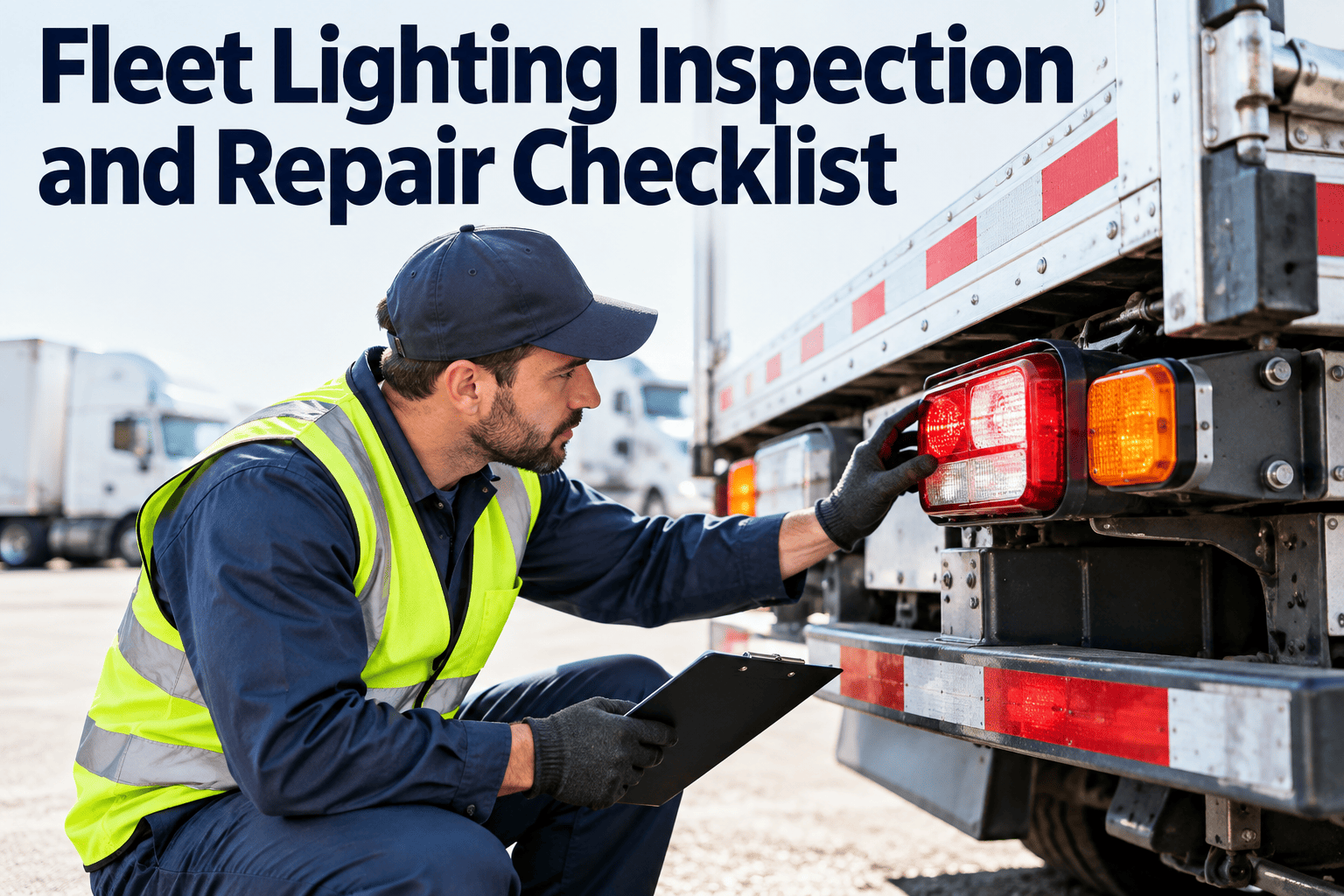
Side marker bulbs that work intermittently, reflective tape with abrasion damage, and small lens cracks all hide in the dark. The driver keying the lights and walking around catches the bulbs that are completely out — but not the ones flickering or with reduced output that DOT inspectors flag at roadside checks.
04
Undercarriage and Frame Condition
Frame cracks, suspension component damage, and undercarriage issues are barely visible to a flashlight even in well-lit yards. In dark yards, drivers default to "looks fine" because nothing else is possible. The structural defects accumulate until the daytime team or DOT inspector finds them.
The Five Imaging Modes AI Vision Uses to See in the Dark
Modern fleet AI vision systems do not rely on a single low-light camera. They combine five complementary imaging modes that compensate for ambient lighting conditions and surface reflective properties. Book a demo to see each mode in action on real fleet vehicles.
IR
Infrared (IR) Illumination
Captures invisible-spectrum reflectivity
Active IR illumination + IR-sensitive camera reveals surface damage that visible-light cameras miss in darkness. Tire sidewall integrity, panel surface texture, and reflective tape conditions clearly visible regardless of ambient light.
TH
Thermal Imaging
Detects heat signatures invisible to standard cameras
Identifies overheated bearings, brake drum hot spots, electrical faults, and fluid system anomalies. Critical for catching predictive failures during predawn pre-trip inspections before the truck rolls.
LL
Low-Light CMOS Enhancement
Amplifies available visible spectrum
Modern smartphone-grade and dedicated CMOS sensors with computational photography techniques amplify ambient light 100x or more. Yard lighting that looks dim to the human eye produces clear inspection-grade images for AI analysis.
SL
Structured Light Patterns
Projects reference patterns to reveal surface defects
Projected line or stripe patterns expose surface deformations — dents, cracks, dings — by tracking pattern distortion. Used in drive-through inspection lanes for sub-millimeter detection regardless of ambient lighting.
FL
Active Flash & Fill Lighting
High-CRI controlled illumination during capture
Smartphone-based capture leverages high-quality LED flash with color-corrected output. Combined with image stacking techniques, produces inspection-quality results even when ambient yard lighting is effectively zero.
Inspections That Actually Work at 4 AM
Stop Asking Drivers to See What's Not Visible. Give Them AI That Can.
Oxmaint integrates infrared, thermal, low-light, and structured-light imaging into the standard fleet inspection workflow — so the predawn driver in a dim yard catches the same defects a daytime technician would catch under shop lighting.
How Oxmaint Manages Night-Shift Fleet Inspections
01
Smartphone Low-Light AI Capture
Drivers use their existing fleet smartphones with the Oxmaint app's low-light capture mode — automatic flash sequencing, image stacking, and exposure compensation produce inspection-grade images even in poorly lit predawn yards.
No new hardware required for most fleets
02
Yard Lighting Profile Calibration
Each yard's ambient lighting conditions captured during initial setup. AI capture parameters adjusted per-location so the inspection at Distribution Center A under sodium vapor lights produces comparable results to the inspection at DC B under LEDs.
Consistent inspection quality across yards and shifts
03
Thermal Imaging Integration
For fleets running thermal-equipped phones or dedicated thermal cameras, Oxmaint integrates the thermal feed alongside visible-light capture. Bearing hot spots, brake overheating, and electrical fault patterns flagged automatically in the inspection workflow.
Predictive failures caught during routine inspection
04
Drive-Through Lane Support
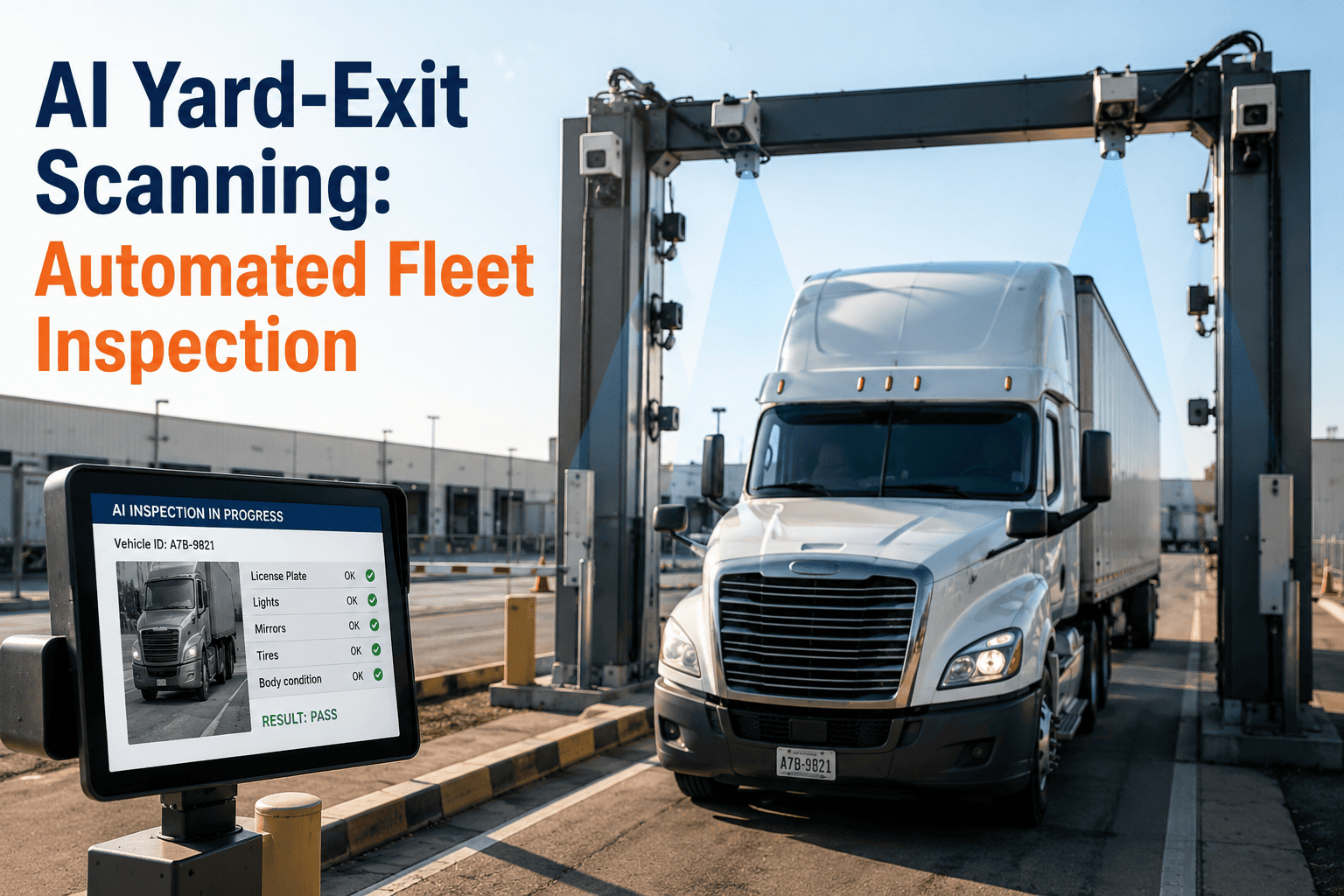
For larger fleets deploying fixed inspection infrastructure, Oxmaint integrates with drive-through lanes that combine IR, structured light, and high-CRI illumination. Trucks roll through at 3–5 mph, full 360-degree scan completed in seconds, results in the fleet manager's dashboard immediately.
96% defect detection accuracy at drive-through speed
05
Defect Severity Ranking & Triage
Detected defects classified by severity — critical (do not dispatch), priority (work order today), routine (scheduled PM), cosmetic (next service). Predawn inspections that previously passed clean but had real defects now flag those defects before the truck rolls, not after.
No truck dispatched with critical undetected defects
06
Audit-Ready DVIR Documentation
Every night inspection logged with timestamp, location, lighting condition, captured imagery, AI findings, and driver acknowledgment. FMCSA-compliant electronic DVIRs (authorized under FMCSA-2025-0115). Audit packages export with full evidence trail.
DOT audit findings on inspection quality eliminated
Daytime vs Night-Shift Inspection — Detection Reality
| Defect category | Daytime shop inspection | Night yard (no AI) | Night yard with AI vision |
|---|
| Tire sidewall damage | 85% caught | 30–40% caught | 90%+ caught |
| Fluid leaks | 80% caught | 25–35% caught | 85%+ caught |
| Marker light condition | 85% caught | 50–60% caught | 95%+ caught |
| Undercarriage / frame | 60% caught | 10–15% caught | 90%+ caught |
| Reflective tape damage | 75% caught | 15–25% caught | 90%+ caught |
| Hot bearings (predictive) | Not detected | Not detected | Thermal flags 100% |
| DVIR audit defensibility | Strong | Weak — paper records | Strong — full evidence trail |
Frequently Asked Questions
Do drivers need special equipment beyond their existing phones?+
For most fleet inspection use cases, modern smartphone cameras with the Oxmaint app's low-light capture mode are sufficient. The app handles flash sequencing, image stacking, and exposure compensation automatically. For thermal imaging capabilities, fleets can add affordable phone-attached thermal cameras (FLIR One, etc.) or dedicated thermal devices. Drive-through lane infrastructure is an investment for high-throughput operations only.
Book a demo to discuss the right deployment for your fleet size.
How does the system handle yards with truly minimal lighting?+
In yards with effectively zero ambient lighting, smartphone flash plus image stacking produces high-quality images for the four sides of the vehicle. For undercarriage and wheel-well inspection, dedicated low-light or IR-capable inspection devices are recommended. Many fleets find that adding a few well-placed yard lights also makes business sense — but the AI workflow doesn't depend on it.
What about weather conditions — rain, snow, fog?+
AI vision performance degrades in heavy precipitation but generally outperforms human inspection significantly under the same conditions. Wet pavement that disguises fluid leaks to the human eye is parsed by AI based on color signature and pattern. Snow on undercarriage is still a hard inspection environment for both — recommended practice is to flag affected zones for re-inspection at next shift if conditions don't allow reliable capture.
How does this integrate with FMCSA electronic DVIR requirements?+
Oxmaint's inspection workflow generates fully compliant electronic DVIRs under FMCSA-2025-0115 (final rule effective March 23, 2026). Every inspection captures driver identification, timestamp, location, vehicle details, captured imagery, AI findings, and digital signature. Audit response is one-click export of the full inspection record per vehicle, per shift, per driver.
What's the implementation timeline for a multi-yard fleet?+
Single-yard rollout typically completes in 2–3 weeks — vehicle registry, app deployment to drivers, lighting profile calibration, and initial training. Multi-yard rollouts phase across 6–12 weeks, starting with one pilot yard before scaling. Most fleets see the inspection quality improvement in the first week of go-live, with documented defect detection rates rising 30–50% within 30 days.
Night Vision Fleet Inspection — Oxmaint
Predawn Inspections That Work as Well as Daytime Ones.
Infrared, thermal, low-light, and structured-light AI imaging integrated into the standard inspection workflow. Drivers in dark yards catch the defects they could never see before. Tire damage, fluid leaks, marker light issues, and undercarriage problems all flagged at predawn — not at the daytime shop re-inspection.
90%+
Detection rate at night with AI vs ~30% without
5 modes
IR, thermal, low-light, structured, active flash
FMCSA
Compliant electronic DVIRs out of the box
2–3 wk
Single-yard rollout timeline