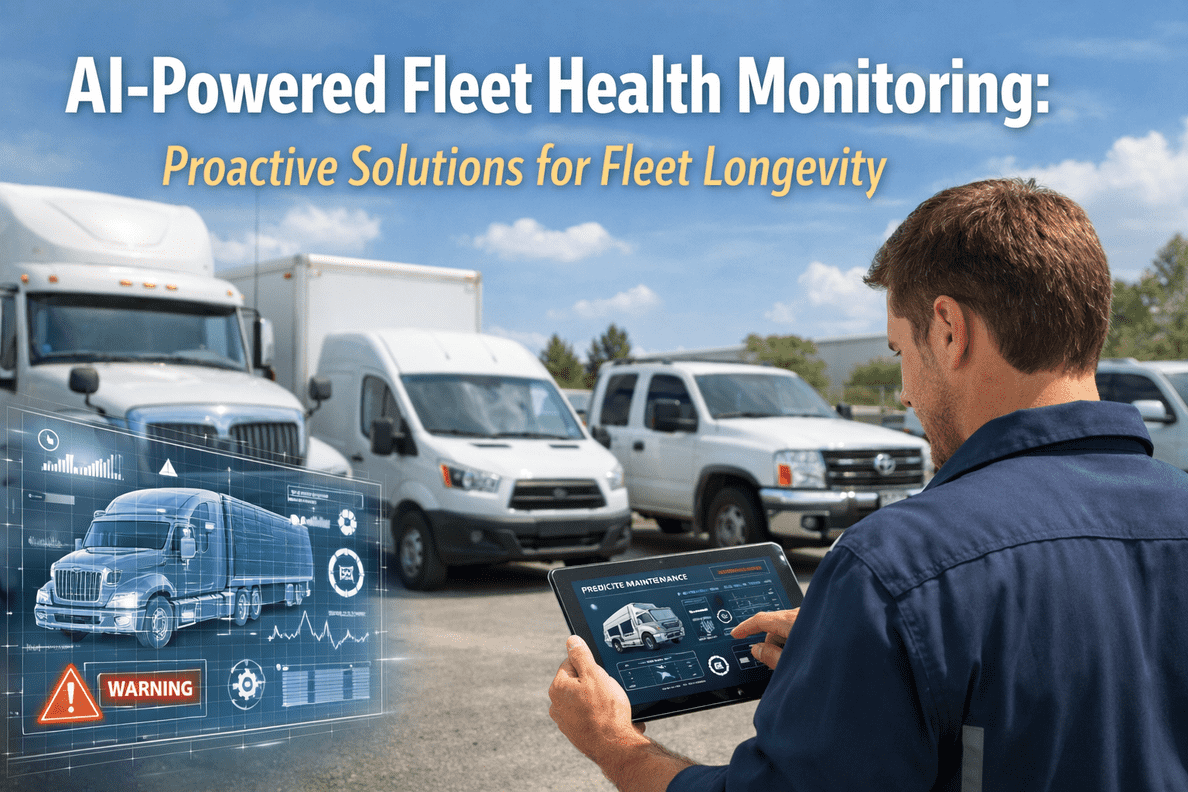
Every fleet manager knows the sinking feeling: a vehicle breaks down mid-route, costing hours of downtime, emergency repairs, and frustrated customers. But what if your vehicles could tell you exactly what was wrong before the breakdown ever happened? That is the promise of OBD-integrated robotics — a new frontier where on-board diagnostic hardware, robotic data collectors, and AI-powered analytics converge to keep your fleet running at peak performance. The global automotive OBD market is projected to exceed $33 billion in 2025, growing at over 14% annually, and fleet operators who embrace this shift are already seeing dramatic reductions in unplanned downtime. Platforms like OxMaint make it easy to connect OBD data streams directly to a centralized CMMS, turning raw engine codes into actionable maintenance plans.
What Is OBD-Integrated Robotics?
On-Board Diagnostics (OBD-II) is a standardized system built into every vehicle manufactured since 1996. It continuously monitors engine load, throttle position, vehicle speed, coolant temperature, fuel trim, and hundreds of other parameters. When something falls outside normal thresholds, the system generates a Diagnostic Trouble Code (DTC).
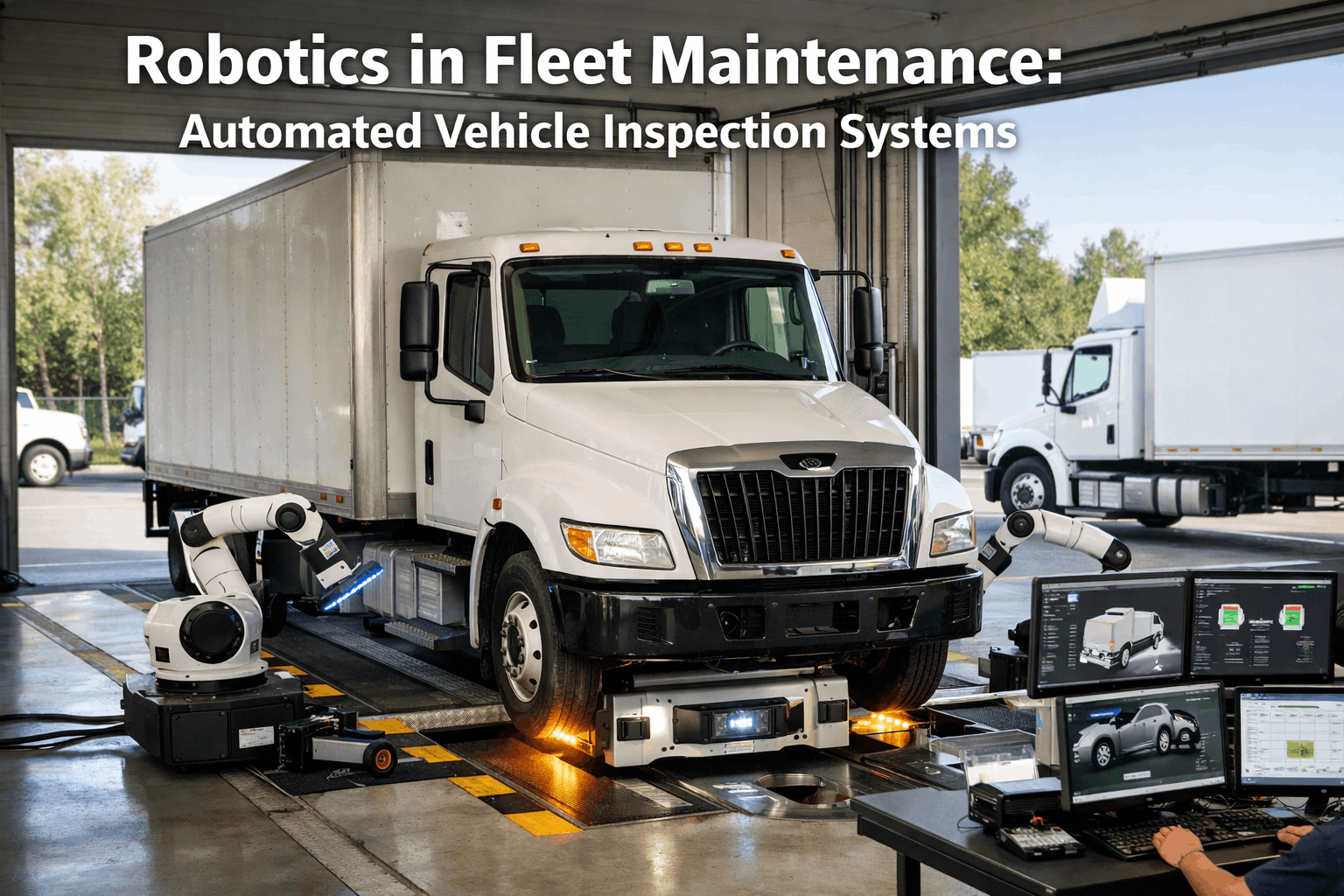
OBD-integrated robotics takes this a step further. Instead of waiting for a technician to manually plug in a scan tool, robotic systems — ranging from autonomous mobile units in depot yards to fixed robotic arms at service bays — automatically connect to each vehicle's OBD-II port, extract real-time diagnostic data, and transmit it wirelessly to a centralized analytics platform. This eliminates human bottlenecks, ensures every vehicle gets checked on every return cycle, and feeds a continuous data stream to your CMMS for condition-based maintenance decisions.
How OBD Robotics Works — The Data Flow
OBD-II Hardware Capture
Robotic connectors or wireless OBD dongles extract live engine data, DTCs, freeze-frame snapshots, and emissions readings from every vehicle in the fleet.
Wireless Data Transmission
Captured data is transmitted via Bluetooth 5.0, Wi-Fi, or cellular networks to cloud-based processing servers in real time or at scheduled intervals.
AI-Powered Analysis
Machine learning models compare incoming data against historical baselines, detecting anomalies and predicting component failures weeks before they occur.
CMMS Work Order Generation
When the AI flags a risk, the system automatically creates a prioritized work order in OxMaint, assigns a technician, and schedules the repair.
Why Fleet Operators Are Making the Switch
Traditional fleet diagnostics rely on scheduled inspections and reactive repairs — a technician discovers a problem only after a warning light appears or a vehicle fails a pre-trip check. This approach leaves costly blind spots between inspection windows. With OBD robotics, every return-to-depot event becomes a full diagnostic scan, and AI analytics catch the subtle patterns that human eyes miss.
Fleet operators using connected OBD diagnostics report up to 40% reductions in emergency repair costs, significantly improved vehicle uptime, and maintenance compliance improvements exceeding 90% within the first year. If you are still relying on clipboard inspections and guesswork, it is time to sign up for OxMaint and experience what data-driven fleet health looks like.
AI Engine Monitoring: From Codes to Insights
Raw OBD data is just numbers — engine RPM readings, oxygen sensor voltages, fuel pressure values, and transmission temperatures. The real value lies in what AI does with that data. Modern machine learning algorithms trained on millions of vehicle data points can recognize when a particular combination of readings signals an impending turbocharger failure, a catalytic converter degradation trend, or an EGR valve malfunction — often weeks before the DTC is even triggered.
This shift from reactive code-reading to predictive insight is what separates modern fleet management from legacy approaches. By integrating these AI insights directly into a CMMS like OxMaint, fleet managers move from "fix it when it breaks" to "fix it before it matters." The result is fewer roadside emergencies, lower towing costs, longer vehicle lifespans, and happier drivers. Ready to see how this works for your fleet? Book a demo and let us walk you through it.
Traditional Diagnostics vs. OBD Robotics + CMMS
Traditional Approach
OBD Robotics + OxMaint
CMMS Integration: The Missing Link
OBD data without a proper management layer is like having a fire alarm with no fire department. The diagnostic insights need to flow seamlessly into a system that can prioritize work orders, assign technicians, track parts inventory, and maintain a complete maintenance history for every asset. That is exactly what a modern CMMS provides.
When OBD robotic systems feed directly into OxMaint, the entire maintenance workflow becomes automated. A detected anomaly generates a work order. The work order is prioritized by severity and assigned to the nearest qualified technician via mobile app. Parts are checked against inventory. The repair is logged, the vehicle is cleared for dispatch, and the entire event becomes part of the vehicle's digital health record — no paper, no phone calls, no missed items. Fleet managers who want to build this kind of closed-loop maintenance system can sign up today and start connecting their diagnostic data within minutes.
Ready to Automate Your Fleet Diagnostics?
Join thousands of fleet operators using OxMaint to turn OBD data into predictive maintenance action. Reduce breakdowns, cut costs, and keep every vehicle on the road.
Key Use Cases Across Fleet Types
Long-haul trucks generate massive OBD data streams across thousands of miles. Robotic depot scanners capture engine health on every return, catching turbo wear, DPF clogging, and coolant system degradation before they strand a driver hundreds of miles from the nearest shop.
City buses run fixed routes on tight schedules. OBD robotics ensure every bus is scanned between shifts, with AI flagging brake system anomalies, transmission heat patterns, and emissions compliance issues — keeping riders safe and services on time.
Heavy equipment operates in harsh conditions that accelerate wear. Automated OBD monitoring tracks hydraulic pressures, engine load patterns, and fuel consumption anomalies to prevent catastrophic failures on remote job sites.
High-frequency stop-and-go driving puts unique stress on brakes, transmissions, and batteries. OBD data flowing into OxMaint enables condition-based brake pad replacements and battery health tracking across hundreds of delivery vans.
The Technology Behind the Transformation
Several converging technologies make OBD-integrated robotics possible today. Wireless OBD-II adapters using Bluetooth 5.0 and dual-band Wi-Fi maintain reliable data throughput during live telemetry uploads. Computer-vision robots — like those developed by companies such as Kinetic Automation — can scan vehicles without even requiring a physical port connection, using camera systems to assess external conditions while OBD handles the internals.
On the AI side, supervised learning algorithms like support vector machines and neural networks deliver high accuracy in fault classification and remaining useful life prediction. Unsupervised learning methods detect novel anomalies in cases where labeled failure data is limited. Cloud-based platforms aggregate fleet-wide data, enabling cross-vehicle pattern recognition that gets smarter with every scan. All of these capabilities become actionable when connected to a CMMS — and if you are evaluating your options, book a demo with OxMaint to see how it all comes together in a single platform.
OBD Hardware Integration Checklist
Predictive Maintenance: The Competitive Edge
Predictive maintenance powered by OBD robotics is not just a cost-saving measure — it is a competitive advantage. Fleets that can guarantee higher uptime win more contracts. Operators who can demonstrate regulatory compliance with digital audit trails avoid fines and pass inspections faster. Companies that extend vehicle lifespans through condition-based care see better ROI on every asset purchase.
The data backs this up. Industry studies show that predictive maintenance strategies reduce unplanned downtime by up to 50%, extend equipment useful life by 20–40%, and cut overall maintenance costs by 25–30%. For a 50-vehicle fleet, that translates to well over six figures in annual savings. The question is not whether to adopt OBD robotics — it is how quickly you can get started. Sign up for OxMaint and start your predictive maintenance journey today.
Transform Your Fleet Maintenance Strategy
OxMaint connects your OBD diagnostics, AI analytics, and maintenance workflows into one intelligent platform. See why fleet operators trust OxMaint for smarter, faster, more reliable maintenance.
Frequently Asked Questions
What is OBD-integrated robotics for fleet diagnostics
OBD-integrated robotics refers to automated systems — including robotic connectors, wireless OBD dongles, and autonomous mobile units — that plug into or wirelessly communicate with a vehicle's OBD-II port to extract real-time diagnostic data without manual technician intervention. This data is then transmitted to a cloud platform where AI analyzes it for anomalies, and a CMMS like OxMaint converts those insights into prioritized maintenance actions.
How does OBD data integrate with a CMMS like OxMaint
OBD data streams are transmitted wirelessly to a cloud server, where AI models process and flag anomalies. When a potential issue is detected, the system automatically generates a work order inside OxMaint, assigns it to a technician, checks parts availability, and tracks the repair through completion. This creates a fully automated, closed-loop maintenance workflow with zero manual data entry.
What types of fleet vehicles support OBD-II diagnostics
All light-duty vehicles manufactured after 1996 include OBD-II as a standard feature. Heavy-duty trucks and buses use related protocols like J1939 and J1708, which provide even more detailed engine and transmission data. OBD robotic systems can be configured to work across mixed fleets containing both light and heavy-duty vehicles.
How far in advance can OBD robotics predict vehicle failures
Depending on the component and the volume of historical data available, AI-powered OBD analytics can detect developing failures anywhere from 3 to 6 weeks before a critical breakdown occurs. Components like bearings, turbochargers, catalytic converters, and battery systems are particularly well-suited to early prediction because their degradation patterns are gradual and data-rich.
Is OBD robotics cost-effective for small and mid-size fleets
Absolutely. While large enterprise fleets see the most dramatic absolute savings, small and mid-size operators often see the highest percentage ROI because a single prevented breakdown can represent a significant share of their monthly maintenance budget. Wireless OBD adapters are affordable, and cloud-based CMMS platforms like OxMaint offer scalable pricing that makes the technology accessible to fleets of any size.
What makes OxMaint different from other fleet CMMS platforms
OxMaint is designed specifically for fleet and asset-intensive operations, offering seamless OBD data integration, AI-powered predictive analytics, automated work order generation, mobile technician apps, and complete compliance tracking in a single unified platform. It is built to scale from small fleets to enterprise operations while remaining intuitive enough for same-day adoption.