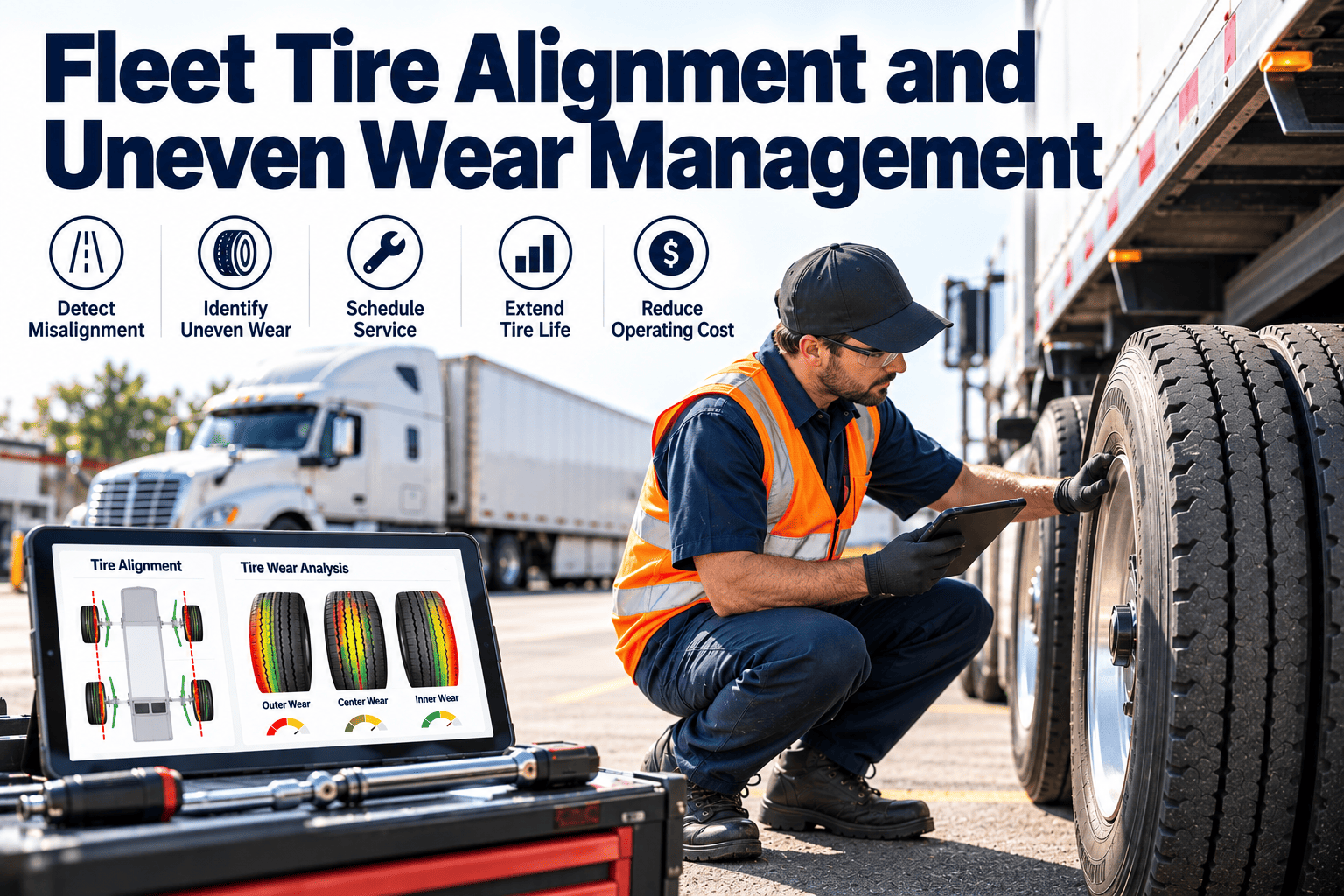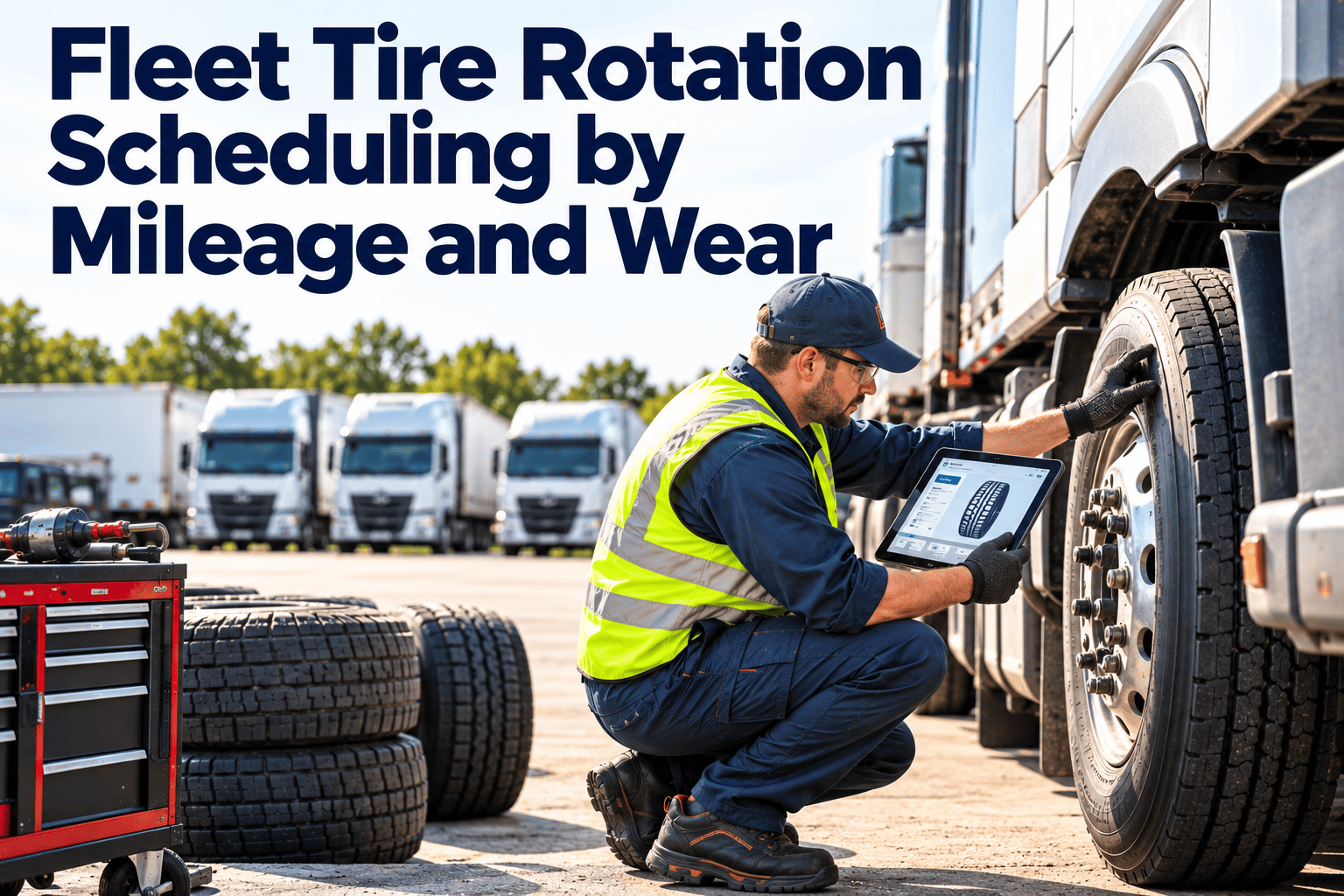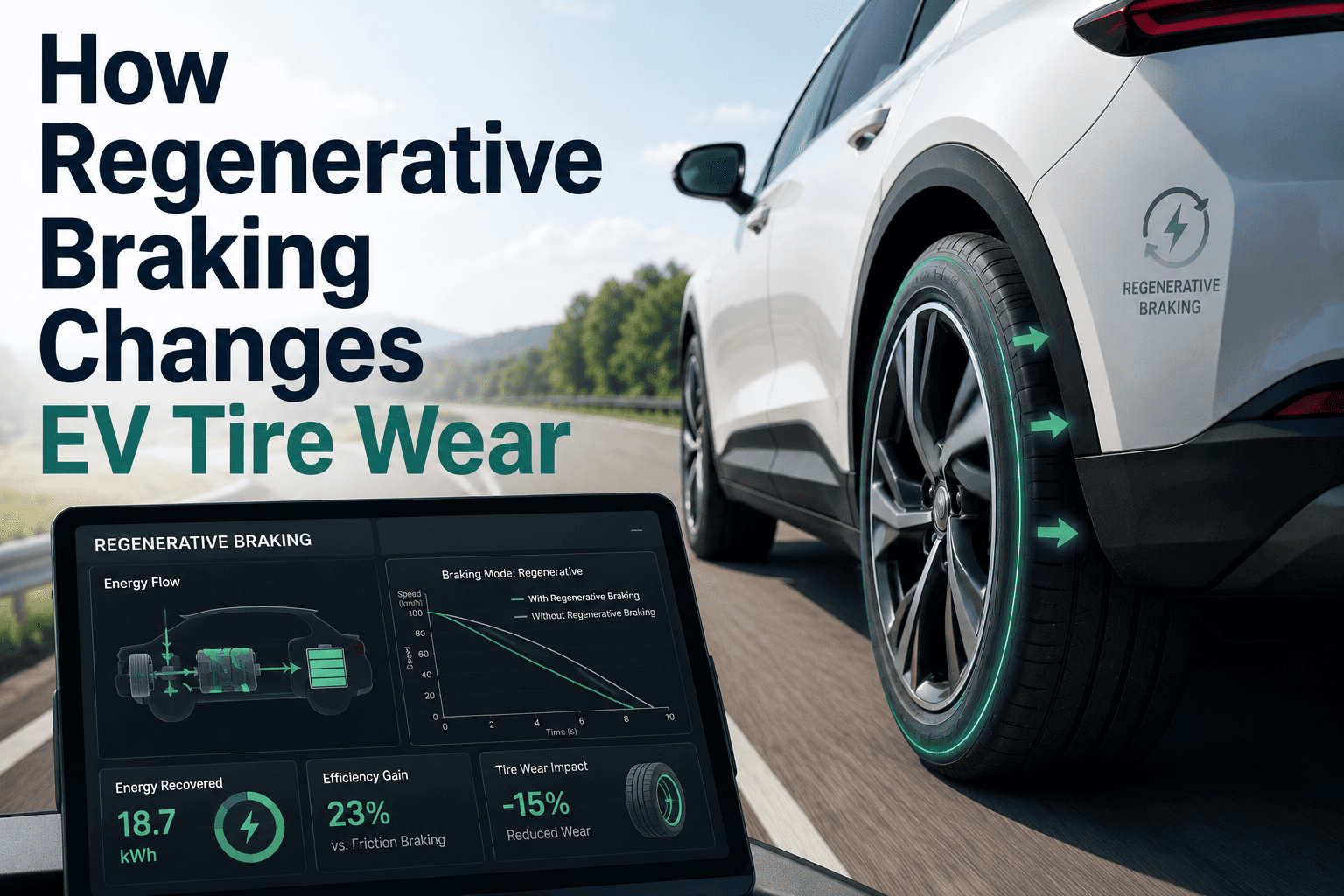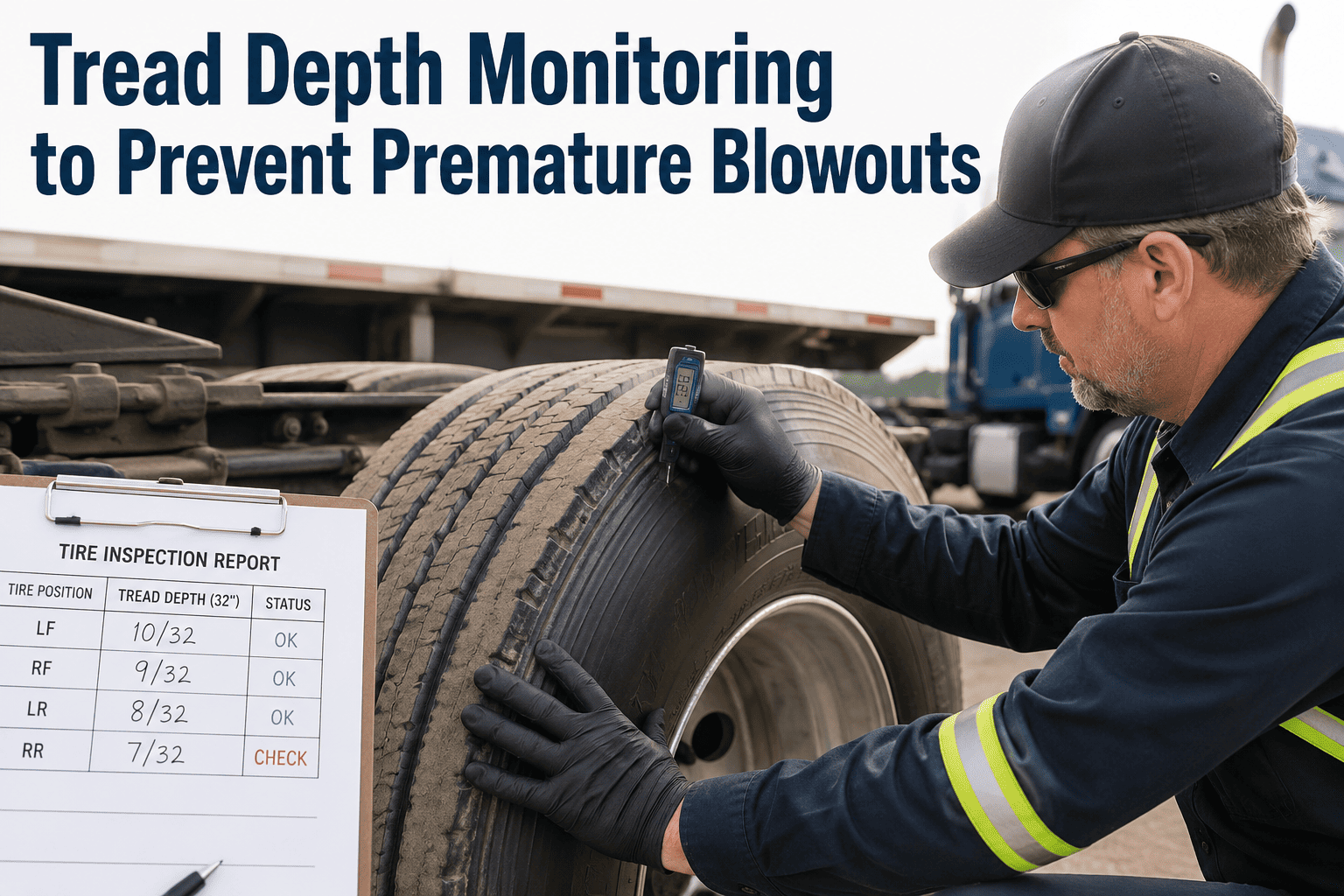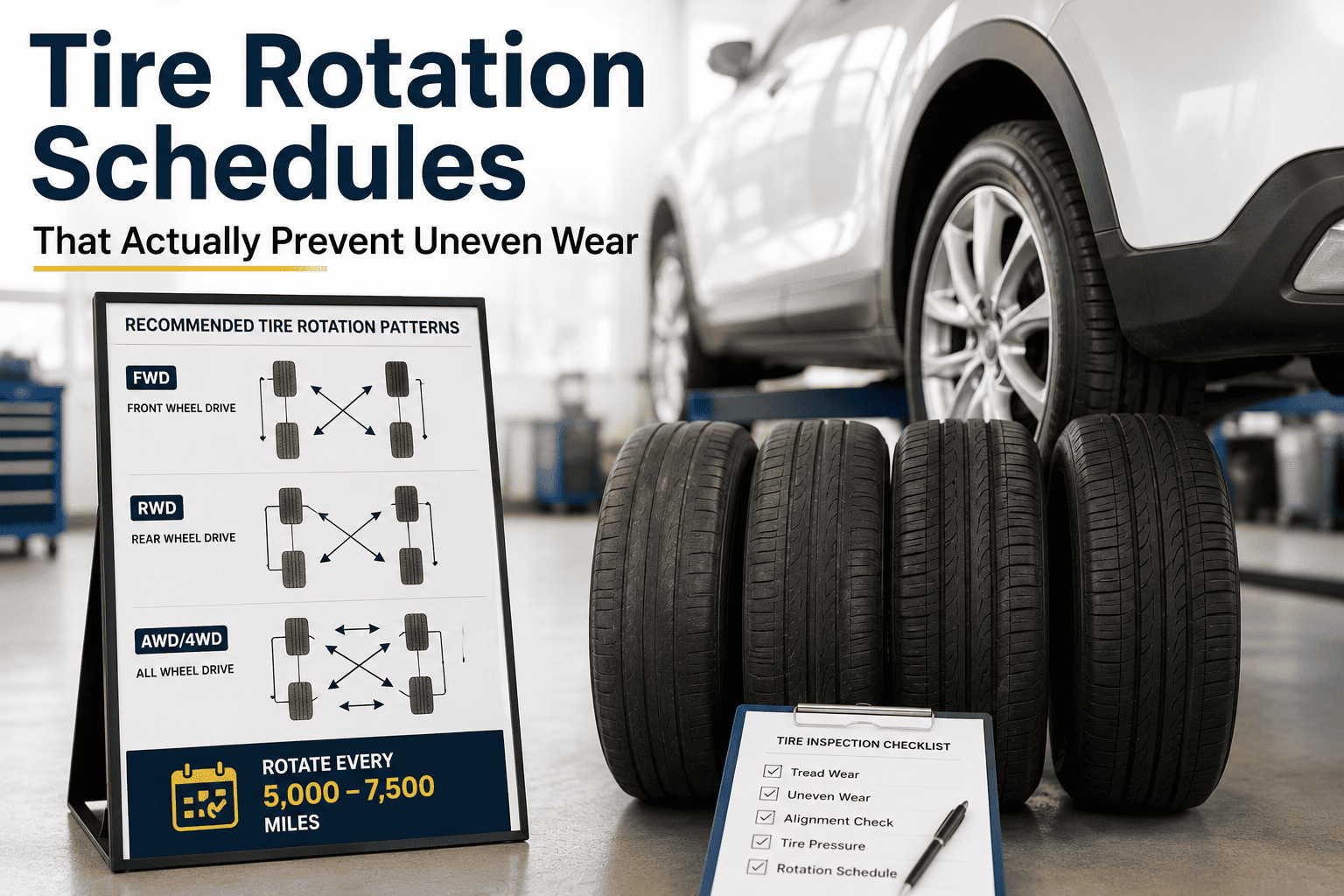
Tire rotation on a commercial vehicle is the single highest-leverage, lowest-cost discipline a fleet can run to extend casing life and protect retread eligibility. The physics is unforgiving: steer axles wear front-shoulder from steering input, drive axles wear center-crown from torque, and trailer positions wear differently again depending on load distribution and axle count. Fleets that let rotations slip 3,000–6,000 miles late routinely replace four tires when only two are actually worn out — a costly way to run any tire program. A disciplined rotation schedule built on telematics odometer feeds, manufacturer-confirmed patterns, and per-position tread logging typically extends tire life 15–25% and lifts retread eligibility 20–30%. You can set those triggers, generate shop work orders, and capture per-tire rotation history by getting started with Start Free Trial in Oxmaint.
Are late rotations quietly scrapping your best casings?
Manual mileage entry misses cause rotations to slip 3,000–6,000 miles late — and that single gap turns retread-ready casings into scrap rubber. A rotation schedule tied to telematics odometer feeds triggers on time, every time, per vehicle class.
Each axle position destroys rubber differently
A Class 8 tractor runs four distinct wear environments. Understanding the physics of each position is what makes a rotation schedule actually prevent uneven wear — instead of just moving tires around.
Steer Axle
Front-shoulder wear
Lateral steering forces scrub the outer shoulder. Without rotation, shoulder tread hits 4/32" removal threshold 8,000–12,000 miles before the center.
Drive Axle
Center-crown wear
Torque and traction load concentrate wear on the crown. High-torque routes can push drive tires to replacement 20% faster than unrotated peers.
Trailer Axle
Position-dependent wear
Wear varies with axle count, load distribution, and turn frequency. Tandem rear axles often show 30% more shoulder wear than the front trailer axle.
Missed Rotation
Mixed, accelerated wear
When rotation slips 3,000–6,000 miles late, position-specific wear patterns lock in. The result: 4 tires replaced when 2 still have life — the most expensive way to run a tire program.
Match the pattern to the tread, then hit the mileage trigger
Standard Class 8 intervals run 20,000–30,000 miles for the first rotation and 30,000–50,000 miles thereafter — but the pattern must match tire construction, and the timing must be telematics-triggered, not manual.
| Rotation Pattern | How It Moves Tires | Best Fit | Key Constraint |
|---|---|---|---|
| Front-to-Rear Straight Swap | Steer ↔ Drive, same side, no cross | Symmetric tread designs | Simplest pattern; does not redistribute side-specific wear |
| X-Pattern Cross | Front-left ↔ Rear-right; Front-right ↔ Rear-left | Non-directional tread, mixed-service trucks | Best wear distribution; cannot use on directional tread |
| Rearward Cross | Steer to Drive with side change; Drive to Steer straight | Directional drive tires needing side change | Confirm manufacturer spec — some casings cannot cross |
| 5-Tire / Spare Rotation | Spare enters cycle on 2nd rotation, then rotates through | Fleets carrying a full-size matching spare | Spare must match tread design and load rating |
The first 150,000 miles, mapped position by position
A typical Class 8 tractor on a long-haul cycle hits five rotation events in its first 150K miles. Each event is a decision point: rotate on schedule and preserve casing equity, or let it slip and pay for it at removal.
Initial position equalization
Steer tires move to drive; drive tires move to steer or trailer. Critical window — missing this one locks in shoulder wear that no later rotation can fully correct. Log tread depth at all four positions before and after.
X-pattern cross or rearward cross
Apply the pattern confirmed by manufacturer spec. This is where directional tread designs either cross safely or stay same-side. Inspect for shoulder cupping — early sign of alignment or inflation drift.
Casing health checkpoint
Measure tread depth across shoulder, center, and opposite shoulder. If any position is within 6/32" of removal, flag for early removal candidate — do not rotate a near-dead tire into a high-wear position.
Retread decision window opens
Casings approaching removal with even shoulder-to-crown wear qualify for retread. Uneven wear from missed rotations often fails casing inspection here and gets scrapped — the direct cost of a broken schedule.
Casing enters retread program
Disciplined-rotation casings move to retread with 20–30% higher eligibility. Scrapped casings from missed rotations cost $280–$420 each in lost retread value — the hidden line item most fleets never track.
A 100-truck fleet loses $84K–$126K per year to missed rotations
18% of casings scrapped due to uneven wear from rotations slipping 3K–6K miles late. Add premature-replacement tires at $26,400 and total annual loss reaches $84,000.
Telematics odometer feeds trigger rotation at exact mileage — no manual entry, no 3K–6K slip. Recovery rate based on fleets extending tire life 15–25% and lifting retread eligibility 20–30%.
What a disciplined fleet actually saves
Fleets running disciplined rotation programs extend total tire life versus manual-entry or ad-hoc rotation.
Even-wear casings pass inspection; uneven-wear casings from missed rotations fail and get scrapped.
Each casing that fails retread due to uneven wear represents pure lost equity in the tire program.
Routine slip when odometer readings are manually logged — the root cause of broken rotation schedules.
Stop scrapping casings you could be retreading
Set telematics-triggered rotation schedules per vehicle class, auto-generate shop work orders, and capture per-tire rotation history for full lifecycle tracking.
Tire rotation schedules, answered
What mileage interval should I use for the first tire rotation on a Class 8 tractor?
The industry standard is 20,000–30,000 miles for the first rotation, then 30,000–50,000 miles for steady-state rotations. The first rotation is the most critical — it establishes the wear baseline. Missing it locks in position-specific shoulder wear that later rotations cannot fully correct. Always confirm the exact interval against your tire manufacturer's spec, as some models require tighter windows.
Which rotation pattern should my fleet use — straight swap, X-pattern, or rearward cross?
It depends on tread construction. Symmetric, non-directional tires can use the X-pattern cross for the best wear distribution. Directional drive tires cannot cross sides and require a rearward cross or straight swap. Tire manufacturer recommendations always override generic patterns — running a directional tread in a cross pattern can damage the casing and void warranty.
How does telematics prevent rotations from slipping late?
Telematics odometer feeds trigger rotation work orders at the exact mileage, per vehicle class — no manual entry required. Manual-entry fleets routinely slip 3,000–6,000 miles late because readings get logged days or weeks after the trigger. You can see how Oxmaint wires telematics triggers to shop work orders when you Book a Demo.
Why does uneven wear disqualify a casing from retreading?
Retread inspection requires even casing integrity across shoulder and crown. Uneven wear from missed rotations creates stress concentrations and thin spots that fail inspection — the casing gets scrapped instead of retreaded. A retread-ready casing retains $280–$420 of value; a scrapped casing retains zero. That is the direct financial cost of a broken rotation schedule.
How much can a fleet actually save with a disciplined rotation program?
Fleets running disciplined, telematics-triggered rotation programs typically extend tire life 15–25% and increase retread eligibility 20–30%. For a 100-truck fleet, that translates to roughly $58,800–$84,000 in annual savings from avoided premature replacements and recovered retread value. The payback on automation is usually under 90 days.
Turn rotation discipline into measurable casing equity
Set mileage triggers per vehicle class, auto-generate shop work orders, and track every tire's rotation history — from first 20K-mile swap to retread removal.
Free 14-day trial · No credit card