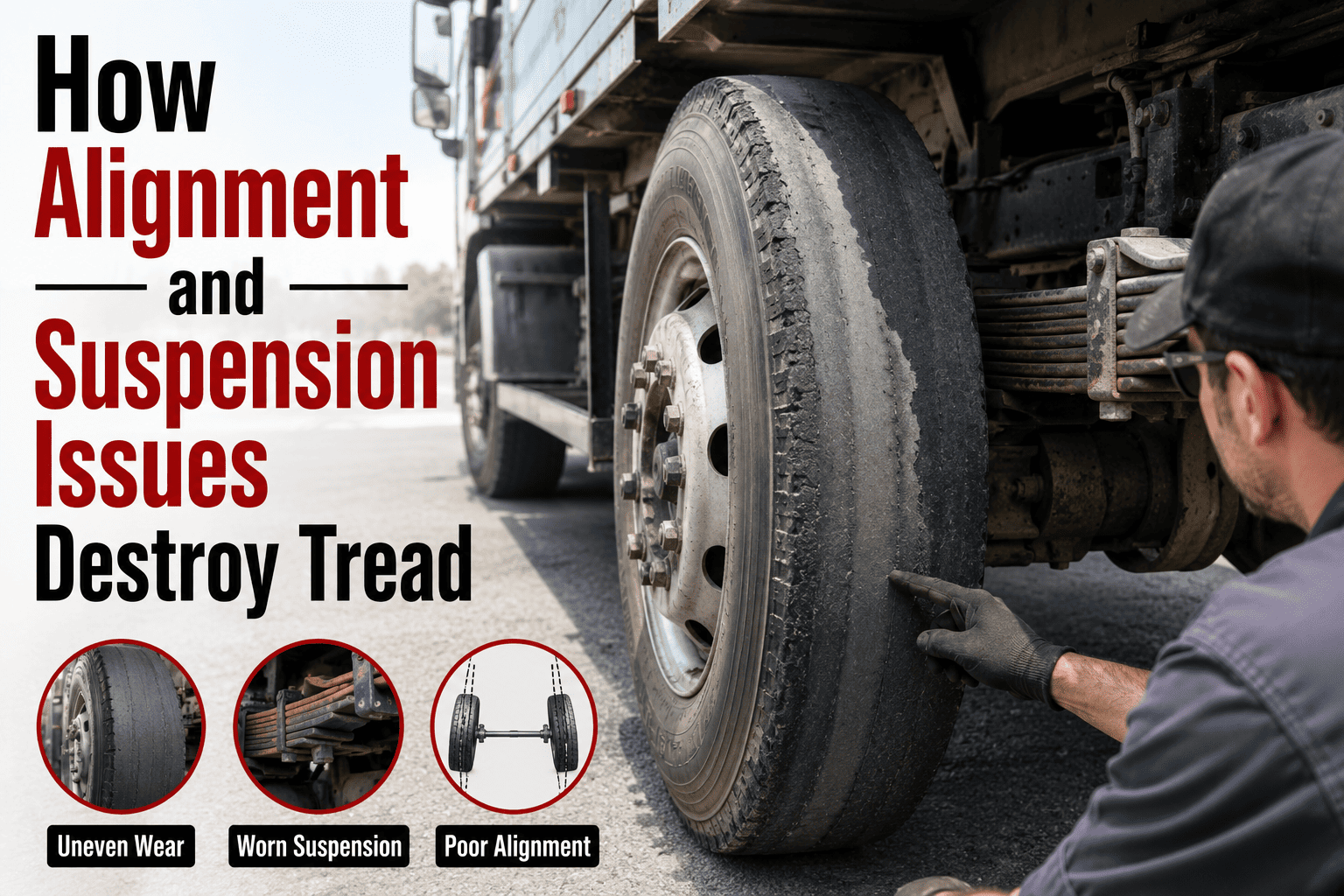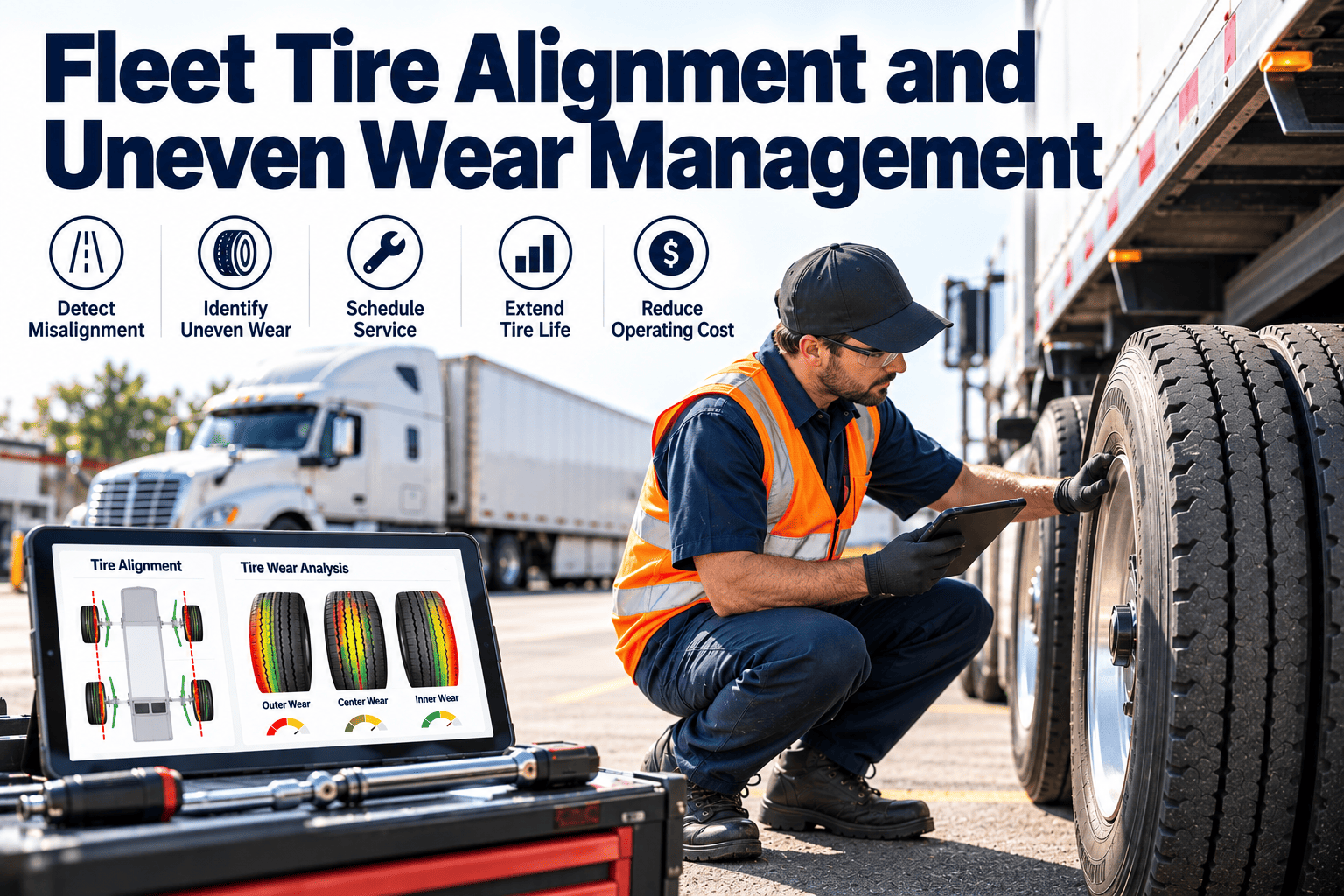
Uneven tire wear is a message from the vehicle. A steer tire worn on one shoulder, a trailer tire cupped across the tread, or a drive tire balding in the center each point to a different cause, and replacing the tire fixes none of them. For most fleets, tires are among the largest recurring maintenance costs, so reading wear patterns pays back quickly. This guide covers how to diagnose uneven wear, when to align, and how a fleet CMMS keeps tire and alignment history on every unit.
Fleet Tire Alignment and Uneven Wear Management
Match each wear pattern to its cause, fix the cause, and record the result. Oxmaint ties tire checks, alignment jobs and replacements to each vehicle and wheel position.
The Real Cost of Uneven Wear
Uneven wear shortens tire life, but the cost goes further than the tire itself.
Reading Wear Patterns
Always inspect the whole tire, inside and outside, and compare positions on the same axle.
| Wear pattern | What you see | Likely causes | First action |
|---|---|---|---|
| Center wear | Center ribs worn faster than shoulders | Overinflation, aggressive drive torque | Check cold pressure against load and spec |
| Both shoulders worn | Outer ribs worn on both sides | Underinflation, overloading | Check pressure, leaks, load practice |
| One-sided wear | Inner or outer edge worn heavily | Camber or toe error, worn suspension parts | Inspect suspension and book alignment |
| Feathering | Ribs smooth one way, sharp the other | Toe misalignment | Measure toe and check tie rod ends |
| Cupping or scalloping | Dips around the tread | Worn shocks, imbalance, loose components | Inspect shocks, balance, bearings |
| Flat spots | Localized worn area | Lockups, brake issues | Inspect brakes and ABS function |
| Dual mismatch | One tire of a pair wears faster | Different diameters or pressures | Match sizes and pressures in pairs |
Root Cause Map
Alignment alone rarely solves wear caused by worn components. Replace the worn part first, then align, or the setting will not hold.
Find the Cause Before You Buy the Next Tire
Record wear by position, link it to alignment and repairs, and see which units keep coming back.
Alignment Basics for Fleet Teams
When to Book an Alignment
- After steering or suspension repairs or replacement of related parts.
- After a curb strike, pothole impact or collision.
- When wear patterns or pulling are found during inspections.
- After installing new steer tires.
- On a regular interval set by duty cycle and wear history.
A Tire Inspection Routine That Catches Problems Early
In the US, 49 CFR 393.75 sets minimum tread depths of 4/32 inch on steer tires and 2/32 inch on other positions. Check the rule that applies in your region.
Before and After: Managing Tires by Position
- Tire replaced, cause unknown
- Alignment done by habit
- Brand and cost comparison guesswork
- Pressure checks undocumented
- Wear linked to cause and repair
- Alignment triggered by findings
- Cost per mile by tire and vehicle
- Pressure and tread trends visible
Trailers and Tandem Axles
Trailers often escape attention because no driver owns them. That makes wear problems last longer.
- Check axle spacing and parallelism on tandems.
- Look for single-side wear on the same trailer across several tractors.
- Inspect wheel-end bearings and hubs, which alter tire running.
- Assign trailers an inspection owner so tire checks do not slip.
- Record tire position on the trailer, not only the unit number.
Measures That Show Progress
How Oxmaint Supports Tire Management
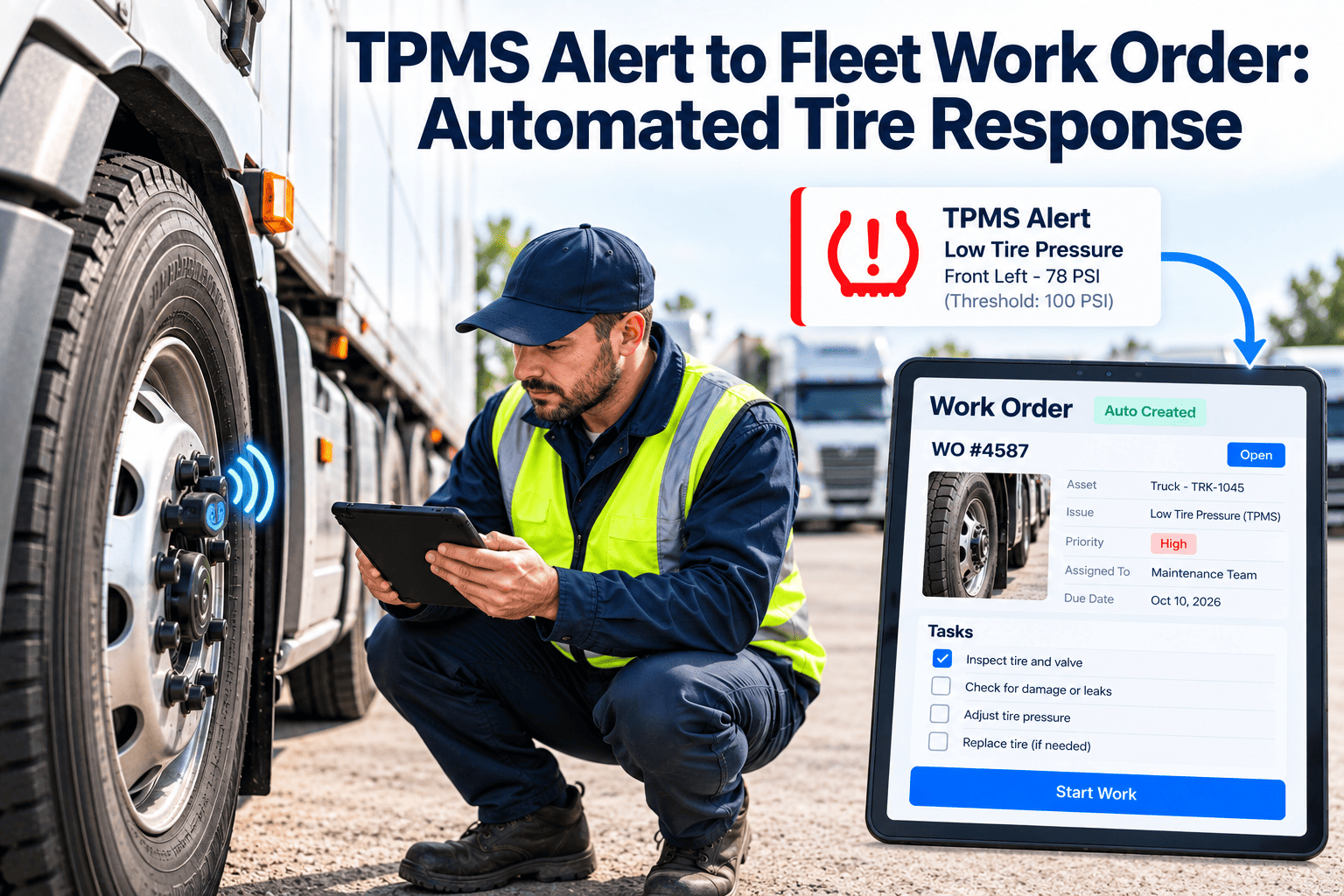
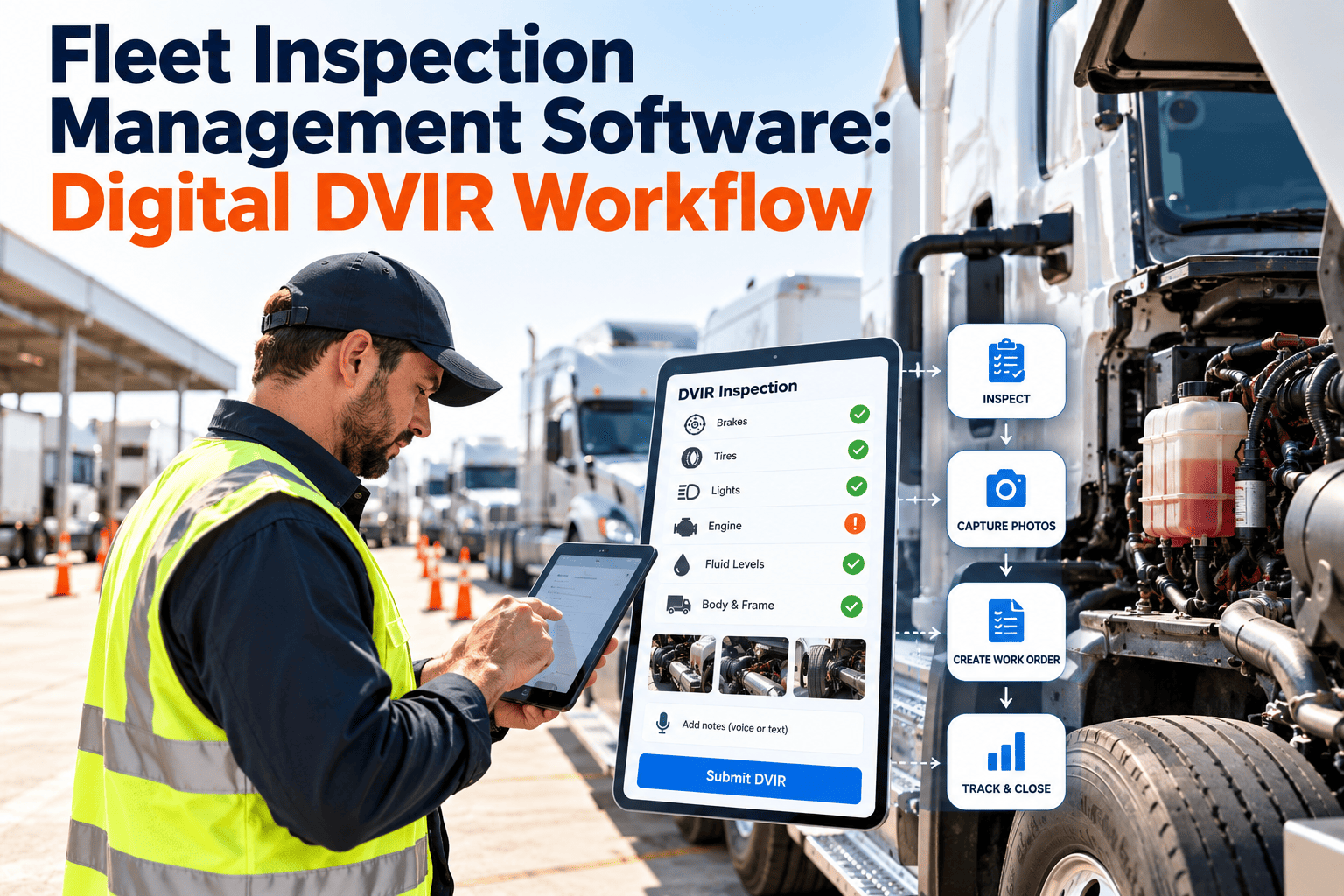
- Inspection checklists: Record pressure, tread depth and visual findings per position on mobile.
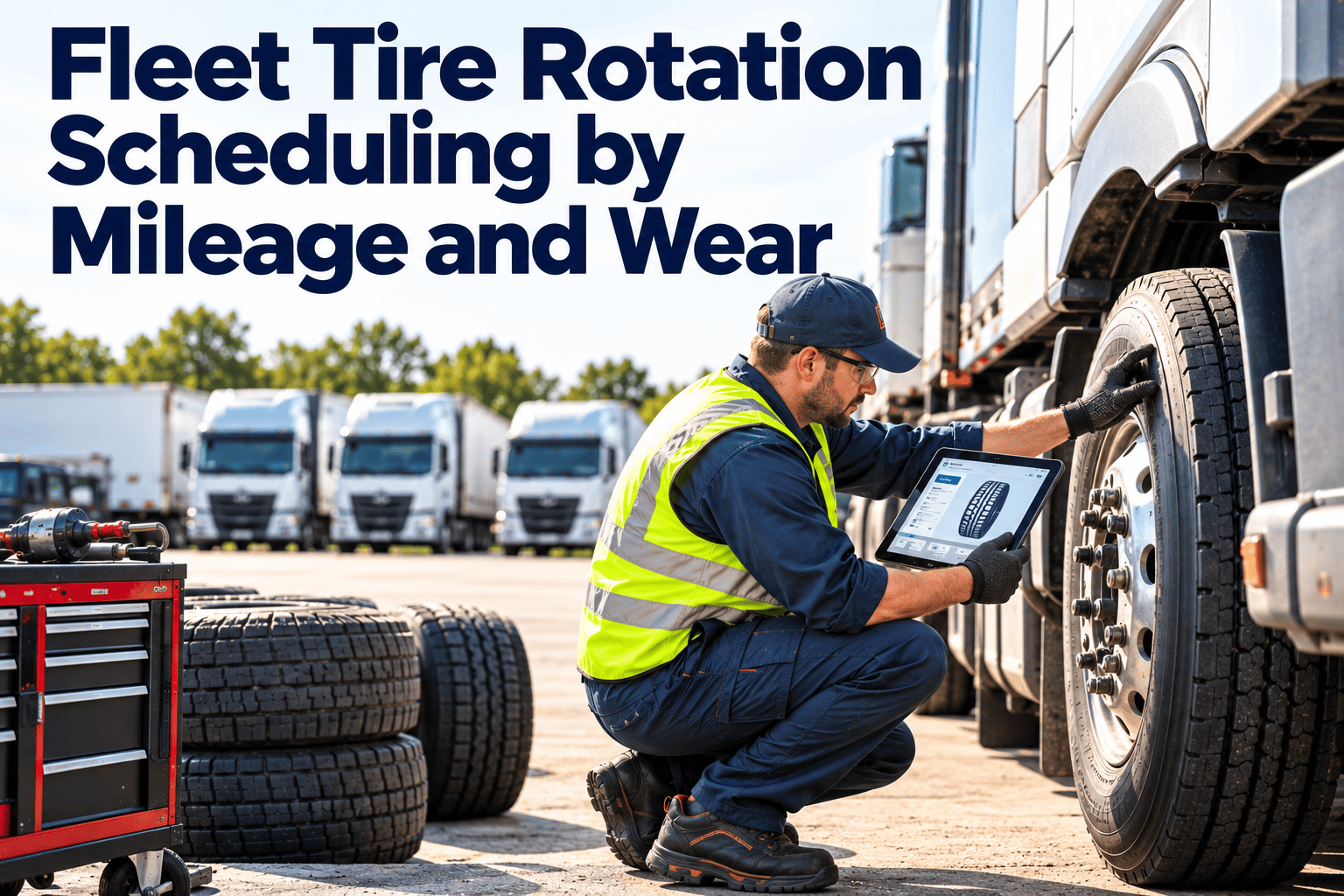
- Preventive maintenance: Trigger tire checks, rotations and alignment reviews by mileage or time.
- Work orders: Turn abnormal wear into alignment, suspension or replacement jobs.
- Asset history: Keep tire changes and alignment results on each vehicle.
- Inventory: Track tire stock, sizes and casings, with reorder alerts.
- Reporting: Review cost trends and repeat issues.
Frequently Asked Questions
Make Tire Wear Data Work for Your Fleet
Connect inspections, alignment, repairs and tire stock in one maintenance system built for fleet teams.