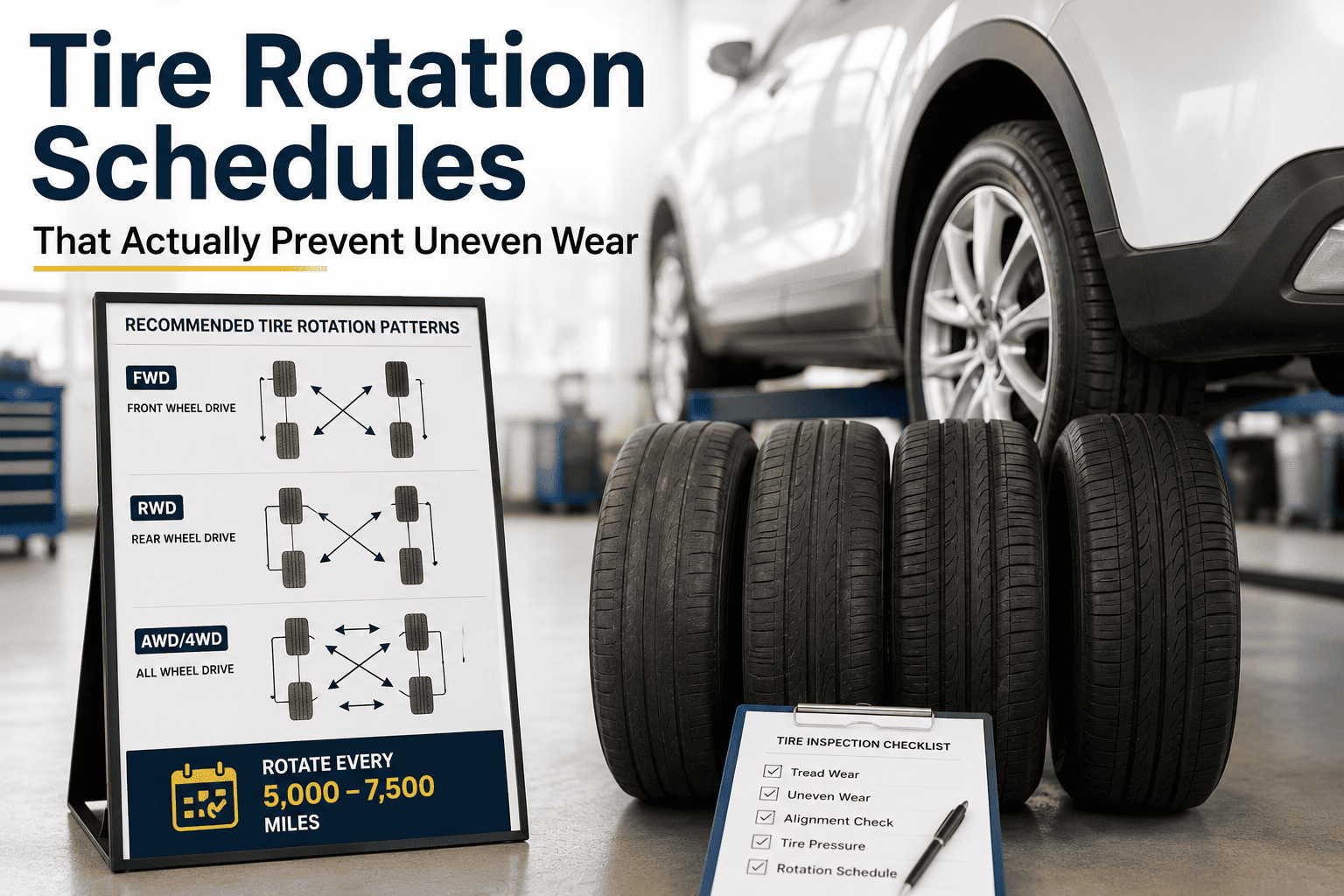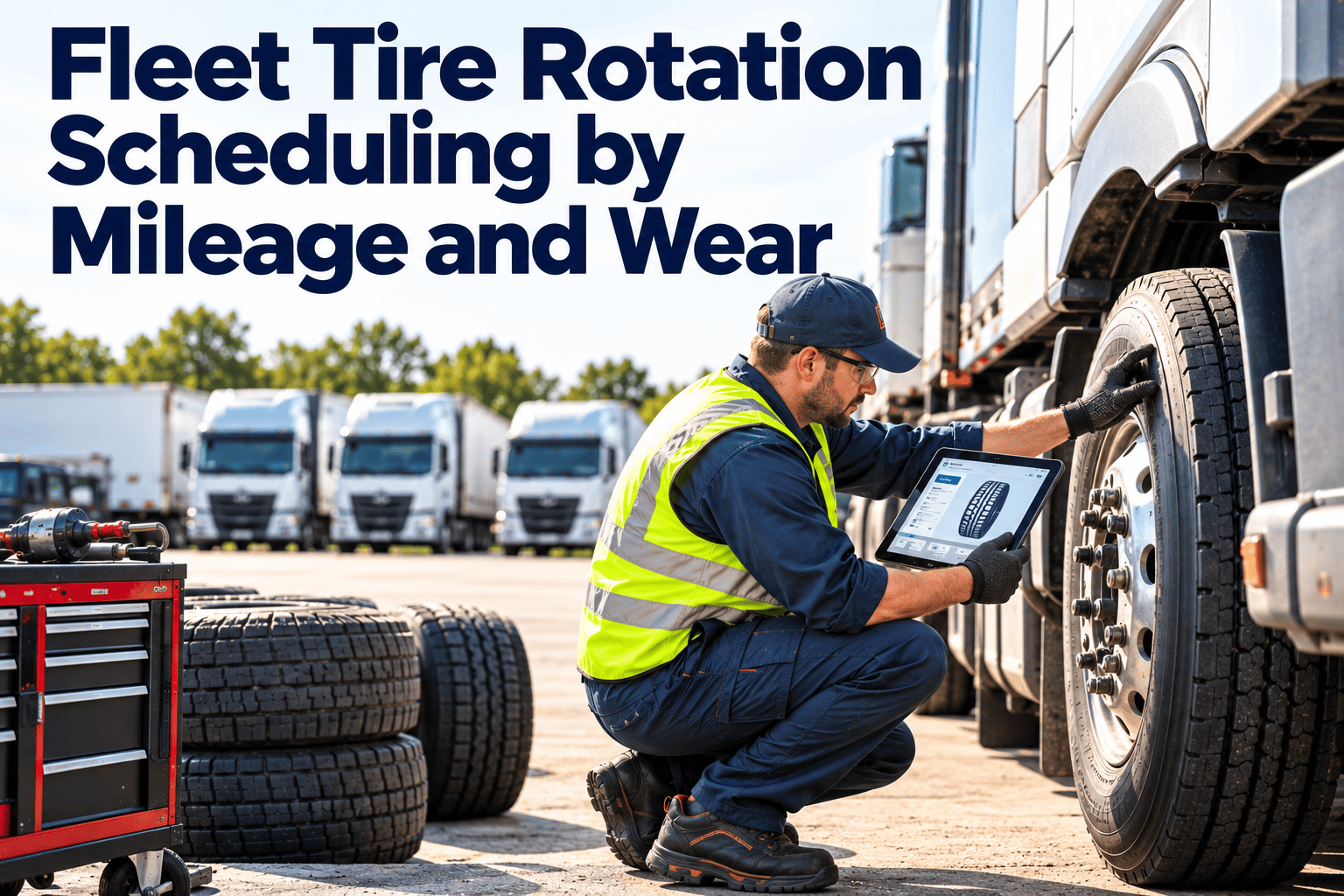
Most fleets rotate tires on a fixed mileage and call it done. The trouble is that a vehicle with a bad alignment, a heavy payload or a mixed city and highway route can wear its tires much faster than the calendar assumes. Rotating by mileage alone either wastes shop time or lets wear get ahead of you. A better schedule combines mileage with measured tread depth and pressure history, which is easier to run in a fleet maintenance management system that keeps every tire reading against the vehicle.
Tires and Wheels | Fleet Preventive Maintenance
Fleet Tire Rotation Scheduling by Mileage and Wear
Trigger rotations on odometer intervals and on measured wear differences between axle positions, so tires wear evenly and come out of service on your terms.
Steer LFront axleSteer R
Drive LDrive axleDrive R
Rear LRear axleRear R
Why Mileage Alone Is Not Enough
Mileage-Only Schedule
- Same interval for every vehicle
- Ignores load, route and driver habits
- Misses alignment and suspension problems
- Wear differences discovered late
Mileage Plus Wear
- Baseline interval set by vehicle class
- Tread depth readings compared by position
- Early rotation when spread exceeds your limit
- Wear patterns raise alignment or pressure work
Always follow the tire and vehicle manufacturer guidance. Rotation patterns differ for directional tires, dual assemblies, all-wheel drive and electric vehicles.
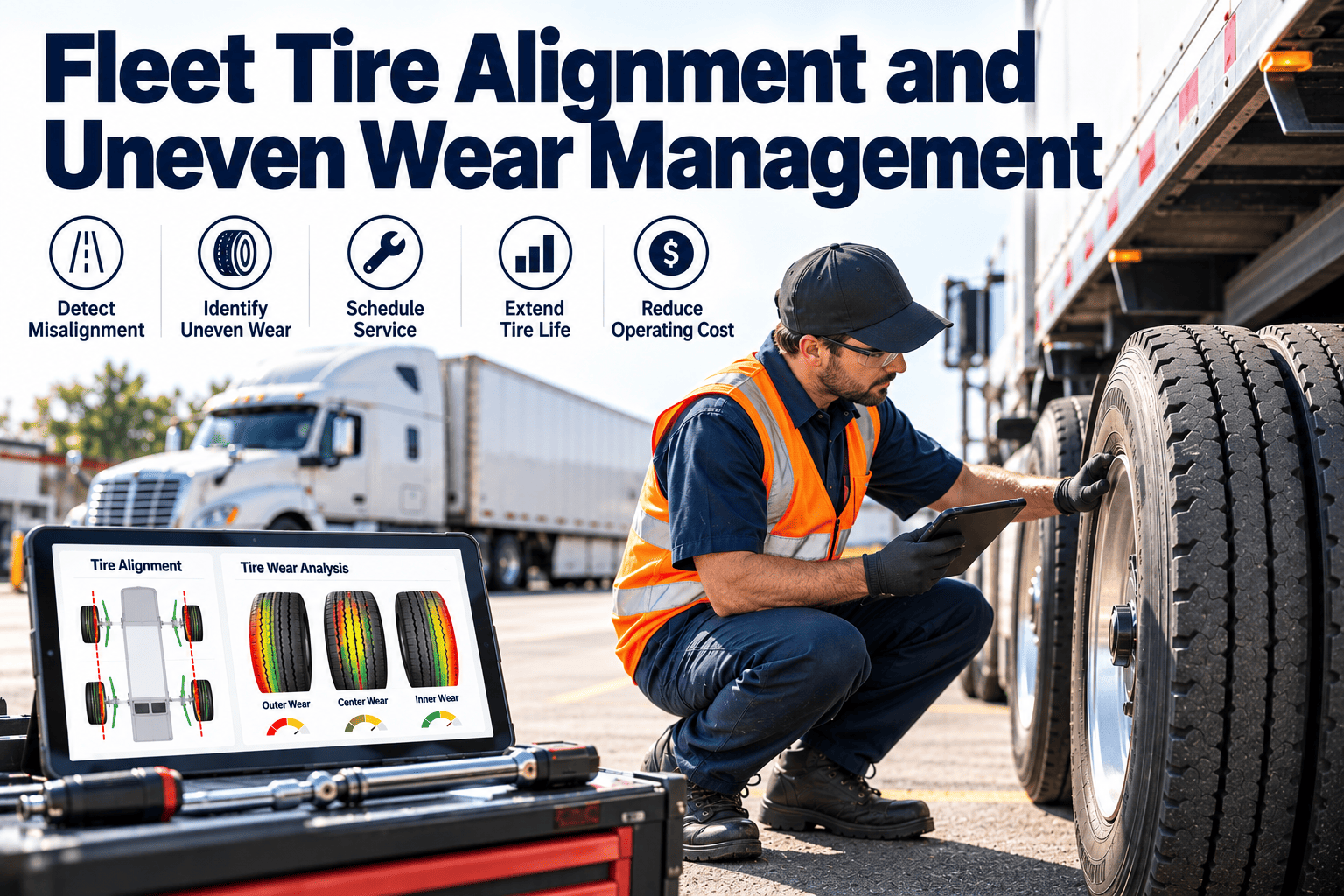
Read the Wear Pattern Before You Rotate
| Wear Pattern | Usual Cause | Maintenance Response |
|---|---|---|
| Both shoulders worn | Chronic underinflation | Check pressure routine, inspect for slow leaks |
| Center worn | Overinflation | Correct pressure, review who adjusts and how |
| One shoulder worn | Alignment or camber issue | Alignment check before rotating |
| Feathered edges | Toe misalignment | Alignment and steering component inspection |
| Cupping or scalloping | Worn shocks, imbalance, loose parts | Suspension and balance inspection |
| Flat spots | Hard braking or lockups | Brake and driver behaviour review |
Rotating a tire that is wearing because of alignment only spreads the damage. Fix the cause, then rotate.
A Trigger-Based Rotation Decision
1
Interval reached
Preventive maintenance fires at the baseline mileage for the vehicle class.
2
Measure at each position
Record tread depth and cold pressure on the work order.
3
Compare against limits
Spread between positions, remaining depth and any abnormal pattern.
4
Rotate, repair or replace
Rotate if even; raise alignment or suspension work if not; schedule replacement near limit.
5
Reset the next trigger
Next interval is set from the new readings, not just the odometer.
Set Intervals by Vehicle Class
Light-Duty and Vans
Frequent, short-interval rotations suit most passenger-type tires; many fleets pair them with each oil service.
Medium and Heavy Trucks
Position matters more than a fixed pattern. Steer tires are often moved to drive positions only after wear checks.
Electric Vehicles
Extra weight and instant torque can speed wear, so wear readings deserve closer review.
Use these as planning categories, then tune each interval using your own wear data.
Schedule Tire Work From Real Wear Data
Set interval triggers, record tread depth on every work order and see which vehicles wear unevenly.
Compliance Points That Affect the Schedule
Tread depth limitsUS federal rules for commercial vehicles set minimum tread depths that differ for steer and other positions. Check the current regulation for your jurisdiction.
Pre-trip inspectionDriver checks for tire condition and inflation feed the maintenance queue.
RecordsKeep proof of inspections and repairs per vehicle for audits and warranty claims.
Tire Data Worth Capturing on Every Job
Minimum Record per Tire Position
- Position and tire serial
- Tread depth at multiple points
- Cold inflation pressure
- Odometer at service
- Wear pattern observed
- Action taken and next due
Costs Hidden Inside Poor Tire Management
Early Replacement
Uneven wear removes tires before their useful life ends.
Roadside Events
Underinflated or damaged tires raise breakdown risk and delay deliveries.
Fuel Use
Underinflation increases rolling resistance, which can affect fuel consumption.
Warranty Gaps
Missing service records weaken claims.
How Oxmaint Supports Tire Rotation Programs
Preventive maintenanceMileage and time-based rotation and inspection schedules per vehicle class.
Work ordersTread depth, pressure and notes recorded at each position, with photos.
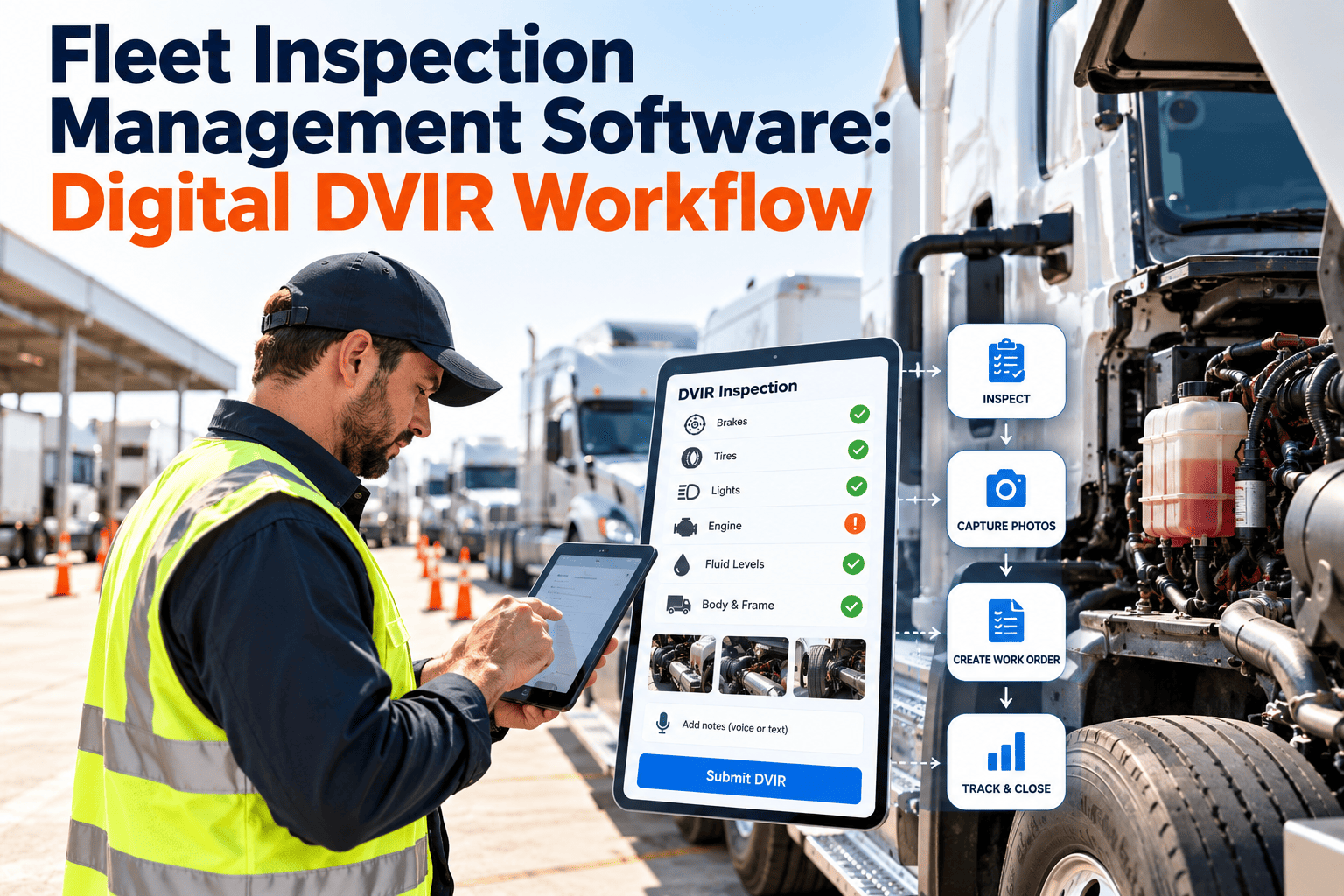
InspectionsMobile checklists for drivers and technicians feed defects into the queue.
Asset historyEvery tire event kept against the vehicle for trend review.
Parts and inventoryTrack tire stock, sizes and replacement needs.
ReportingFind vehicles with repeat uneven wear or overdue tire work.
KPIs to Track
Rotation Compliance
Done within interval
Wear Spread
Depth difference by position
Tire Removals
Planned versus early
Tire Road Calls
Events per period
Frequently Asked Questions
How often should fleet tires be rotated?
It depends on vehicle type and manufacturer guidance. Start with a baseline interval and adjust using measured wear.
Should steer tires be rotated?
Many heavy-duty fleets manage steer positions by wear rather than a fixed pattern. Follow tire maker advice.
Can rotation fix uneven wear?
Only if the cause is corrected. Alignment, pressure and suspension problems need repair first.
Can I schedule by mileage in software?
Yes, Oxmaint supports mileage and time-based preventive maintenance schedules.
Where can I see a tire workflow?
You can book a demo to review a tire inspection template.
Make Every Tire Rotation Count
Combine mileage, wear readings and repair history in one maintenance record and reduce early tire removals.