Tire violations remain one of the top reasons commercial vehicles get placed out of service during roadside inspections. During the 2025 CVSA International Road check, inspectors identified 2,899 tire-related out-of-service violations, accounting for 21.4% of all vehicle violations. These failures impact more than just immediate operations—they affect your CSA scores, insurance rates, and ability to operate across state lines.
Understanding DOT and FMCSA tire regulations is essential for every fleet manager and driver. This comprehensive guide covers the specific requirements under 49 CFR 393.75, explains what inspectors look for, and shows how Oxmaint's compliance management platform helps you maintain audit-ready documentation that keeps your fleet on the road and out of trouble.
DOT / FMCSA Compliance for Tires Maintenance & Inspections
Master federal tire regulations, pass roadside inspections, and maintain audit-ready maintenance logs that protect your fleet and your business.
Key DOT Tire Regulations at a Glance
The Federal Motor Carrier Safety Regulations (FMCSRs) establish minimum safety standards for commercial vehicle tires under 49 CFR 393.75. Violations of these requirements result in out-of-service orders and CSA points.
Cold inflation pressure must not be less than specified for the load being carried. Tires inflated below 50% of maximum pressure are automatically out of service.
2025 CVSA Roadcheck: Tire Violation Statistics
Tire Violation Categories & Financial Impact
Tire violations carry significant financial penalties and operational consequences. Understanding the breakdown helps fleets prioritize compliance investments.
DOT vs CVSA: Understanding the Difference
CVSA out-of-service criteria are stricter than DOT minimum requirements. Know both to stay compliant.
| Requirement | DOT Minimum | CVSA OOS Criteria |
|---|---|---|
| Steer Tire Tread Depth | 4/32 inch | Less than 2/32 inch triggers OOS |
| Other Tire Tread Depth | 2/32 inch | Less than 1/32 inch triggers OOS |
| Tire Inflation | As specified for load | Below 50% of max pressure = OOS |
| Exposed Cord/Ply | Not permitted | Immediate OOS |
| Flat Tire / Air Leak | Not permitted | Immediate OOS |
Fleet Compliance Benchmarks
Industry data shows significant variation in tire compliance across fleet sizes and operational types. Use these benchmarks to assess your program.
Required Documentation for Compliance
Driver Vehicle Inspection Reports
Daily pre-trip and post-trip inspections documenting tire condition. Must include date, vehicle ID, defects found, and driver signature.
Preventive Maintenance Records
Documentation of scheduled tire inspections, rotations, pressure checks, and tread depth measurements.
Annual Inspection Reports
Comprehensive annual vehicle inspection verifying all tires meet regulatory standards. Required for every CMV.
Corrective Action Records
Documentation that defects noted on DVIRs have been repaired before vehicle returns to service.
Oxmaint's digital inspection system automatically generates and stores all required documentation in audit-ready format, with timestamps and electronic signatures that satisfy DOT requirements.
Inspection Frequency Requirements
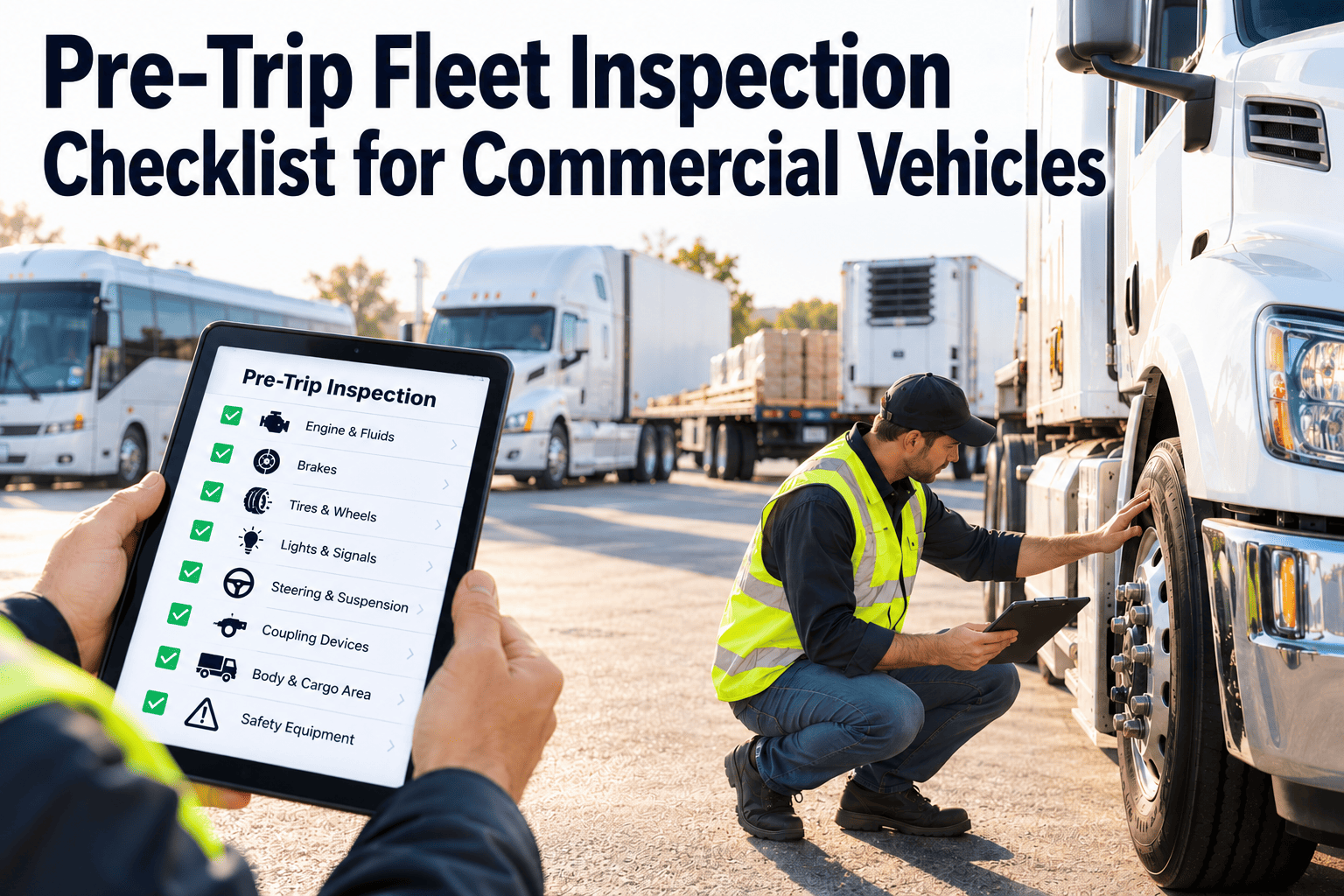
Pre-Trip Inspection
Drivers must visually inspect all tires before operating the vehicle. Check for obvious damage, inflation, and foreign objects.
Post-Trip DVIR
Complete Driver Vehicle Inspection Report documenting tire condition at end of each work day.
Pressure Measurement
DOT recommends checking cold tire pressure weekly using a calibrated gauge. Document readings in maintenance log.
Tread Depth Measurement
Measure and record tread depth at multiple points across each tire. Track trends toward minimum thresholds.
DOT Annual Inspection
Comprehensive inspection by qualified inspector verifying all tire requirements. Inspection report must be retained 14 months.
Consequences of Non-Compliance
Out-of-Service Orders
Vehicle cannot move until violations are corrected. Roadside repairs cost 4x more than scheduled maintenance. Drivers may also be placed OOS.
CSA Score Impact
Each tire violation adds 8 points to your Vehicle Maintenance BASIC. High scores trigger audits and can result in intervention.
Fines and Penalties
Federal penalties range from $1,000 to $16,000 per violation. Repeat violations and patterns of non-compliance increase penalties.
Insurance Impact
Poor compliance records lead to higher premiums. Some insurers refuse coverage for carriers with excessive violations.
Regional Enforcement Statistics
Tire violation enforcement varies by region. High-traffic corridors and port states show elevated inspection activity.
Note: States with major freight corridors conduct 3x more inspections than rural states. Fleets operating in these regions should prioritize proactive tire maintenance programs.
Frequently Asked Questions
What are the DOT minimum tread depth requirements for commercial vehicle tires
Under 49 CFR 393.75, steer tires must have a minimum tread depth of 4/32 inch, while all other tires (drive and trailer positions) require a minimum of 2/32 inch. Measurements must be taken at any point in a major tread groove. Tires below these minimums must be replaced before the vehicle can operate.
What tire conditions result in immediate out-of-service orders
Immediate OOS conditions include: exposed body ply or belt material, tread or sidewall separation, flat tires or audible air leaks, cuts exposing ply or belt material, and tires labeled "Not for Highway Use." Additionally, tires with inflation pressure below 50% of maximum are automatically out of service under CVSA criteria.
How long must tire inspection records be retained
Driver Vehicle Inspection Reports (DVIRs) must be retained for at least 3 months. Annual inspection reports must be kept for 14 months. Carriers should retain preventive maintenance records for at least 12 months, and many compliance experts recommend longer retention periods to demonstrate systematic maintenance programs during audits.
What is the difference between DOT and CVSA tire requirements
DOT regulations set minimum operational standards (4/32" steer, 2/32" other tires), while CVSA out-of-service criteria set stricter thresholds (2/32" steer, 1/32" other) at which vehicles are immediately removed from service. Fleets should maintain tires well above DOT minimums to avoid CVSA OOS orders during roadside inspections.
How can digital maintenance systems help with tire compliance
Digital CMMS platforms like Oxmaint automate inspection scheduling, capture electronic DVIRs with timestamps and signatures, track tread depth trends over time, alert managers when tires approach minimum thresholds, and maintain audit-ready records that satisfy DOT documentation requirements.
What happens if my vehicle fails a DOT tire inspection
The vehicle will be placed out of service and cannot move until all violations are corrected. Roadside repairs or tire replacements must be completed on-site or the vehicle must be towed. The violation is recorded and affects your CSA scores. Multiple violations can trigger compliance reviews and potential operating authority actions.
Build Your Audit-Ready Compliance Program
Join thousands of fleet managers who trust Oxmaint to maintain compliant documentation, automate inspection schedules, and pass DOT audits with confidence.