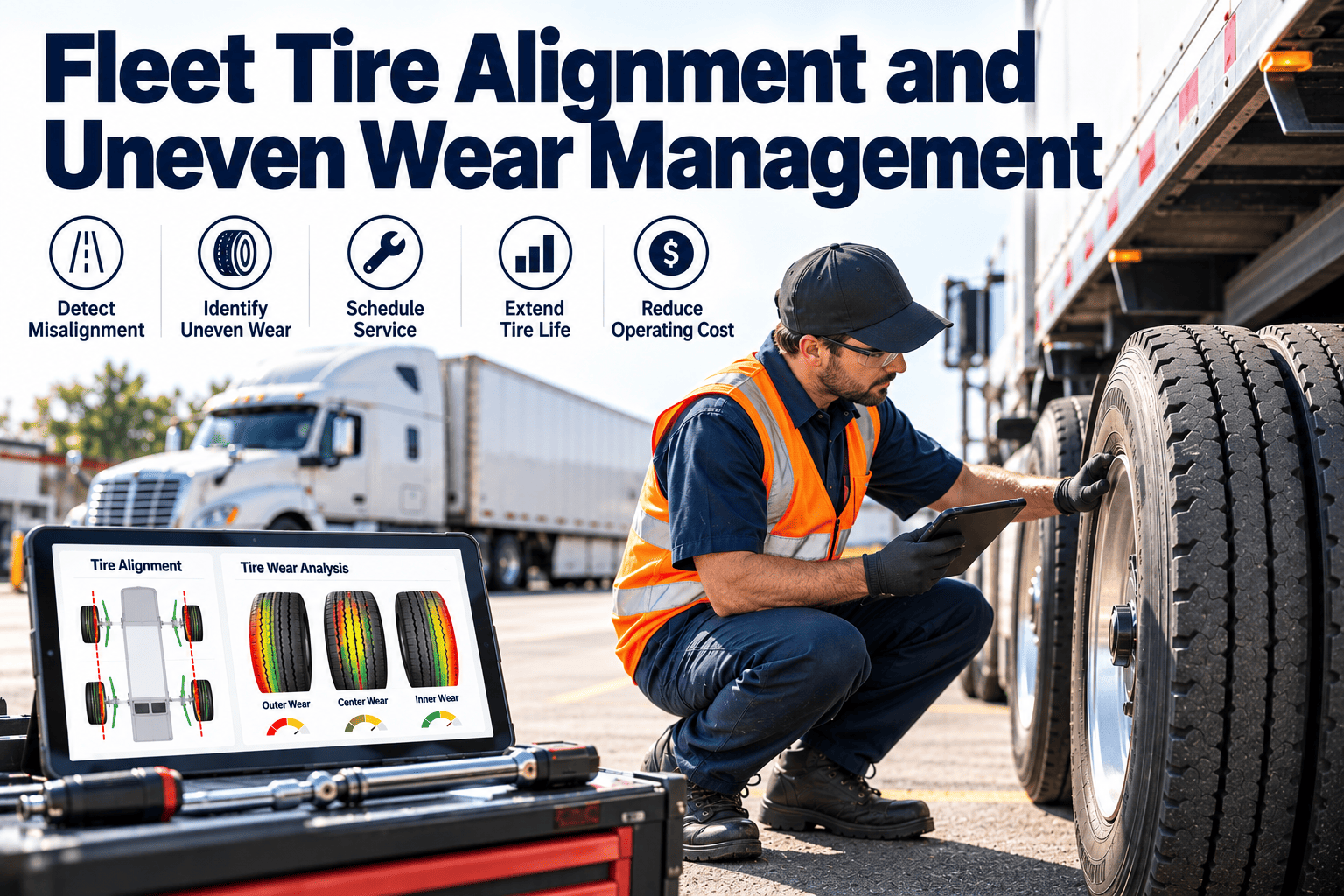
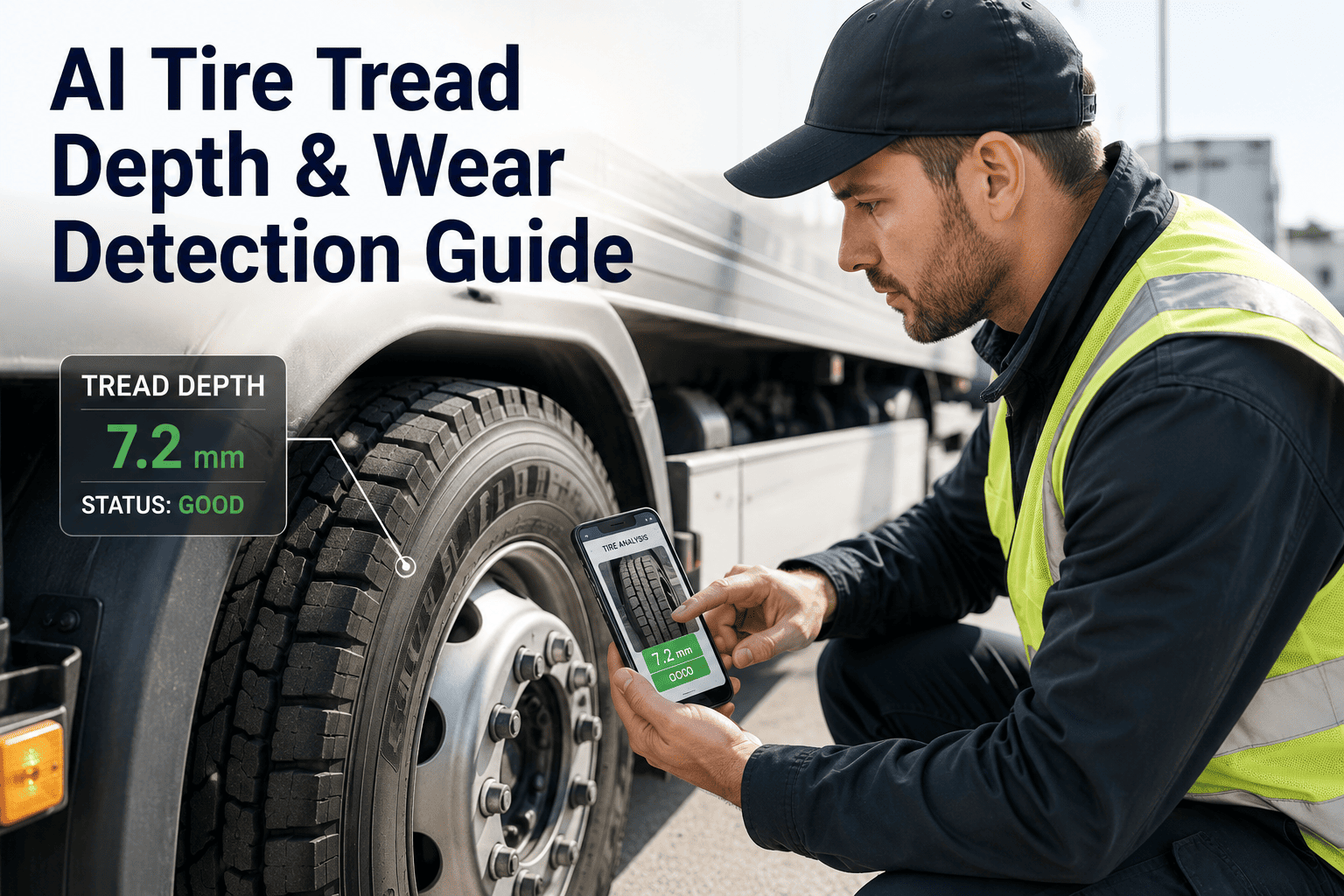
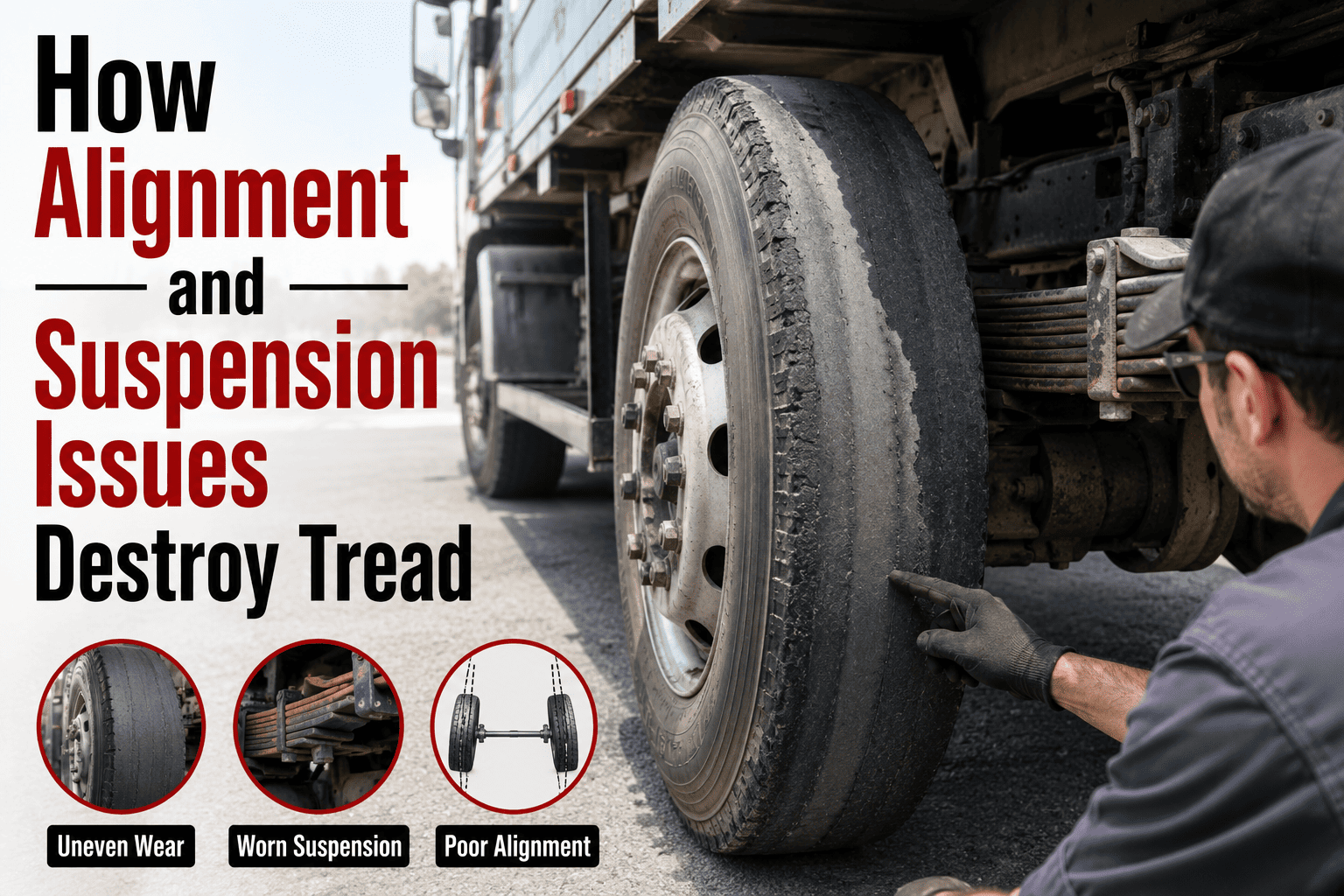
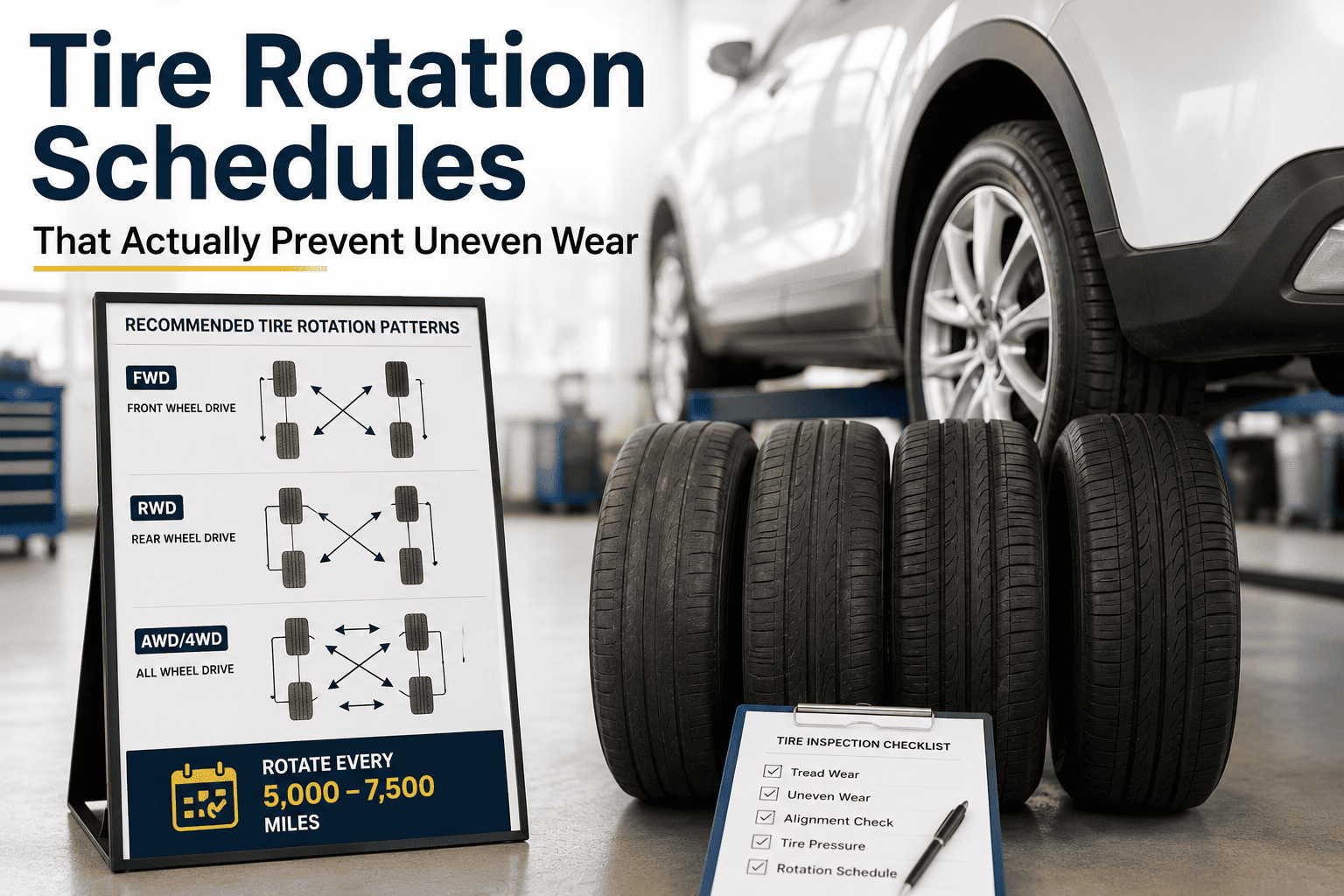
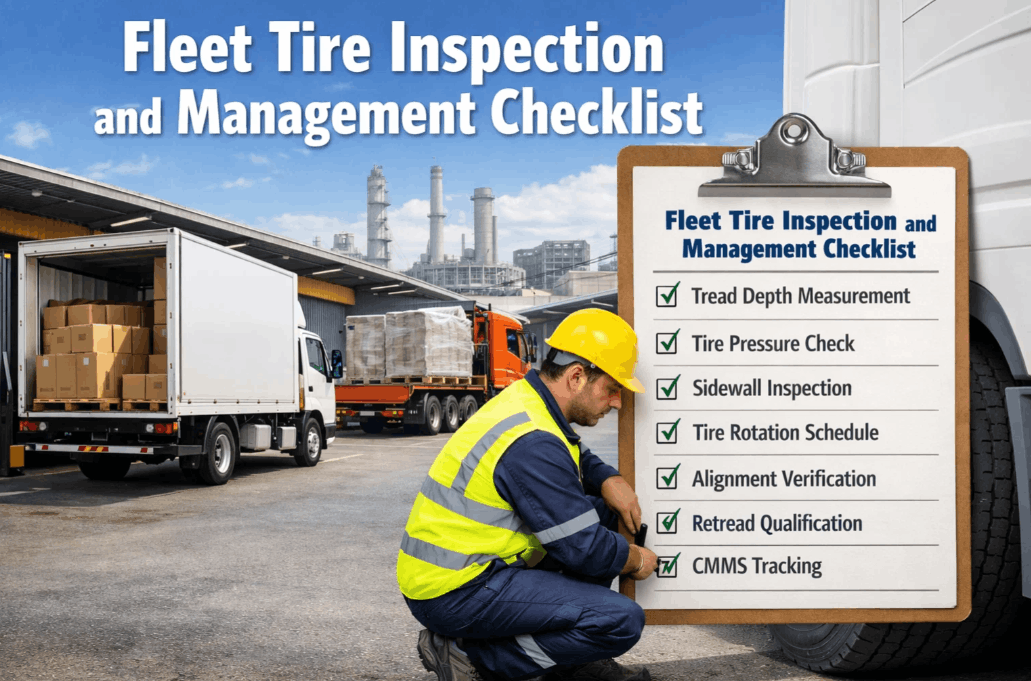
Uneven tire wear is one of the most overlooked yet costly issues in fleet and vehicle maintenance. It silently drains your budget through premature tire replacements, increases fuel consumption by up to 3%, and puts driver safety at serious risk — especially in wet or icy conditions. Whether you manage a fleet of commercial trucks or maintain a few service vehicles, catching uneven wear patterns early can save thousands of dollars annually and prevent dangerous blowouts on the road. This comprehensive checklist will help you systematically identify, diagnose, and prevent every type of uneven tire wear — so you can extend tire life, reduce downtime, and keep your operations running safely. Ready to digitize your tire maintenance? Sign up on OxMaint and start tracking tire conditions across your entire fleet today.
Center Wear
Looks like: Middle tread worn smooth while edges remain intact
Root cause: Over-inflation forces only the tire's center to contact the road
Risk level: Moderate — reduced traction, especially in rain
Edge / Shoulder Wear
Looks like: Both outer edges worn down faster than the center
Root cause: Under-inflation causes outer edges to bear the vehicle's weight
Risk level: High — increased heat buildup, blowout risk
One-Sided Wear
Looks like: Inner or outer edge significantly more worn than the other side
Root cause: Wheel misalignment (excessive camber or toe angle)
Risk level: High — compromised handling and steering response
Cupping / Scalloping
Looks like: Wavy, dipped patches across the tread surface
Root cause: Worn shocks, struts, or unbalanced tires causing bounce
Risk level: Severe — noisy ride, vibration, rapid tread loss
Feathered Wear
Looks like: Tread ribs smooth on one side, sharp on the other (sawtooth feel)
Root cause: Incorrect toe alignment causing the tire to drag sideways
Risk level: Moderate — increased road noise and reduced tire life
Flat Spot Wear
Looks like: One section of tread noticeably thinner than the rest
Root cause: Wheel lockup from hard braking or extended parking
Risk level: Moderate — thumping noise, vibration at speed
7-Point Uneven Tire Wear Inspection Checklist
Use this interactive checklist during every scheduled inspection. Check off each item as you complete it to ensure nothing gets missed. Fleet managers who follow a structured checklist like this reduce tire-related breakdowns by up to 40%. Want to automate this process? Book a demo with OxMaint to see how digital checklists work in the field.
Tire Pressure Verification
Tread Depth Measurement
Wear Pattern Analysis
Wheel Alignment Check
Suspension & Balance Inspection
Tire Rotation & Matching
Physical Damage & Age Assessment
Stop Guessing. Start Tracking Tire Health Digitally.
OxMaint turns paper checklists into smart, automated tire inspection workflows. Get real-time alerts when tires need attention, track wear trends across your entire fleet, and maintain audit-ready records — all from one platform.
Recommended Inspection Schedule
Consistency is everything in tire maintenance. This schedule ensures uneven wear is caught early — before it becomes a safety hazard or a budget drain. Digitize this schedule with OxMaint's free sign-up and never miss an inspection window again.
The Real Cost of Ignoring Uneven Tire Wear
Every uneven wear pattern you overlook is money leaving your fleet budget. Here's what's at stake — and why proactive maintenance with a platform like OxMaint pays for itself. Book a demo to see the ROI for your fleet.
Ready to Eliminate Tire Wear Surprises?
Join 1,000+ companies using OxMaint to automate tire inspections, schedule rotations and alignments, and track wear trends with digital precision. Your tires — and your bottom line — will thank you. Sign up now or speak with our team to get started.
Frequently Asked Questions
How often should I check my fleet tires for uneven wear
Perform daily visual walk-arounds before each trip, weekly pressure checks, and a full tread depth and wear pattern analysis at least once a month. Quarterly comprehensive audits with photo documentation are recommended for commercial fleets. With OxMaint, you can automate these inspection schedules so nothing slips through the cracks.
What is the most common cause of uneven tire wear
Improper tire inflation is the single most common cause. Under-inflated tires wear on the edges, while over-inflated tires wear in the center. After inflation issues, wheel misalignment is the next leading factor — particularly toe and camber angle deviations that cause one-sided or feathered wear patterns.
Can uneven tire wear be corrected or is the tire ruined
If caught early (minor wear variation), correcting the root cause — adjusting pressure, performing alignment, replacing worn suspension parts — can prevent further damage and let the tire wear more evenly going forward. However, severely worn tires with cupping, exposed cords, or deep one-sided wear should be replaced, as the structural integrity may be compromised.
How does a CMMS like OxMaint help prevent uneven tire wear
OxMaint digitizes your entire tire maintenance workflow — from automated inspection scheduling and digital checklists to real-time alerts when tires need rotation, alignment, or replacement. It tracks wear data across every vehicle, identifies patterns over time, and maintains audit-ready records for DOT compliance. This proactive approach catches small issues before they become expensive problems.
What is the minimum legal tread depth for commercial vehicles
Per DOT and FMCSA regulations, steer tires on commercial vehicles must have a minimum tread depth of 4/32 of an inch, while drive and trailer tires require at least 2/32 of an inch. However, safety experts recommend replacing tires well before reaching these minimums, as stopping distance and wet traction degrade significantly as tread wears down.
How much money can proper tire maintenance save a fleet annually
Fleets that implement consistent tire maintenance programs typically see 25–30% longer tire life, 2–3% improvement in fuel efficiency, and a significant reduction in unplanned roadside breakdowns. For a mid-size fleet of 20–50 vehicles, this can translate to tens of thousands of dollars in annual savings — easily covering the cost of a maintenance management platform like OxMaint many times over.
When should I retire a tire even if it still has tread remaining
Tires should be retired if they are more than 6 years old (check the DOT date code on the sidewall), show visible sidewall cracking or dry rot, have any bulges or deformities, or display exposed cords or belts. Age-related rubber degradation can cause sudden failures even when tread depth appears adequate, making regular age-based retirement policies essential for fleet safety.