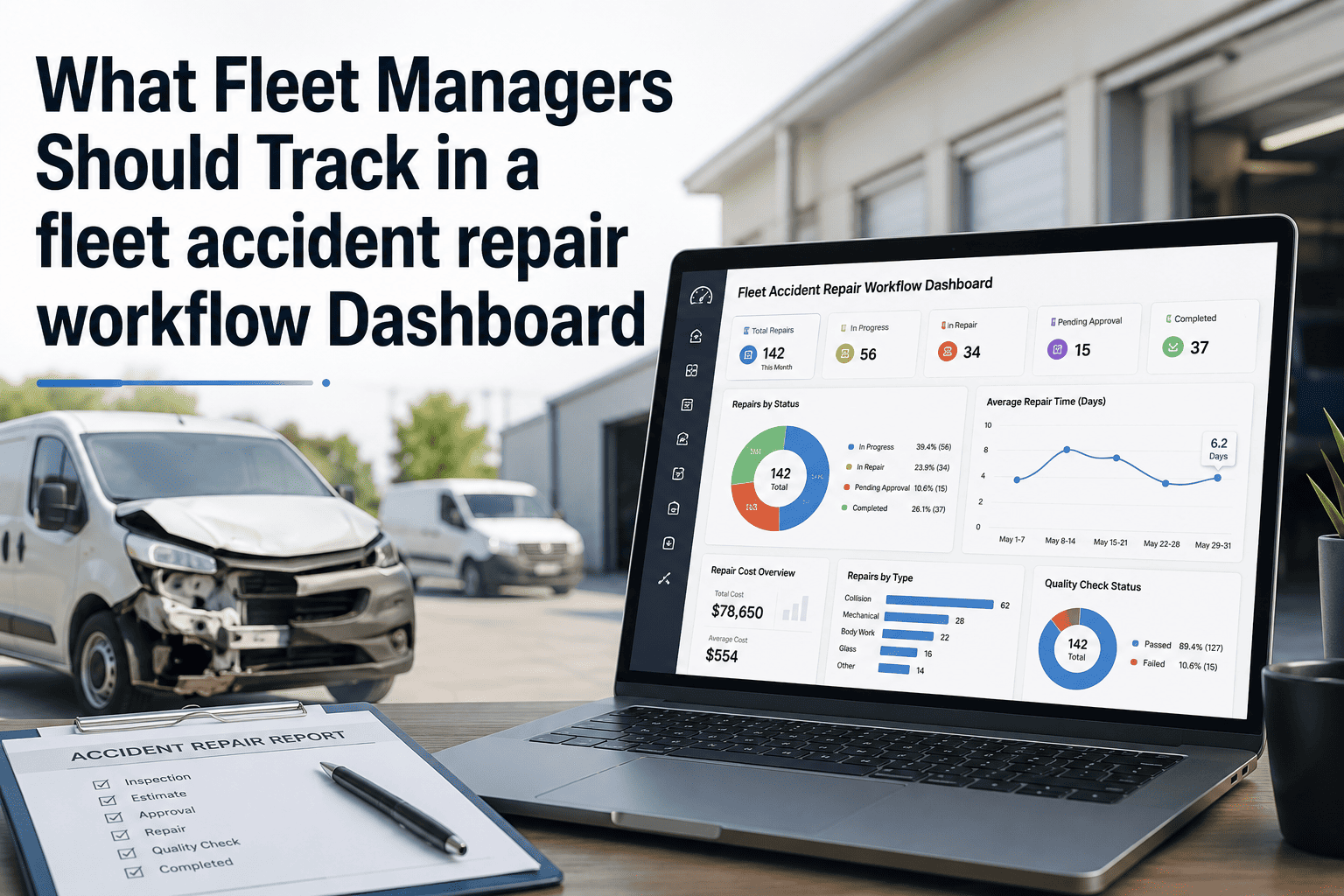
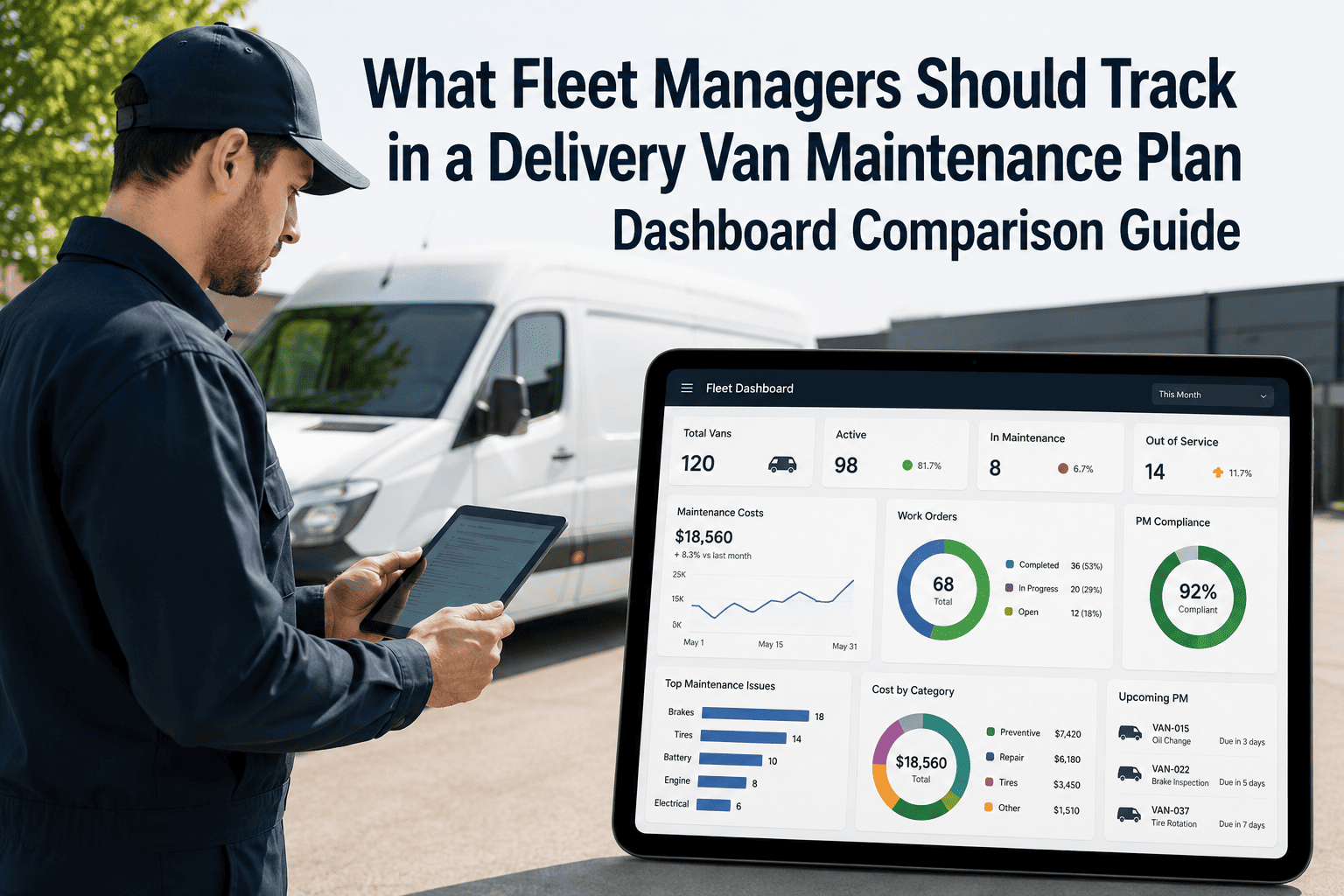
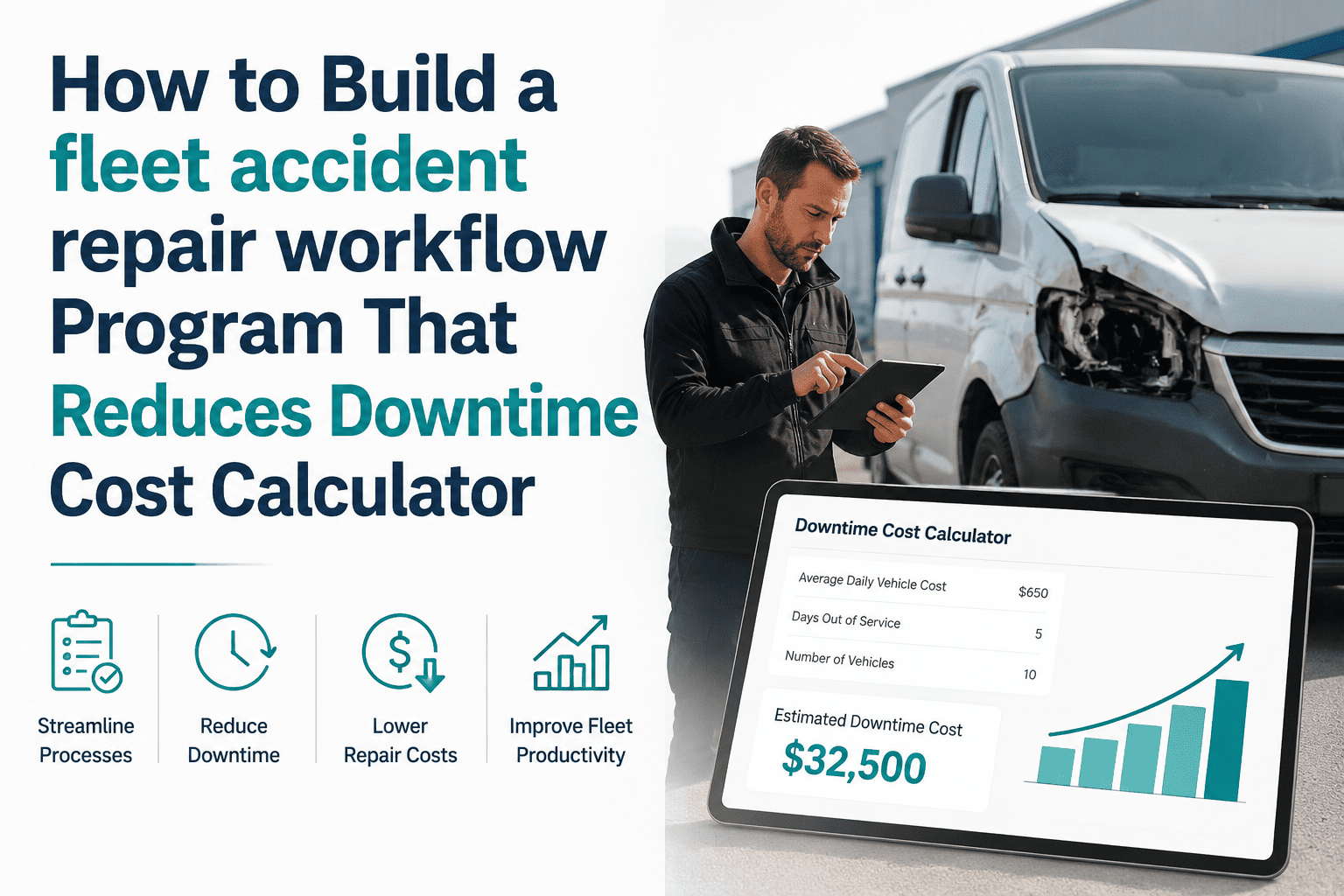
The first 48 hours after a fleet accident decide everything that follows — how fast the vehicle gets back on the road, how much of the repair cost gets recovered, and whether the paperwork holds up if a claim gets disputed later. Most fleets handle this with scattered phone calls, email threads, and a folder of photos nobody can find when the adjuster asks for them. A proper accident repair workflow dashboard turns that chaos into a single tracked process from the moment a driver reports a collision to the day the vehicle is certified back in service. Here's exactly what that dashboard needs to track, built around the workflow inside OxMaint's fleet management platform.
Safety & Repairs · Accident Workflow
What Fleet Managers Should Track in an Accident Repair Workflow Dashboard
From first report to certified return-to-service — the metrics and stages that keep accident recovery fast, documented, and audit-ready.
48 hrs
Window where documentation quality decides claim outcomes
$15B
Recoverable subrogation dollars fleets fail to claim yearly
6 wks
Possible downtime for an undocumented major collision case
The Five Stages Every Accident Workflow Dashboard Should Show
An accident isn't a single event to log — it's a multi-week process with distinct stages, each with its own risk of delay. A dashboard that only shows "open" or "closed" misses where the actual bottlenecks happen.
01
Incident Report
Driver-submitted report with photos, location, and a factual account, captured before details fade or get disputed.
02
Liability Investigation
Police reports, witness statements, and telematics data gathered to establish fault before repairs are authorized.
03
Repair Authorization
Estimate approved and routed to a certified shop, with insurer notified so repairs aren't delayed waiting on payment.
04
Repair & Return-to-Service
Vehicle repaired, inspected, and certified roadworthy before it's released back to dispatch.
05
Subrogation Recovery
Demand package sent to the at-fault party's insurer, with full documentation to maximize reimbursement.
Core Metrics Your Dashboard Should Surface
Tracking too many numbers creates dashboard fatigue, where managers stop checking it altogether. These are the metrics that actually drive decisions during accident recovery.
| Metric | What It Reveals | Why It Matters |
|---|
| Time to First Report | How fast a driver documents the incident | Delayed reporting weakens both liability and insurance positions |
| Repair Cycle Time | Days from authorization to return-to-service | Directly tied to lost route capacity and rental costs |
| Documentation Completeness | Photos, reports, and statements on file per case | Incomplete files are the leading cause of denied or reduced claims |
| Subrogation Recovery Rate | Percentage of eligible costs actually recovered | Billions in recoverable costs go unclaimed industry-wide each year |
| Repeat Incident Vehicles | Vehicles or drivers appearing in multiple cases | Flags a need for driver coaching or vehicle-specific review |
Why Documentation Quality Decides Claim Outcomes
The difference between a fast, fully reimbursed claim and a stalled one usually isn't the accident itself — it's what got documented in the hours after. Insurers and adjusters move faster and pay more completely when the file is airtight from day one.
Scattered Manual Tracking
Photos and reports live across phones, emails, and paper files
No clear owner for each stage of the repair process
Subrogation demand packages assembled late, weakening recovery odds
Repeat incident patterns by vehicle or driver go unnoticed
Centralized Dashboard Workflow
Every photo, report, and statement attached to one case record
Each stage has a clear status and an owner accountable for it
Demand packages auto-compiled with full documentation attached
Repeat incident trends surfaced automatically across the fleet
Accident Recovery, Tracked
Turn Every Accident Into a Tracked, Recoverable Case
OxMaint gives fleet managers one dashboard from incident report through subrogation recovery, so no documentation gap costs you a claim.
Building a Repair Authorization Checklist
Repair authorization is where delays quietly creep in — waiting on an estimate, waiting on insurer sign-off, waiting on shop scheduling. A standard checklist removes the guesswork from this stage.
Damage assessment completed and photographed from multiple angles
Repair estimate obtained from a certified shop within the network
Insurer notified with case number and documentation attached
Rental or replacement vehicle arranged if downtime affects routes
Repair authorized and shop scheduling confirmed in writing
Frequently Asked Questions
What should an accident repair dashboard track first?+
Time to first report and documentation completeness matter most early on, since both directly affect whether liability and insurance claims hold up later.
How does documentation quality affect subrogation recovery?+
A complete file with photos, reports, and repair invoices determines how quickly and fully an insurer recovers costs from the at-fault party — incomplete files are the most common reason recoverable costs go unclaimed.
Why track repeat incident vehicles separately?+
A vehicle or driver appearing in multiple accident cases signals a pattern worth investigating, whether it's a vehicle issue, a route risk, or a driver coaching need.
What slows down repair cycle time the most?+
Waiting on insurer sign-off and shop scheduling are the most common delays. A standardized authorization checklist removes much of that wait. Explore how with
OxMaint's workflow tools.
Can a dashboard help recover loss-of-use costs too?+
Yes, when the case record includes rental costs and downtime data alongside repair invoices, fleets are positioned to claim loss-of-use and diminished value, not just repair costs. See it in
a live demo.
OxMaint · Accident Repair Workflow
Don't Let a Missing Photo Cost You a Recoverable Claim
Every fleet accident is a race against incomplete documentation and slow handoffs between drivers, shops, and insurers. OxMaint keeps every stage — from first report to subrogation recovery — visible in one dashboard, so nothing slips through and no claim gets left on the table.