AI Label Verification for FMCG Compliance (2026 Guide)
By Jack Edwards on April 16, 2026
A bottling line in a food manufacturing plant in the UK had processed 2.4 million units that quarter — and 34,000 of them had label errors the AI vision system would have caught in under 80 milliseconds per unit. Wrong allergen declarations, transposed lot codes, barcodes printing 12% too faint to scan reliably at retail. The plant's manual spot-check system caught 11 of those units before they shipped. The rest were discovered during a retailer barcode rejection event that triggered a partial recall, a £190,000 regulatory penalty, and a 6-week audit by the FSA. The cost of implementing automated label verification on that line was £28,000. Start a free OxMaint trial and connect your label verification inspection data to your production asset records — or book a demo to see how AI vision integrates with OxMaint's quality management workflow.
AI Vision & Quality · FMCG Compliance
AI Label Verification for FMCG Compliance
Automated label inspection catches allergen errors, barcode failures, and ingredient mismatches at line speed — before non-compliant product reaches the retailer, the regulator, or the consumer.
Food recalls in the US are caused by undeclared allergens on labels
99.97%
Label inspection accuracy achievable with AI vision at full line speed
80 ms
Per-unit inspection time for AI barcode and label text verification
$10M+
Average cost of a Class I food recall — FDA data, including market withdrawal
What AI Label Verification Does — and Why Manual Spot Checks Fail
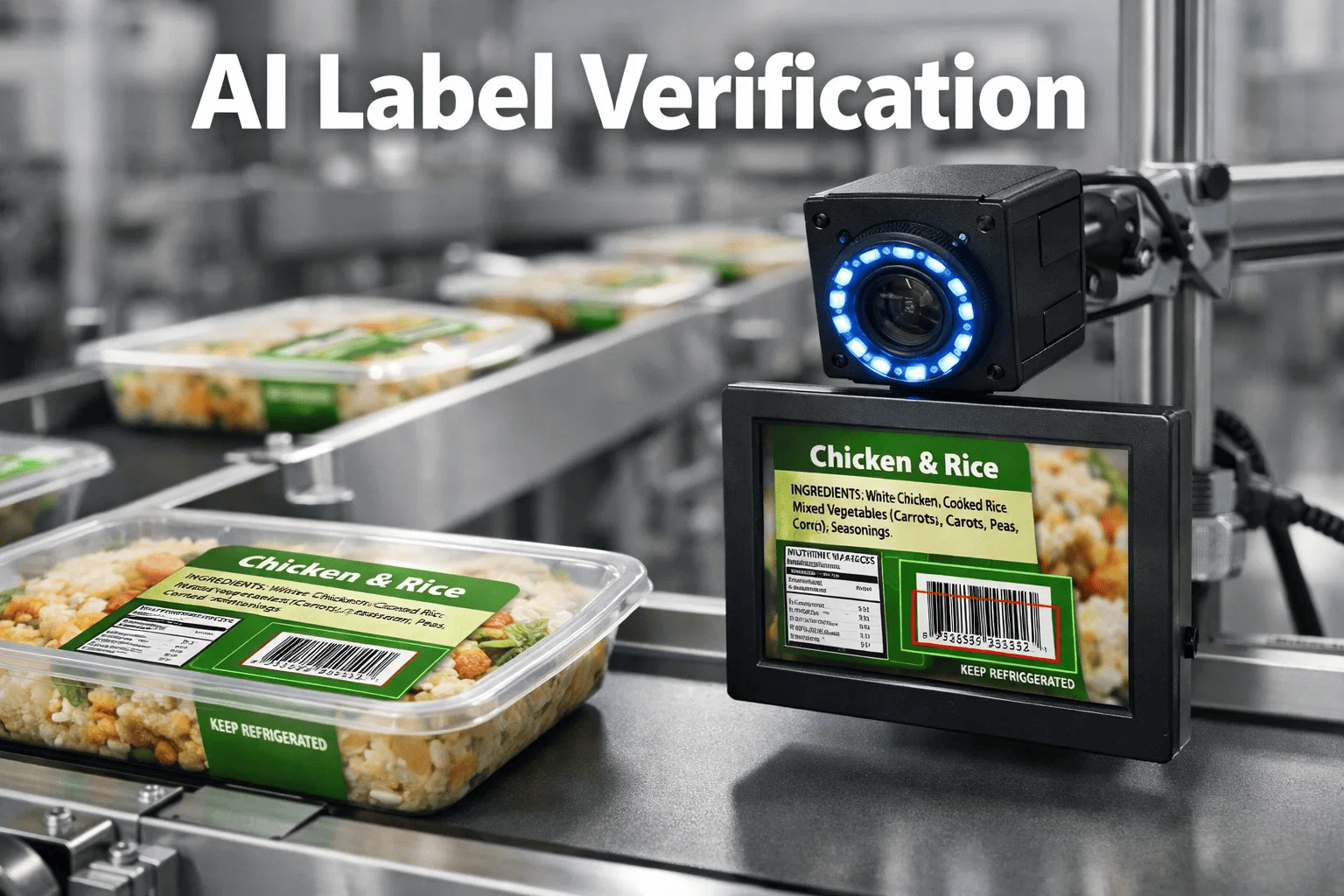
AI label verification uses machine vision cameras and deep learning models to inspect every unit on a production line in real time — comparing label content, barcode readability, and print quality against the approved master template for that SKU. Manual spot checks sample 0.1–0.5% of production. AI inspects 100%. A label error that occurs after a changeover, mid-run label stock change, or printer drift will affect hundreds of units before the next manual check discovers it. AI inspection catches the first defective unit.
Text Verification
OCR reads every text element — ingredients, allergens, net weight, nutrition facts — against approved master template per SKU
Barcode Verification
ISO-standard barcode grade checks — decode rate, bar width deviation, quiet zone compliance, and print contrast ratio per unit
Template Matching
Label placement, orientation, and artwork integrity verified against the digital master — detecting wrong version and substrate defects
Lot Code & Date Validation
Date codes and lot numbers cross-referenced against active production batch records — detecting missing, illegible, or incorrect coding
The 6 Label Defect Categories That Drive Regulatory Action
These six defect types account for the overwhelming majority of label-related recalls, retailer rejections, and FSA/FDA enforcement actions in FMCG production. Each is detectable by AI vision at line speed — none is reliably caught by manual inspection at production rates above 60 units per minute.
01
Undeclared Allergen
Wrong label applied after SKU changeover, or allergen text missing from batch due to label stock error. FDA Class I recall trigger. AI detects wrong label applied within the first unit post-changeover.
Avg. recall cost: $10M+
02
Barcode Below Grade
Print density drift, substrate contamination, or printer head wear causes ISO barcode grade to fall below Grade C — resulting in retail scanner rejection. Affects entire production run before the next manual check cycle.
Retail rejection rate: 12–28% of affected units
03
Wrong Artwork Version
Outdated label stock used after artwork update — containing superseded ingredient list, old nutritional data, or pre-reformulation allergen declaration. Undetectable by naked eye at line speed.
Regulatory fine (EU): up to €500,000 per event
04
Missing or Illegible Date Code
Ink jet coder drift, nozzle blockage, or substrate incompatibility causes date/lot code to print faint, smeared, or absent. Creates traceability gaps that trigger full batch quarantine during audits.
Traceability failure penalty: up to £20,000 UK
05
Net Weight Misstatement
Label declares incorrect net weight due to template error or wrong label applied. Weights and Measures Act violation in UK and EU — triggers compliance investigation when found at retail inspection.
UK Trading Standards fine: up to £5,000 per SKU
06
Label Placement Deviation
Label applied skewed, partially peeled, or positioned to obscure required declaration text. Compliance risk when mandatory information is obscured — particularly origin statements, allergen boxes, and preparation instructions.
Retailer deduction: £0.12–0.40 per rejected unit
How OxMaint Connects Label Verification to Production Asset Management
AI vision systems detect label defects in real time. OxMaint connects those defect events to the production asset records, maintenance history, and work order workflows that identify and resolve the root cause — whether it's a printer head failure, label applicator calibration drift, or an inkjet coder blockage.
Printer & Applicator Asset Registry
Every label printer, inkjet coder, and label applicator is registered in OxMaint with its PM schedule, service history, and condition score. When AI vision detects a print quality defect, the work order is linked directly to the offending printer asset — not just logged as a production event.
Defect-Triggered Work Orders
When inspection defect rates exceed threshold — barcode grade below C, text OCR confidence below 98%, placement deviation above 2mm — OxMaint generates a maintenance work order automatically. The technician sees the defect category, the linked asset, and the inspection data before arriving at the line.
Changeover Label Master Verification
OxMaint's changeover workflow includes a mandatory label verification step — confirming the correct label stock, artwork version, and batch coding parameters are loaded before the line starts. The changeover is not marked complete until the verification is signed off. This eliminates wrong-label-after-changeover events.
GMP-Compliant Audit Documentation
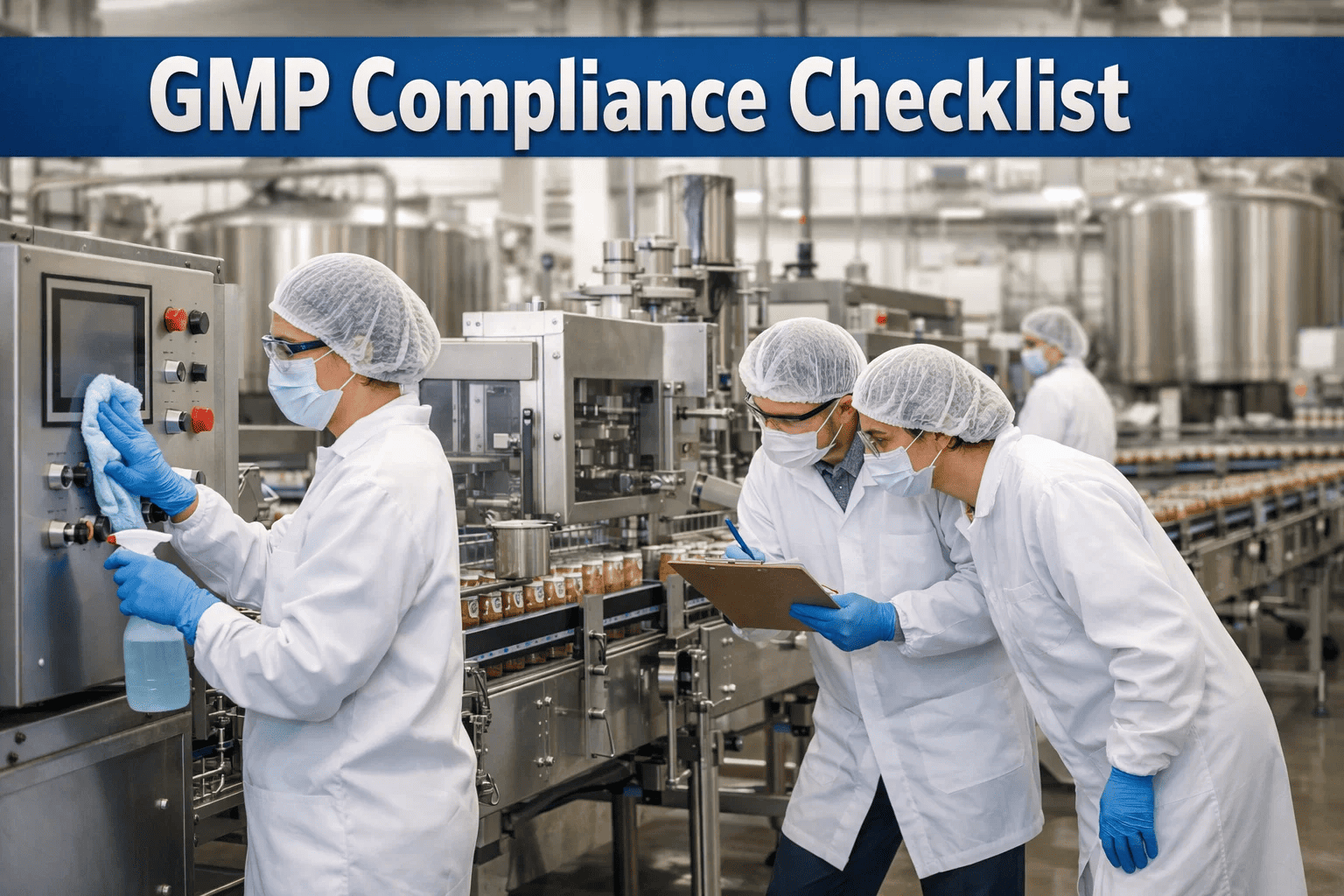
Every inspection event — pass, fail, defect type, unit count, corrective action — is logged with digital signatures and timestamps in OxMaint. When a regulator or retailer auditor requests label inspection records for a specific batch, the complete inspection history is filterable and exportable in under 5 minutes.
PM Scheduling by Production Volume
Print head cleaning, nozzle calibration, and label applicator pressure checks are scheduled by units produced — not just calendar intervals. A printer that runs 3 shifts instead of 1 gets PM at the correct interval for its actual wear, not its theoretical schedule. Defect rates trend down when PM tracks real usage.
Multi-Line Defect Rate Dashboard
Quality managers see label defect rates, barcode grade distributions, and inspection pass rates across all lines on a single dashboard. Lines trending toward higher defect rates trigger preventive intervention before they breach compliance thresholds — stopping the problem at the asset level, not the recall level.
Manual Inspection vs. AI Label Verification
Inspection Parameter
Manual Spot Check
AI Vision System
Coverage rate
0.1–0.5% of units
100% of units
Inspection speed
3–8 seconds per label
80 milliseconds per unit
Barcode grade measurement
None — pass/fail only
ISO graded per unit — A to F
Allergen text verification
Visual — error-prone
OCR match against master — 99.97% accuracy
First defective unit detected
After hundreds of units produced
Immediately — first non-conforming unit
Audit documentation
Paper log — incomplete, not searchable
Digital record per unit — batch-filterable export
Inspector fatigue factor
Significant after 20+ minutes
None — consistent at any run duration
Changeover risk window
Up to 500 units before detection
1 unit — first post-changeover inspection
Scroll right to view full table on mobile
Close the Compliance Gap
AI vision finds the defect. OxMaint fixes the asset that caused it. That is how you stop the next recall before it starts.
Printer and applicator asset registry. Defect-triggered work orders. Changeover verification workflows. GMP-compliant audit documentation. All connected in OxMaint — with every label inspection event tied to the asset that produced it. Start your free trial today or book a demo to see the quality workflow live.
A single allergen recall costs more than 10 years of AI inspection investment
99.97%
AI inspection accuracy at line speed
vs. 94–96% for trained human inspectors at sustained production rates
87%
Reduction in barcode rejects at retail
When ISO-graded barcode verification is applied at 100% coverage
1 unit
First defective unit detected at changeover
vs. 200–500 units before a manual spot-check catches a post-changeover error
Frequently Asked Questions
What FMCG labelling regulations does AI label verification support compliance with?
AI label verification supports compliance with EU Regulation 1169/2011 (Food Information to Consumers), FDA 21 CFR Part 101 (US food labelling), UK Food Safety Act 1990 and subsequent labelling regulations, and GS1 barcode grading standards. For allergen declarations specifically, AI verification supports compliance with the UK Natasha's Law requirements (October 2021) and EU Regulation 1169 allergen declaration rules. OxMaint's GMP documentation trail provides the inspection records required during FSA, FDA, and BRC audit reviews.
How does AI label verification handle label changes mid-run?
When a label stock changeover occurs mid-run, the AI vision system requires the master template to be updated in the inspection database before the new labels enter the inspection zone. OxMaint's changeover workflow triggers this template update as a mandatory step — the line cannot be marked as running on the new SKU until the template update is confirmed. Any label that does not match the current active template is rejected immediately, regardless of where in the run it appears.
What barcode grades are acceptable under retail trading standards?
Major UK grocery retailers (Tesco, Sainsbury's, Asda) require ISO 15416 barcode grades of C or above for linear barcodes and ISO 15415 grade C or above for 2D codes. Grade D barcodes pass at some scanners but fail reliably at others — creating intermittent scan failures that generate chargebacks. Grade A/B barcodes are the industry standard target for zero-rejection production. AI vision systems grade every barcode per ISO standard and flag grade D or below units for rejection — the grade distribution report gives QA teams trend visibility before retail rejection events occur.
How does OxMaint track which production assets contribute most to label defect rates?
When AI vision defect events are linked to asset records in OxMaint, the reporting layer calculates defect contribution by asset — showing which printer, applicator, or coder generates the highest proportion of rejections across a time period. Assets with above-baseline defect contribution rates are automatically flagged for PM review. Over multiple production cycles, the system identifies chronic underperformers for CapEx replacement planning — turning label defect data into asset lifecycle intelligence rather than just a rejection counter.
Stop the Next Recall Before It Starts
AI Catches the Defect. OxMaint Fixes the Asset. Together, They Protect Your Brand.
Printer and label applicator asset registry. Defect-triggered work orders at the first non-conforming unit. Changeover verification that prevents wrong-label events. GMP audit documentation that satisfies FSA, FDA, and BRC auditors. Multi-line defect rate dashboards. OxMaint connects every label inspection event to the maintenance intelligence that prevents it from happening again.