
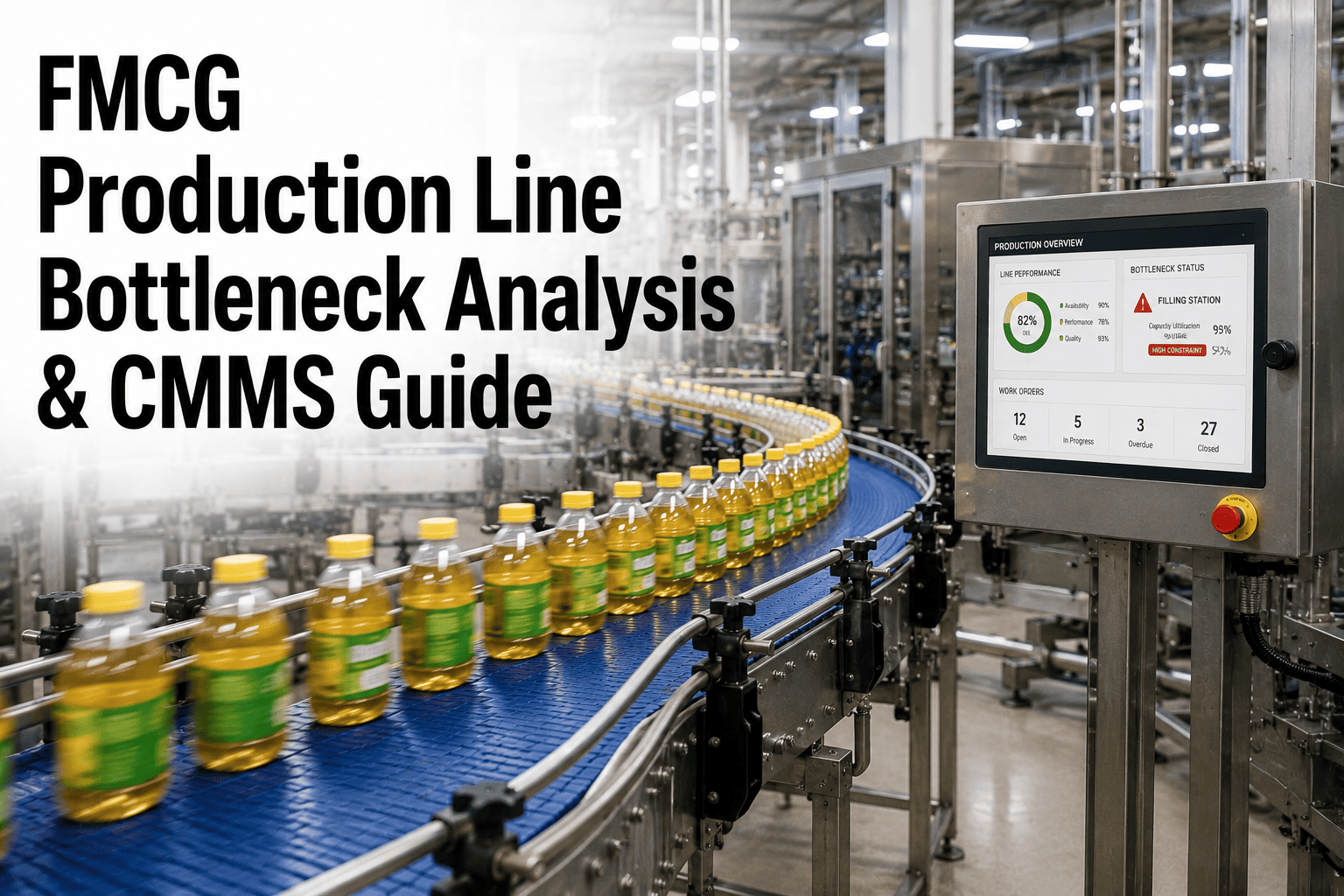
The production manager stared at the dashboard showing Line 4's output for the third consecutive week: 312 units per minute against a rated capacity of 420. The line wasn't broken—it was running. Every machine showed green status. No alarms, no faults, no downtime events logged. Yet the line was producing 26% below its theoretical maximum, and nobody could explain why. Upstream, the mixer was completing batches 4 minutes faster than the filler could consume them, creating a surge tank overflow that triggered automatic slowdowns. Downstream, the case packer waited idle for 11 seconds every cycle because the labeler couldn't keep pace during flavor changeovers. The bottleneck shifted three times per shift depending on the SKU running, the ambient temperature affecting viscosity, and which operator was managing the filler's speed setpoints. The $2.3 million production gap between actual and rated capacity wasn't caused by any single equipment failure—it was caused by the invisible interactions between every machine on the line that no human could simultaneously monitor, understand, and optimize in real time. Book a Demo to see how AI identifies and eliminates hidden production bottlenecks.
This guide examines how AI-powered process optimization transforms FMCG production lines—from mixing and batching through filling, labeling, and packaging—by continuously analyzing equipment interactions, process parameters, and throughput patterns to identify the dynamic bottlenecks that manual monitoring consistently misses. Sign Up to start connecting production data with maintenance operations.
Why FMCG Lines Run Below Rated Capacity
Six Critical Process Areas AI Optimizes on FMCG Lines
AI-driven production optimization addresses every stage of the FMCG manufacturing process. Each area contains hidden inefficiencies that compound into the 20–40% capacity gap most plants accept as normal. Sign Up to connect production insights directly to maintenance workflows for faster resolution.
Mixing & Batching Optimization
AI adjusts mixing times, speeds, and ingredient sequencing based on raw material variability, ambient conditions, and downstream consumption rate to eliminate batch-to-filler timing mismatches.
Filling Speed & Accuracy
Dynamic fill speed optimization based on product viscosity, temperature, and container type. AI balances speed against fill accuracy to minimize giveaway while maintaining target throughput.
Labeling & Coding Synchronization
Timing optimization between upstream filling and downstream labeling to eliminate the micro-stops and speed mismatches that accumulate into significant daily output loss.
Packaging & Case Packing
Case packer speed synchronization with upstream flow, collation pattern optimization, and carton erector timing adjustment to prevent the downstream bottlenecks that throttle entire lines.
Changeover Optimization
AI analyzes changeover sequences across all machines simultaneously, identifying parallel activities, eliminating wait states, and predicting optimal startup parameters for each new SKU.
Energy & Utility Optimization
Compressed air, steam, and electrical load profiling correlated with production schedules. AI reduces energy consumption per unit by optimizing equipment staging and utility demand sequencing.
Manual Optimization vs. AI-Driven Optimization
AI Optimization Performance by FMCG Line Type
AI optimization delivers different improvement profiles depending on line complexity, product variability, and current efficiency levels. These benchmarks reflect typical results from FMCG plants that have deployed AI-driven process optimization.
What AI Production Optimization Actually Monitors
Implementing AI Production Optimization: Four Phases
Instrument & Baseline
Install sensors on critical control points: machine speeds, buffer levels, temperatures, pressures, and cycle times. Run 4–6 weeks of data collection to establish baseline performance profiles for each SKU and shift pattern. Map the current bottleneck locations and frequency.
Model & Identify
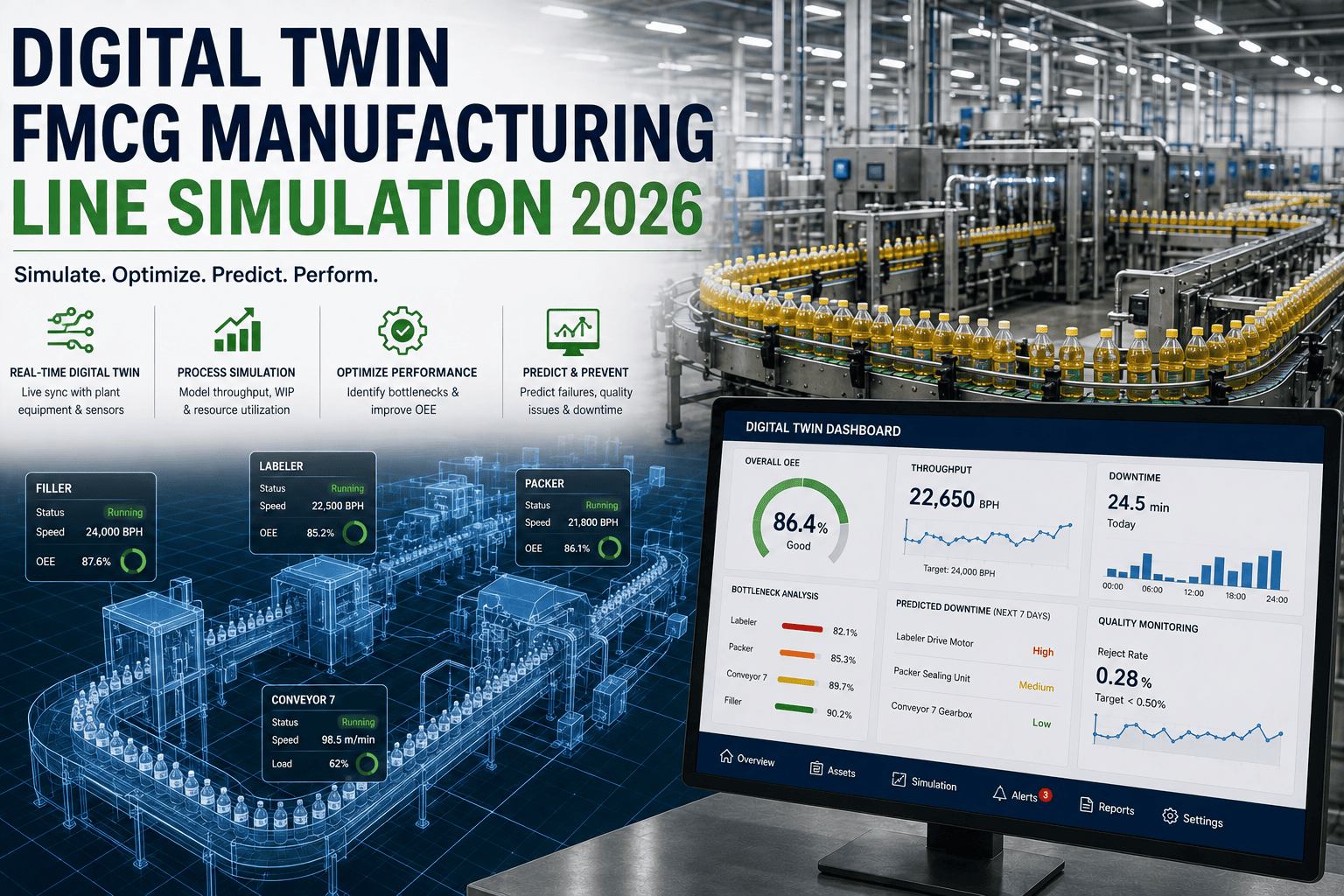
AI builds a digital model of line interactions—how each machine's speed, timing, and parameters affect every other machine. The model identifies the top 5–10 constraints that account for 80% of the capacity gap. Most plants discover 3–5 bottlenecks they didn't know existed.
Optimize & Validate
AI recommends specific parameter changes: speed adjustments, timing offsets, temperature setpoints, and changeover sequences. Changes are validated on individual SKUs first, then expanded across the full product mix. Operators see recommendations on dashboards with expected output improvement per change.
Sustain & Connect to Maintenance
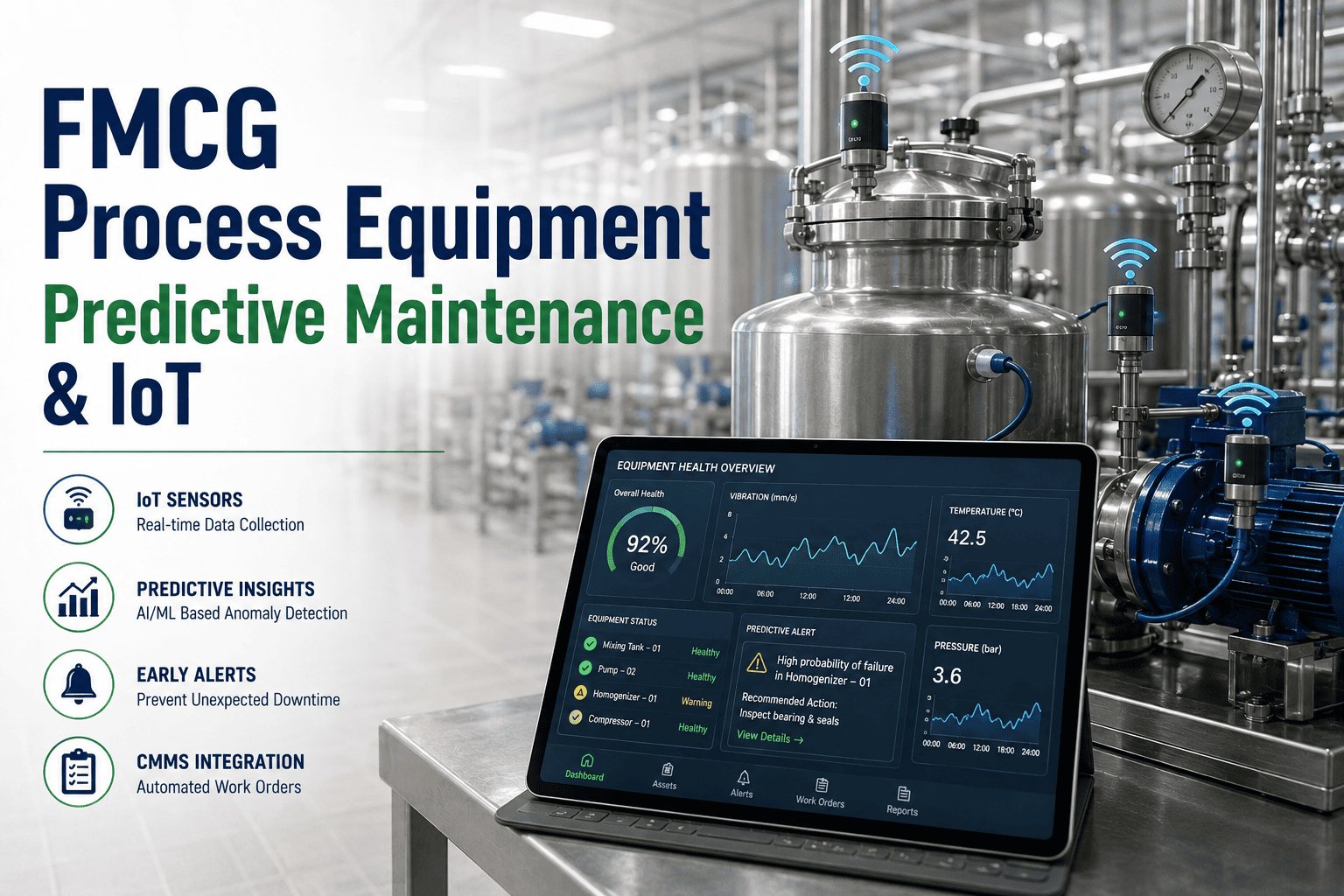
Continuous monitoring sustains gains and detects new constraints as they emerge. Equipment degradation alerts flow directly to Oxmaint for preventive maintenance. The AI learns from every shift, continuously refining its optimization model as products, materials, and equipment conditions evolve.
Frequently Asked Questions
How does AI identify bottlenecks that experienced operators miss?
Experienced operators observe one machine at a time and rely on visible symptoms—jammed products, empty buffers, or alarm lights. AI simultaneously monitors every machine's speed, cycle time, and buffer level and calculates which station is the active constraint at any given moment. Because bottlenecks in FMCG lines shift 3–7 times per shift depending on the SKU, temperature, and material conditions, no human can track these dynamic changes. AI identifies that Line 4's bottleneck moves from the filler (during high-viscosity products) to the labeler (during SKU changeovers) to the case packer (during multi-pack runs)—and recommends different speed profiles for each scenario. Book a Demo to see real-time bottleneck detection.
What data does AI need to optimize an FMCG production line?
At minimum: machine speed or cycle time from each station, buffer/accumulator fill levels between stations, and production counts. Better results come from adding process parameters (temperature, pressure, viscosity), changeover timing data, and quality metrics (fill accuracy, label placement, reject rates). Most plants already have 60–70% of this data available in PLCs and SCADA systems—AI integration taps existing infrastructure rather than requiring entirely new instrumentation. The first 4–6 weeks are spent collecting baseline data before any optimization recommendations begin.
How does production optimization connect to maintenance?
Equipment degradation is one of the largest hidden causes of production speed loss. A filler running 5% below setpoint because of worn valve seals, a labeler with increasing micro-stops from a developing bearing issue, or a case packer with slower cycle times from pneumatic pressure loss—all show up as production losses before they become maintenance failures. Oxmaint receives early warning alerts directly from the AI optimization system, creating maintenance work orders weeks before equipment fails. This closes the loop between production intelligence and maintenance action. Sign Up to connect production and maintenance workflows.
What throughput improvement should we expect from AI optimization?
Typical FMCG lines see 15–25% throughput improvement from AI optimization, though results vary by line complexity and current efficiency. Lines with frequent changeovers, multiple SKUs, and complex product-to-packaging combinations see the largest gains because they have the most dynamic bottlenecks. Lines already running near rated speed on single SKUs see smaller but still valuable improvements in changeover time reduction and quality consistency. The first 60–90 days of deployment usually capture the largest gains as the most obvious constraints are resolved.
Does AI optimization require replacing our existing control systems?
No. AI optimization layers on top of existing PLCs, SCADA, and HMI systems. It reads data from your current sensors and controllers, performs analysis in its own processing layer, and delivers recommendations either as operator-facing dashboard suggestions or as setpoint changes pushed to the control system through standard protocols (OPC-UA, Modbus, Ethernet/IP). No PLC reprogramming is required for the advisory mode. Plants that want closed-loop automatic optimization can enable it incrementally—one parameter at a time—after validating each recommendation in advisory mode first.
How does AI handle the variety of SKUs running on the same FMCG line?
AI builds separate optimization profiles for each SKU or product family. As each product runs, the system learns its specific speed constraints, process parameter requirements, changeover sequences, and quality sensitivities. Over time, the AI accumulates a library of optimal setpoints per SKU that operators can apply instantly at changeover—eliminating the 15–30 minutes typically spent finding the right speed after each product transition. Sign Up to start building your production-maintenance integration.


-in-fmcg-monitoring-production-quality-in-real-time.png)