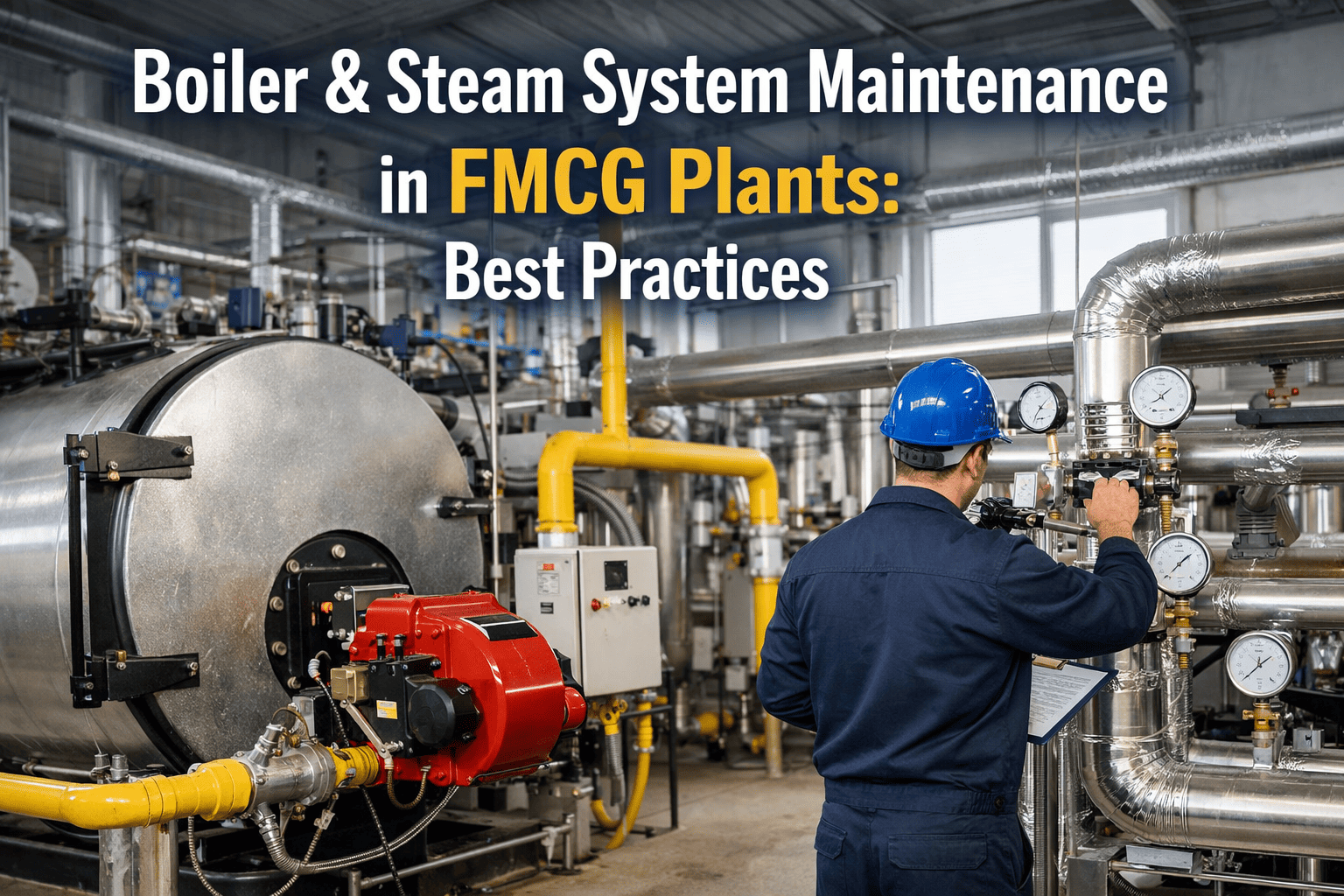
Boiler and Steam System Maintenance Checklist for FMCG

By Jonas on March 23, 2026

boiler-steam-system-maintenance-checklist-fmcg

A boiler failure in an FMCG plant is not a maintenance event — it is a production shutdown. Steam drives pasteurisation, CIP, cooking, drying, and packaging heat sealing simultaneously. A pressure relief valve that has not been tested, a water treatment programme that has drifted out of specification, or a steam trap that has failed open — any of these produces consequences that range from lost production to catastrophic equipment failure. Boiler systems are also the most heavily regulated utility in a food plant: annual inspections, pressure vessel certification, and water treatment records are legal requirements, not optional documentation. This checklist covers every maintenance task for a complete boiler and steam system in an FMCG facility — from daily water chemistry checks to annual pressure vessel inspection — structured for use in OxMaint to auto-schedule every task and produce the compliance records required for insurance, regulatory, and audit inspection.

Boiler and Steam System Maintenance Checklist for FMCG
Water treatment, pressure testing, safety valve inspection, steam trap surveys, combustion efficiency, and regulatory compliance — complete PM schedule for boilers and steam distribution in food manufacturing plants.
6
System zones

60+
PM tasks

Legal
Inspection compliance

Free
CMMS import
How to Use This Checklist
Tasks are organised by frequency: Daily Weekly Monthly Annual. Boiler and pressure vessel work requires qualified personnel — confirm applicable jurisdiction requirements for boiler operator certification before assigning tasks. All statutory inspection records must be retained for the life of the vessel.

1. Daily Boiler Operations

Daily boiler checks are the first line of defence against developing faults. A low water level that is caught at 07:00 during the shift start check is a 5-minute correction. The same low water level missed until the low-low cutoff trips is a production shutdown and a potential vessel damage event. Log every parameter, every day, against the boiler asset record.

DailyWater Level and Pressure Monitoring
DailyCombustion and Fuel System Check

2. Water Treatment Programme

Boiler water treatment is the single most important factor in boiler longevity and efficiency. Scale 1mm thick on heat transfer surfaces reduces thermal efficiency by 7–10% and raises flue gas temperature by 20–30°C. Oxygen pitting from inadequate deaeration can perforate a pressure vessel in months. Both are entirely preventable with a disciplined water treatment programme.

DailyBoiler Water Chemistry
WeeklyFeedwater and Condensate Quality
MonthlyWater Treatment Review
Auto-Schedule Every Boiler PM Task in OxMaint
Daily water chemistry, weekly condensate checks, and annual statutory inspections all auto-scheduled in OxMaint — tasks assigned to the correct operator or contractor before they are due, with compliance records timestamped and retained against the boiler asset record.

3. Safety System Inspections

Boiler safety systems are not PM items — they are legal requirements with defined test frequencies. A pressure relief valve that has not been tested within the required period is a compliance failure regardless of whether it appears functional. All safety system tests must be documented with the date, result, and the name and certification of the person who conducted the test.

WeeklyLow Water Level and Alarm Tests
MonthlySafety Valve and Pressure Relief Testing
AnnualStatutory Safety Inspection

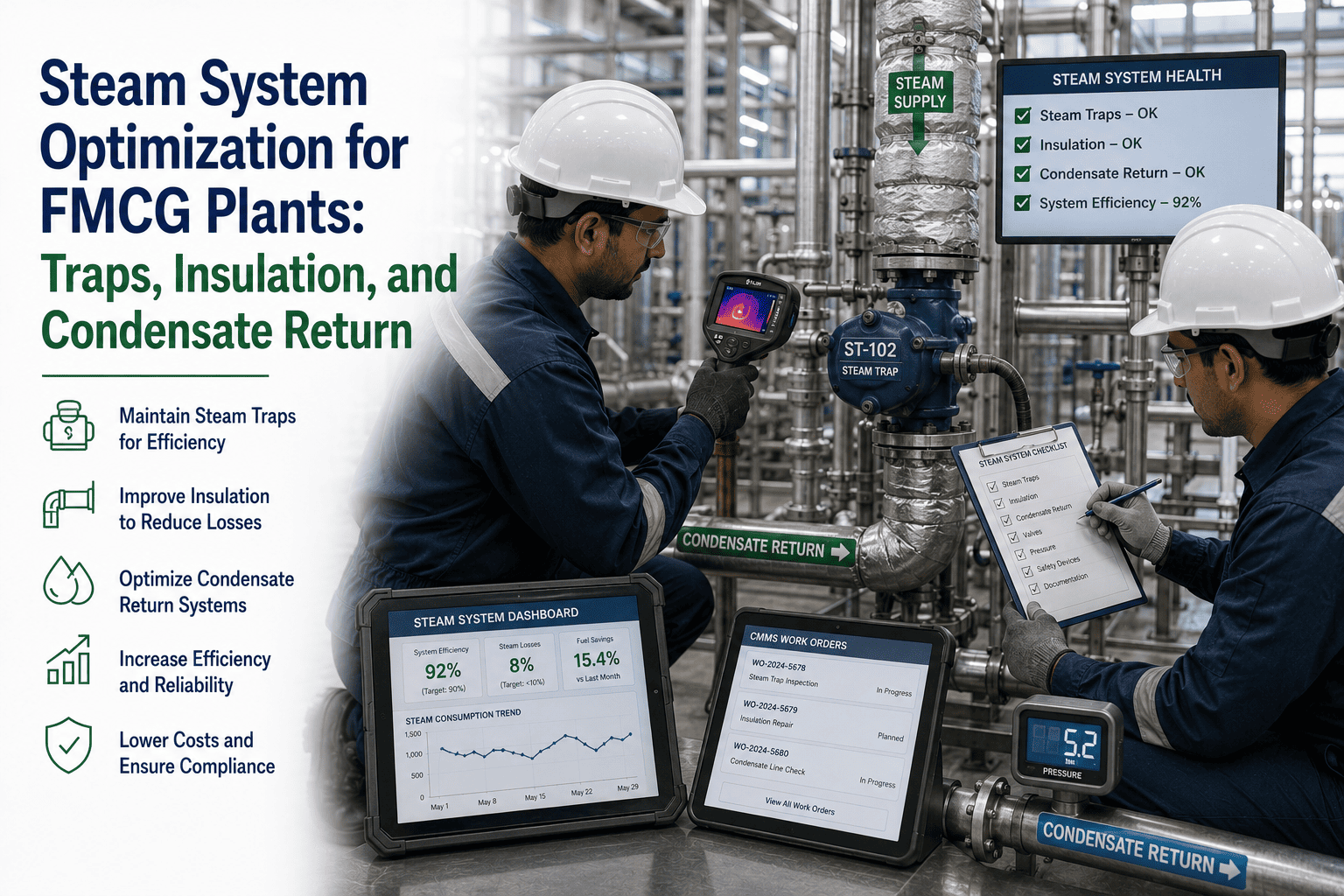
4. Steam Trap Survey and Maintenance

Failed steam traps are the single largest source of avoidable energy loss in steam distribution systems. A failed-open trap in a 10-bar system discharges flash steam equivalent to the output of a small domestic boiler — continuously, invisibly, directly to drain. A plant with 50 steam traps and a 15% failure rate is losing the equivalent of one working boiler to drain every day. Survey frequency depends on system pressure and criticality; quarterly is the minimum for any food plant steam system.

QuarterlySteam Trap Survey
MonthlySteam Distribution Inspection

5. Combustion Efficiency and Energy Optimisation

A boiler at 80% thermal efficiency costs 20% more to operate than one at 100%. In a food plant running a 10 MW boiler at 8,000 hours per year, a 5% efficiency improvement is worth £100,000–£150,000 in fuel cost annually. Combustion analysis is the tool that identifies where the efficiency loss is — excess air, flue gas temperature, CO concentration, and O₂ level together define the complete combustion picture.

MonthlyCombustion Analysis
AnnualHeat Transfer Surface Inspection and Cleaning

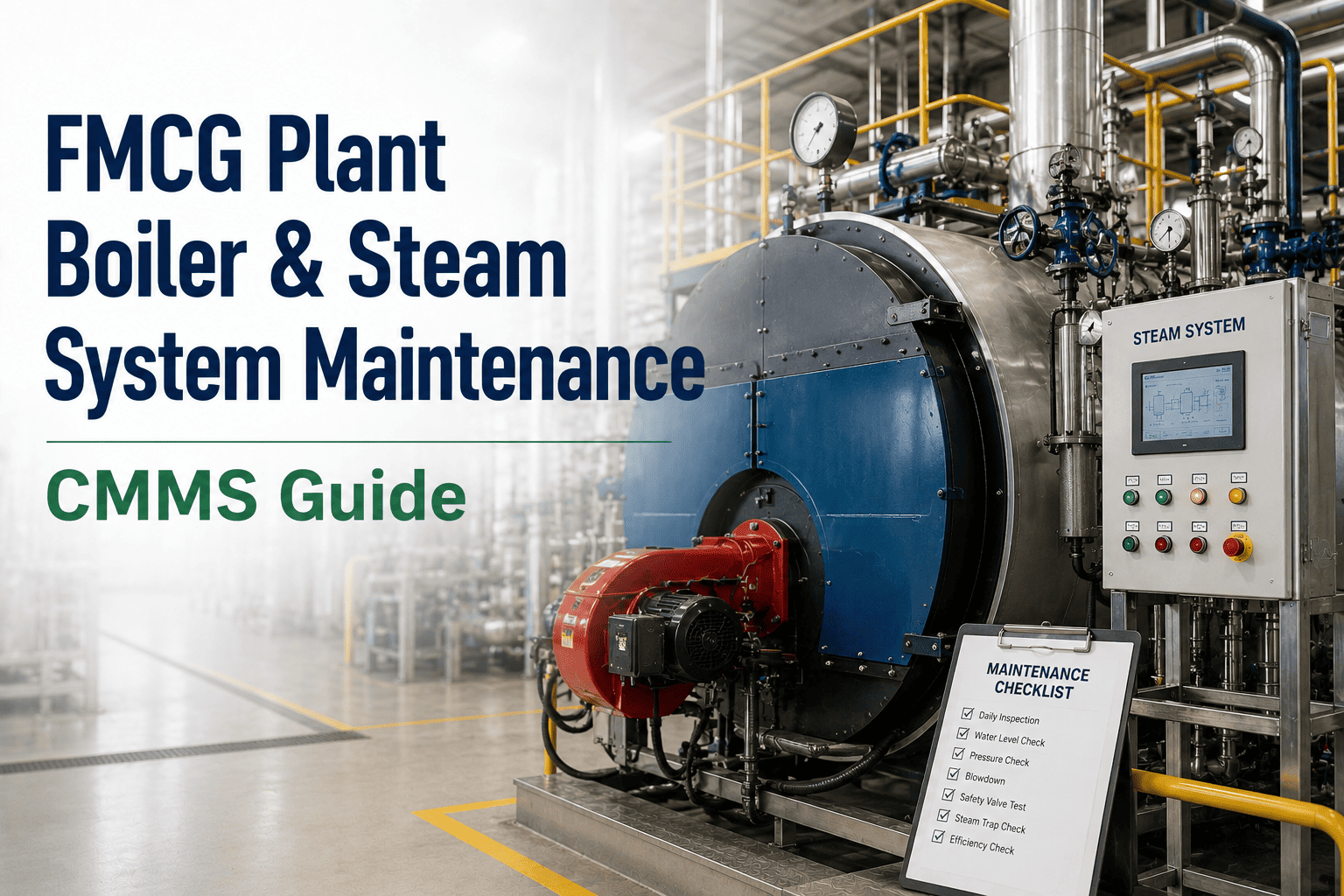
6. Statutory Compliance and Documentation

Boiler compliance documentation is not optional additional paperwork — it is a legal requirement in every jurisdiction. Operating a pressure vessel beyond its inspection due date voids the operating certificate, voids the insurance cover, and in most jurisdictions exposes the plant manager and engineer personally to prosecution. All records must be retained for the life of the vessel, not just the current certification period.
MonthlyCompliance Records Maintenance
AnnualFull Statutory Inspection Package

Frequently Asked Questions

Inspection frequency depends on jurisdiction and vessel classification. In the UK under PSSR 2000, the written scheme of examination specifies the interval — typically 14 months for shell boilers at normal operating pressures. In the USA, ASME and National Board standards typically require annual inspection for power boilers and biennial for heating boilers. In Australia, AS 3788 specifies intervals based on plant type. Operating beyond the inspection due date voids certification and insurance cover regardless of vessel condition.
For low-pressure shell boilers (up to 10 bar), pH target is typically 10.5–12.0 and TDS (conductivity) is typically below 3,500 µS/cm or per your water treatment contractor's specification for your water chemistry. These targets are not universal — the correct values depend on operating pressure, feedwater chemistry, and chemical treatment programme. Your water treatment contractor must set site-specific targets and review them whenever operating pressure, fuel type, or condensate return rate changes.
Two methods work while the system is live. Ultrasonic testing detects the high-frequency sound of live steam passing through a failed-open trap — a disc-type or thermostatic trap failed open will register clearly above background noise. Infrared thermography identifies the temperature profile across the trap body — a failed-open trap will show the same temperature on both inlet and outlet sides. Both methods require a trained operator and calibrated equipment. Failed-open traps identified during a survey should be tagged and replaced at the next available opportunity — do not defer more than one maintenance cycle.
Scale on heat transfer surfaces is the most common cause — 1 mm of calcium carbonate scale reduces efficiency by approximately 7% and raises flue gas temperature by 20–30°C. The second most common is excess combustion air — O₂ above 3–4% at full load in a gas-fired boiler adds roughly 0.5% to fuel cost per percent excess O₂. Both are identified by regular flue gas analysis and corrected by descaling and burner air ratio adjustment respectively. Neither is detectable without measurement.
OxMaint registers each boiler as an asset with its inspection certificate expiry date, operator certification due dates, and safety valve test schedule. Inspection due dates trigger advance notifications 90, 60, and 30 days before expiry — so you are never caught by a lapsing certificate. All inspection records, water treatment logs, and combustion analysis results are stored against the boiler asset record and are exportable for insurance, regulatory, or audit inspection. Book a demo to see boiler compliance management in OxMaint.
Boiler PM — OxMaint CMMS
Never Miss a Boiler Inspection Due Date Again.
90
days advance cert alert

Auto
daily PM scheduling

Full
compliance record archive

Free
to start
Daily water chemistry, weekly safety tests, annual inspections — all auto-scheduled
Inspection certificate expiry tracked with 90-day advance alerts per vessel
All compliance records retained against boiler asset — exportable for insurers
Steam trap survey results logged per trap — failure trends identified before next survey

Share This Story, Choose Your Platform!