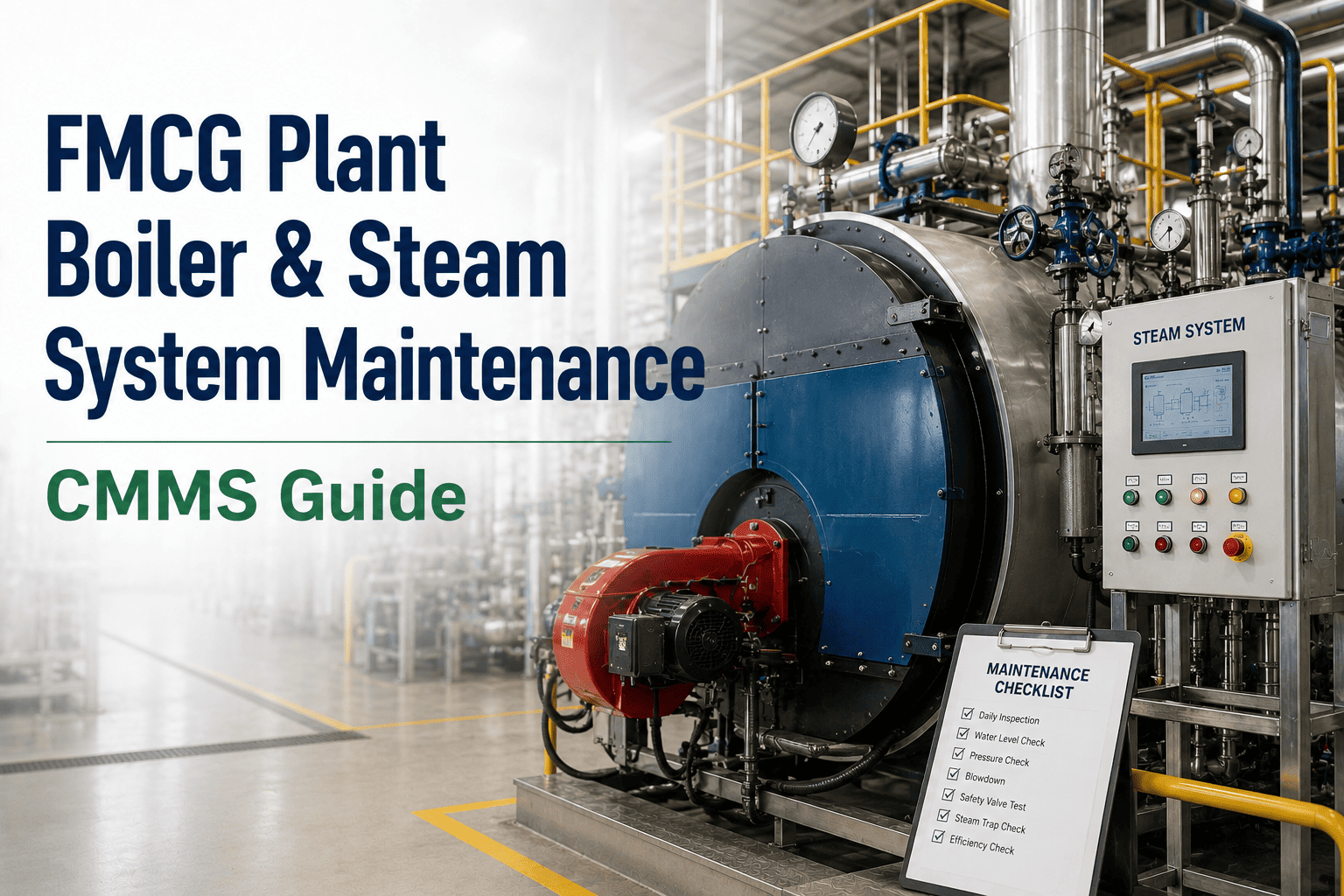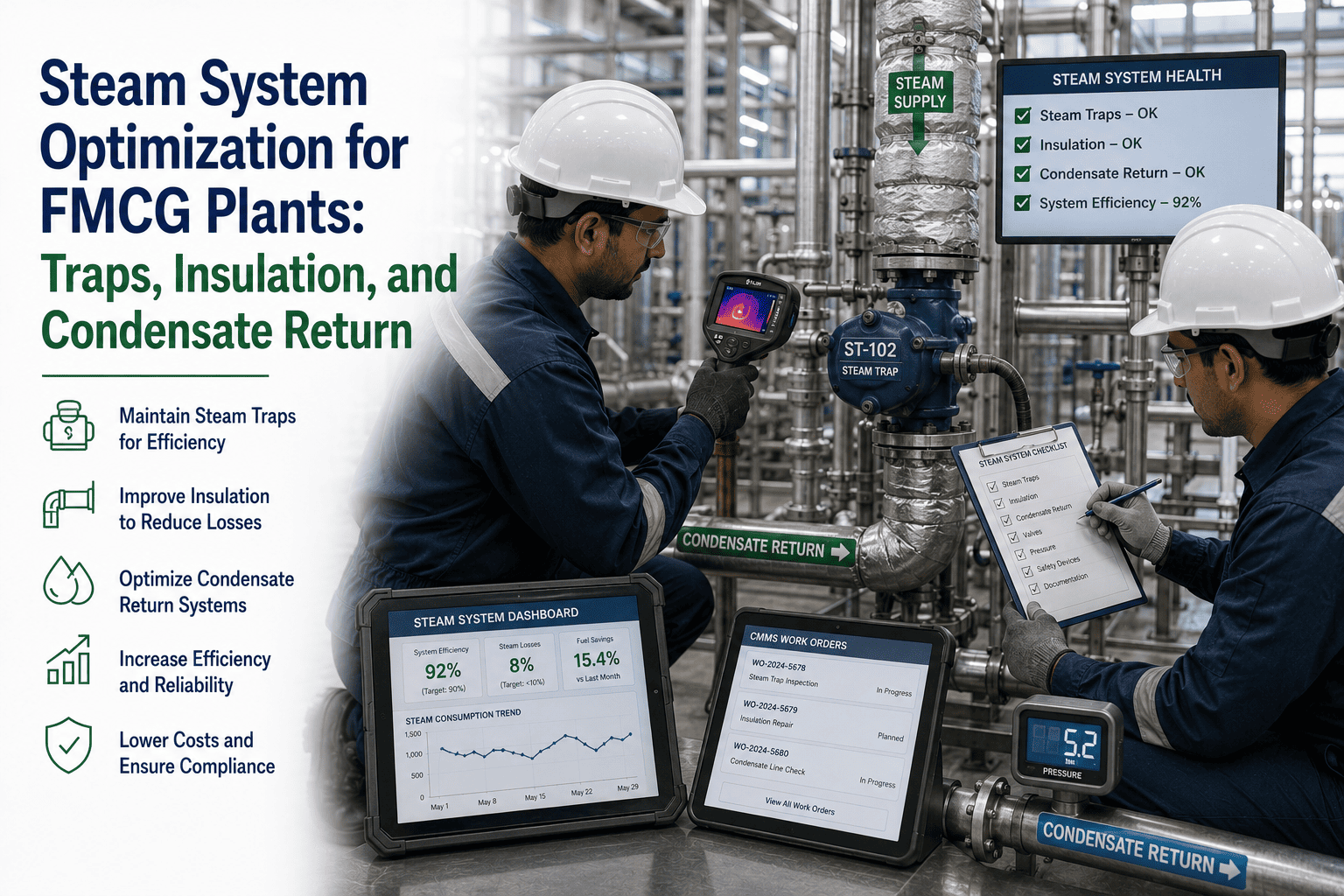
A beverage plant in Tamil Nadu lost $75,000 in a single incident when their 6-tonne fire-tube boiler suffered a low-water condition at 3 AM — the feedwater pump check valve had been leaking for weeks, gradually reducing water level between shifts. The crown sheet overheated, deformed, and the plant faced a full boiler shutdown for 11 days of emergency tube replacement. Boilers are the most expensive single assets in most FMCG plants and the most dangerous when neglected. A structured PM programme prevents catastrophic failures, keeps fuel costs under control, and satisfies the statutory inspection requirements that can shut your plant down overnight. Start your free trial today or book a 30-minute demo to see how Oxmaint automates boiler PM for your plant.
|
Neglected / Reactive Maintenance
|
VS
|
Structured PM Programme
|
| Inspection Point | Method | Frequency |
|---|---|---|
| Water Level (Gauge Glass) | Visual + Blowdown Test | Every 2 Hours |
| Steam Pressure | Gauge Reading Logged | Every 2 Hours |
| Flue Gas Temperature | Stack Thermometer Reading | Every Shift |
| Feedwater Temperature & Pressure | Gauge Reading Logged | Every Shift |
| Combustion Air Damper Position | Visual Inspection | Every Shift |
| Blowdown Execution (TDS Control) | Manual Valve Operation | Once Per Shift Min. |
| Burner Flame Condition | Visual Through Sight Glass | Every Shift |
| Safety Valve Visual Inspection | No Leaks or Weeping | Every Shift |
| Daily Inspections Prevent | 60% of Failures | |
|
32%
Scale & Deposit Buildup
Hard water minerals form insulating scale on tube surfaces — just 1mm of scale increases fuel consumption by 8% and creates hot spots that cause tube failure
|
22%
Low Water Conditions
Feedwater pump failure, level control malfunction, or check valve leakback — exposes crown sheet to direct flame, causing catastrophic overheating within minutes
|
18%
Oxygen Corrosion (Pitting)
Dissolved oxygen in feedwater attacks boiler metal surfaces — creates deep pits that weaken tubes and shells, eventually causing leaks under pressure cycling
|
|
16%
Burner & Combustion Faults
Dirty nozzles, faulty flame scanners, incorrect air-fuel ratio — reduces efficiency, causes soot buildup, and creates delayed ignition risk (puff-back explosion)
|
12%
Steam Trap Failures
Failed-open traps dump live steam to condensate return — wastes $180–$960 per trap per year in fuel cost and overloads the condensate system
|
8%
Refractory & Insulation Failure
Degraded furnace refractory and casing insulation drives up fuel consumption and causes external shell overheating — often missed without thermal imaging surveys
|
| 1 | Feedwater TDS after softening: 120 ppm |
| 2 | Target boiler water TDS (10 bar): 3,000 ppm max |
| 3 | Max cycles of concentration: 3,000 ÷ 120 = 25 cycles |
| 4 | Blowdown rate required: 1 ÷ 25 = 4% of steam output |
| Parameter | ≤10 bar | 10–20 bar |
|---|---|---|
| Total Dissolved Solids (TDS) | 3,500 ppm | 2,500 ppm |
| pH (at 25°C) | 10.5–11.5 | 11.0–11.8 |
| Total Hardness (as CaCO₃) | ≤2 ppm Feedwater | 0 ppm (Ideal) |
| Dissolved Oxygen | ≤0.02 ppm | ≤0.007 ppm |
| Silica (as SiO₂) | 150 ppm | 50 ppm |
| Sulphite (O₂ Scavenger Residual) | 20–40 ppm | 30–50 ppm |
| Fuel Savings from Proper Water Treatment | 8–15% | |
|
T1
Every Shift — Operator
Shift Checks
Visual inspection of safety valve for signs of leaking, weeping, or corrosion. Verify discharge pipe is unobstructed. Check that easing gear lever moves freely. Log condition and flag any abnormality immediately.
|
T2
Every 3 Months — Technician
Quarterly Test
Manual lift test using easing gear at operating pressure to verify valve opens and reseats cleanly. Check lift pressure against set point. Inspect valve seat for scoring or erosion. Document results with photos in CMMS.
|
T3
Annual — Certified Inspector
Annual Certification
Full bench test to IBR/ASME standards: pop test at set pressure, blowdown verification, seat leak test, and spring condition assessment. Valve overhauled or replaced if it fails any criterion.
|
|
38%
Failed Steam Traps
Traps stuck open pass live steam directly to condensate — a single failed 1/2" trap at 8 bar wastes $3,000–$4,800 per year in fuel
|
26%
Pipe & Flange Leaks
Gasket degradation, bolt relaxation, and expansion joint wear — small leaks are invisible but add up to significant steam and fuel waste
|
22%
Missing / Damaged Insulation
Uninsulated steam pipe loses 6–10× the heat of insulated pipe — every metre of bare pipe at 8 bar wastes $96–$180 per year
|
|
14%
Condensate Not Recovered
Hot condensate dumped to drain — wastes both water and the thermal energy already invested in heating it to steam temperature
|
Est. 8%
Control Valve Bypasses
Manually cracked bypass valves left open for convenience allow uncontrolled steam flow — frequently left open after maintenance and forgotten
|
Est. 5%
Flash Steam Not Recovered
High-pressure condensate flashing to low-pressure steam at trap outlets — recoverable via flash vessels and low-pressure steam headers but rarely captured
|
|
01
Combustion Tuning
3–6% Fuel Reduction
Optimise air-fuel ratio using flue gas analyser · Target O₂: 2–4% at stack for gas, 3–5% for oil · Tune monthly; re-check after any burner servicing
|
02
Steam Trap Survey
5–12% Steam Recovery
Ultrasonic test every trap quarterly · Replace all failed-open traps immediately · Tag and record each trap's condition in CMMS
|
03
Insulation Audit
3–8% Heat Loss Reduction
Thermal imaging scan all steam headers · Replace missing or damaged insulation · Insulate all valves and flanges above 2" diameter
|
|
04
Condensate Recovery
8–15% Fuel Reduction
Return all clean condensate to feedwater tank · Install flash steam recovery on high-pressure traps · Preheat feedwater to 80–90°C using recovered heat
|
05
Blowdown Optimisation
2–4% Water & Energy Saving
Install conductivity-controlled automatic blowdown valve · Recover blowdown heat via flash vessel · Log and trend blowdown rate against TDS readings weekly
|
06
Economiser Maintenance
3–6% Stack Heat Recovery
Clean economiser tubes quarterly — fouling degrades heat transfer rapidly · Monitor approach temperature · Inspect for fin damage bi-annually
|
| Excess Fuel from Poor Efficiency | 12% efficiency loss on $132,000 fuel bill from scale, poor combustion, no economiser | $15,900 |
| Steam Leak & Trap Losses | 18% steam loss through 14 failed traps and 22 flange/pipe leaks | $23,900 |
| Emergency Tube Repairs | 2 tube failures/yr × $6,600 repair + 8 days lost production per event | $34,200 |
| Production Loss from Steam Outages | 96 hrs total plant downtime from boiler trips × avg output/hr | $50,600 |
| Water Treatment & Blowdown Waste | Excessive blowdown from poor chemistry control wastes water and energy | $8,200 |
| Total Annual Cost of Reactive Boiler Maintenance | $132,500 | |
| Task | Frequency | Responsible |
|---|---|---|
| Water Level, Pressure, Flame Check | Daily / Per Shift | Operator |
| Blowdown & Water Chemistry Test | Daily / Per Shift | Operator |
| Burner Nozzle Cleaning & Inspection | Weekly | Technician |
| Feedwater Pump & Check Valve Test | Weekly | Technician |
| Flue Gas Analysis & Combustion Tuning | Monthly | Specialist |
| Steam Trap Survey (Full Plant) | Quarterly | Technician |
| Safety Valve Lift Test | Quarterly | Technician |
| Insulation & Pipe Support Audit | Bi-Annually | Maintenance Lead |
| Internal Inspection & Tube Thickness | Annually | Certified Inspector (IBR) |
| Safety Valve Bench Test & Certification | Annually | Certified Inspector (IBR) |
| Total PM Tasks per Boiler per Year | 780+ | |
- March 6, 2026
- By Jason