A single palletizing station running two shifts burns through $127,000 in annual labor cost while averaging 3.2 ergonomic injury claims per year. A collaborative robot doing the same job costs $42,000 installed, runs 24/7 without breaks or injury claims, and pays for itself in under 5 months. Across FMCG packaging floors worldwide, cobots and industrial robotics are eliminating the bottlenecks that have constrained end-of-line operations for decades — not by replacing entire production lines, but by dropping into existing workflows with minimal integration and immediate throughput gains. This is not factory-of-the-future speculation. It is happening now, on lines running potato chips, shampoo bottles, cereal boxes, and beverage cans — and the plants deploying cobots are seeing 15–25% OEE improvement with payback periods measured in months, not years. Start your free trial to track cobot maintenance alongside your existing equipment. Book a demo to see OxMaint's Robotics Maintenance module managing cobot fleets in FMCG plants.
Why FMCG Packaging Lines Are the Perfect Cobot Use Case
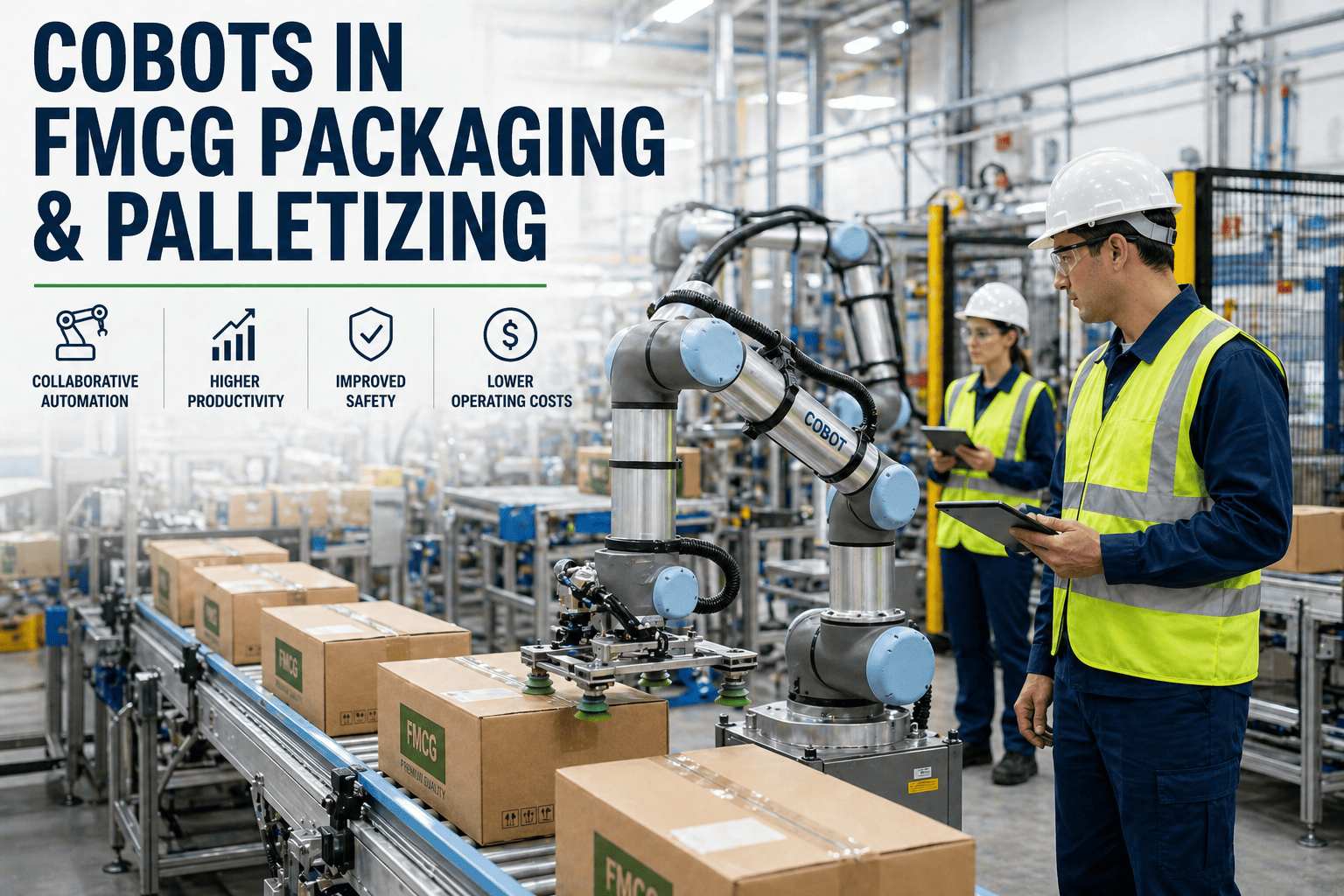
FMCG packaging operations have three characteristics that make them uniquely suited for collaborative robotics: high repetition rates (the same pick-place-pack motion thousands of times per shift), frequent changeovers (multiple SKU switches per day that idle traditional automation), and ergonomic hazards (repetitive lifting, twisting, and reaching that generate injury claims). Cobots address all three simultaneously — and unlike traditional industrial robots, they deploy in days rather than months.
The labor equation is getting worse, not better. FMCG plants report 22% annual turnover in packaging positions — each departure costing $4,500–$8,000 in recruiting, training, and lost productivity during ramp-up. Meanwhile, ergonomic injury claims from repetitive palletizing average $48,000 each including workers' comp, lost time, and temporary replacement labor. Cobots eliminate both problems permanently while delivering consistent output across every shift, every day.
The Five Cobot Applications Transforming FMCG Packaging
Not every packaging task benefits equally from cobot deployment. The highest-ROI applications share a common profile: repetitive motion, moderate payload, predictable product geometry, and high injury or turnover risk. These five applications account for 80% of cobot deployments in FMCG today.
Palletizing is the entry point for most FMCG plants because the ROI is fastest and the integration is simplest. A cobot palletizer requires only a power drop, a compressed air connection, and a conveyor infeed — no cage, no safety scanner reprogramming, no production line modification. It bolts to the floor at the end of an existing line and starts stacking cases within hours of delivery. This simplicity is why palletizing accounts for 45% of all FMCG cobot deployments globally.
Cobots vs. Traditional Industrial Robots: Why FMCG Is Different
FMCG plants considered industrial robots for decades but rarely deployed them outside of greenfield installations. The reason was not cost — it was flexibility. Traditional robots need cages, fixed tooling, weeks of programming, and shutdown time for every changeover. Cobots changed the equation fundamentally.
The changeover advantage is where cobots truly differentiate in FMCG. A traditional robot changing from a 500ml bottle pattern to a 1L bottle pattern requires a tooling swap, program change, and validation cycle that takes 2–4 hours. A cobot with a universal gripper selects the new recipe from a touchscreen and starts running the new format in under 60 seconds. On a line doing 6–12 changeovers per day, that difference compounds into hours of recovered production time daily.
The OEE Impact: Where the 15–25% Improvement Comes From
Cobot deployment improves OEE by attacking all three components simultaneously — Availability, Performance, and Quality. Here is where the gains come from:
The most underappreciated gain is night shift parity. Manual packaging lines consistently produce 15–20% less during night shifts due to fatigue, reduced supervision, and higher absenteeism. Cobots produce identically at 3 AM as they do at 10 AM. For FMCG plants running 24/7, this alone can justify deployment — the night shift output gap on a single line represents $180,000–$350,000 in annual lost production.
The Economics: What Cobots Actually Cost and Save
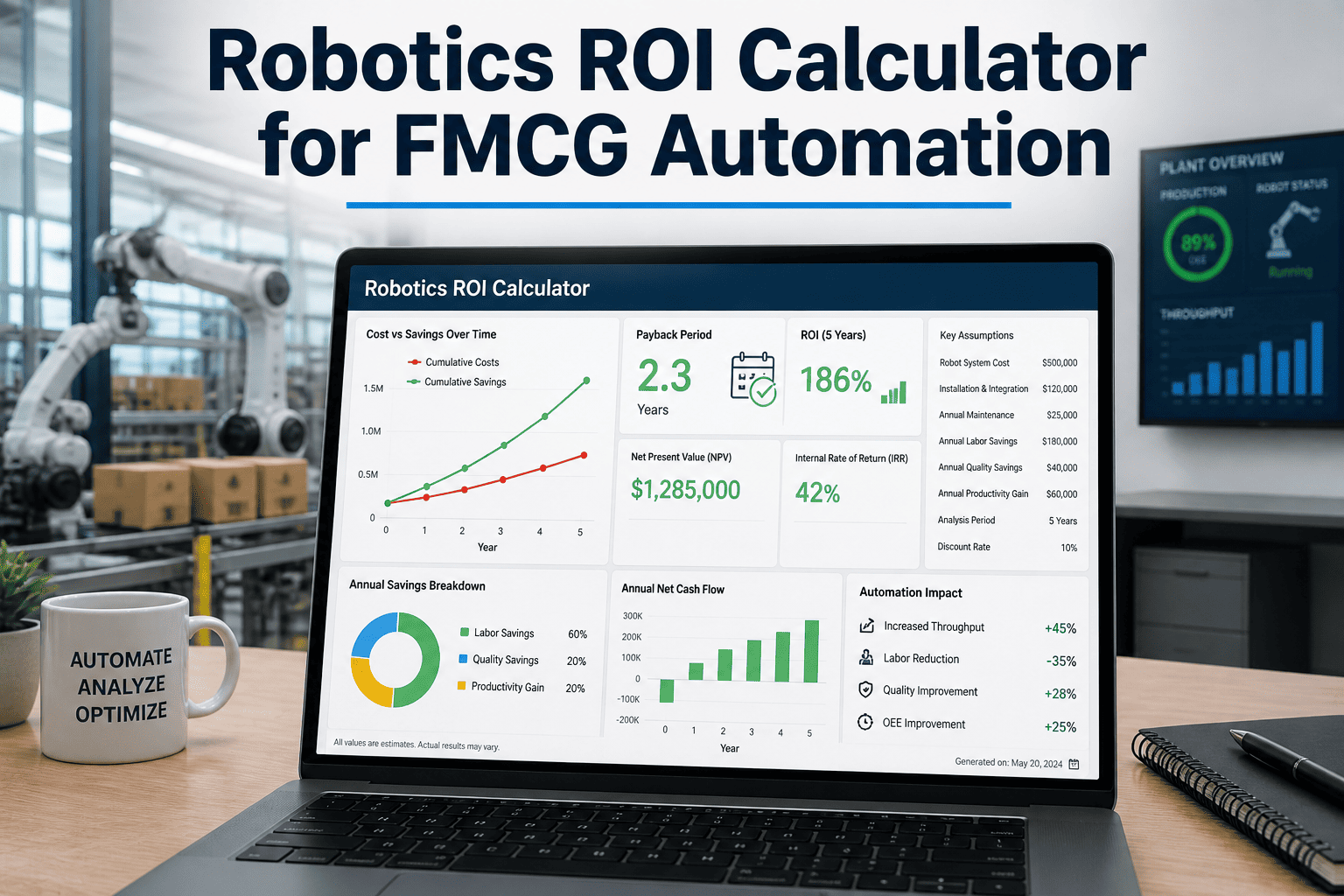
FMCG operations managers consistently overestimate cobot costs and underestimate savings. Here is the real math for the most common deployment — a single palletizing station replacing manual stacking.
The labor savings deserve clarification: cobots do not eliminate jobs — they reallocate them. The two operators previously hand-stacking cases are redeployed to upstream quality checks, changeover support, or machine tending roles where their skills create more value. FMCG plants deploying cobots report zero involuntary headcount reductions — they redeploy, retrain, and retain. Turnover actually drops because the most physically demanding, least desirable jobs are the ones cobots take over.
Cobot Maintenance: What Breaks and How to Prevent It
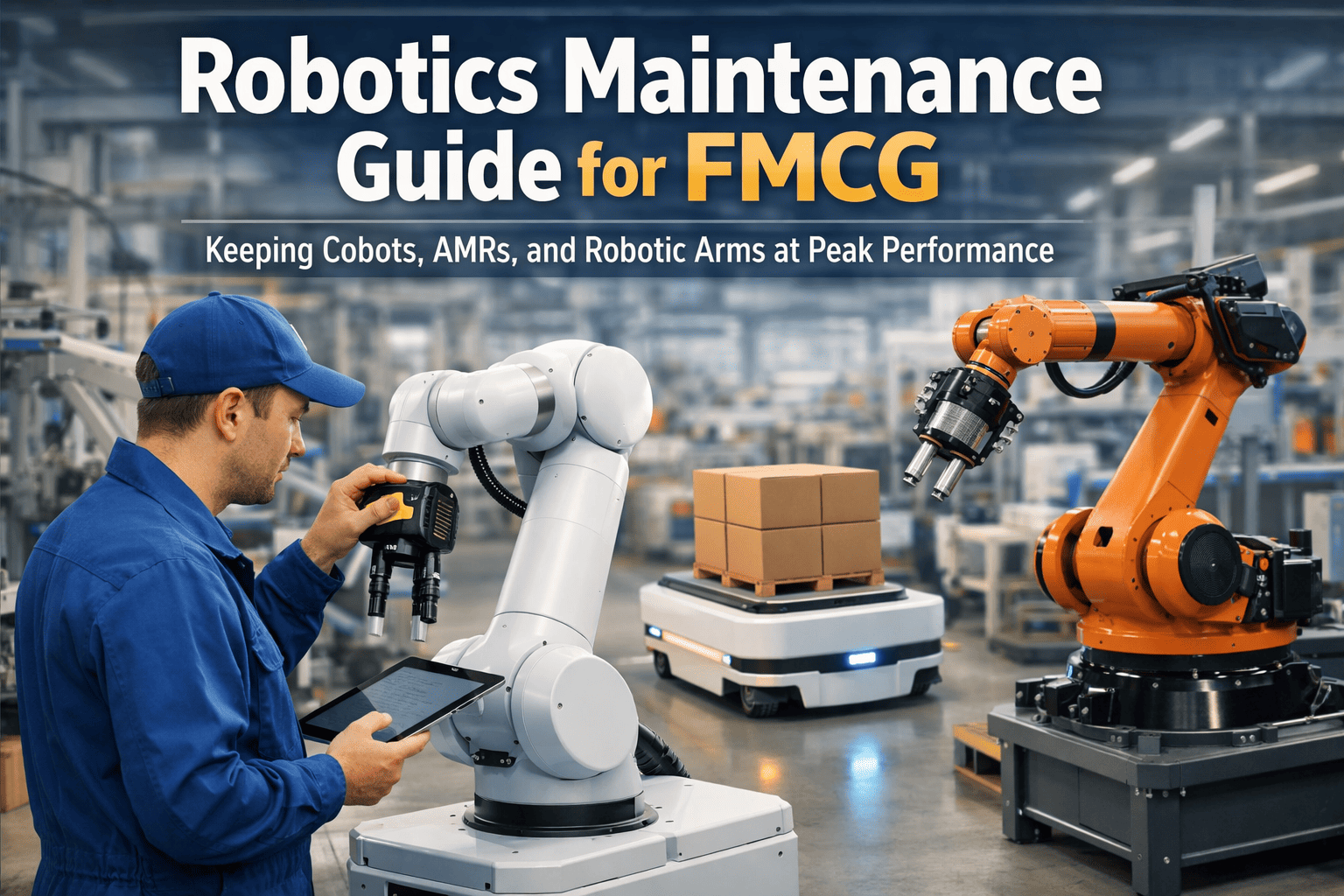
Cobots are remarkably reliable — most models are rated for 35,000+ hours of operation before major service. But they are not maintenance-free. Understanding cobot failure modes and PM requirements is critical for sustaining the OEE gains.
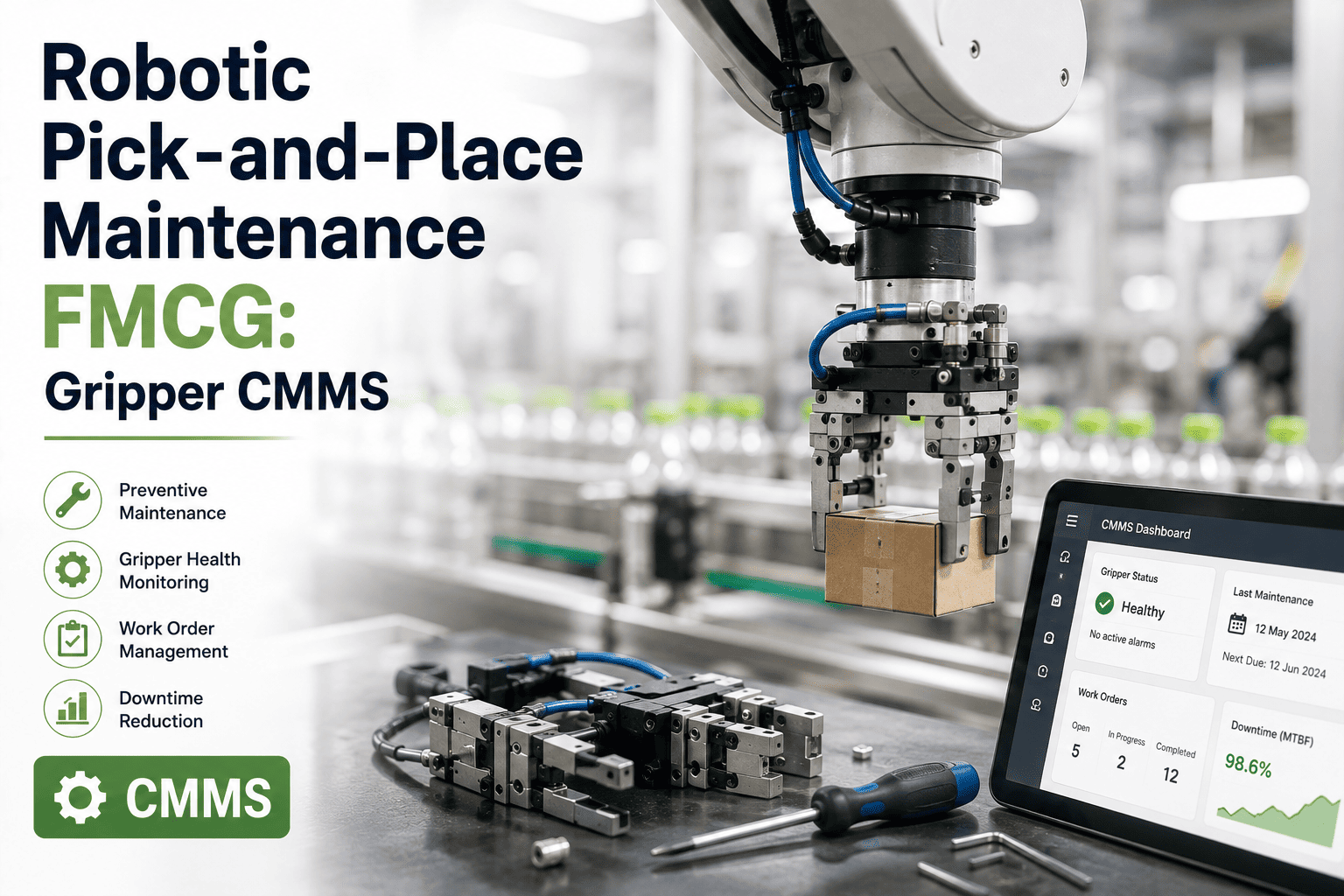
The highest-wear component is always the end-of-arm tooling — grippers, suction cups, and fingers that contact product thousands of times per hour. Smart FMCG plants track gripper cycle counts in their CMMS and replace wear parts on condition rather than calendar, extending life by 20–30% while preventing the mid-shift grip failures that cause line stoppages and product damage. OxMaint's Robotics Maintenance module tracks joint torque trends, error code frequency, and cycle counts automatically — flagging degradation before it causes downtime.
Real-World FMCG Cobot Deployments
These are documented deployments from FMCG plants that have published their cobot results — showing the range of applications, payback timelines, and productivity gains across different product categories.
The pattern across deployments is remarkably consistent: payback in 3–6 months regardless of product category, with Year 1 savings running 3–5× the initial investment. The fastest paybacks occur at plants with high labor costs, multiple shifts, and frequent changeovers — which describes most FMCG operations. Plants that start with one cobot almost always deploy additional units within 12 months because the ROI case builds itself once the first unit is running.
Implementation: From Evaluation to Production in 30 Days
Cobot deployment in FMCG is dramatically faster than traditional automation. Most plants go from vendor selection to production output in 2–4 weeks — a timeline that traditional industrial robot projects measure in months.
The key enabler of this speed is hand-guided programming. Unlike traditional robots that require specialized programmers writing code, cobots are programmed by physically guiding the arm through the desired motion path and pressing "save." An experienced packaging operator — not a robotics engineer — can teach a new pallet pattern in 15–30 minutes. This means your existing team manages the cobot fleet without hiring specialized staff.